How Should Hiking Boots Fit? Toe Room, Heel Lift and Socks
A good hiking boot leaves half an inch to three-quarters of an inch at the toe and holds your heel. Here is how to test it and when to size up.
Quick answer
Hiking boots should leave about half an inch to three-quarters of an inch in front of your longest toe, hold the heel with only slight lift, and fit the ball of the foot without squeezing. Test them with your hiking socks, late in the day, and expect to size half a size up from sneakers.
Hiking boots should fit snugly through the heel and midfoot, with about half an inch to three-quarters of an inch between your longest toe and the front of the boot. That is more toe room than a street shoe, and it is deliberate: your feet swell on the trail and slide forward on every descent. Most hikers end up in a size half to a full size larger than their sneaker size.
The rest of this guide covers how to test the fit in a store or at home, what the socks change, how to read heel lift and pressure points, and which fixes work when a boot is almost right.
Start with the right length
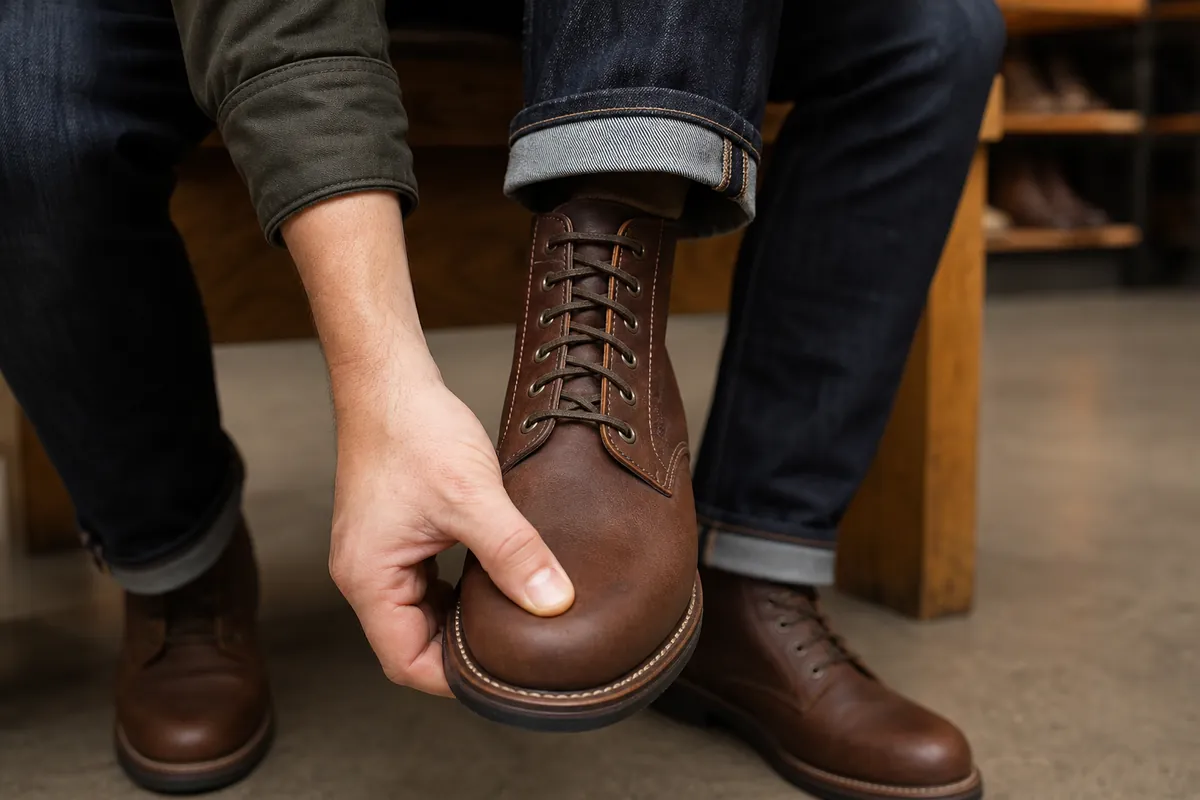
Pull out the insole and stand on it with your heel against the back. Your longest toe, which is not always the big toe, should end roughly half an inch to three-quarters of an inch before the front edge. Put the insole back, lace the boot up and kick the toe gently against a hard surface. You should not feel your toes hit the front.
A second check is the finger test: with the boot on and unlaced, slide a finger behind your heel. Roughly one finger of space is normal in a loose boot, and it should disappear once you lace up. Two fingers when the boot is laced means the boot is too long.
Fit tip: Feet are smallest in the morning and largest at the end of the day. Try on boots in the afternoon or evening, and buy for the larger foot.
How hiking boot sizes compare with your sneaker size
Hiking boots are cut with a roomier toe box than most sneakers, and you will wear thicker socks. In general, many hikers choose a half size up from their sneaker size, and some go a full size up if they plan long descents or carry heavy packs. This is a common pattern, not a promise, so use it as a starting point and then test. Our general boot fit guide covers the other boot types, and the sneaker guide explains the baseline.
| US men's | UK | EU | Foot length (cm) | CM (JP) |
|---|---|---|---|---|
| 8 | 7 | 41 | 25.4 | 26 |
| 8.5 | 7.5 | 42 | 25.9 | 26.5 |
| 9 | 8 | 42.5 | 26.2 | 27 |
| 9.5 | 8.5 | 43 | 26.7 | 27.5 |
| 10 | 9 | 44 | 27.1 | 28 |
| 10.5 | 9.5 | 44.5 | 27.5 | 28.5 |
| 11 | 10 | 45 | 27.9 | 29 |
| 12 | 11 | 46 | 28.7 | 30 |
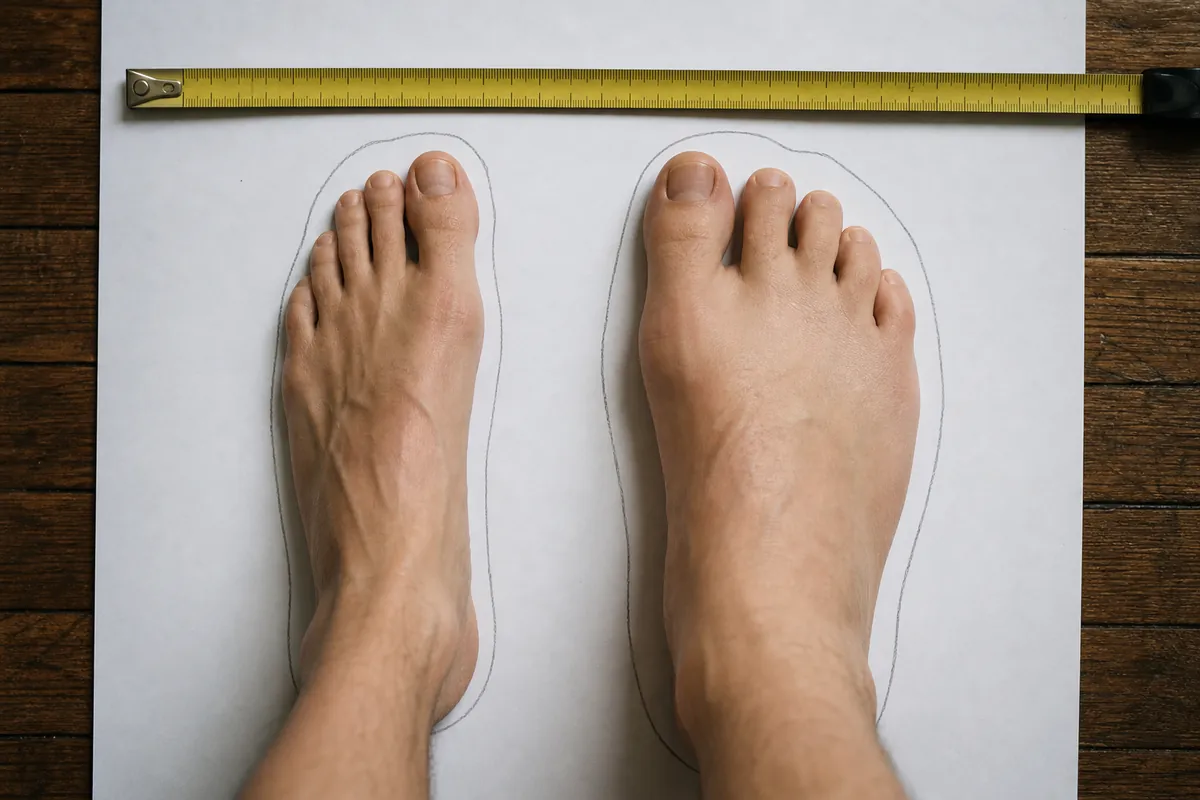
Read the Foot length column as the real length of your foot for that US size. A 26.2 cm foot is a men's US 9 on the standard chart, so a hiker with that foot who wants about 1.3 to 1.9 cm of toe room in a boot needs a boot with an insole length of roughly 27.5 to 28 cm, which is closer to the CM (JP) size of a men's US 10. Brands list their insole length differently, so check the boot's own chart where you can.
Socks decide the fit
Wear the socks you plan to hike in when you try boots on, and bring a few pairs. A thick sock can make a boot feel a half size smaller, and a thin sock can let the foot slide. Merino wool is a common recommendation, as it cushions and handles moisture better than cotton, which holds sweat and promotes blisters.
If you wear liner socks under heavier socks, include both when you test. A boot that fits with one thin sock may feel tight with the two-layer system. See the measuring guide for how to measure with socks on.
Heel hold and the stairs test
A boot that fits well holds your heel in place. A little lift, up to about a centimeter on a stiff new boot, is typical, because the sole is rigid. More than that, or a heel that slides sideways, means the boot is too big or the heel cup is the wrong shape.
Use a staircase or a slope to check. Walk uphill and notice whether your heel rises. Walk downhill with small steps and see whether your toes press into the front. A heel that rides up on the climb or toes that slam on the descent are the two classic signs of a bad fit.
Lacing fixes
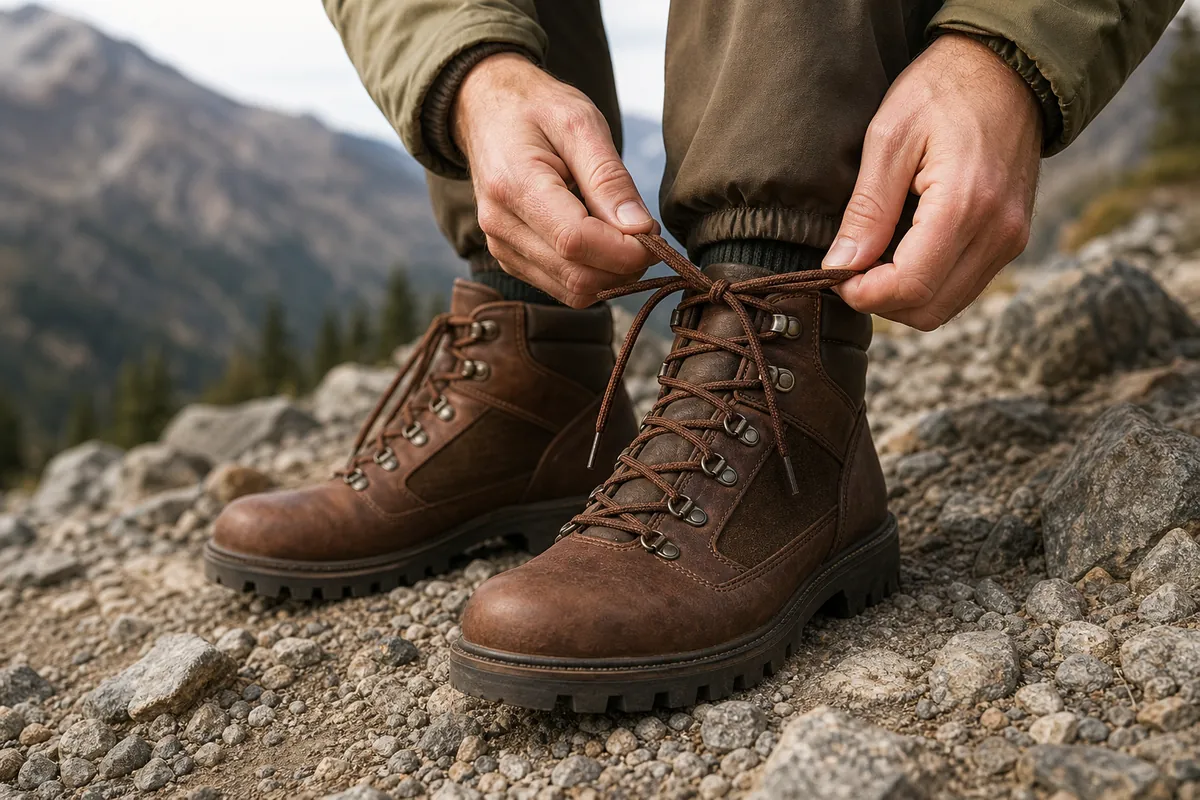
Lacing can solve small problems without buying another size. A heel lock, where you cross the laces and thread them through the top eyelets to cinch around the ankle, helps if the heel lifts. Skipping an eyelet over a sore spot relieves pressure on the top of the foot. Loosening the forefoot laces and tightening the ankle ones is a common compromise for wide forefeet with narrow heels.
Width and volume
Length is only half the problem. Width and volume, meaning the height of the boot over your instep and toes, change comfort more than a half size does. Signs of a too-narrow boot are pressure on the sides of the ball of the foot, toes curling, and a hot spot on the little toe. Signs of a too-wide boot are skin folds above the toes when you pinch the upper, and a foot that slides side to side.
A small amount of foot spilling over the insole edge is normal, but a lot of overhang means the boot is too narrow. Many brands sell a wide version of popular models, so check before sizing up for width, since a longer boot with the same narrow last does not fix a tight forefoot. Our shoe width chart explains the letters.
Fit tip: Do not buy a boot that is long enough but crushes your forefoot, planning to 'break it in'. A hiking boot softens at the ankle and tongue, but stiff leather or a rigid shank will not widen on its own.
Break-in
Leather boots need more time than synthetic ones. Wear them around the house for about half an hour on a few evenings, then on short walks, before a long trip. If you find a hot spot, stop and fix it, because small irritations become blisters on a long day. Cover tender areas with tape or a cushion pad before heading out.
A boot that is uncomfortable after a short walk in the shop will not become better over twenty miles. Return it if you can.
Types of boots and what changes
- Lightweight hikers and trail shoes: closer to a running shoe in fit. Allow a thumb's width of toe room and expect a half size more than your dress shoe.
- Mid-height boots: a firmer ankle hold. The fit rules above apply, and heel lift is the thing to watch.
- Backpacking boots: stiffer, and usually worn with heavier socks. Many people take the larger of two sizes.
- Insulated or waterproof boots: these have thicker linings that reduce room, so test with your actual socks.
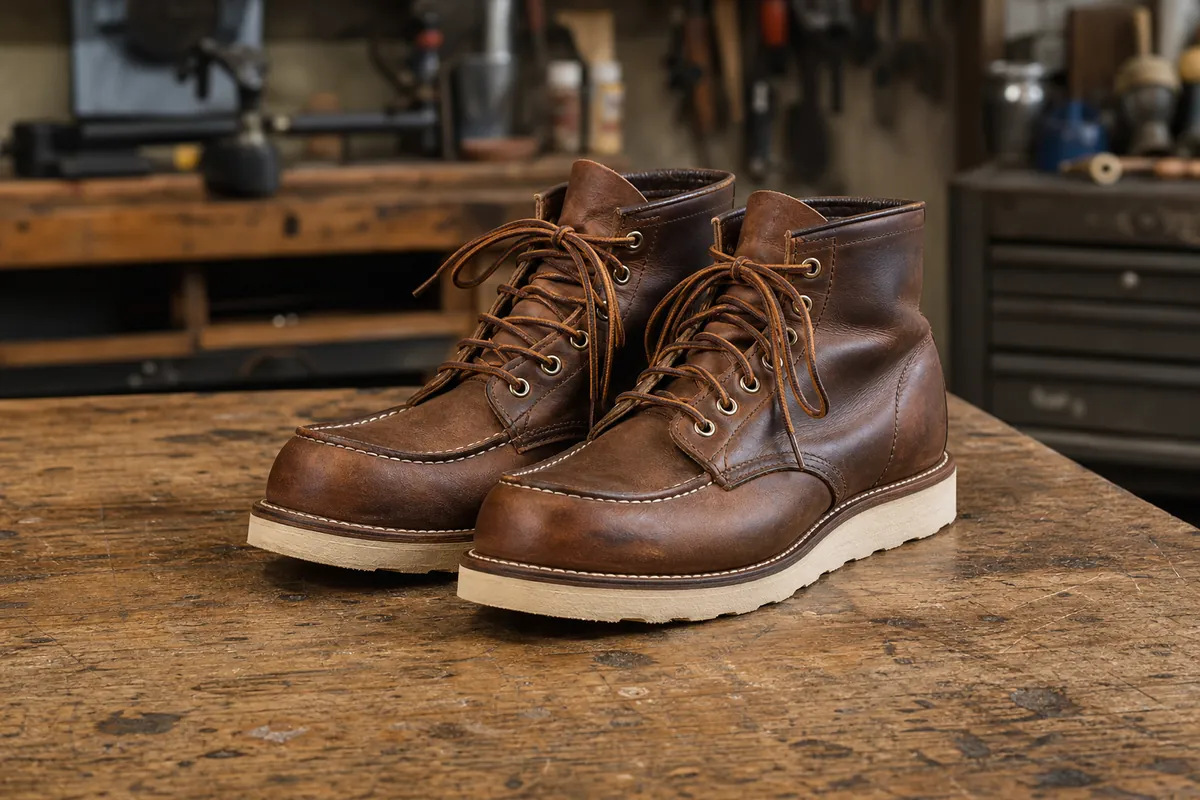
For work boots and Red Wing leather, which often run long, see our Red Wing guide. Hiking boots lean toward the opposite: more room, not less.
What to do when you are between sizes
If the smaller size touches your toes on a downhill test, take the larger. If the larger one lets your heel slide on an uphill test, try a heel lock, a thicker sock or a heel cushion. If neither works, change the model, because the last may not suit your foot. A heel that moves is a shape problem more often than a size problem.
If your feet differ in size, as many do, fit the larger foot and manage the smaller with socks or an insole. A quick check with the shoe size calculator can tell you where a half size lands on the scale.
Insoles, orthotics and swelling
Stock insoles in hiking boots are often thin, and many hikers swap them for a firmer one or a custom orthotic. A new insole takes up volume, so test the boot with the replacement in place and re-check toe room. If you use orthotics, take them to the store and try the boot with them, since a good fit with the stock insole can become tight once they go in.
Feet swell over a long day on the trail, and heat, altitude and a heavy pack add to it. That is why a boot that feels slightly roomy in the store can feel right by mile eight, and why a boot that feels perfectly snug at ten in the morning may be too tight after lunch. If you are choosing between two sizes, imagine your foot a little larger and take the one that still holds the heel.
Wet feet and water crossings
Wet socks stretch and slide, so a boot that fit dry may feel looser in a stream crossing or heavy rain. Waterproof membranes also hold in sweat. If you hike in wet climates, a slightly snugger heel and a good sock matter more than extra room, and fresh socks in your pack are worth carrying.
A short checklist
- Measure both feet in the afternoon.
- Wear your hiking socks.
- Check half an inch to three-quarters of an inch of toe room.
- Lace up and check heel lift on a slope or stairs.
- Test the downhill toe press.
- Check for pressure on the sides or top of the foot.
Bottom line
A hiking boot should hold your heel, give your toes room to avoid the front on descents, and fit the ball of your foot without squeezing. Start half a size up from your sneaker size, test with real socks, and fix small heel slip with lacing. If a boot hurts in the shop, leave it there.
Frequently asked questions
How much room should hiking boots have in the toe?
About half an inch to three-quarters of an inch between your longest toe and the front, measured with your foot on the insole. The room matters on descents, when feet slide forward and swell.
Should hiking boots be a size bigger than my shoes?
Many hikers go half a size up from their sneaker size, and some go a full size for long descents or heavy packs. It is a common pattern, not a rule, so confirm with a downhill test and your real socks.
How much heel lift is normal in hiking boots?
Slight lift, up to about a centimeter in a stiff new boot, is normal. A heel that slides a lot or rises on every uphill step means the boot is too big or the wrong shape. A heel lock lacing can help.
What socks should I wear to try on hiking boots?
The exact socks you plan to hike in, ideally merino wool. Thick socks make boots feel tighter and thin ones let your foot slide, so bring a few pairs and check each.
How do I know if hiking boots are too narrow?
Pressure on the sides of the forefoot, curled toes or a hot spot on the little toe all point to a narrow boot. A longer size will not fix it, so look for a wide version of the same model.