How Should Boots Fit? Toe Room, Heel Slip and Sizing by Boot Type
Snug at the ball and instep, free toes, a little heel lift at first. How to judge boot fit, plus what changes for work, hiking, cowboy and winter boots.
Quick answer
Boots should feel snug across the ball of the foot and over the instep, with about a thumb's width of space in front of your longest toe. A little heel lift is normal in a stiff new boot, but your heel should not slide freely. Hiking and winter boots need extra room; leather lace-ups often run long.
A well-fitted boot is snug across the ball of your foot and over the instep, holds your heel with only a little lift while the boot is new, and leaves your toes free to move with roughly a thumb's width of space in front. It should bend where your foot bends. If a boot squeezes your toes on day one, it is the wrong size, no matter what anyone says about break-in.
The size that gets you there is often not your sneaker size. Stiff leather lace-ups usually run long, hiking and winter boots usually need extra room, and pull-on styles have no laces to rescue a loose fit. Below we cover the checks that apply to every boot, then the details for work, Chelsea, hiking, cowboy and winter boots.
The five checkpoints of a good boot fit
Run through these every time you try a boot on, in this order. Length gets the attention, but the other four decide if you will still like the boot after a long day.
- Toe room. Stand up and push your foot forward. You want about a thumb's width, around 1 to 1.5 cm, between your longest toe and the end of the boot. Your toes should lie flat and wiggle freely.
- Ball of the foot. The widest part of the boot should sit right under the widest part of your foot. Expect firm, even contact here, never pinching on the little toe or big toe joint.
- Instep. Lace up (or pull on) and check the top of your foot. Snug is good; a band of pressure that builds after a few minutes is not.
- Heel. Walk. A small lift in a new, stiff boot is normal. A heel that slides freely up and down will blister.
- Flex point. Watch where the boot creases when you step. It should crease under the ball of your foot. A crease in front of your toes means the boot is too long; one behind the ball means it is too short.
Fit tip: before you put the boot on, take the insole out and stand on it. You should see a finger's width of insole in front of your longest toe and no part of your foot hanging over the edges.
How boot sizes relate to your sneaker size
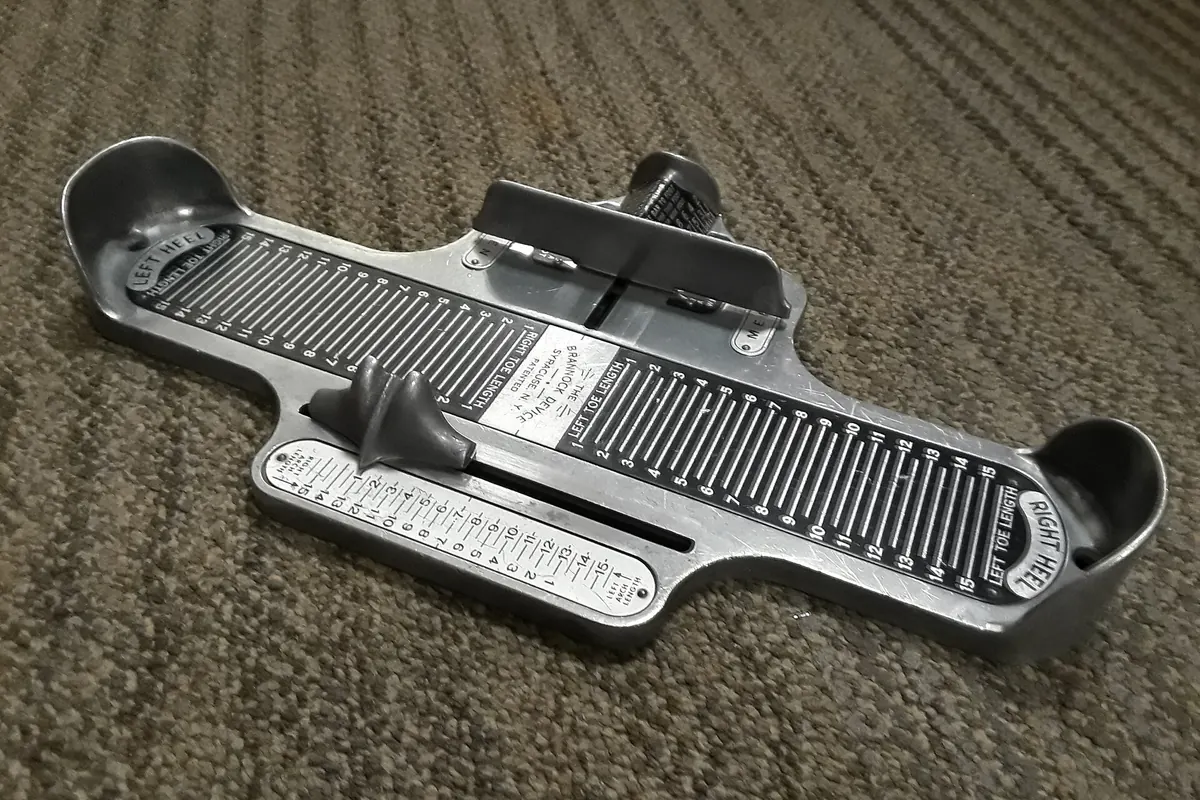
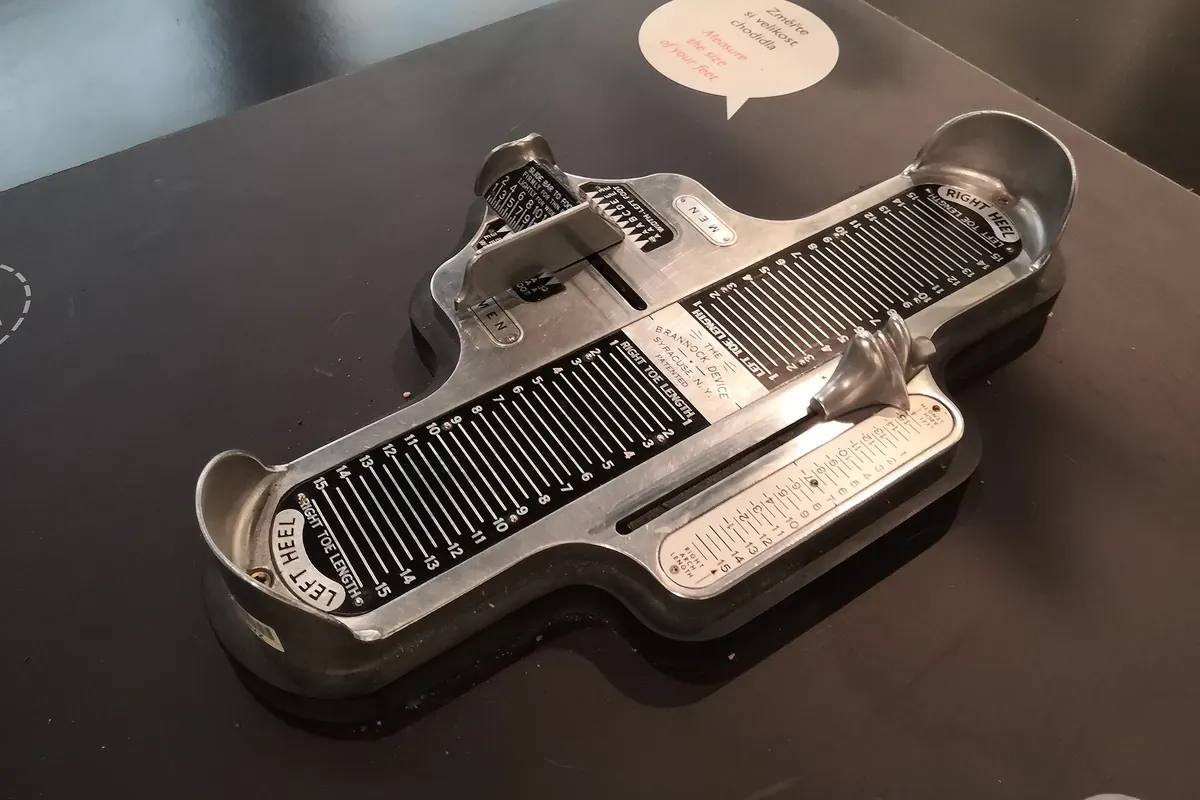
Sneakers are a poor reference for boots, mostly because many people already buy their sneakers half a size large. Start from a real measurement instead. Our guide on how to measure your feet takes ten minutes, and the shoe size calculator turns centimeters into a US size. Then use this table as a starting point.
| Boot type | Typical starting size | What to prioritize |
|---|---|---|
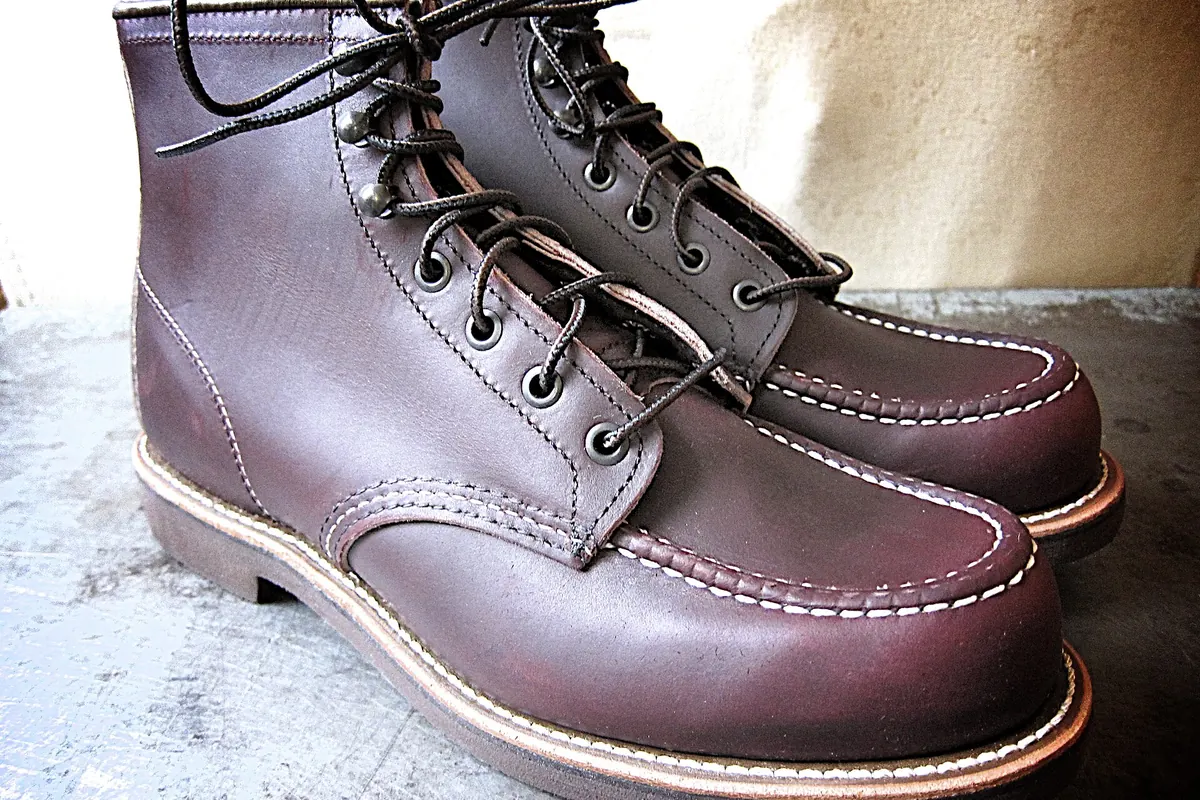
| Heritage leather lace-ups | Half size below sneaker size | Snug sides, free toes, correct flex point |
| Work and safety boots | Measured size | Clearance under the safety toe, room for work socks |
| Chelsea boots | Measured size or half down | Instep hold, limited heel lift |
| Hiking boots | Measured size or half up | Toe room for descents, locked heel |
| Cowboy and western boots | Measured size or half down | Instep fit, ball of foot at the widest point |
| Insulated winter boots | Half to one size up | Room for thick socks and air around the toes |
These are tendencies, not laws. Brands and even models from the same brand differ, so always read the maker's fit note. Red Wing is a good example of why: most of its Heritage boots run large, but a few models are meant to be worn true to size. Our Red Wing sizing guide covers it model by model.
Fit by boot type
Work boots and safety-toe boots
Work boots are worn for long shifts, on hard floors, often with thick socks, so they need more forgiveness than a style boot. The non-negotiable rule for safety toes: your toes must not touch the steel or composite cap, even when you crouch. The cap will never stretch. Kneel down in the store or at home and feel for the edge of the cap across your toes. If you feel it, go longer or try a model with a roomier toe cap.
Fit work boots at the end of a working day if you can, wearing your work socks. Heel hold matters a lot on ladders and uneven ground, so lace firmly through the ankle and check that you can walk up a step without the heel lifting much.
Chelsea boots
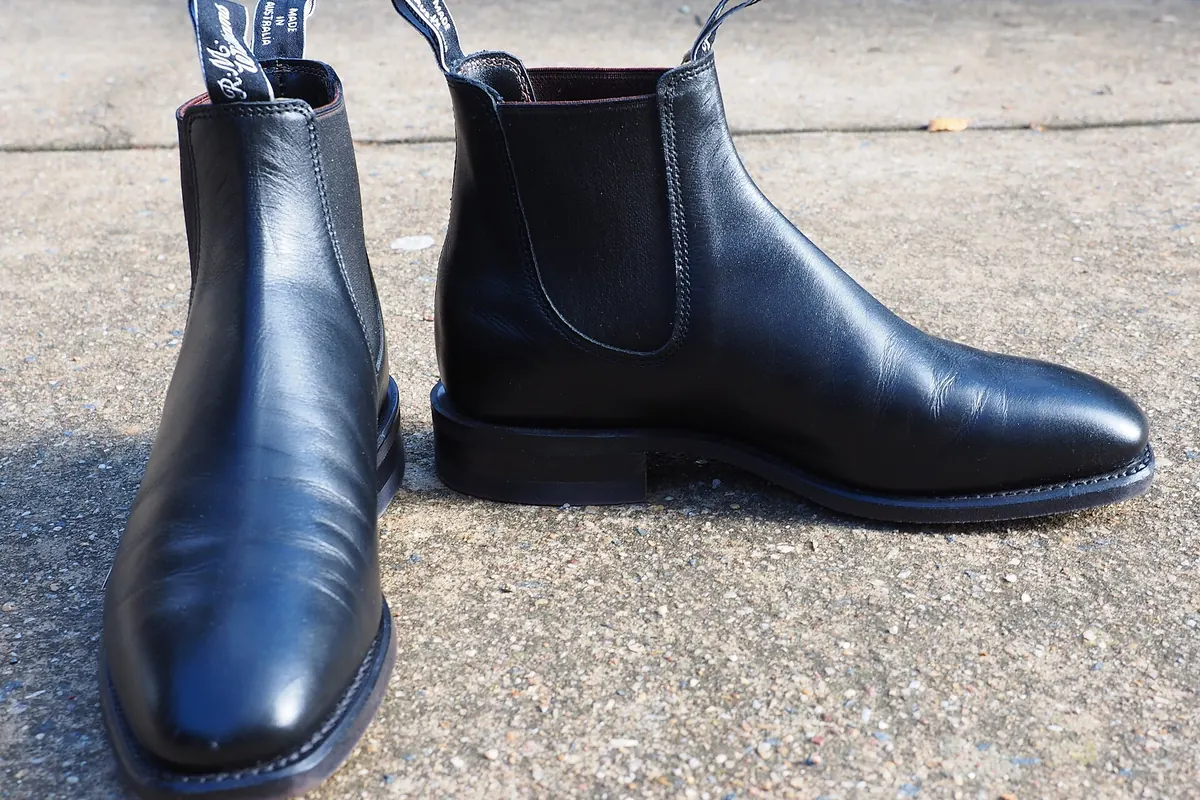
A Chelsea has no laces, so the fit you feel in the store is the fit you get. The instep does the holding: the boot should feel snug over the top of your foot as you pull it on, sometimes with a satisfying pop as your heel drops into place. Expect a little heel lift at first, since the sole is stiff and there are no laces to anchor you.
The elastic side panels relax over time, and leather uppers soften, so a Chelsea that is loose on day one gets looser. If you are between sizes, the snugger size is usually right, as long as your toes are not pressed. Some Chelsea brands label boots in UK sizes, which run about one size below US men's sizes; check the conversion before you order.
Hiking boots
Hiking boots need the most toe room of any boot, because your foot slides forward on every descent and swells over a long day. Aim for the full thumb's width in front, with your heel firmly seated. Many hikers end up at their measured size or half a size above their street shoes, mainly to fit thicker hiking socks.
Test them on a slope. Walk down a ramp or stairs, or stand on a sloped board if the store has one. If your toes touch the front, the boots are too short or the heel is not locked. Lacing the top hooks with a surgeon's knot often stops the slide before you need a bigger size. Synthetic hiking boots need little break-in; full-grain leather ones need several walks before a long trip.
Cowboy and western boots
Western boots are pulled on, so the instep is the key fit point. If you can push your foot in without a struggle and it stops with firm contact over the top, the instep is right. Too easy means too big, and no amount of break-in will fix a loose instep.
Heel slip is expected here, more than in any lace-up: a quarter to half an inch is a common range on a new pair, and it settles as the stiff sole and heel counter break in. The ball of your foot should sit at the widest point of the boot. With pointed or narrow toes, the toe box extends past your toes, so judge length by where your foot bends, not by how much empty space you can feel at the tip.
Insulated winter and snow boots
Winter boots work by trapping warm air, and a tight boot squeezes that air out and restricts circulation. Cold feet are often a sign of a boot that is too small, not one that is too thin. Fit them with the thickest socks you plan to wear, and you should still be able to wiggle every toe freely.
That usually means half to one full size above your measured size, especially for pac boots with removable liners. Always try the boot with the liner in. Keep the heel reasonably secure, since walking on snow or ice in a sloppy boot is tiring and unsafe.
Heel slip: how much is normal?
A little heel lift in a new boot is normal, because a stiff sole does not bend with your foot yet, so your heel rises before the boot does. As the sole and heel counter soften, the lift shrinks. In lace-ups, aim for less than about a quarter inch. In pull-on boots, a bit more is acceptable on a brand-new pair.
Fitters do not all agree on the exact numbers, and your comfort is the better test. What is never fine: a heel that rubs hard enough to make a hot spot within ten minutes of walking, or slip that continues after a few weeks of wear. Both point to a boot that is too long or too wide in the heel.
Socks change your size more than you think
A thick wool hiking or work sock can take up the space of half a size. That is why the same person can wear different sizes in a dress boot and a winter boot from the same brand. Measure your feet in thin socks for a baseline, but always try boots on in the socks you will actually wear with them.
If you switch between thin and thick socks with the same boots, fit for the thicker sock and use a slightly thicker insole when wearing thin ones. Going the other way, fitting for thin socks, leaves you with toes jammed the first cold morning.
Break-in or wrong size?
Leather boots break in, but only in some directions. Leather softens and eases a little across the width, footbeds compress and add a few millimeters of volume, and stiff soles learn to flex. Length never changes. Neither does a hard toe cap.
Rule of thumb: snug across the sides is break-in. Toes pressed against the end, numbness, or sharp pain is the wrong size. Do not buy a boot that hurts on day one and hope it stretches.
If a boot is snug in width but the length is perfect, a wider version of the same size is the fix. Our shoe width chart explains what D, EE and the other width letters mean. Going up half a size to get width usually trades one problem for another: more heel slip and a flex point in the wrong place.
Test the fit at home before you commit
Online boots are easy to return only if they look unworn. Try them on indoors, on a clean hard floor, in the evening when your feet are at their largest.
- Wear them for at least twenty to thirty minutes, not a quick lap of the room.
- Walk up and down stairs to check heel lift and toe contact.
- Crouch and kneel to find any pressure from a stiff toe or a safety cap.
- If you ordered two sizes, swap them halfway through and compare side by side.
The right pair is the one you stop noticing: firm along the sides, free at the toes, quiet at the heel. Small leftovers like a touch of heel lift or a slightly roomy instep can be tuned with lacing, a heel grip or a thicker insole. Pain, numbness and toes at the end of the boot cannot.
Frequently asked questions
Is it normal for my heel to slip in new boots?
A little, yes. Stiff new soles do not flex with your foot yet, so your heel lifts slightly before the boot does. In lace-ups, aim for less than about a quarter inch; pull-on western boots can show more at first. Heel slip that rubs a hot spot within minutes, or never settles, means the boot is too big.
Should boots be a size bigger than my sneakers?
It depends on the boot. Hiking and insulated winter boots often need half a size to a full size more room for thick socks and swelling. Leather lace-up boots, especially heritage styles, often run long and fit half a size below your sneaker size. Measure your feet and check each brand's fit note.
How much toe room should boots have?
About a thumb's width, roughly 1 to 1.5 cm, between your longest toe and the end of the boot while you stand. Hiking boots need the full amount because your foot slides forward downhill. In safety boots, your toes must not touch the steel or composite cap even when crouching.
Do leather boots stretch in length?
No. Leather softens and eases a little across the width, and footbeds compress to add a bit of volume, but the length of a boot does not grow. If your toes press against the end on day one, they will keep pressing. Choose the length that fits and let break-in handle snugness along the sides.
Should cowboy boots be tight?
They should be snug over the instep, since that is what holds your foot in a pull-on boot. Your foot should go in with some effort and stop with firm contact on top. A quarter to half an inch of heel slip is common in a new pair. Pain at the toes or ball means the wrong size or width.