Red Wing Boot Sizing: How Heritage Boots Fit vs Your Sneaker Size
Iron Rangers and Moc Toes run large, so most people go half a size down from their sneakers. The Beckman and work boots are the big exceptions.
Quick answer
Red Wing Heritage boots run large. For the Iron Ranger and Classic Moc, start half a size below the size you wear in true-to-size sneakers; narrow feet can try a full size down. Red Wing recommends true to size for the Beckman and its work boots. If your forefoot is wide, choose EE width rather than a longer size.
- Fit
- Runs large
- Width
- Varies
- Our advice
- Go half a size down from your sneaker size in Iron Ranger and Classic Moc; stay true to size in the Beckman and work boots.
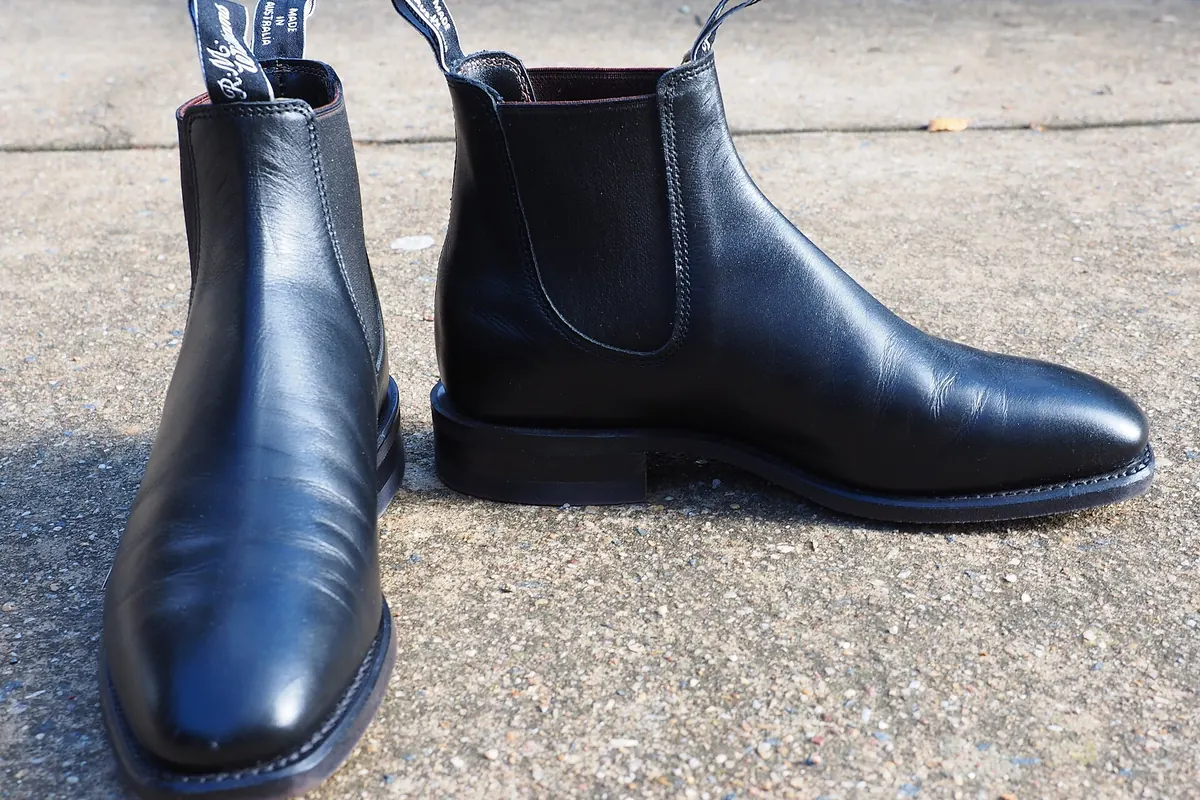
Red Wing Heritage boots run large. For the classic lace-ups like the Iron Ranger and the Classic Moc, most people end up half a size below their sneaker size, and some narrow-footed wearers go a full size down. By the brand's own admission, most Heritage models come out long, so expect to drop between a half and a full size from your sneakers.
That rule has real exceptions, though. Red Wing currently recommends true to size for the Beckman, the Weekender Chukka sits between true to size and half down, and Red Wing's work and safety boots generally fit true to size. So the honest answer is: size down for the classics, and check the model before you apply the rule to anything else.
Why a Red Wing 10 is not a sneaker 10
Three things make Heritage sizing feel off compared with the trainers in your closet.
- The last. Every Red Wing is built around a last, the foot-shaped form that sets the length, toe shape, instep height and heel. The Iron Ranger uses the No. 8 last; the Classic Moc 875 uses the No. 23 last. They are generous in length compared with most athletic shoes.
- Sneaker sizes drift. Many people buy sneakers half a size above their measured foot to get toe room. When that habit carries over to a long boot last, the boot ends up far too big.
- The footbed sinks. Most Heritage boots have a leather insole over a layer of cork. Over the first weeks the cork compresses under your foot and adds a little interior volume. A boot that is roomy on day one only gets roomier.
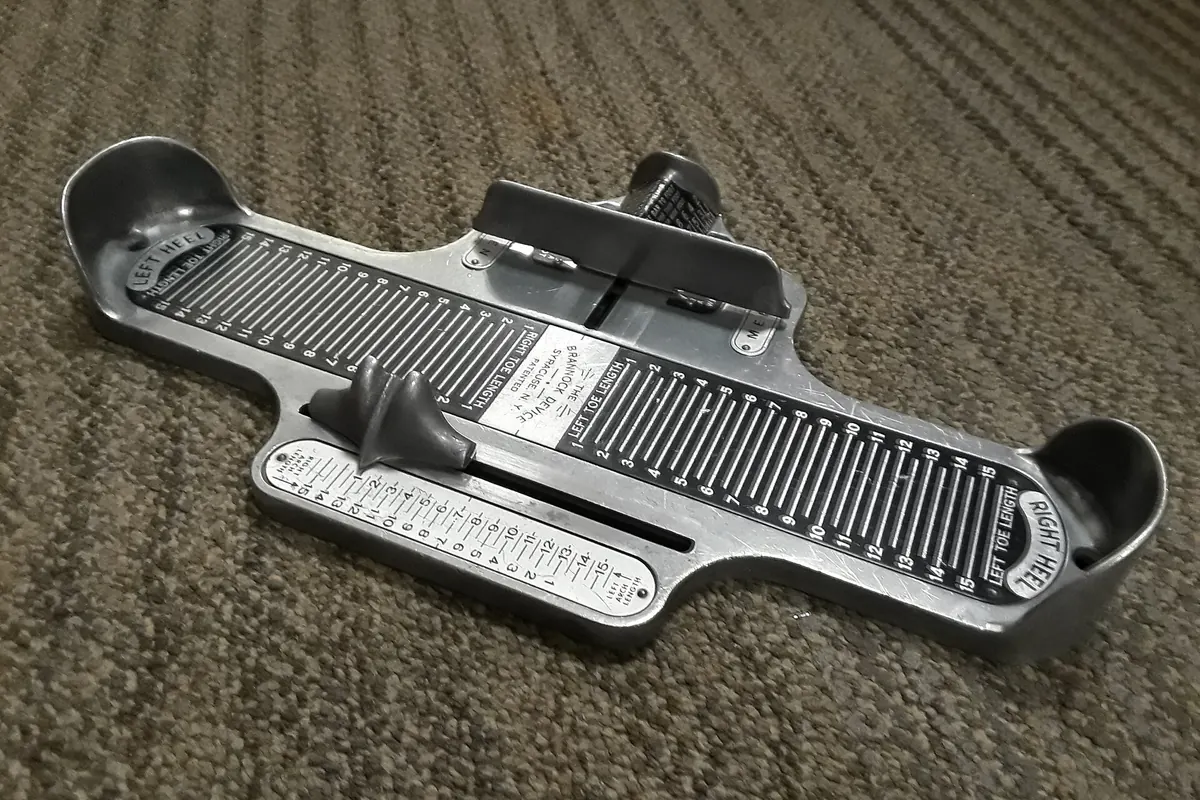
The result is that the common advice works relative to your sneaker size: wear a 10 in most Nike or Adidas trainers, try a 9.5 in an Iron Ranger. If you know your measured size on a Brannock device, half a size below that is also a common starting point for the No. 8 and No. 23 lasts.
Watch out: if your sneaker size came from a shoe that already runs long, such as the Air Force 1, do not subtract again. Work from your measured foot length or your size in a true-to-size sneaker instead.
Start from your foot, not your favorite trainer
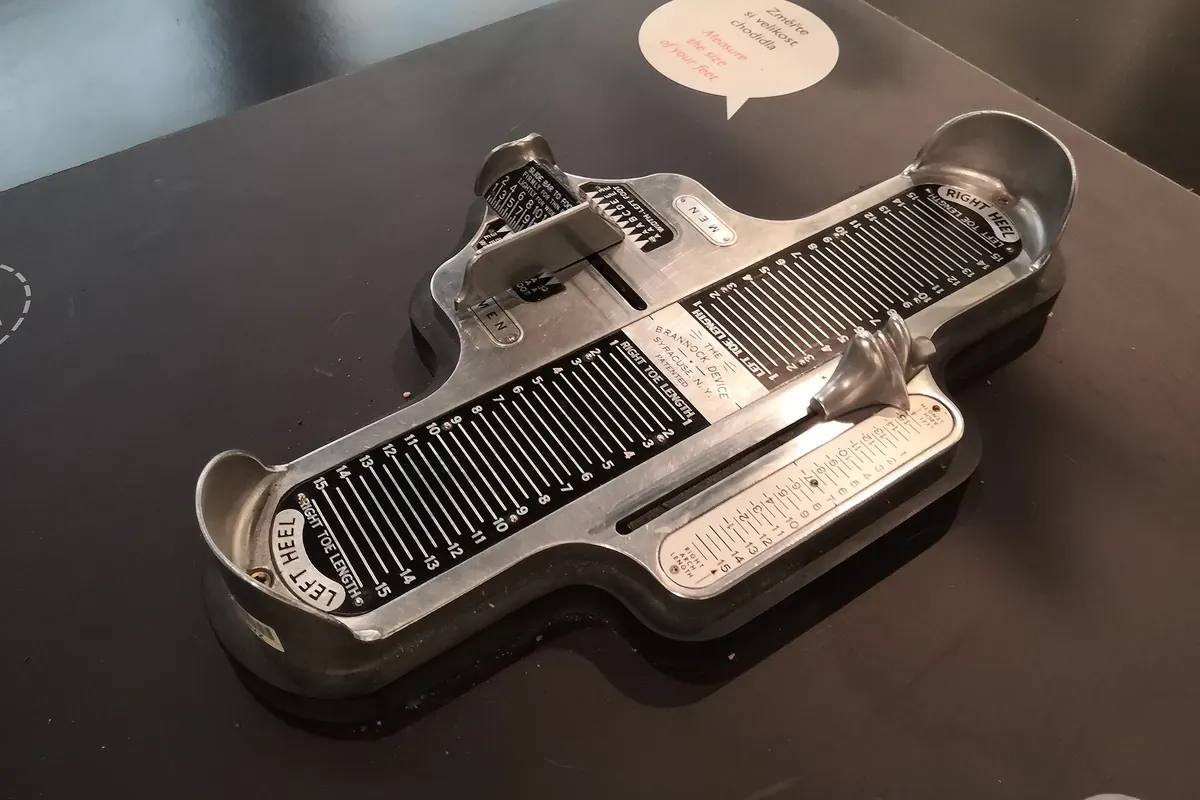
Because sneaker brands disagree with each other, the most reliable anchor for Red Wing sizing is a measurement. A shoe-store Brannock device gives you three readings: heel-to-toe length, arch length (heel to the ball of your foot) and width. All three matter for boots.
No store nearby? Our guide on how to measure your feet at home gets you length and width with paper, a pen and a wall. Measure standing, in thin socks, and use the longer foot. Then run the number through our shoe size calculator to get your true US size before applying any Red Wing adjustment.
One detail that trips people up: if your arch length reads larger than your heel-to-toe length, fit the boot to the arch reading. Boots bend at the ball of the foot, and a boot that flexes in the wrong place feels wrong no matter what the size label says.
Model by model starting points
Use this table as a first guess relative to the size you wear in a true-to-size sneaker. It is guidance, not a conversion chart: your foot shape still decides the final size.
| Model | Common starting size | Notes |
|---|---|---|
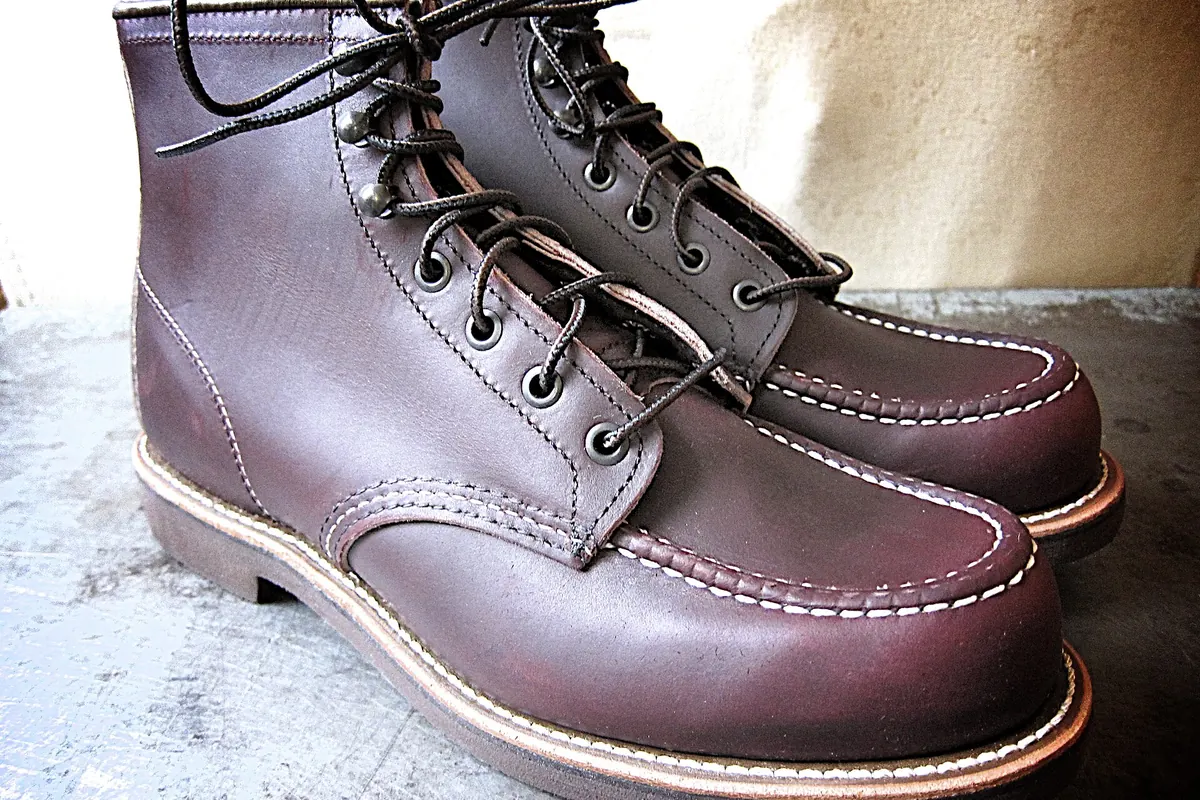
| Iron Ranger (8111 and family) | Half size down | No. 8 last. Bump toe gives toe room; narrow feet sometimes go a full size down. Offered in D and EE. |
| Classic Moc 875 | Half size down | No. 23 last. Roomy toe box, slightly higher instep. Offered in more widths than most Heritage boots. |
| Classic Moc 1907 | Half size down or true to size | Removable cushioned footbed. Stay closer to true size if you add orthotics. |
| Weekender Chukka | True to size to half size down | Thicker removable footbed takes up room, so it does not run as large. |
| Work Chukka (Heritage) | Half size down | Snugger shape and lower instep; high insteps should stay at half down rather than going further. |
| Beckman | True to size | Red Wing's current advice for this model. Do not apply the size-down rule automatically. |
| Red Wing work and safety boots | True to size | Different construction from Heritage. Safety toes need full toe clearance. |
For anything not in this list, check the product page on redwingshoes.com. Red Wing publishes fit notes per model, and they override general rules of thumb, including ours.
Width: D, EE and why longer is not wider
Men's Red Wing boots are built on a standard D width, with EE as the usual wide option. Some models, like the Classic Moc 875, come in a broader range. Not every boot is available in every width, so check before you fall in love with a colorway.
Here is the mistake to avoid. If a boot feels right in length but squeezes the sides of your forefoot, going up half a size is the wrong fix. You gain a little width and a lot of length you do not need, the flex point moves behind the ball of your foot, and the toe starts to curl upward as the boot breaks in. If you need room across the foot, order the same length in EE. Our shoe width chart explains what the letters mean if you have never bought a wide shoe.
The opposite case is common too. Narrow feet in a D Iron Ranger often feel loose at the heel. That is when a full size down can work, because the bump toe still leaves enough room up front.
What the right size feels like on day one
New Heritage boots should feel snug, not painful. Use this checklist when you try them on in the evening, wearing the socks you plan to wear:
- Sides: firm pressure along the sides of your forefoot, like a solid handshake. That is normal for the Iron Ranger in particular, and the leather eases with wear.
- Toes: free to wiggle. They should never be pushed against the end or curled. Pressing a thumb on the toe tells you little in a stiff leather boot; feel it from the inside instead.
- Heel: a small amount of lift is expected in a stiff new boot. Opinions differ here: some fitters want almost none, others accept up to about a quarter inch at first. What you do not want is a heel that slides up and down freely with every step.
- Flex point: walk a few steps and look at where the boot creases. It should bend under the ball of your foot, not in front of your toes.
- Instep: laces should close without crushing the top of your foot. Pressure across the top is an instep issue, not a length issue.
Fit tip: if the top of your foot hurts but length and width feel fine, loosen the lacing over the instep first. If the model has a removable footbed, try a thinner one. Sizing up for an instep problem usually creates a heel-slip problem.
Break-in: what changes and what never will
Red Wing's oil-tanned leathers are thick and stiff out of the box, and most owners describe a break-in of a few weeks of regular wear. During that time the leather softens across the forefoot, the heel counter starts to hug your heel, and the cork footbed takes the shape of your foot.
What changes: snugness along the sides, stiffness at the flex point, and a little volume as the cork compresses. What does not change: length. A boot that presses your toes on day one will press them on day one hundred. That is why the right Red Wing size feels tight on the sides and comfortable at the toes, never the reverse.
Wear them for short stretches at first, a couple of hours around the house or on an errand, and build up. Thick socks help with hot spots while the leather softens. Blisters at the heel during the first week usually point to too much slip, which is a sign the boot may be too long.
Socks, insoles and orthotics
Measure in thin socks, but try boots on in the socks you will actually wear. A heavy wool sock can take up a surprising amount of room across the instep. If you only ever wear thick socks with your boots, half a size down from sneaker size is usually enough; going a full size down plus thick socks tends to be too tight.
For orthotics, the 1907 Classic Moc and the Weekender are the easier choices because their footbeds come out. Most other Heritage boots have fixed footbeds, so adding an insert eats into volume and may push you back toward your true size.
Women's Red Wing Heritage sizing
Red Wing's women's Heritage boots are built on a standard B width, which is narrower than the men's D. Most women go true to size or half a size down, with wider feet staying at true size. On Red Wing's own chart, a men's US 8 corresponds to a women's US 9.5, so women buying a men's model should convert by about one and a half sizes and remember that the men's D is a wide fit by women's standards.
Between sizes, and the missing 12.5
If you fall between two sizes in a Heritage boot, the smaller size is usually the better bet in the Iron Ranger and Classic Moc, because their toe boxes are generous. Check that your toes are free and your heel holds, and let the sides ease with wear. In the Beckman or a work boot, where Red Wing recommends true to size, take the larger size if you are between.
Red Wing's US chart also skips size 12.5. If you are a measured 12.5, do not automatically jump to 13 in a model that already runs large. A 12 in EE, or a 12 with a thinner sock, is often closer to right.
Our recommendation
For the Iron Ranger and Classic Moc, start half a size below your true-to-size sneaker size in D width, and move to EE rather than a longer size if your forefoot is wide. Narrow feet can try a full size down in the Iron Ranger. For the Beckman and Red Wing work boots, stay true to size. If you are buying online, order from a store with easy exchanges, try both candidate sizes indoors on a hard floor, and keep the pair that is snug at the sides with free toes and a quiet heel. For broader fit rules that apply to every boot type, see our guide to how boots should fit.
Frequently asked questions
Should I size down in Red Wing Iron Rangers?
Yes, for most people. The Iron Ranger is built on the No. 8 last, which is long compared with sneakers. Half a size below your true-to-size sneaker size is the usual starting point. Narrow feet often go a full size down because the bump toe still leaves room for the toes.
Do Red Wing Classic Moc Toes fit the same as Iron Rangers?
Not exactly. The Classic Moc 875 is built on the No. 23 last, which has a roomy toe box and a slightly higher instep. Most people still go half a size down, but do not assume your Iron Ranger size carries over. High insteps often find the Moc Toe easier to wear.
Is the Red Wing Beckman true to size?
Red Wing currently recommends true to size for the Beckman, which surprises people used to the half-size-down rule for Heritage boots. Older forum advice often says to size down, so check the product page for the version you are buying and trust Red Wing's current note over general rules.
Should I size up in Red Wings if I have wide feet?
Usually no. If the length fits but the sides squeeze, order the same length in EE width. Going up half a size adds length you do not need, moves the flex point behind the ball of your foot and can make the toe curl upward as the boot breaks in.
How long does it take to break in Red Wing boots?
Most owners describe a few weeks of regular wear. The leather softens along the sides, the heel counter molds to your heel and the cork footbed compresses. Length does not change, so toes that feel pressed on day one will stay pressed. Start with short wears and build up.
What Red Wing size should a woman buy in a men's boot?
On Red Wing's chart, a men's US 8 corresponds to a women's US 9.5, so subtract about one and a half sizes. Remember the width too: a men's D is standard for men but wide by women's standards, so a narrow foot may feel loose in the men's version.