Shoe Size Chart: US, UK, EU and CM for Men and Women
Convert any shoe size between US, UK, EU and centimeters, switch between men's and women's sizes, and learn why the same number fits differently by brand.

Quick answer
To find your shoe size, measure your foot length in centimeters and read across the chart. On the standard chart a 27 cm foot is a US men's 9, UK 8 and EU 42.5. Women's US sizes are men's plus 1.5 (Adidas uses plus 1). Charts give your starting size; adjust for the specific model before ordering.
This is our master shoe size chart: US men's and women's sizes converted to UK, EU and foot length in centimeters, using the standard chart that Nike and most American retailers follow. Find your foot length in centimeters, read across the row, and you have your size in every system.
A chart gets you to the right starting size, and that is all it can do. Brands build shoes on different lasts, so the same number fits differently from one model to the next. Use the tables below to get your base size, then check the brand or model guide before you order.
How to use this chart
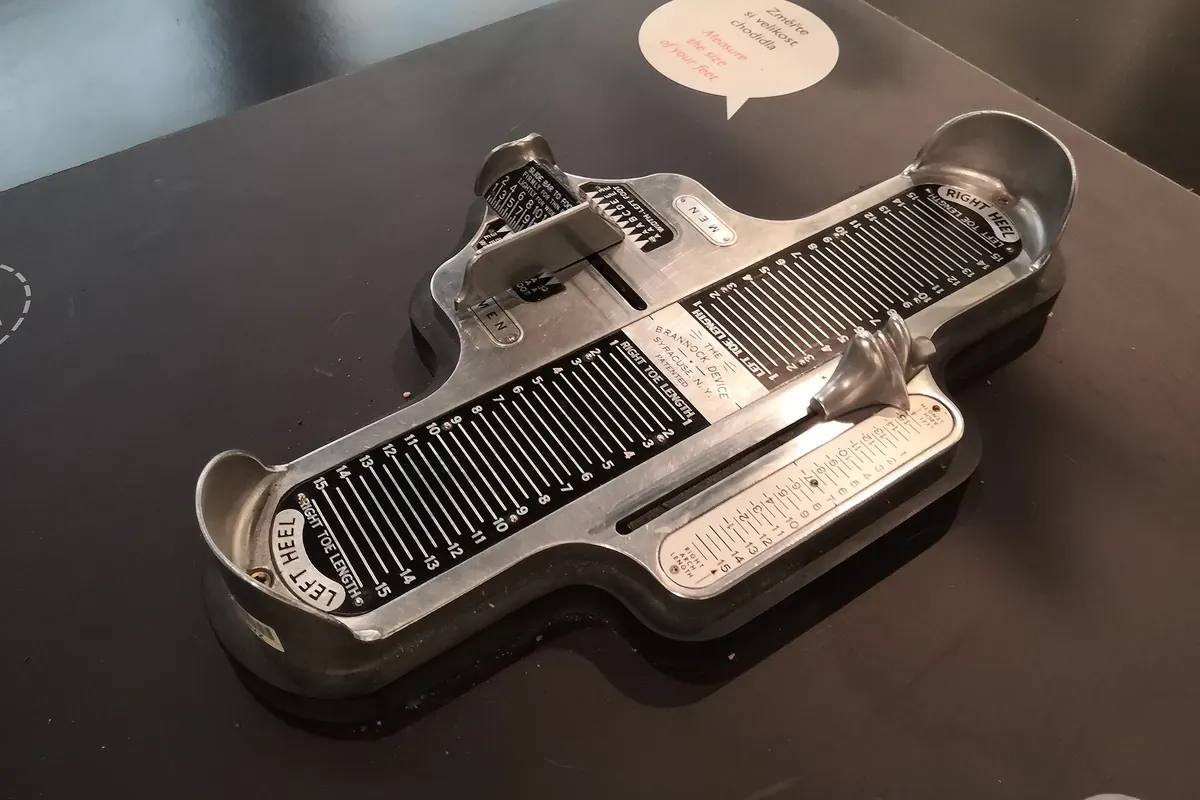
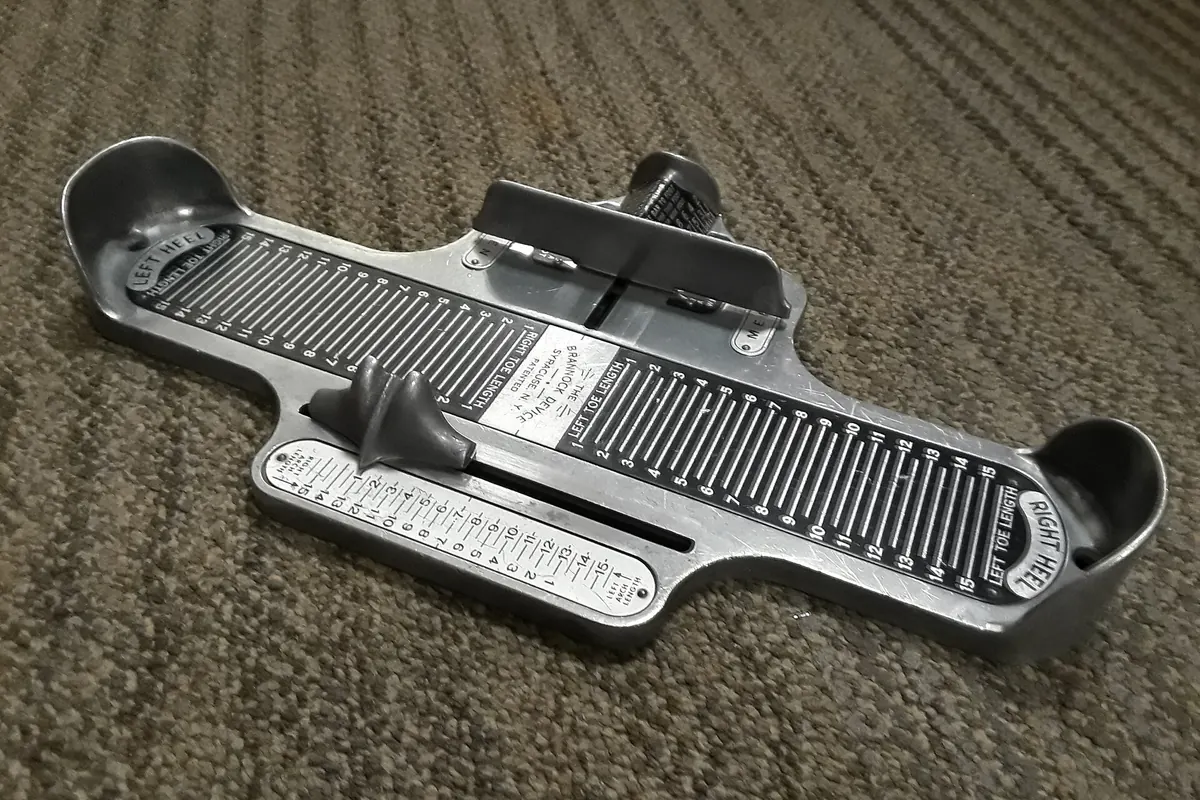
- Measure your foot in centimeters. Stand on a sheet of paper with your heel against a wall, mark your longest toe, and measure. Do it in the evening and measure both feet. Our foot measuring guide walks through it step by step.
- Find the row with the closest foot length. If you sit between two rows, note both.
- Read across to your US, UK and EU size.
- Adjust for the shoe. Some models run long, some narrow. The brand guides linked at the end tell you which way to lean.
Measuring beats memory. Feet often lengthen slightly over the years as arches relax, and plenty of adults are still buying the size they settled on a decade ago.
Men's shoe size chart
| US men's | UK | EU | Foot length (cm) |
|---|---|---|---|
| 6 | 5.5 | 38.5 | 24 |
| 6.5 | 6 | 39 | 24.5 |
| 7 | 6 | 40 | 25 |
| 7.5 | 6.5 | 40.5 | 25.5 |
| 8 | 7 | 41 | 26 |
| 8.5 | 7.5 | 42 | 26.5 |
| 9 | 8 | 42.5 | 27 |
| 9.5 | 8.5 | 43 | 27.5 |
| 10 | 9 | 44 | 28 |
| 10.5 | 9.5 | 44.5 | 28.5 |
| 11 | 10 | 45 | 29 |
| 11.5 | 10.5 | 45.5 | 29.5 |
| 12 | 11 | 46 | 30 |
| 12.5 | 11.5 | 47 | 30.5 |
| 13 | 12 | 47.5 | 31 |
| 14 | 13 | 48.5 | 32 |
| 15 | 14 | 49.5 | 33 |
A few patterns help you sanity-check any men's chart. From US 8 upward, the UK size is one below the US size, so a US 10 is a UK 9. Each half size adds about half a centimeter of foot length on this chart. The EU column doesn't move evenly: it sometimes steps by half a point and sometimes by a full point (40.5 to 41, then 41 to 42). That irregularity comes from rounding one system's steps into another's, and it is normal.
Women's shoe size chart
| US women's | UK | EU | Foot length (cm) |
|---|---|---|---|
| 5 | 2.5 | 35.5 | 22 |
| 5.5 | 3 | 36 | 22.5 |
| 6 | 3.5 | 36.5 | 23 |
| 6.5 | 4 | 37.5 | 23.5 |
| 7 | 4.5 | 38 | 24 |
| 7.5 | 5 | 38.5 | 24.5 |
| 8 | 5.5 | 39 | 25 |
| 8.5 | 6 | 40 | 25.5 |
| 9 | 6.5 | 40.5 | 26 |
| 9.5 | 7 | 41 | 26.5 |
| 10 | 7.5 | 42 | 27 |
| 10.5 | 8 | 42.5 | 27.5 |
| 11 | 8.5 | 43 | 28 |
| 12 | 9.5 | 44.5 | 29 |
On the standard chart, the women's UK size sits two and a half below the US size: a US women's 8 is a UK 5.5. Women's EU sizes run on the same European scale as men's, so an EU 40 is an EU 40 whichever side of the store it comes from.
Runner's tip: If your measurement lands between two rows, the deciding factor is the shoe, not the chart. Round down for roomy lifestyle sneakers, round up for running shoes, which need about a thumb's width in front of the toes for longer runs.
Converting between men's and women's sizes
Many sneakers are sold as unisex and listed in men's sizes only, so this conversion comes up all the time. On the standard chart the rule is simple: women's US = men's US + 1.5. A men's 8 is a women's 9.5; both sit at UK 7 and EU 41 in the tables above.
Adidas is the main exception. It uses a one-size gap, so on an Adidas page a men's 7 is a women's 8. If you convert with the standard rule on an Adidas unisex shoe, you will end up half a size off. Our Adidas sizing guide covers that scale in detail.
Two more practical notes. Women's sizes above 12 are hard to find, so women with longer feet often do better shopping men's sizes, which run higher. And men's and women's versions of a shoe can be built on different lasts, with women's often slightly narrower in the heel. A conversion gets the length right; it doesn't promise an identical fit.
How each sizing system works
Four numbering systems show up on shoe boxes, and they were never designed to line up neatly. Knowing how each one counts explains most conversion headaches.
US and UK: barleycorns
Both grew out of the old English barleycorn, a third of an inch, with one full size equal to one barleycorn and a half size equal to a sixth of an inch. The two systems start their count at different points, which is why the UK number is lower than the US number for the same foot. On real brand charts the steps get rounded to about half a centimeter per half size, as you can see in the tables above.
EU: Paris points
European sizes count Paris points of two-thirds of a centimeter, based on the length of the shoe's last rather than the foot. Because a Paris point is shorter than a full US size and longer than a half size, EU numbers can never map one-to-one onto US half sizes. That is where in-between labels like 42.5 or Adidas' 42 2/3 come from.
Centimeters, Japan and Mondopoint
Japanese sizing simply uses foot length in centimeters, and Mondopoint (common on ski boots) uses millimeters. These are the most honest systems because they describe your foot directly. That is why we put a centimeter column in every chart and why we suggest using it as your anchor when you cross brands.
Same size, different brands
Every major brand publishes its own chart, and they don't fully agree. Here is a US men's 9 on four brand charts:
| Brand chart | UK | EU | Foot length (cm) |
|---|---|---|---|
| Nike / standard | 8 | 42.5 | 27 |
| Adidas | 8.5 | 42 2/3 | 26.5 |
| New Balance | 8.5 | 42.5 | 27 |
| Asics | 8 | 42.5 | 27 |
Same US number, but the UK label shifts by half a size, Adidas uses its own thirds for EU, and Adidas maps a slightly shorter foot to the size. None of this is an error. Each brand converts from a different base, and each rounds differently. The safe habit is to choose by US size or foot length, never by matching a UK or EU label from one brand to another. Our brand size comparison tool lays the four charts side by side.
Width: the other half of the fit
Length gets the attention, but width causes as many returns. In US sizing, width is a letter code added after the length, and the letters mean different things for men and women.
| Sizing | Width code | Meaning |
|---|---|---|
| Men's | B | Narrow |
| Men's | D | Standard / Medium |
| Men's | 2E (EE) | Wide |
| Men's | 4E (EEEE) | Extra wide |
| Men's | 6E | Extra-extra wide |
| Women's | 2A (AA) | Narrow |
| Women's | B | Standard / Medium |
| Women's | D | Wide |
| Women's | 2E (EE) | Extra wide |
Notice that a D is the standard men's width but a wide women's width. That's why a woman with wide feet can often wear a men's shoe comfortably: converting to men's sizing gives her a D width automatically. Most sneakers are made in standard width only, so if you need a 2E or wider, look for models sold in multiple widths. Our shoe width chart explains how to measure and what each code feels like.
Half sizes, odd feet and between sizes
Half sizes exist for a reason, so use them. A full size is a big jump, roughly a centimeter of length in most charts, and choosing the wrong whole size to avoid a half size usually means either toe pressure or heel slip.
- One foot bigger than the other: very common. Always size for the larger foot and take up slack on the smaller one with lacing or a thin insole.
- Between sizes on the chart: round down in shoes known to run long or roomy, round up in shoes known to run narrow or short.
- Thick socks or orthotics: if you always wear them, measure with them on and expect to go up half a size in close-fitting models.
- Whole-size-only shoes: some slides, clogs and foam shoes come in whole sizes only. Half-size wearers usually round up.
Checking the fit when the box arrives
A chart can't feel the shoe for you, so give every new pair a quick check indoors, on a clean floor, before you wear it outside. Most retailers only accept returns on unworn shoes, and five minutes in the hallway tells you nearly everything.
- Toe room: stand up and press in front of your longest toe, which for many people is the second toe. Running shoes want about a thumb's width; casual sneakers can be a little closer.
- Width: the ball of your foot should sit at the widest part of the shoe with no hard pressure on the outside edge near the little toe.
- Heel: walk and climb a few stairs. A little movement is fine; a heel that lifts out of the collar with each step means the shoe is too long or too roomy.
- Flex point: rise onto your toes. The shoe should bend where your foot bends. If it creases well behind the ball of your foot, the size is probably too big.
If a pair passes on length but fails on width, don't fix it by going up a full size. You gain far more length than width. Look for a wider model or a version sold in a 2E or wider.
From the chart to the right pair
The chart tells you what size your foot is. The model tells you what size to buy. A Nike Air Force 1 and an Adidas Samba can both carry your chart size and fit a half to a full size apart, because one is roomy and the other is narrow.
Here's how that plays out. Say your foot measures 27.5 cm. The standard chart puts you at a US men's 9.5, UK 8.5, EU 43. In a true-to-size shoe like the Nike Dunk, that is your size. In the Air Force 1, which many wearers take half a size down, you would look at a 9. In a running shoe you plan to wear for long distances, stay at 9.5 and make sure you have that thumb's width in front. And on the Adidas chart the same 27.5 cm foot reads as a US 10, which is one more reason to use the brand's own chart whenever it exists.
So treat this page as step one. Once you have your base size, open the guide for your brand: Nike sizing, Adidas, New Balance or Asics. If you would rather type in a number and get the conversion instantly, our shoe size calculator uses the same data as these tables.
Frequently asked questions
How do I convert a men's shoe size to a women's size?
On the standard chart used by Nike and most retailers, add 1.5 to the men's US size: a men's 8 is a women's 9.5, and both read UK 7 and EU 41. Adidas is the exception and adds only 1, so an Adidas men's 7 is a women's 8. Always check which convention the product page uses.
Why is the UK size smaller than the US size for the same foot?
Both systems count in barleycorns of a third of an inch, but they start counting from different points, so the UK number comes out lower. On the standard men's chart a US 10 is a UK 9. For women the gap is larger: a US women's 8 is a UK 5.5. Brands round slightly differently, which is why Adidas lists a US men's 10 as UK 9.5.
Are EU shoe sizes the same for men and women?
Yes. European sizing uses one scale for everyone, based on Paris points of two-thirds of a centimeter, so an EU 40 means the same length in a men's or women's shoe. The shoes themselves may still differ in width and heel shape, because brands often build women's models on a narrower last. Check the model notes, not just the number.
Which column should I trust when charts disagree?
Trust foot length in centimeters first, then your US size. The centimeter column describes your actual foot, while UK and EU labels depend on how each brand converts. Our chart shows a US men's 9 as UK 8 on the standard chart but UK 8.5 on Adidas and New Balance charts. Measure your foot and match the length.
What does a D or 2E mean after a shoe size?
It is the width. In men's US sizing, D is standard, B is narrow, 2E is wide and 4E is extra wide. In women's sizing the scale shifts: B is standard, 2A is narrow and D is wide. A men's D and a women's D are both written the same, but for women it already counts as a wide fit.