How to Measure Your Feet at Home for the Right Shoe Size
Paper, a pen and a wall are all you need. Measure both feet in the evening, use the longer one and round up between sizes.
Quick answer
Tape paper to a hard floor against a wall, stand with your heel on the wall and mark the tip of your longest toe. Measure from the wall to the mark in centimeters. Do both feet in the evening, wearing the socks you will use, take the longer foot and round up to the next size on the chart.
To measure your feet at home, tape a sheet of paper to a hard floor against a wall, stand on it with your heel touching the wall, mark the tip of your longest toe, and measure from the wall to the mark in centimeters. Do both feet, in the evening, wearing the socks you will wear with the shoes. Use the longer foot, and if it falls between two sizes on the chart, round up.
That takes about ten minutes and gives you a far better starting point than the number printed in your old shoes. Below is the full method, including width, the mistakes that throw the result off, and how to turn centimeters into a size.
What you need
- A sheet of paper larger than your foot. Letter or A4 works for most adults; tape two sheets together for big feet.
- A pen or pencil you can hold straight up and down.
- A ruler or a rigid tape measure with centimeters. A floppy sewing tape is fine for width but awkward for length.
- A wall with a clean, square corner where it meets a hard floor.
- Tape to stop the paper sliding.
- The socks you plan to wear with the shoes.
- Ideally, a second person. Marking your own toe while standing straight is harder than it sounds.
Set up for an accurate reading
Measure late in the day. Feet swell a little after hours of standing and walking. An evening measurement reflects the foot you will actually be putting into shoes. If you are buying running shoes, measuring after a walk or easy run is even better.
Wear the right socks. Thin running socks and thick hiking socks can differ by half a size of space. Measure in whatever you will wear most with the shoe you are buying.
Use a hard floor. Carpet lets your heel sink and the paper buckle, which shortens the reading. Wood, tile or concrete gives a true number.
Stand, do not sit. Your foot lengthens and spreads under body weight. A seated measurement can come out several millimeters short.
How to measure foot length, step by step
- Place the paper. Put one short edge of the paper flush against the wall and tape it down so it cannot move.
- Stand with your heel to the wall. Step onto the paper with one foot, heel lightly touching the wall. Keep your weight spread evenly over both feet and look straight ahead rather than down at your foot.
- Mark the longest toe. Have your helper hold the pen vertically and make a small line just in front of your longest toe. For many people that is the second toe, not the big toe.
- Measure. Step off and measure from the edge of the paper at the wall to the mark. Read it to the nearest millimeter, for example 26.7 cm.
- Repeat with the other foot. Use a fresh sheet or a different color so you do not confuse the marks.
- Write both numbers down. Your size comes from the longer foot.
Fit tip: measure each foot twice. If the two readings differ by more than a few millimeters, something moved: the paper, your heel, or the angle of the pen. Do it a third time and use the two readings that agree.
No helper? Use a book
If you are measuring alone, stand with your heel against the wall as before, then slide a hardback book or a box flat along the floor until it touches the tip of your longest toe. Hold it square to the wall, step back carefully and draw a line along the book's edge. Measure from the wall to that line. It is easier than bending over to mark your own toe, and it keeps your posture upright, which keeps the reading honest.
The same trick works for children, who rarely stand still long enough for a pen. Have them stand tall with their heel to the wall, slide the book up to their toes, and measure. Kids' feet grow quickly, so remeasure every few months rather than relying on last season's size.
How to measure foot width
Width is measured across the ball of the foot, the widest part just behind your toes. This is the same spot shoe-store measuring devices use, and it is where width letters like D and 2E apply.
- Stand on a fresh sheet of paper with your full weight on the foot.
- Have your helper trace around your foot, keeping the pen upright and snug against the skin. A tilted pen adds width.
- Step off and find the widest point across the forefoot on the outline.
- Measure straight across that point, side to side, and write it down next to your length.
Because a tracing always adds a little, treat the width number as approximate. What matters is how it compares with your length: the same 10 cm width is narrow for a long foot and wide for a short one. Our shoe width chart explains what the letters mean once you know where you stand.
Turn your measurement into a shoe size
The charts below map foot length to US, UK and EU sizes on the standard chart used by Nike and many other brands. The centimeter column is the foot length for each size, so compare your measurement directly. Do not add extra room for your toes; the size already allows for it.
| US | UK | EU | Foot length (cm) |
|---|---|---|---|
| 6 | 5.5 | 38.5 | 24 |
| 6.5 | 6 | 39 | 24.5 |
| 7 | 6 | 40 | 25 |
| 7.5 | 6.5 | 40.5 | 25.5 |
| 8 | 7 | 41 | 26 |
| 8.5 | 7.5 | 42 | 26.5 |
| 9 | 8 | 42.5 | 27 |
| 9.5 | 8.5 | 43 | 27.5 |
| 10 | 9 | 44 | 28 |
| 10.5 | 9.5 | 44.5 | 28.5 |
| 11 | 10 | 45 | 29 |
| 11.5 | 10.5 | 45.5 | 29.5 |
| 12 | 11 | 46 | 30 |
| 12.5 | 11.5 | 47 | 30.5 |
| 13 | 12 | 47.5 | 31 |
| 14 | 13 | 48.5 | 32 |
| 15 | 14 | 49.5 | 33 |
| US | UK | EU | Foot length (cm) |
|---|---|---|---|
| 5 | 2.5 | 35.5 | 22 |
| 5.5 | 3 | 36 | 22.5 |
| 6 | 3.5 | 36.5 | 23 |
| 6.5 | 4 | 37.5 | 23.5 |
| 7 | 4.5 | 38 | 24 |
| 7.5 | 5 | 38.5 | 24.5 |
| 8 | 5.5 | 39 | 25 |
| 8.5 | 6 | 40 | 25.5 |
| 9 | 6.5 | 40.5 | 26 |
| 9.5 | 7 | 41 | 26.5 |
| 10 | 7.5 | 42 | 27 |
| 10.5 | 8 | 42.5 | 27.5 |
| 11 | 8.5 | 43 | 28 |
| 12 | 9.5 | 44.5 | 29 |
Find the row closest to your longer foot. If your number falls between two rows, take the larger size. A foot that measures 26.7 cm, for example, sits between a men's 8.5 (26.5 cm) and a men's 9 (27 cm), so order the 9.
Prefer not to read tables? Enter your measurement in our shoe size calculator and it will give you US, UK and EU sizes in one go. For the full range of conversions, see the shoe size chart.
When the chart is not the final answer
Your measured size is your true size. Whether a given shoe fits at that size depends on how the brand and the model are built.
Some popular sneakers run long, and most people size down in them. The Nike Air Force 1 is the classic example. Some run short or narrow and need half a size more. Many leather boots run long compared with sneakers. Brands also map lengths to sizes slightly differently: ASICS and New Balance charts do not line up exactly with Nike's.
So use your measurement in two steps. First, find your true size on the chart. Then check how the specific model fits and adjust. Our brand size comparison tool shows how the same foot length translates across brands.
Mistakes that skew the result
- Leaning the pen. A pen tilted under the toe marks short; tilted outward on a tracing, it adds width. Keep it vertical.
- Heel not touching the wall. Even a few millimeters of gap shortens the reading. Check before your helper marks.
- Looking down. Bending forward shifts weight to the toes and can change foot length. Stand tall.
- Measuring only one foot. Most people have one foot slightly longer than the other. You need the longer one.
- Using the morning number. Feet are at their smallest early in the day.
- Rounding down. Between two sizes, a slightly roomy shoe is fixable with laces or an insole. A short shoe is not.
Watch out: if your two feet differ by half a size or more, buy for the larger foot and add a thin insole or a thicker sock on the smaller side. Never squeeze the larger foot to suit the smaller one.
What a tape measure cannot tell you
Length and width are only two dimensions of a three-dimensional foot. Two people with identical numbers can still need different shoes.
Toe shape
If your second toe is the longest, or your first three toes are nearly level, pointed and tapered toe boxes will feel shorter than their size suggests. Rounded toe boxes suit these feet better.
Instep and volume
A high instep takes up vertical space. If shoes always feel tight across the laces even when length and width are right, look for models with more volume or a softer tongue instead of a bigger size.
Arch
Lower arches tend to let the foot spread and lengthen more when standing, which is another reason to measure under full weight. High arches usually measure shorter and narrower but may need more depth over the midfoot.
How much room to expect when you try shoes on
Once the new pair arrives, check it the same way every time. Stand up and feel for about a thumb's width of space, roughly 1 to 1.5 cm, between your longest toe and the front of the shoe. Running shoes should sit at the top of that range, everyday sneakers can be a little closer, and hiking boots need the full amount for downhill walking. The sides should touch your foot without pushing your toes together, and your heel should not lift when you walk.
When to measure again
Adult feet change more than most people expect. They tend to lengthen and widen slowly with age, and pregnancy and significant weight changes can alter them too, sometimes for good. If you have worn the same size for years and new shoes suddenly feel tight, measure again before blaming the brand. A fresh measurement every couple of years, or before a big purchase like running shoes or boots, keeps your starting point honest.
Frequently asked questions
Should I measure my feet with socks on?
Yes, wear the socks you plan to use with the shoes. Thin running socks and thick hiking or wool socks can differ by roughly half a size of space. If you buy for several uses, measure in your thickest regular socks and use thinner socks or an insole to take up slack when needed.
Do I add toe room to my foot length before using the chart?
No. On our charts the centimeter column is the foot length for each size, so compare your measurement directly. The shoe itself is built longer than your foot to leave toe room. Adding extra space yourself would push you up a size you do not need.
What if my two feet measure different sizes?
Buy for the longer foot. A difference of a few millimeters is normal and usually unnoticeable. If the gap is half a size or more, size to the larger foot and add a thin insole or thicker sock on the smaller side so it does not slide around.
Why is my measured size different from the size I wear?
Many people buy shoes half a size large out of habit, and some popular models run long or short. Feet also change with age, weight and pregnancy. Your measured size is your true size; use it as the starting point, then adjust for the brand and model you are buying.
Is a home measurement as accurate as a store device?
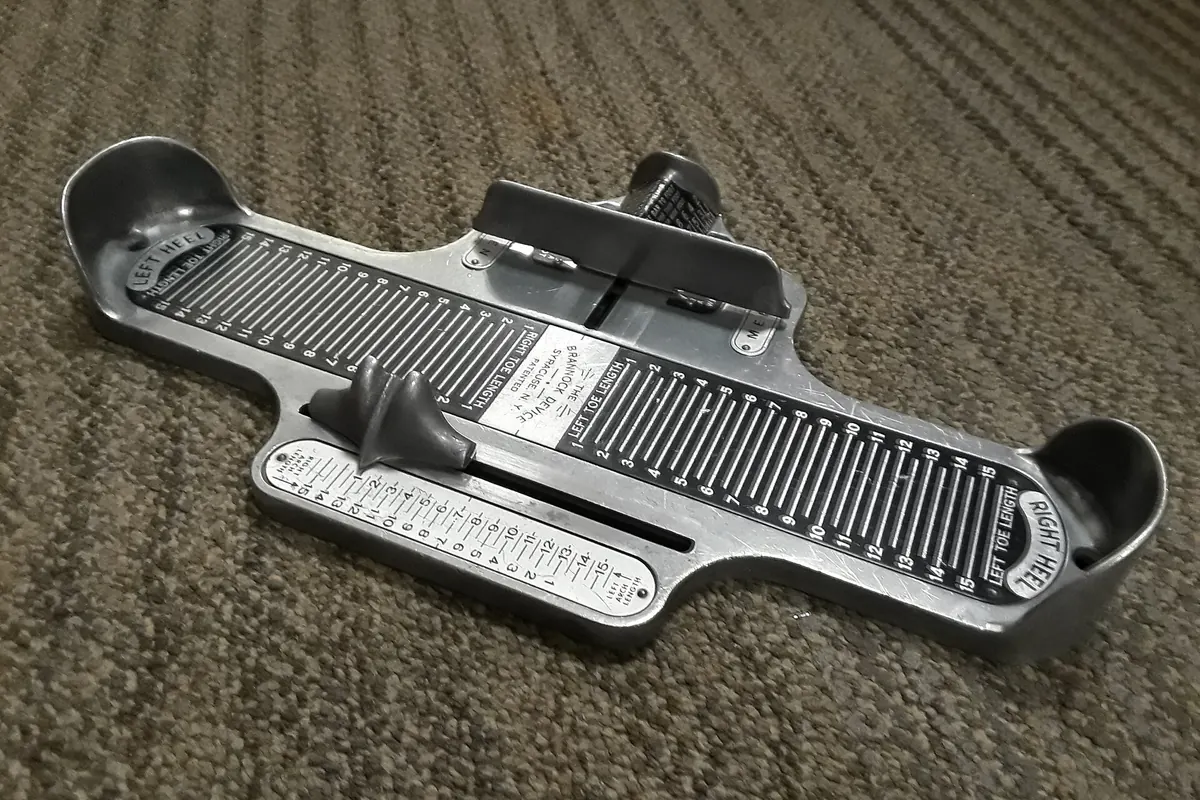
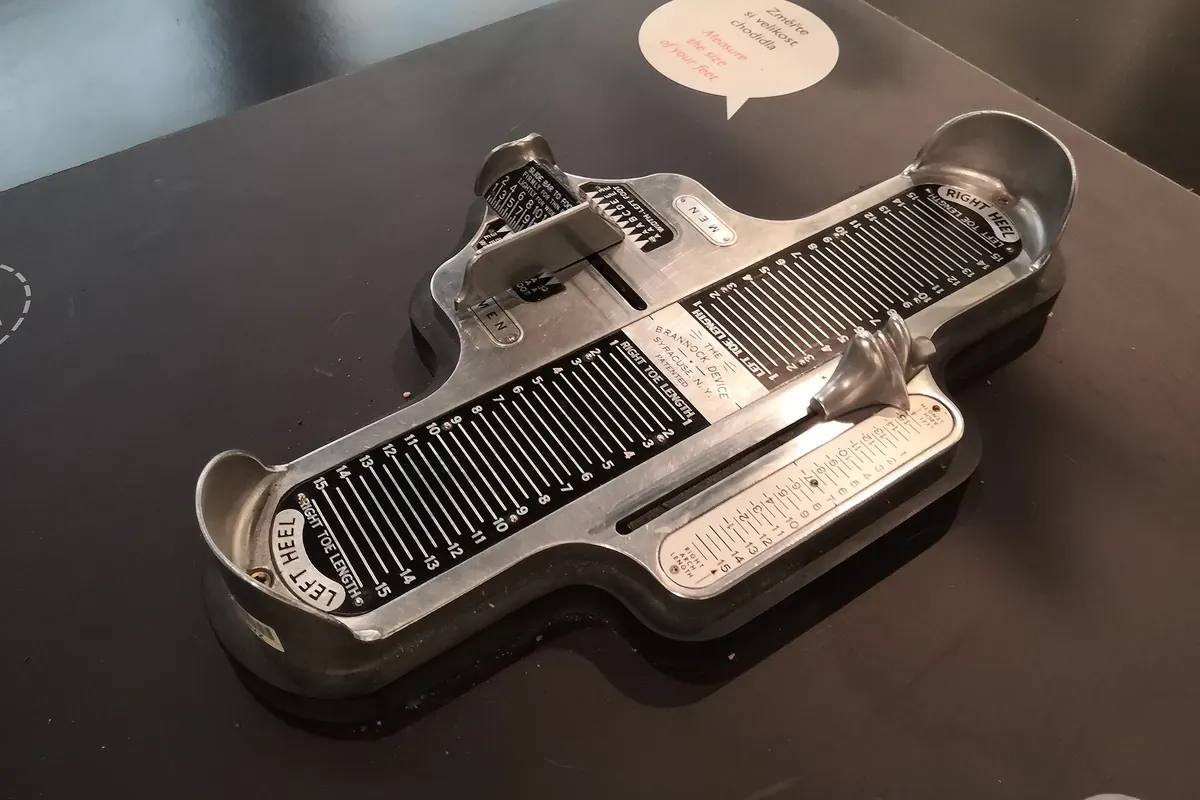
For length, a careful wall-and-paper measurement is usually within a few millimeters, which is enough to pick a size. Width from a tracing is less precise because the pen adds a little. A store measuring device also gives arch length, which helps when your toes and arch point to different sizes.