How Should Sneakers Fit? A Practical Checklist for the Right Size
A thumb of toe room, a calm heel, comfortable sides and no strain on the laces. Use this checklist to test sneakers in a store or at home, and to choose between sizes.

Quick answer
Sneakers should leave about a thumb's width of space in front of your longest toe, hold your heel with only a slight lift, and touch the sides of your foot without squeezing. Test them standing, with your own socks, late in the day. If you are between sizes, take the roomier one and adjust the laces.
A well-fitting sneaker leaves about a thumb's width of space in front of your longest toe, holds your heel without digging in, and touches the sides of your foot without squeezing. Nothing should rub, slip or go numb. If a pair needs "breaking in" to be wearable, the size is probably wrong.
Those four checks (toe room, heel, width and top of the foot) catch almost every bad fit. This guide walks through each one, then covers the habits that stop you buying the wrong size online: how to try shoes on, what to do between sizes, and why the same number changes from brand to brand.
The quick checklist
- Toes: a thumb's width (roughly half an inch) of space past your longest toe, which is not always the big toe.
- Heel: held firmly, with only a slight lift as you walk. A fingertip should just slide in behind it.
- Sides: the widest part of your foot sits at the widest part of the shoe, with no pinching and no bulging.
- Top of the foot: the laces close without strain, and the tongue does not dig in.
- Walking: no rubbing, no sliding, no pressure points after ten minutes.
The rest of this page explains how to test each one.
Toe room: the front of the shoe
Stand up, with your weight on both feet, and press down on the front of the shoe with a thumb. You want a thumb's width between the longest toe and the end. That space is not wasted. Your foot slides forward with every step, and it spreads as you push off.
Too little room and the toes jam on every stride, which leads to bruised nails and sore joints. Too much and the shoe flaps, creases in the wrong place and tires your feet as they work to hold on.
Heel fit: the back of the shoe
The heel counter should cup your heel without gaps, and the collar should sit below the ankle bone. A common test is to slip a fingertip between your heel and the back of the shoe: it should go in, but only just. If you have to force it, the shoe is short. If you can wiggle a finger freely, it is too big.
Walk a few paces and watch for slippage. A slight lift is normal in stiff new shoes. If the heel pops out on each step, the shoe is too long or too loose, and lacing tricks will only help so much.
Runner's tip: If a shoe is right in length but loose at the heel, use the extra top eyelet to create a heel lock. It is the same technique runners use to stop black toenails on long downhills.
Width and volume: the part most people skip
Length is only half of fit. Width and volume decide whether a shoe feels comfortable or just the right number. Press along the outside of the forefoot: you should feel the shoe edge about where your foot ends. If you feel bone pressing against the upper, the shoe is too narrow. If you can pinch a fold of loose material across the toe box, it is too wide.
Volume is the height of the shoe over the top of your foot. A high instep needs more of it, and a flat foot needs less. When the laces cannot close properly, or the eyelets pull tight, the shoe lacks volume.
Sizing up is the usual reflex for a tight shoe, and sometimes it works. If it does not, the answer is a different model or a wider version, not a bigger number. Our shoe width chart explains the letter codes, and the wide feet guide has brand-by-brand picks.
| Width letter | Meaning |
|---|---|
| B | Narrow |
| D | Standard / Medium |
| 2E (EE) | Wide |
| 4E (EEEE) | Extra wide |
| 6E | Extra-extra wide |
| Width letter | Meaning |
|---|---|
| 2A (AA) | Narrow |
| B | Standard / Medium |
| D | Wide |
| 2E (EE) | Extra wide |
How to test sneakers properly
- Bring your real socks. The thickness of the sock changes the fit by up to half a size.
- Try them on late in the day. Feet swell through the day, so afternoon or evening gives you the honest size.
- Stand, then walk. Sitting hides problems. Your foot lengthens and widens under your weight.
- Lace them fully. A pair half-laced always feels fine.
- Try both feet. Most people have one foot slightly larger than the other, so choose the size for the bigger one.
Between sizes: go roomier, then fix it
If you are torn between two sizes, the larger one is usually the better bet. A shoe that is a touch loose can be fixed with lacing, a thicker sock or an insole. A shoe that is a touch tight can only be returned. The exception is a shoe that is very roomy by design, such as certain court classics, where the smaller size is often the right call.
When a brand sells no half sizes, take the whole size that leaves the heel secure, and use the lacing to adjust the rest.
Why the same size fits differently by brand
A size 10 is not a measurement. It is a label, and each brand builds its own lasts around it. Even within one brand, a slim model and a roomy model can feel a full size apart. A few examples from this site's own guides:
- The Adidas Samba is narrow and wants your usual size or half up, while many other Adidas classics run roomy.
- The Nike Dunk is close to true to size, but the Air Force 1 is roomier and often goes half a size down.
- A brand's chart can change by model, so check the individual guide when one exists.
Use our brand size comparison to see how popular scales line up, then check the specific model before you buy.
Common fit problems and what they mean
- Heel blisters: the heel is slipping, or the collar is rubbing the Achilles. Try a heel lock, a thicker sock or a smaller size.
- Pain at the little toe: the forefoot is too narrow. Try a wider model, not just a longer one.
- Numb toes: pressure from the top or sides. Loosen the laces over the forefoot, or choose a model with more volume.
- Pressure on the top of the foot: a thick tongue or tight eyelets. Lace more loosely across the instep, or skip an eyelet.
- Toes hitting the front on downhills: the shoe is short, or the heel is loose and your foot is sliding forward.
- Arch ache: the arch support sits in the wrong place for you. A different insole or model usually fixes it.
Lacing fixes that really work
Lacing is the cheapest tuning tool you have. Skipping an eyelet over a tender spot removes pressure at no cost. A heel lock stops slipping without squeezing the forefoot. Lacing only the lower eyelets loosely and the upper ones snugly gives toes room while keeping the ankle secure.
These tricks refine a good fit. They cannot rescue a shoe that is the wrong length, so do not use them as an excuse to keep a bad size.
Will sneakers stretch?
Only a little, and mostly leather. Mesh, knit and synthetic uppers barely change, and suede softens but does not grow much. Do not buy a shoe that is uncomfortable in the first ten minutes in the hope it will loosen up. A shoe should feel decent straight out of the box, and then improve a little with wear.
Warning: Numbness, pinching or a toe pressed against the front are signs the size is wrong. They are not signs of a shoe that needs breaking in.
Fit by shoe type
- Running shoes: more toe room than casual shoes, since feet swell and slide forward when you run. Many runners go up half a size from their casual size.
- Court and terrace classics: flat soles and thin uppers, so the fit is more exact. Test the heel and sides carefully.
- Basketball shoes: a firm heel and midfoot matter most. See our basketball shoe fit guide.
- Boots: a different set of rules, with more heel lift allowed. Read how boots should fit.
Do you have a sizing problem or a model problem?
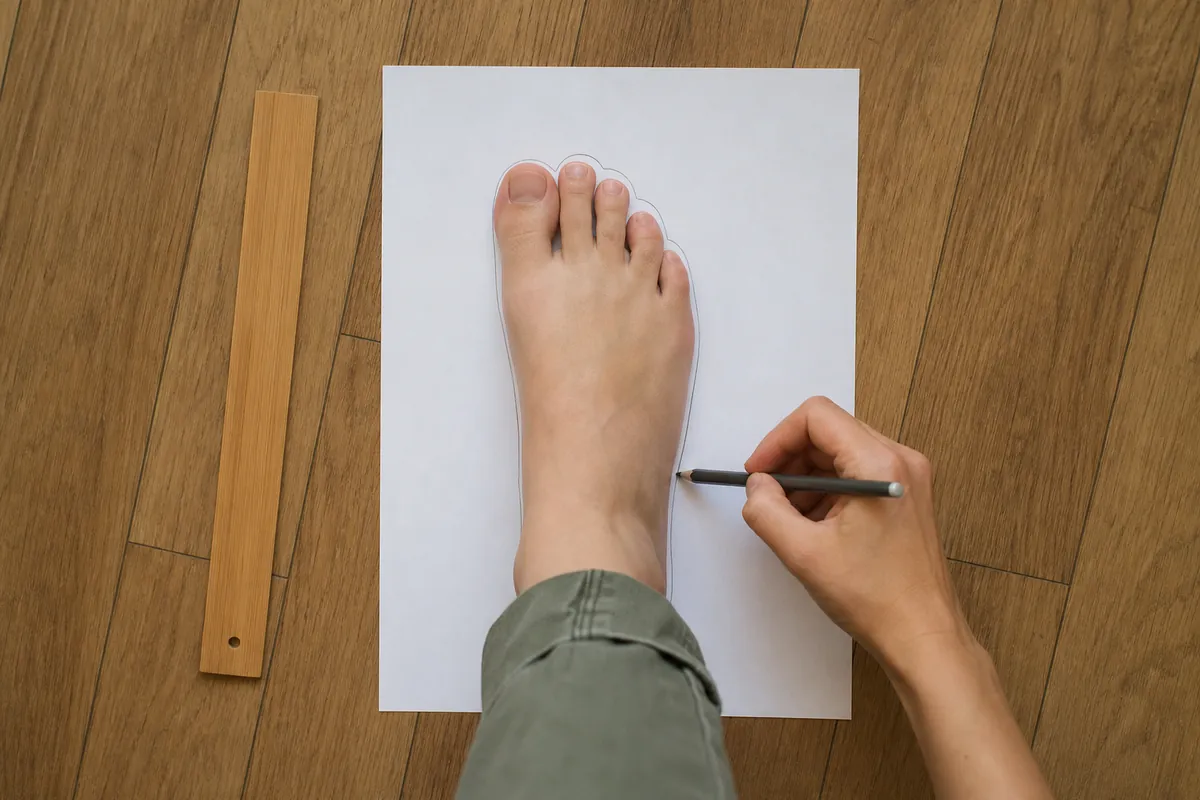
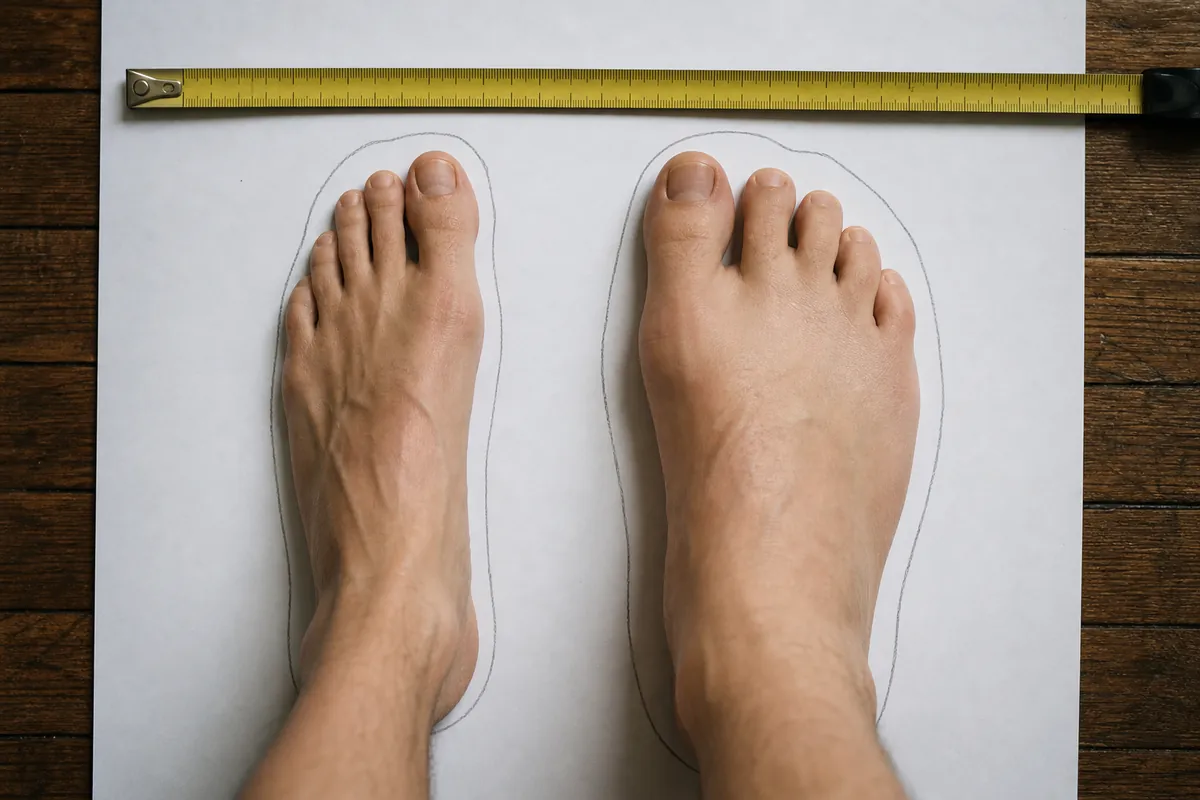
If every pair feels tight or loose in the same way, your base size is probably off. Measure your feet and work from the foot length in the chart. If only certain models are off, the model is the issue and you should switch. Our guide to measuring your feet shows how to get a reliable number, and the shoe size calculator turns it into a starting size.
If you wear a size that is half off in some shoes and perfect in others, you have simply found the shoes that suit your feet's shape. It is not a flaw.
Our recommendation
Judge a sneaker by feel, not by the number. Look for a thumb's width at the toes, a calm heel, room at the sides and a lace that closes without strain. When two sizes tempt you, take the roomier one and fix the details with lacing. When a model never fits right, switch to one built for your foot shape.
Frequently asked questions
How much room should you have at the front of sneakers?
About a thumb's width, or roughly half an inch, between your longest toe and the end of the shoe, measured while you stand. Your longest toe may be the second toe, not the big one. Less than that and your toes will jam when you walk; much more and the shoe will feel sloppy.
Should sneakers be tight or loose at first?
Neither. They should feel secure but comfortable straight out of the box, with no pinching, numbness or heel slip. A small amount of stiffness in leather is normal, but pain is not. Sneakers do not stretch much, so buying them tight and waiting for them to loosen is a mistake.
Should I size up for sneakers?
Only if your current size is tight in length or width. A slightly roomier shoe can be adjusted with lacing and thicker socks, while a tight one cannot. Some models run big by design, so check that model's guide first. If a shoe only pinches at the sides, a different model or width is often better than a bigger size.
How can I tell if my sneakers are too big?
Look for heel slipping when you walk, a crease that forms behind the ball of your foot, and more than a thumb of space at the toes. If you can wiggle a finger freely behind your heel, the shoe is too large. Thicker socks or an insole can help a little, but a smaller size is better.
Should both feet fit the same size?
They often do not. Most people have one foot slightly longer or wider than the other, so always try both shoes and choose the size that suits the larger foot. You can fix a small gap on the smaller side with lacing, but you cannot fix a shoe that is too small.