How Should Basketball Shoes Fit? A Practical Checklist
Snug heel, a thumb of toe room and no side pressure. Here are five fit checks, plus width, break-in and what to do when your heel slips.
Quick answer
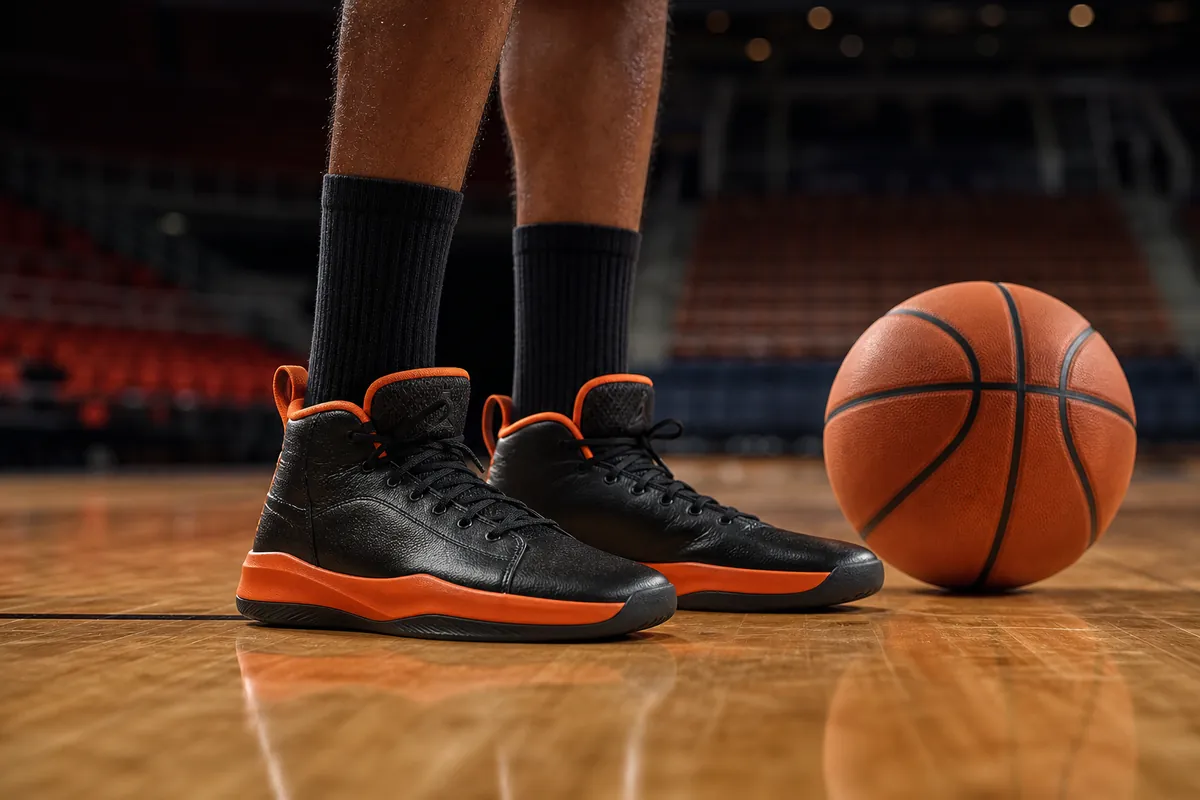
Basketball shoes should fit snug but not tight: heel locked in, about a thumb's width of space past your longest toe, and no pressure along the sides. Try them with game socks, test stops and cuts, and judge by feel rather than the size number, since fit varies by brand and model.
Basketball shoes should fit snug but not tight: your heel locked in, a thumb's width of space past your longest toe, and no pressure along the sides. Order your usual size as a starting point, then judge by feel, since fit varies a lot between brands and models.
A basketball shoe has a harder job than a lifestyle sneaker. You stop, cut, jump and land, and any loose space inside becomes sliding. Use the checks below to tell a good fit from a risky one before you take a pair onto the court.
The five checks of a good fit
- Heel: locked, with little vertical lift when you walk or jog.
- Toes: about a thumb's width in front of the longest toe, and no jamming when you stop hard.
- Midfoot: snug and supported, with no pressure points.
- Width: no squeezing at the little toe, no side-to-side slide.
- Movement: your foot should stay put when you shuffle, jump and cut.
If a shoe passes all five, it is the right size, even if the number is different from what you usually wear.
Snug, not strangled
Think of a firm handshake. The shoe should hold the foot without cutting off circulation. If your foot slides forward during a stop, the shoe is too big or poorly laced. If your toes go numb or your little toe aches, it is too narrow or too short.
Try basketball shoes with the socks you play in. A thick athletic crew takes up noticeable space, and trying shoes with thin dress socks leads to a size that feels perfect in the store and tight on the court.
How much toe room do you need?
Aim for roughly a thumb's width, about half an inch, between your longest toe and the front of the shoe, measured while standing. Your foot lengthens and spreads under body weight and swells during play, so a shoe that is flush with your toe when sitting will feel short after the first quarter.
Check it dynamically, too. Walk, shuffle and do a few hard stops on a hard floor. Your toes should not hit the end of the shoe when you decelerate.
Fit check: Lace the shoe fully, stand with your weight evenly spread, and press down at the front. If you can barely feel the end of the shoe past your longest toe, the pair is probably too short.
Heel lock matters most
The heel is the anchor. If it lifts as you walk, expect blisters and a loose, unstable feel on the court. A little movement is normal in a new pair with a stiff collar, but constant slipping is not.
Before you size down to fix it, try these:
- Use the top eyelet for a runner's loop, also called a heel-lock lacing.
- Lace snugly through the ankle rather than only the forefoot.
- Check that your socks are the right thickness.
- If the shoe has a removable insole, try one with a little more heel cup.
If the heel still slips after all that, the shoe is too big or the heel shape does not suit your foot.
Width: narrow, standard and wide
Basketball models differ more in width than most shoes. Some players have to avoid certain signature lines because of a narrow, tapered shape, while others have a wide-foot-friendly build. The key sign is the little toe: if it presses against the side wall, you need a wider shoe or a different model. Adding length does not fix width.
| Width | Men's code | Women's code |
|---|---|---|
| Narrow | B | 2A (AA) |
| Standard / Medium | D | B |
| Wide | 2E (EE) | D |
| Extra wide | 4E (EEEE) | 2E (EE) |
Many brands sell basketball shoes in a standard width only, and wide sizes may be limited to certain models. If you are not sure whether you have wide feet, our shoe width chart and wide feet guide help you check. Wide-footed players can also look at mesh and knit uppers, which usually give more than leather.
Low, mid and high tops
Cut changes support and fit but not the length. A high-top adds ankle coverage and a snugger collar, and the heel often feels more secure. A low-top gives more freedom of movement, but more room for the heel to move if the size is loose. Mids sit in between. Most players keep the same size across cuts of the same model, though a tall collar can make a borderline pair feel tighter around the ankle. Check the collar if you have a high instep or thick ankles.
Brands differ: one size does not fit all
Do not assume a 10 in one brand is a 10 in another. Nike's signature lines have long had a mix of narrow and roomy fits, and the same model can feel different from one season to the next. Some models are known for being narrow through the midfoot, while newer releases have become more accommodating for wide feet. Adidas, Under Armour, Puma and other brands each use their own lasts.
If you know your size in a different Nike shoe, our guides can help translate: see the Dunk and Air Force 1 pages for lifestyle reference points, and the brand size comparison for cross-brand differences. Treat these as starting points rather than promises, because performance shoes are cut differently from lifestyle sneakers.
Fit by playing style
The ideal fit shifts a little depending on how you play. Guards who rely on quick cuts and sudden stops benefit most from a close, one-to-one fit, because a tight shoe transfers every change of direction. Bigger players who land hard from rebounds often prefer a bit more toe room and a roomier forefoot, since impact pushes the foot forward. Neither group should accept heel slip.
If you play outdoors on rough concrete, you might want slightly more room too. Hot pavement makes feet swell faster, and the extra half size can mean the difference between a good session and a blister.
Insoles, orthotics and thick socks
Anything you add inside the shoe takes up volume. A thicker aftermarket insole or custom orthotic can turn a good fit into a tight one, so test the shoe with whatever you will actually play in. Many players find that a half size up is needed when using orthotics, while thin socks may allow a closer fit. Take the shoe off the insole and stand on it to compare your foot outline with the insole. If your foot spills over the edges, the shoe is too narrow.
Buying for growing kids
Parents often buy a size or two up so the shoe lasts longer. In basketball this is a bad trade. A shoe that is too big lets a young foot slide on stops and invites ankle twists and blisters. A better rule is about a thumb's width of room, which means one half size up at most, and a new pair when the toe gap disappears. Check fit every few months during growth spurts.
Trying on shoes the right way
- Shop in the afternoon or evening, when your feet are largest.
- Bring your game socks and any insoles or braces.
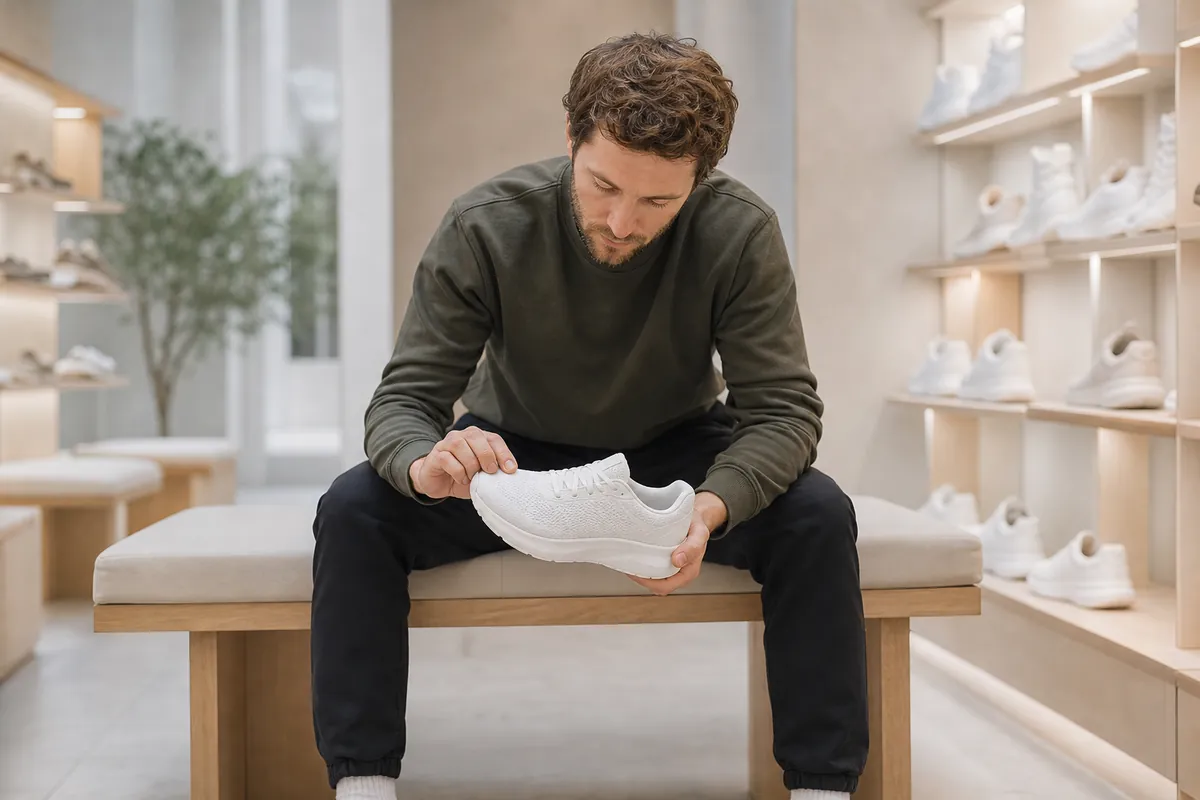
- Lace the shoes fully, using every eyelet.
- Stand, walk, then do a few quick shuffles and stops.
- Check both feet, because one is usually larger.
If you are buying online, order from a seller with free returns and test the shoes indoors on a clean floor. Many stores will not accept returns on shoes worn outside, so check the policy first.
Break-in without wrecking your feet
New basketball shoes feel stiff, and that is normal. Break them in gradually: wear them around the house, then in shooting practice, before using them in a game. Breaking in softens the upper and molds the collar to your ankle, but it should improve comfort, not fix a bad fit. If a shoe is painful from the first minute, return it.
How to measure your feet for basketball shoes
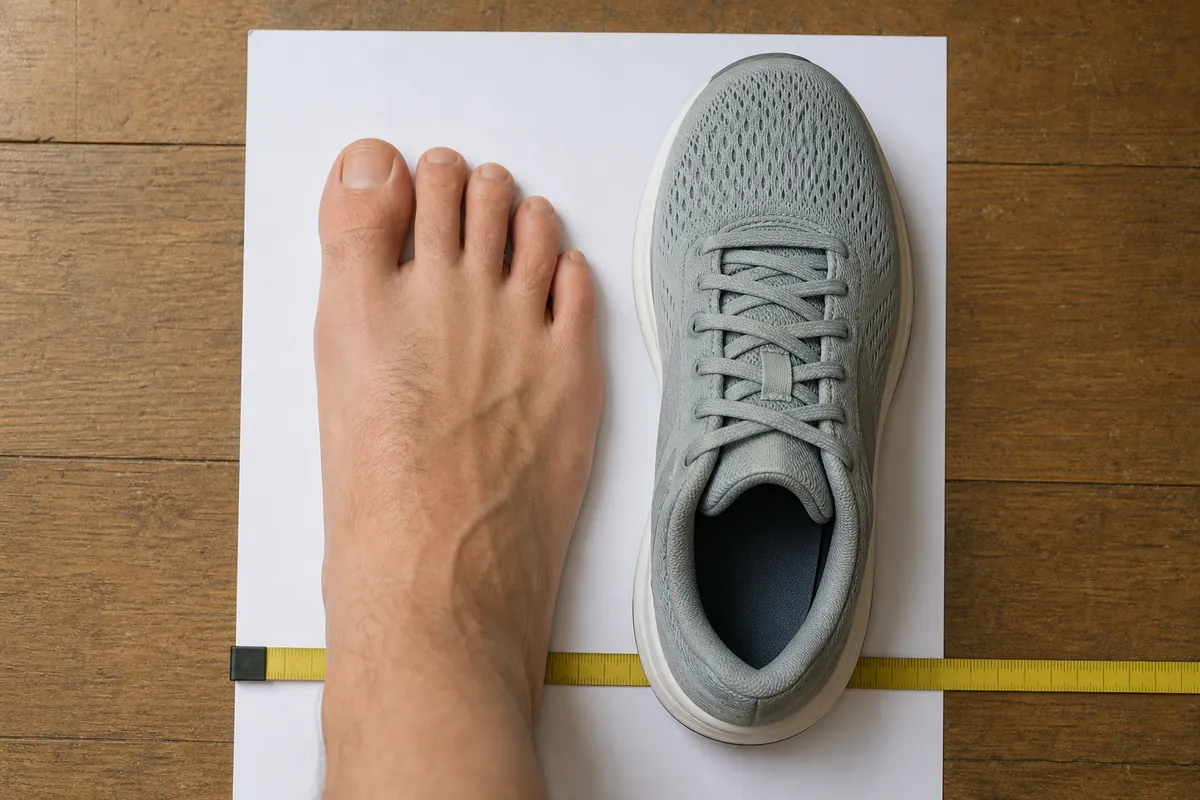
Measure in the evening when your feet are at their largest. Stand on a sheet of paper with your heel against a wall, mark your longest toe, and measure the distance in centimeters. Measure both feet and use the larger. Then check width across the ball of the foot. Our how to measure your feet page gives the step-by-step method, and the standard chart below shows the length for each size.
| US men's | UK | EU | Foot length (cm) |
|---|---|---|---|
| 6 | 5.5 | 38.5 | 24 |
| 6.5 | 6 | 39 | 24.5 |
| 7 | 6 | 40 | 25 |
| 7.5 | 6.5 | 40.5 | 25.5 |
| 8 | 7 | 41 | 26 |
| 8.5 | 7.5 | 42 | 26.5 |
| 9 | 8 | 42.5 | 27 |
| 9.5 | 8.5 | 43 | 27.5 |
| 10 | 9 | 44 | 28 |
| 10.5 | 9.5 | 44.5 | 28.5 |
| 11 | 10 | 45 | 29 |
| 11.5 | 10.5 | 45.5 | 29.5 |
| 12 | 11 | 46 | 30 |
| 12.5 | 11.5 | 47 | 30.5 |
| 13 | 12 | 47.5 | 31 |
| 14 | 13 | 48.5 | 32 |
| 15 | 14 | 49.5 | 33 |
Signs your basketball shoes do not fit
- Too small: toes touch the front when you stop, the little toe aches, or toenails bruise.
- Too big: your foot slides forward on stops, your heel lifts, or you get blisters from friction.
- Too narrow: numbness, hot spots on the sides, or a bulging upper.
- Too wide: the foot shifts sideways when you cut and you have to lace extremely tight.
The bottom line
A good basketball fit is snug at the heel and midfoot, with room for your toes and enough width that nothing pinches. Start with your usual size, check the five fit points, and trust how the shoe feels when you move. If you are between sizes and play hard, the larger size with good lacing usually works better than a shoe that is slightly too short. And when it is possible, try the pair on in person with your game socks.
Finally, remember that a fit that feels right in week one should still feel right in week eight. Cushioning compresses and uppers soften, so a pair that is only just comfortable on day one may become loose, while a pair that is clearly too tight will not improve. Re-check your heel lock and toe room after a month of regular play, and replace shoes once the midsole is flat or the collar stops holding your ankle.
Frequently asked questions
Should basketball shoes be tight or loose?
Neither. They should be snug, with your heel locked, your midfoot supported and no sliding when you stop or cut. They should not squeeze your toes or numb your feet. A good test is whether your foot stays put during hard stops while your toes still have a little space to move.
Should I size up in basketball shoes?
Only if the shoe is too short or too narrow at your usual size. Many players go half a size up for extra toe room or wide feet, especially in narrow signature lines. If the heel starts to slip, fix it with lacing first before you size down. Choose by feel, not just the number.
How much room should be in front of my toes?
About a thumb's width, roughly half an inch, between your longest toe and the front, measured while standing. Your foot lengthens under weight and swells during play, so a shoe that fits flush while sitting will feel short on court. Test with hard stops to make sure toes do not jam.
What if my heel slips in basketball shoes?
Try a runner's loop with the top eyelet, lace firmly through the ankle, check your sock thickness and consider a better-fitting insole. If the heel still lifts after that, the shoe is probably too big or does not match your heel shape. Size down or try a different model.
Do high-tops fit differently from low-tops?
The length is usually the same, so most players keep one size across cuts. High-tops tend to feel more secure at the heel and ankle, while low-tops give more freedom but can allow more heel movement. A tall collar may feel tighter if you have a high instep or thick ankles.