Nike Dunk Sizing: Do Dunks Run Big, Small or True to Size?
Regular Dunks follow Nike's chart. The SB Dunk Low does not. Here's how every Dunk version fits and how it compares to the Air Force 1 and Jordan 1.
Quick answer
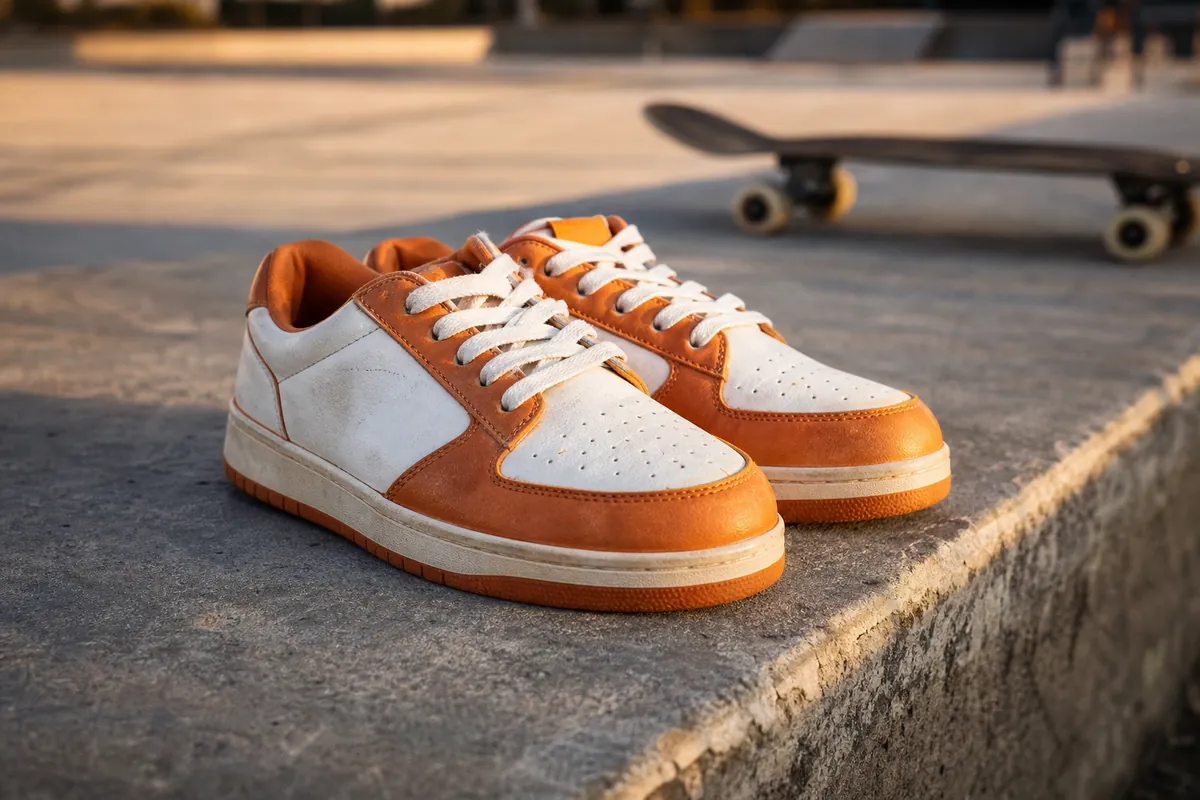
Nike Dunk Lows and Dunk Highs fit true to size, so order your normal Nike size. The exception is the SB Dunk Low, whose thick tongue and extra padding make it about half a size snugger: go half a size up unless your feet are narrow. The SB Dunk High fits true to size.
- Fit
- True to size
- Width
- Standard width
- Our advice
- Order your usual Nike size in the Dunk Low and High; go half a size up in the SB Dunk Low or if you have wide feet.
Nike Dunks fit true to size. The Dunk Low and Dunk High follow Nike's standard chart closely, with a balanced shape that is neither roomy nor tight, so your measured Nike size is the right order for most feet.
The one big exception is the skateboarding version. The SB Dunk Low is packed with extra padding and a thick tongue, and most people need half a size up to get the same comfort. A few special releases also drift slightly, which we cover below.
Why regular Dunks are easy to size
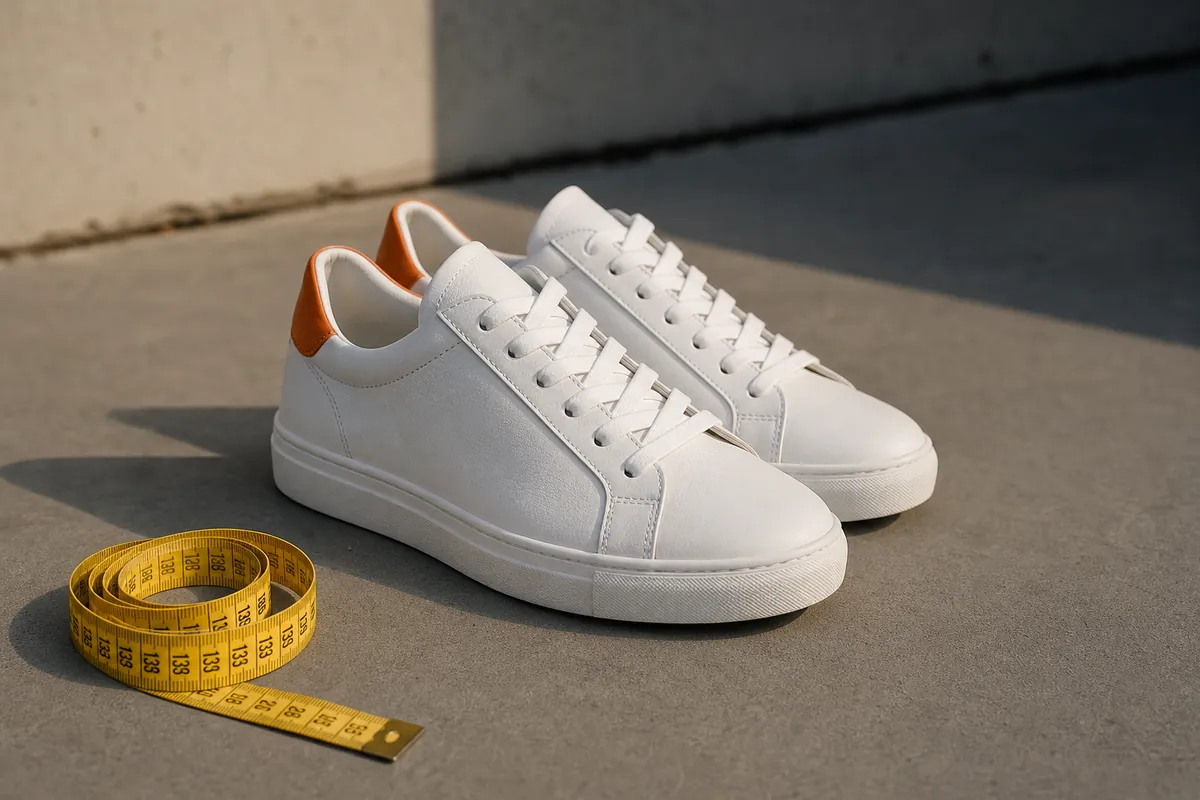
The Dunk started life in 1985 as a college basketball shoe, and it still uses a fairly traditional court last: a moderate toe box, a snug heel and a midfoot that responds well to the laces. There is nothing extreme about it. At your true size you should have around a finger's width of space past your longest toe and light contact along the sides of the forefoot.
That middle-of-the-road fit is why the Dunk is a good reference shoe. If a Dunk Low fits you well, you can use that number to work out your size in the rest of Nike's catalog, including Jordans and Air Force 1s.
Socks matter more than people expect with Dunks, because the interior has little spare volume. Try them on with the socks you will actually wear. A thick crew sock can take up as much room as half a size, which is why some people who wear heavy socks in winter keep a half-size-larger pair for the colder months.
Fit check: Lace the shoe fully, stand up and press the toe cap. If you can fit roughly the width of your index finger between your longest toe and the end, the length is right. Less than that and you need the next half size.
Dunk Low vs Dunk High
Both cuts share the same sizing, so order the same number in each. The difference most wearers notice is in the forefoot: the Dunk High tends to feel a little more accommodating across the widest part of the foot, while the Low sits closer along the sides. It is a small difference, not a reason to change sizes.
The High also has a taller, padded collar. If you have a high instep, loosen the top two eyelets rather than going up in length. The heel lockdown on the High is good enough that you will not lose security.
The SB Dunk: where your size changes
SB Dunk Low
Nike SB built the skate Dunk for impact and board feel, which means a puffy tongue, a thickly padded collar and a Zoom Air unit in the insole. All of that material sits inside the same outer shell, so there is simply less room for your foot. Most wearers describe pressure along the outside of the forefoot, near the little toe, at their usual size.
The common consensus is half a size up for average and wide feet. If your feet are narrow and you like a locked-in feel, your true size can work, and the padding will fill space you would otherwise have to fill with laces. Many skaters also lace SBs a little looser than regular Dunks, since the tongue already does a lot of the holding.
SB Dunk High
Here is the surprise: the half-size bump does not carry over to the high-top. The SB Dunk High still has plenty of padding, but the extra height gives the foot more room to settle, and most people wear their true size. If you are new to SB Highs, start at your regular Nike size. Wide feet can consider half up if the forefoot feels tight after a few wears.
SB collaborations
Collabs mostly follow the SB Dunk Low rule. A few are known for running even snugger because of extra-thick padding, and some wearers with wide feet go a full size up in those. Others, with thinner tongues or canvas uppers, feel slightly less tight. When in doubt on a hyped SB release, half a size up is the safer bet, because resale returns are rarely an option.
Don't assume: A size that fits in regular Dunks will often feel tight in an SB Dunk Low. Check the box label or product name for "SB" before you order.
Special releases that fit a little differently
Most Dunk variants keep the standard fit, but wearers report a few patterns worth knowing:
- Dunk Low Premium: generally true to size, though some pairs are reported to feel slightly short. If you are between sizes, go up.
- Dunk Low QS: often described as snugger in the forefoot. Wide feet should consider half a size up.
- Dunk Low SP: slightly roomier through the forefoot than a general release.
- Dunk Low Retro SE and textile uppers (tweed, corduroy, suede panels): true to size, sometimes a touch snug when new. Fabric uppers give a little with wear.
- Women's Dunk Low: same shape, women's sizing. Convert first, then order your usual Dunk size.
Dunk vs Air Force 1 vs Air Jordan 1
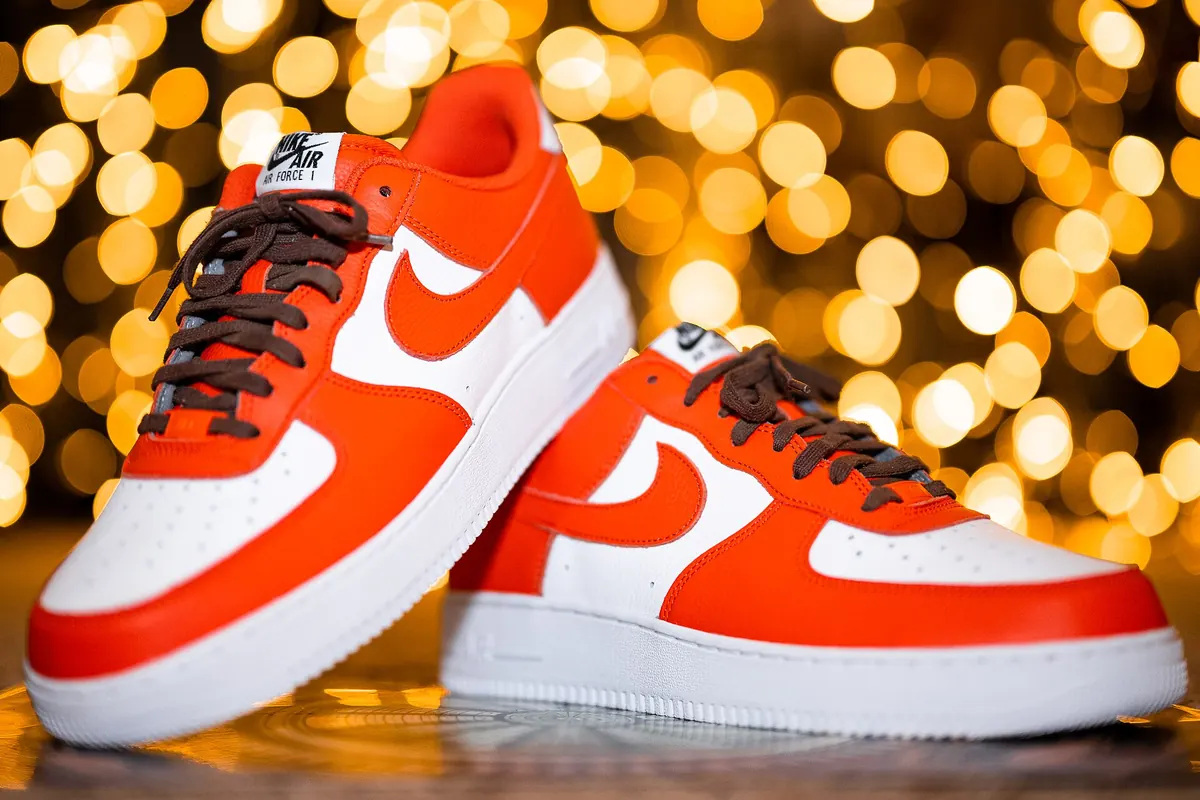
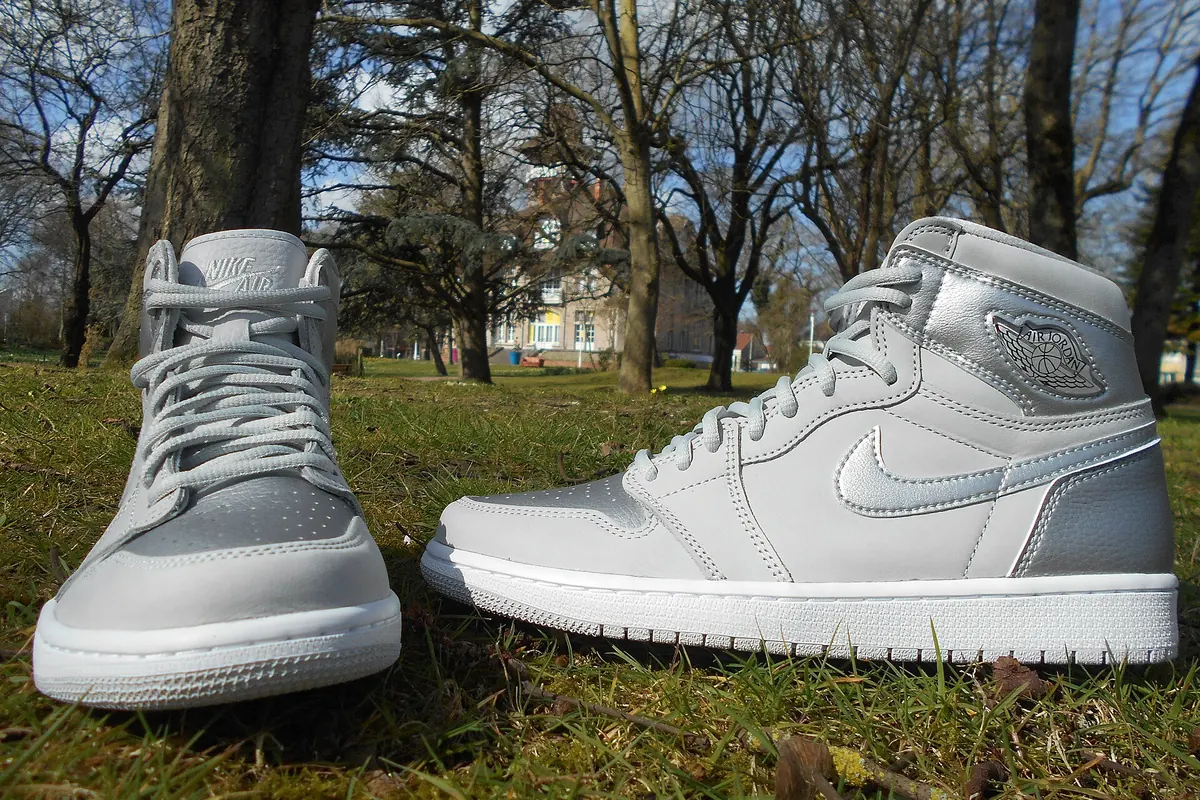
These three are often bought together, and the size relationship is consistent. The Dunk and the Air Jordan 1 High fit almost the same, so order the same number. The Air Force 1 runs about half a size big compared with both. In practice, if you wear a 10 in Dunks, take a 10 in Jordan 1 Highs and a 9.5 in Air Force 1s.
Shape matters too. The AF1 has a taller, rounder toe box with noticeably more room above and beside the toes. The Dunk tapers a little more toward the front and holds the heel and midfoot more closely. If you dislike any movement inside a sneaker, the Dunk is the better match. If toe room is your top priority, the Air Force 1 wins, even after sizing it down. For the Jordan side of the comparison, see our Air Jordan sizing guide.
Wide feet and narrow feet
Dunks only come in Nike's standard width, so your options are length and model choice:
- Slightly wide: regular Dunk Lows and Highs usually work at true size. The leather softens along the sides after a few wears.
- Genuinely wide: half a size up in the Dunk Low, especially if you feel pressure at the little toe. Avoid the snugger QS releases at true size, and treat SB Dunk Lows as half up at a minimum.
- Narrow: true size in regular Dunks. You are the one group that can comfortably wear SB Dunk Lows at your true size.
Not sure where your feet fall? Our shoe width chart explains the letter codes and how to tell if you are wide.
Buying women's or grade school Dunks
Many Dunk colorways only release in women's or grade school (GS) sizing, and both are fair game for anyone. For women's pairs, a men's size equals the women's size minus 1.5, so a men's 9 buys a women's 10.5. Some wearers worry that women's Dunks are cut narrower, but the common report is that the shape feels the same as men's pairs.
GS sizes, marked with a Y, match men's sizes number for number up to 7Y. A men's 6.5 is a 6.5Y. Women subtract 1.5 from their size to find GS: a women's 8 converts to a 6.5Y. GS pairs sometimes use thinner leather and simpler padding, which can make them feel slightly less plush, but the length is the same.
Materials and break-in
Standard Dunks use coated leather that is stiff out of the box and creases quickly across the toe. That stiffness can make a correctly sized pair feel tight on day one, especially at the sides. Give it a week of normal wear before deciding it is too small. Suede and nubuck pairs feel softer from the start.
What leather will not do is get longer. If your toes touch the end on the first try, the shoe is too short and no amount of break-in will change that. Width loosens a little; length does not.
Heel slip is the opposite problem. A little lift at the heel in a stiff new pair is normal and fades as the collar molds to your ankle. If the heel still lifts after a week, use the top eyelet for a runner's loop (a heel-lock lacing) before you decide the pair is too long. Constant slipping after that usually means you can drop half a size next time.
Nike Dunk size chart
Dunks use Nike's standard chart. Find your foot length in the right-hand column and read across.
| US men's | UK | EU | Foot length (cm) |
|---|---|---|---|
| 6 | 5.5 | 38.5 | 24 |
| 6.5 | 6 | 39 | 24.5 |
| 7 | 6 | 40 | 25 |
| 7.5 | 6.5 | 40.5 | 25.5 |
| 8 | 7 | 41 | 26 |
| 8.5 | 7.5 | 42 | 26.5 |
| 9 | 8 | 42.5 | 27 |
| 9.5 | 8.5 | 43 | 27.5 |
| 10 | 9 | 44 | 28 |
| 10.5 | 9.5 | 44.5 | 28.5 |
| 11 | 10 | 45 | 29 |
| 11.5 | 10.5 | 45.5 | 29.5 |
| 12 | 11 | 46 | 30 |
| 12.5 | 11.5 | 47 | 30.5 |
| 13 | 12 | 47.5 | 31 |
| 14 | 13 | 48.5 | 32 |
| 15 | 14 | 49.5 | 33 |
| US women's | UK | EU | Foot length (cm) |
|---|---|---|---|
| 5 | 2.5 | 35.5 | 22 |
| 5.5 | 3 | 36 | 22.5 |
| 6 | 3.5 | 36.5 | 23 |
| 6.5 | 4 | 37.5 | 23.5 |
| 7 | 4.5 | 38 | 24 |
| 7.5 | 5 | 38.5 | 24.5 |
| 8 | 5.5 | 39 | 25 |
| 8.5 | 6 | 40 | 25.5 |
| 9 | 6.5 | 40.5 | 26 |
| 9.5 | 7 | 41 | 26.5 |
| 10 | 7.5 | 42 | 27 |
| 10.5 | 8 | 42.5 | 27.5 |
| 11 | 8.5 | 43 | 28 |
| 12 | 9.5 | 44.5 | 29 |
For other brands and systems, our shoe size conversion chart has the full set of US, UK and EU conversions.
What size Dunk should you order?
For the Dunk Low and Dunk High, order your true Nike size. Go half a size up only if your feet are wide or you are buying a QS release known to run snug. For the SB Dunk Low, add half a size unless your feet are narrow, and stay at your true size for the SB Dunk High. If you are converting from women's or GS, do the conversion first, then apply the same rules.
If you already own Jordan 1 Highs that fit well, that same number is your Dunk size. If your reference shoe is an Air Force 1, add half a size.
One practical note for limited releases: many Dunk colorways sell out fast and are bought from resale platforms where returns are difficult. On those pairs, getting the size right the first time is worth an extra five minutes. Measure your foot, compare it with the chart above and, if you can, try on a general-release Dunk in a store first. General-release Dunks fit consistently across colorways, so a pair on a shelf tells you very closely what the limited one will feel like.
Frequently asked questions
Do SB Dunks fit differently from regular Dunks?
Yes. The SB Dunk Low has a much thicker tongue, more collar padding and a Zoom Air insole, which leave less room inside. Most people with average or wide feet go half a size up. Narrow feet can stay at their true size. The SB Dunk High is the exception and generally fits true to size.
Should I get the same size in Dunks and Air Force 1s?
No. The Air Force 1 runs about half a size bigger than the Dunk. If you wear a 10 in Dunks, a 9.5 is usually the right Air Force 1 size. Wide feet are the exception: they often wear the same number in both because the AF1's extra toe room helps.
Are Dunk Highs bigger than Dunk Lows?
Not in length. Both cuts use the same sizing, so order the same number. Many wearers find the Dunk High slightly more forgiving across the forefoot, which helps slightly wide feet, but the difference is small and not a reason to change sizes.
What size women's Dunk should a man buy?
Add 1.5 to your men's size. A men's 9 is a women's 10.5, and a men's 10 is a women's 11.5. Women's Dunk Lows use the same shape as men's pairs, so once you convert, the usual Dunk advice applies: true to size, or half up for wide feet.
Will tight Dunks stretch?
A little, in width only. The leather softens along the sides after a week or two of wear, especially on suede pairs. Length does not change, so if your toes touch the front when you first try them, exchange them for the next half size rather than waiting for a break-in.