Air Jordan Sizing: How Every Jordan Retro Fits
Jordans share Nike's size chart but not one shape. Here's which retros fit true to size, which have extra room and which need half a size up.
Quick answer
Most Air Jordans fit true to size, so start with your normal Nike size. The Jordan 1 High and Mid are the most reliable. Go half a size up in the Jordan 4 if your feet are wide and in the Jordan 9 and 40 for most feet. The 5, 6, 10, 12 and 13 are roomier, so narrow feet can go half down.
- Fit
- Depends on the model
- Width
- Varies
- Our advice
- True to size in the Jordan 1, 3 and 11; half up in the 4 for wide feet and in the 9 and 40; half down in the 6, 10 and 12 for narrow feet.
Air Jordans mostly fit true to size, but not every number in the line fits the same way. The Air Jordan 1 is the easy one: order your normal Nike size. Among the other retros, the Jordan 4 and 9 are narrow up front and often need half a size up for wider feet, while the 5, 6, 10, 12 and 13 have extra room that lets narrow feet go half a size down.
Jordan Brand uses Nike's size chart, so your number does not change between brands. What changes is the shape of each model. This guide groups the retros by how they fit so you can find yours quickly.
The quick version
| Model | Fit | What to order |
|---|---|---|
| Jordan 1 High / Mid | True to size | Your size |
| Jordan 1 Low OG | Slightly long | Your size, or half down for narrow feet |
| Jordan 1 High '85 | Narrower forefoot | Your size; half up for wide feet |
| Jordan 2, 3, 8, 14 | True to size | Your size; half up only for very wide feet |
| Jordan 11 | True to size, patent leather barely stretches | Your size; half up for wide feet |
| Jordan 4 | True length, narrow toe box | Your size; half up for wide feet |
| Jordan 5, 6, 7, 13 | True to size with extra room | Your size, or half down for a snug fit |
| Jordan 10, 12 | Runs slightly long | Half down for narrow and average feet |
| Jordan 9 | Narrow up front | Half up for average and wide feet |
| Jordan 40 | Very snug | Half up for most people |
"Your size" means your measured Nike size. If you have not checked it recently, our foot measuring guide takes a few minutes.
Air Jordan 1: High, Mid, Low and '85
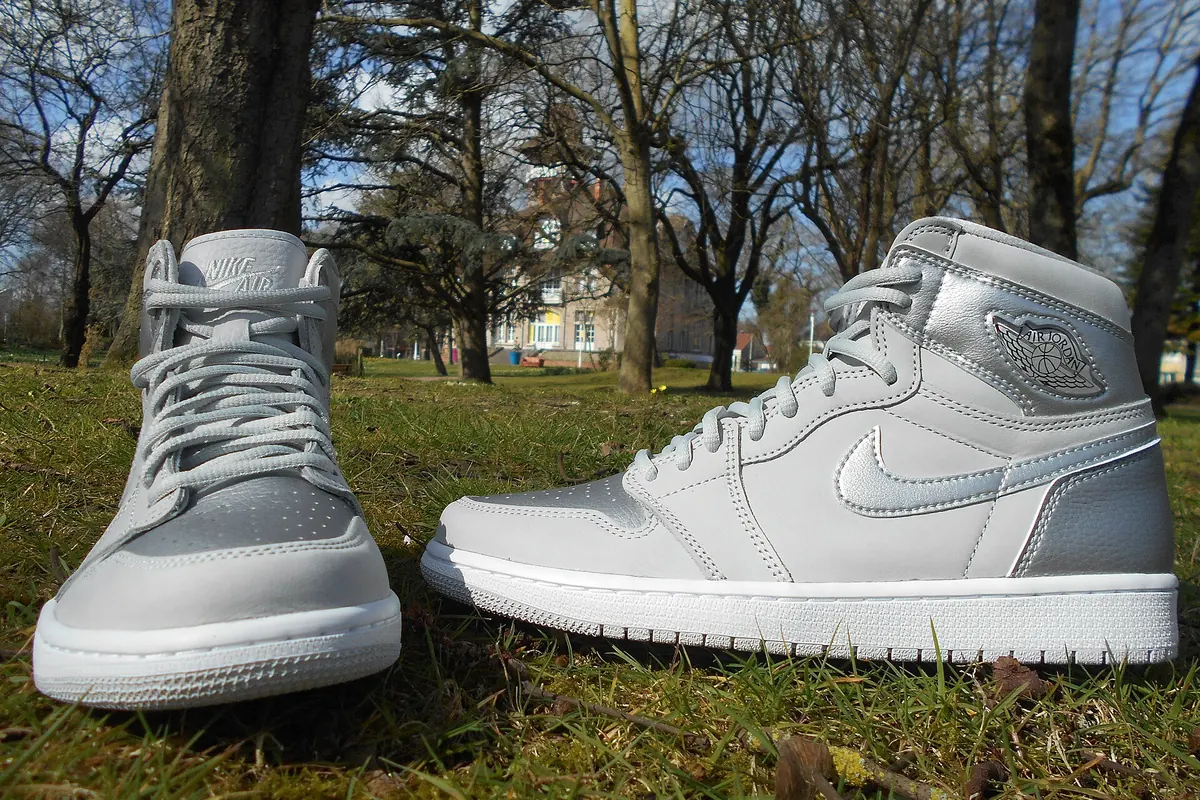
The Air Jordan 1 is one of the most consistent shoes Nike makes. The High OG fits true to size for narrow, average and slightly wide feet, with a comfortable toe box and a heel that holds well. If you wear a 10 in Dunks, you wear a 10 in Jordan 1 Highs.
The Jordan 1 Mid is the same length as the High. What differs is the leather: some Mid releases use a stiff, heavily coated upper that feels tight for the first several wears, and the tongue can press on the top of the foot. That is a break-in issue, not a sizing one, so stay with your normal size.
The Jordan 1 Low OG has a bit more length than the High. Wearers with narrow or average feet often go half a size down for a closer fit, while slightly wide and wide feet do better at true size, where the little toe has more freedom. Women's-only Low OG collabs follow the same rule after you convert the size.
The Jordan 1 High '85 recreates the original 1985 shape, which is slimmer through the forefoot. Length is unchanged, but wide feet may want half a size up.
Fit tip: If a Jordan 1 feels tight across the top when new, try lacing it one eyelet lower at the top and leaving the collar loose for the first week. Stiff leather usually relaxes; length never changes.
Retros that follow the chart
Several retros fit almost exactly like the chart says, and there is little reason to change sizes:
- Jordan 2 and 2 Low: true to size, with a wide, stable sole and a little room inside. Wide feet can go half up if the inside edge of the foot feels pressure after longer wear.
- Jordan 3: true to size and fairly accommodating, even for slightly wide feet. Some recent "Reimagined" releases have a slightly more generous toe box than standard pairs.
- Jordan 8: true to size, with a neoprene inner bootie that wraps the foot tightly. It feels snug and bulky by design; very narrow feet can drop half, but most people should not.
- Jordan 11: true to size and one of the most secure fits in the line. The patent leather barely stretches, so wide feet should consider half a size up.
- Jordan 14: true to size with a slightly snug wrap. Wide feet may want half up.
Retros with room to spare
These models have more interior volume than a Jordan 1. Your normal size will feel comfortable, especially for wider feet, but narrow and average feet often prefer half a size down for a one-to-one fit.
- Jordan 5: extra space in the toe box. Many go half down; some special releases fit tighter, so check before sizing down on a collab.
- Jordan 6: more volume above the toes. Half down is common for anyone who likes a snug fit.
- Jordan 7: uses a sleeve-like inner bootie instead of a separate tongue. True to size works; half down gives a closer fit for narrow and average feet. Reports vary on this one, with some wearers finding it snug rather than roomy.
- Jordan 10: runs a little long. Half down is the usual choice for narrow and average feet.
- Jordan 12: also slightly long. Half down for narrow and average feet; true size for wide feet, as the leather starts stiff.
- Jordan 13: true to size, but roomy enough that half down suits narrow and average feet who want a close fit.
Retros that run tight
Jordan 4
The Jordan 4 is the most debated size in the line. Its length is true to size, but the toe box narrows toward the outside, and the most common complaint is pressure on the little toe. Narrow and average feet are usually fine at their normal size. Wide feet should go half a size up. Some recent releases, including the Reimagined pairs, have a more forgiving toe box than older retros, so wide-footed buyers may get away with true size on those.
Jordan 9
The Jordan 9 is technically true to size, but it is narrow and unforgiving at the front of the foot. For average and wide feet, half a size up is the safer order.
Modern performance Jordans
Current game shoes such as the Jordan 40 are built for lockdown on court, and they fit very snug. Half a size up is the common advice for most people, and some wide-footed players report that even that feels tight. If you play in them and want a close fit, try on before you buy.
Wide feet and narrow feet
Jordans only come in Nike's standard width, so choosing the right model matters as much as choosing the right size. If you are not sure where your feet fall, our shoe width chart explains the codes.
- Wide feet: the Jordan 1 High, 3, 5, 6, 12 and 13 are the friendliest at true size. Go half up in the 4, 9, 11 and 40. Even half up might not solve the Jordan 4 or 9 if your toe shape does not suit them.
- Narrow feet: the 5, 6, 10, 12, 13 and Jordan 1 Low OG are the models where half down works. Keep your true size in the 4, 8 and 11.
Women's and grade school Jordans
Many Jordan colorways, including some of the most sought-after collabs, release in women's or grade school sizing only. Both use the same chart conversions as the rest of Nike:
- Women's to men's: subtract 1.5. A women's 10.5 is a men's 9.
- Men's to women's: add 1.5. A men's 10 is a women's 11.5.
- Grade school (Y sizes): numbered the same as men's up to 7Y. A men's 7 is a 7Y; a women's 8.5 is also a 7Y.
Convert first, then apply the model's sizing rule. A men's 9 who goes half down in Jordan 12s would buy a women's 10 in a women's-only Jordan 12.
Jordans vs other Nike classics
If you already own Nike shoes that fit well, use them as a reference. The Jordan 1 High and the regular Dunk share the same size. The Air Force 1 runs about half a size bigger, so if you wear a 9.5 in AF1s you probably wear a 10 in Jordan 1s. More detail is in our Air Force 1 and Dunk guides.
Running shoes are a different story. A Pegasus or Vomero uses soft, stretchy mesh, while most Jordans use leather, nubuck or patent leather over a firm basketball sole. Even at the same labeled size, a Jordan will feel stiffer and closer around the foot for the first couple of weeks. Don't size up just because a new pair feels firmer than your trainers; judge it on length and on pressure points instead.
Moving from another brand? Don't copy the number from your shoe label. Start from your foot length and use the brand size comparison tool.
Air Jordan size chart
All Air Jordans use Nike's standard chart.
| US men's | UK | EU | Foot length (cm) |
|---|---|---|---|
| 6 | 5.5 | 38.5 | 24 |
| 6.5 | 6 | 39 | 24.5 |
| 7 | 6 | 40 | 25 |
| 7.5 | 6.5 | 40.5 | 25.5 |
| 8 | 7 | 41 | 26 |
| 8.5 | 7.5 | 42 | 26.5 |
| 9 | 8 | 42.5 | 27 |
| 9.5 | 8.5 | 43 | 27.5 |
| 10 | 9 | 44 | 28 |
| 10.5 | 9.5 | 44.5 | 28.5 |
| 11 | 10 | 45 | 29 |
| 11.5 | 10.5 | 45.5 | 29.5 |
| 12 | 11 | 46 | 30 |
| 12.5 | 11.5 | 47 | 30.5 |
| 13 | 12 | 47.5 | 31 |
| 14 | 13 | 48.5 | 32 |
| 15 | 14 | 49.5 | 33 |
| US women's | UK | EU | Foot length (cm) |
|---|---|---|---|
| 5 | 2.5 | 35.5 | 22 |
| 5.5 | 3 | 36 | 22.5 |
| 6 | 3.5 | 36.5 | 23 |
| 6.5 | 4 | 37.5 | 23.5 |
| 7 | 4.5 | 38 | 24 |
| 7.5 | 5 | 38.5 | 24.5 |
| 8 | 5.5 | 39 | 25 |
| 8.5 | 6 | 40 | 25.5 |
| 9 | 6.5 | 40.5 | 26 |
| 9.5 | 7 | 41 | 26.5 |
| 10 | 7.5 | 42 | 27 |
| 10.5 | 8 | 42.5 | 27.5 |
| 11 | 8.5 | 43 | 28 |
| 12 | 9.5 | 44.5 | 29 |
Before you buy resale: Limited Jordans are often sold without returns. Confirm the size category on the listing (men's, women's or GS) and convert before you check out.
Our recommendation
Start with your measured Nike size. Keep it for the Jordan 1 High and Mid, the 2, 3, 8, 11 and 14. Consider half a size down in the 5, 6, 10, 12 and 13 and in the Jordan 1 Low OG if your feet are narrow or average. Go half a size up in the Jordan 4 and 11 if your feet are wide, and in the 9 and 40 for most feet.
If you are between two sizes on the chart, the model decides the tiebreak. In the roomy retros, take the smaller size. In the narrow ones (4, 9, 11 and the modern performance shoes), take the larger one. For the Jordan 1, take the larger size if you wear thick socks and the smaller one if your feet are narrow and you like a firm heel hold.
When a model has a mixed reputation, true to size is the safest bet, since a slightly roomy Jordan is easier to live with than a short one.
Frequently asked questions
Do Air Jordan 1s run true to size?
Yes. The Jordan 1 High and Mid fit true to size for narrow, average and slightly wide feet, and they match the regular Nike Dunk. The Jordan 1 Low OG is a little longer, so narrow and average feet sometimes go half a size down, while the High '85 has a slimmer forefoot that may need half up for wide feet.
Should I size up in Jordan 4s?
Only if your feet are wide. The Jordan 4 is true to size in length, but its toe box narrows toward the outside and often presses on the little toe. Narrow and average feet are fine at their normal size. Some recent releases have a roomier toe box, so check feedback on the specific pair.
Which Air Jordans run big?
None run dramatically big, but the Jordan 10 and 12 have a little extra length, and the 5, 6 and 13 have more volume in the toe box. Narrow and average feet often go half a size down in these for a closer fit. Wide feet can keep their true size and enjoy the extra room.
Are Jordan sizes the same as Nike sizes?
Yes. Jordan Brand uses Nike's size chart, so a men's 10 is the same length in both. The shape of each model is what varies. A 10 in Dunks means a 10 in Jordan 1 Highs and a 9.5 in Air Force 1s, but you might need a 10.5 in a Jordan 9.
How do I convert women's or GS Jordan sizes?
Women's sizes are 1.5 larger than men's, so a men's 9 buys a women's 10.5. Grade school sizes match men's numbers up to 7Y, so a men's 7 is a 7Y and a women's 8.5 is also a 7Y. Convert first, then apply the model's usual sizing rule.