Do I Have Wide Feet? How to Tell and What to Buy
Six signs of wide feet, a simple paper-and-ruler width test, how D, 2E and 4E letters work, and when a wide fitting beats a bigger size.
Quick answer
You likely have wide feet if shoes in the right length squeeze the ball of your foot, crush your little toe, leave pressure marks, or push you to size up for width, across several brands. Measure the widest part of your foot, compare it with width codes (men's D is standard, women's B), and try a wide fitting before going longer.
You probably have wide feet if shoes in the right length keep pinching across the ball of the foot, squashing your little toe, or leaving red pressure marks on the sides, and if this happens in many brands, not just one pair. A single tight shoe proves very little. A pattern across brands is what counts.
The next step is to measure instead of guess. Once you know your length and width, you can decide between a wide fitting, a roomier model, or just a different brand. Below you will find the signs to look for, a measuring routine, how widths are labeled, and which choices make sense.
Six signs your feet may be wide
- The length is right but the sides squeeze. There is space in front of your toes, yet the widest part of the shoe presses on the widest part of your foot.
- The little toe is crushed. It rubs the upper or gets pushed under its neighbor, even in a shoe that is long enough.
- Red marks or hot spots on the sides. Dents at the end of the day, or blisters at the little-toe joint and the big-toe joint.
- Your forefoot spills over the sole. Stand in the shoe and look from behind: if the sides of your foot press well beyond the edge of the midsole, the platform is narrower than you are.
- You size up just for width. Half a size relieves the squeeze but leaves you with a longer shoe, and often a loose heel.
- It happens in more than one shoe. If three or four brands do this, your foot is the likely cause.
If only one pair behaves this way, suspect the shoe. Some models are simply cut narrow, and an average-width foot can feel pinched in them.
Wide feet versus wide shoes
Having a wide foot does not automatically mean you need wide shoes. A foot that measures a little wider than the average D width may do perfectly well in standard sneakers with a generous toe box, and struggle in a slim, structured shoe. Two shoes labeled with the same size and width can have noticeably different amounts of space.
Think of it as three questions. How wide is your foot at its widest point? How much room does a particular shoe give you there? And how much does your preference for a snug or relaxed fit change the answer? Only the first is a measurement. The other two depend on the shoe and on you.
How to measure your width
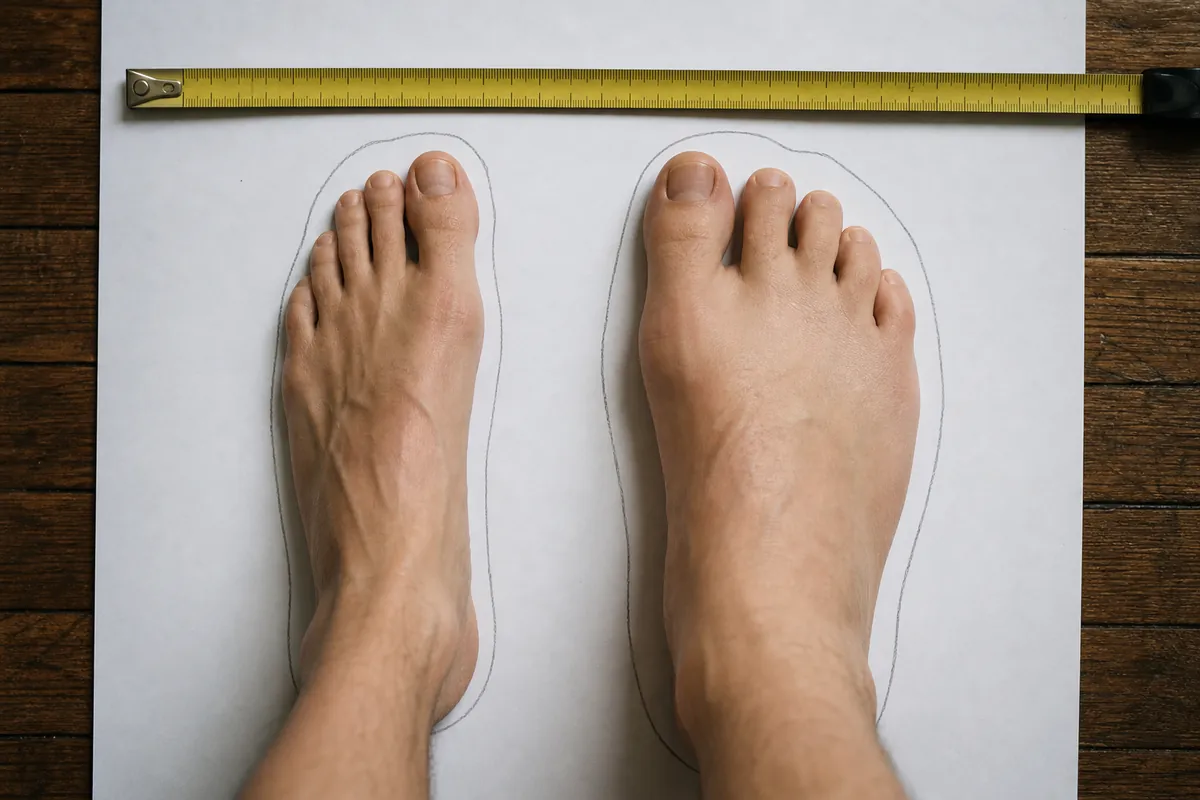
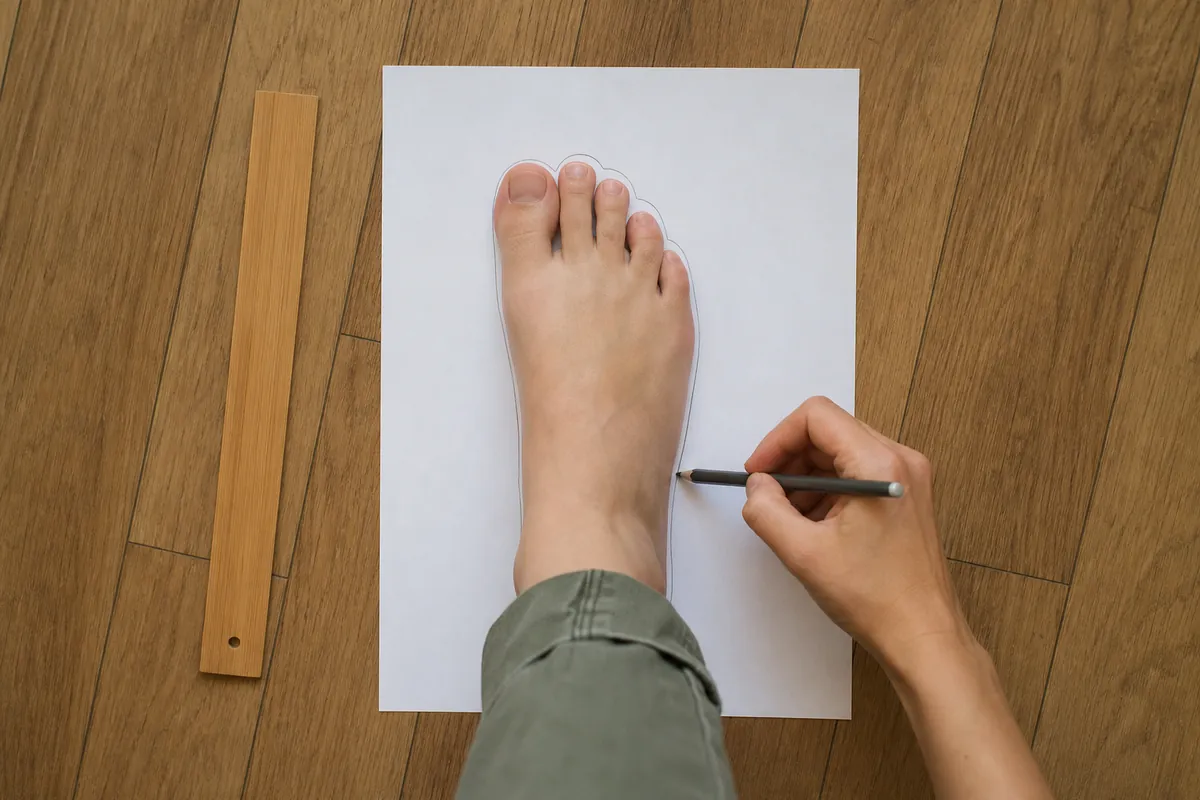
You need a sheet of paper, a pen, a ruler and a wall. Do it in the evening, when feet are slightly larger, while standing with your full weight on the foot.
- Place the paper against the wall and stand on it with your heel touching the wall.
- Trace around the foot, holding the pen upright and close to the skin.
- Mark the longest point (the end of the longest toe) and the widest point across the ball of the foot.
- Measure the length from the wall to the longest toe, and the width across the two outer marks. Use millimeters.
- Repeat for the other foot, since they often differ. Use the larger measurement.
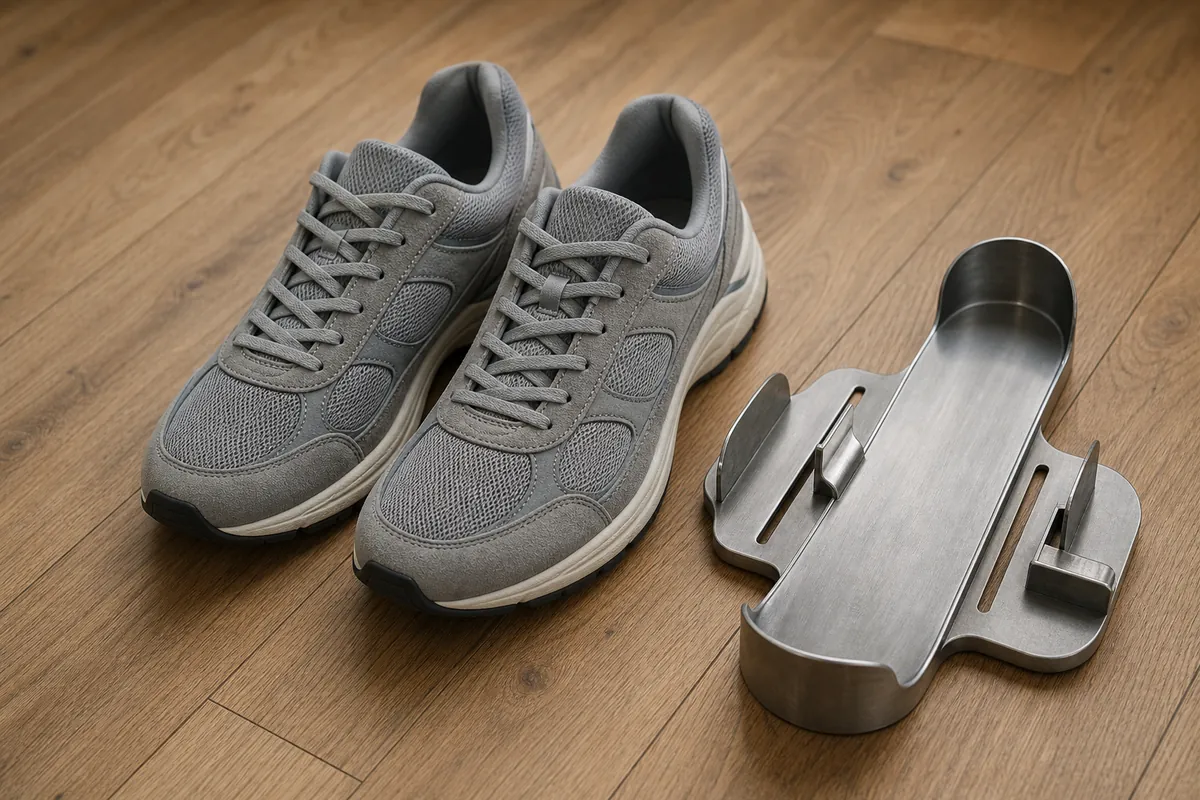
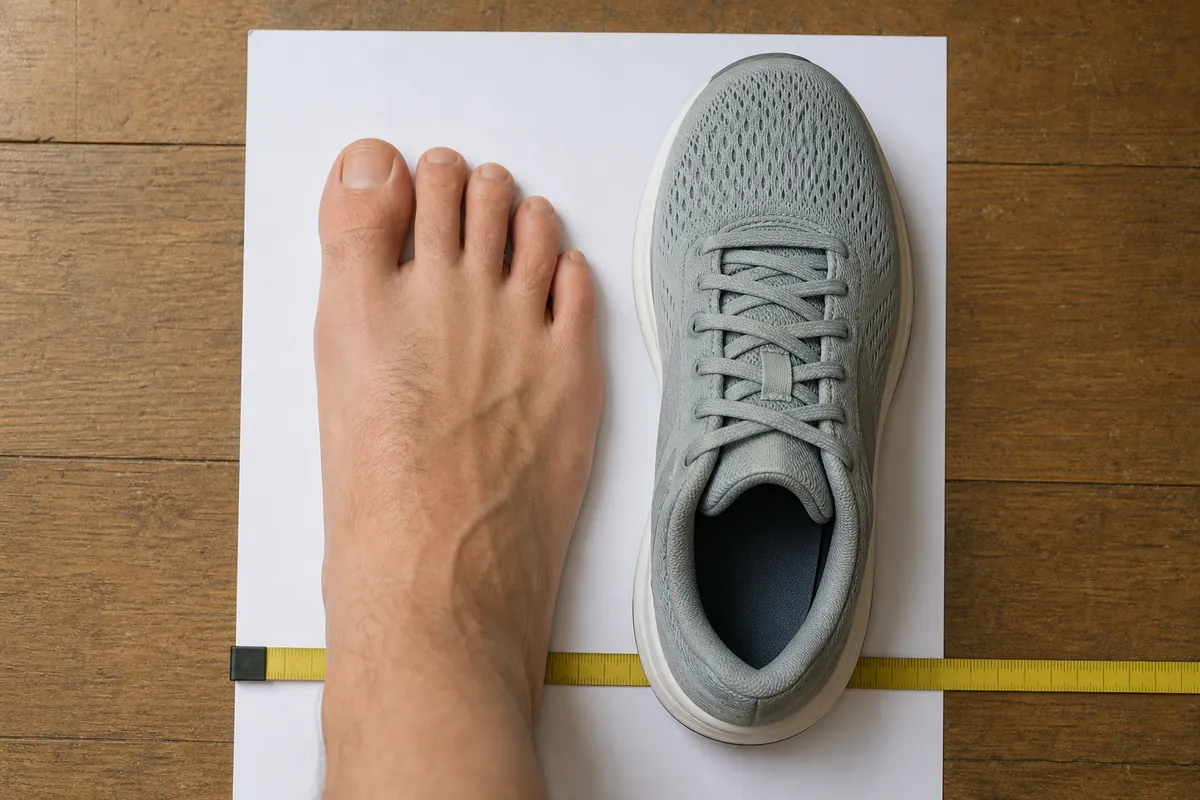
Our guide to measuring your feet has more detail on length. For a faster option, a Brannock device at a shoe store measures both length and width. Note that you measure your foot, not the shoe. A shoe is always larger than the foot it holds, and that is why the numbers on size charts do not match your tracing.
Runner's tip: If the paper tracing is hard to read, stand on the sheet, then step off and trace the footprint with a thick marker. Mark the widest point in the middle of the tracing, not at the toes.
Understanding width letters
Width is shown with letters, and the letters differ for men and women. In the US men's system, D is the standard width. In the women's system, B is standard, so a women's D is wide.
| Code | Meaning |
|---|---|
| B | Narrow |
| D | Standard / Medium |
| 2E (EE) | Wide |
| 4E (EEEE) | Extra wide |
| 6E | Extra-extra wide |
| Code | Meaning |
|---|---|
| 2A (AA) | Narrow |
| B | Standard / Medium |
| D | Wide |
| 2E (EE) | Extra wide |
This catches many shoppers out: a women's D is a wide fit, while a men's D is the regular fit. If you wear a unisex model, check which scale the brand uses. Our shoe width chart covers every code in more detail.
How much does a width step change?
New Balance publishes foot measurements for its sizes, which makes the effect easy to see. In its men's guide, a 9 D listed at 104 mm of width becomes 107 mm at 9 2E, with the same 270 mm of length. By contrast, moving from 9 D to 9.5 D adds 5 mm of length and about 1 mm of width.
| Size | Length (mm) | Width (mm) |
|---|---|---|
| 9 D | 270 | 104 |
| 9 2E | 270 | 107 |
| 9.5 D | 275 | 105 |
| 10 D | 280 | 106 |
That is why a wide fitting often solves a squeeze better than a bigger size. It adds width without adding the length, so you avoid the loose heel and the extra toe space. These figures describe the foot measurements the brand uses, not the space inside the shoe, but the comparison shows the direction.
Wide, high volume and flat: they are not the same
Width is the measurement across the ball of your foot. Volume is how much total space your foot needs, including the height of the instep. Two people with the same width measurement can need different shoes, because one has a flat, low foot and the other has a high arch and a taller instep.
A person with a high instep can feel pressure at the laces and think the shoe is narrow when the real problem is height. A person with a wide forefoot and a narrow heel can find that a wide shoe slips at the back. Look at where you feel the problem before buying. If it is at the sides, try wide. If it is on top, look for a deeper toe box, a more flexible upper or a lacing change.
Why your width can change
Foot width is not fixed for life. Feet commonly spread with age, with weight gain and during pregnancy, and they swell during the day and in hot weather. If shoes that used to fit now pinch, re-measure rather than assume the shoe changed. It is also worth measuring both feet each time you buy, because a difference between left and right is normal, and the larger one sets the size.
Lacing tricks for a wide forefoot
If you are close but not there, lacing can buy a few millimeters. Skip the eyelet pair that sits over the widest part of the foot, so the laces do not pull the sides together. Use a parallel lacing pattern, which spreads pressure across the top of the foot. Loosen the laces over the forefoot and tighten them nearer the ankle to keep the heel locked. These changes will not turn a narrow shoe into a wide one, but they often settle borderline cases.
What to buy
Pick brands and models that offer widths
Several running and walking brands sell popular models in more than one width, with New Balance, Asics, Brooks and Hoka commonly offering wide options on their running ranges. Availability changes by model and season, so check the product page for letters like 2E, 4E or Wide, and see our guides to New Balance and Asics fit for brand-specific notes.
Choose roomy shapes if wide sizes are not offered
Many fashion sneakers and court shoes come in a single width. In those, look for soft or knit uppers and rounded toe boxes. Slim, structured leather models are the hardest. Some people go up half a size in the brands that run narrow, but we suggest trying the wider-fit model first, because extra length can bring heel slip.
Boots and dress shoes
Leather will ease across the width with wear, but it will not lengthen. If a boot is slightly snug at the sides in the right length, a few wears may fix it. If it hurts in the first hour, it will not. Look for a wider last, or an E or EE option, before you buy a longer size. See how boots should fit for more.
When it is not a width problem
Sometimes the cure is not a wider shoe at all. Bunions, hammertoes and swollen joints can make a standard forefoot feel cramped, and some people need extra depth in the toe box rather than extra width. If you have persistent pain, numbness or visible deformity, see a podiatrist; a fitting specialist can also check for conditions that a tape measure will not show.
Practical shopping steps
- Measure both feet and write down length and width in millimeters.
- Check the brand's chart for width codes, and remember that the men's and women's letters differ.
- Try shoes in the afternoon or evening, with the socks you usually wear.
- Walk around indoors for twenty minutes before you decide to keep a pair.
- If a half size is the only option, check the heel before you commit.
If your foot measures only slightly wider than average, you may be able to stay with standard widths in models that run roomy. If you find yourself fighting almost every pair, accept the evidence and start shopping in wide sizes. The shoe size calculator can convert your length to a size, and from there the width letter finishes the job.
Frequently asked questions
How do I know if I need wide shoes?
Look for a pattern. If the length fits but the sides squeeze, your little toe gets crushed, or you keep sizing up for width across several brands, you likely need a wide fitting. One narrow shoe proves little. Measure the widest part of your foot and compare it with the brand's width codes.
Is a women's D width the same as a men's D?
No. In US sizing, men's standard width is D, while women's standard width is B, so a women's D is considered wide. If you shop unisex models or buy across men's and women's ranges, check which scale the brand uses before choosing a width letter.
Should I go up half a size instead of buying wide?
Usually not, if the length is already right. A half size adds roughly 4 to 5 mm of length and little width, and it can loosen the heel. New Balance's published figures show a 2E adds about 3 mm of width at the same length, which fixes the squeeze more directly.
Can I have a wide forefoot and a narrow heel?
Yes. Feet are not the same width all the way along. You may feel a squeeze at the forefoot while the heel still slips. In that case a longer shoe is the wrong fix, and a roomier forefoot with a secure heel is better. Try lacing tricks and a model with a snugger heel cup.
Are wide feet the same as high-volume feet?
No. Width is the measurement across the ball of the foot. Volume includes the height of the instep, so a person can have a standard width and a high instep, or a wide forefoot and a low profile. Pressure on top points to volume, while pressure on the sides points to width.