Georgia Boot Sizing: Do Georgia Work Boots Run True to Size?
Georgia Boot runs close to true to size, unlike Red Wing. The toe box can feel snug, so width and model choice matter most.
Quick answer
Georgia boots run pretty true to size, so a size 10 sneaker usually means a size 10 Georgia. Red Wing and Thorogood fit larger, so you may be half a size smaller there. Georgia only offers M and W widths, and the toe box can feel snug. Go up half a size for thick socks or orthotics.
- Fit
- True to size
- Width
- Varies
- Our advice
- Order your sneaker size; go up half for thick socks, orthotics or a snug Logger toe; choose W for a thick forefoot.
Georgia Boot runs close to true to size. If you wear a 10 in sneakers, a 10 in a Georgia work boot is the right place to start. That makes it more conventional than Red Wing, which tends to run large and asks you to drop down.
The part that trips people up is not length. It is the toe box, which feels tighter than in many competing work boots, and the choice between only two widths. Read the notes on your specific model before you commit.
Start with the brand you already own
The easiest way to size Georgia is to compare it with a boot you already know. The brands below are the ones most readers are coming from.
| If you wear | Your size there | Try in Georgia | Reason |
|---|---|---|---|
| Nike or Adidas sneakers | Size 10 | Size 10 | Georgia follows conventional sizing |
| Red Wing or Thorogood | Half size below your sneakers | Your sneaker size | Those brands run larger |
| Wolverine | Half size below your sneakers | Your sneaker size | Wolverine also runs large |
| Timberland | Some guides say it runs large | Your sneaker size, then check the toe box | Reports differ |
The last column matters most. Owners switching from Red Wing or Thorogood commonly say the toe feels slightly snugger in a Georgia, even when the length is right. For more on how Red Wing runs, see the Red Wing guide, and the Thorogood guide for that brand.
The Timberland row above is the least certain in the table. Reports differ on how Timberland sizes against Georgia, so treat it as a prompt to check the toe box, not as a conversion.
Two widths only: M and W
Georgia labels its widths M for medium and W for wide. M matches a Brannock D, and W matches a double-E. That is a shorter menu than you get from many bootmakers, and it makes width a decision rather than a detail.
If you are between M and W, or if you have a thick forefoot, choose W. It also gives more room in the toe box, which is where Georgia tends to feel tight. If you wear a 4E sneaker or a true extra-wide boot elsewhere, check the shoe width chart, because a Georgia W may still feel narrow.
The toe box, model by model
Georgia is a large brand with many styles, and the fit character moves with the model. Two examples show the range.
- Logger styles: some run snug up front, and toes feel more confined than in comparable Red Wing, Thorogood, Timberland or Wolverine boots. If you wear thick socks, go for the wide width or half a size more.
- AMP LT Wedge Composite Toe Waterproof: roomy overall, but the heel is held well, so you get volume without a loose back.
Beyond those, there is no reliable universal rule across every Georgia model. Look at reviews for the exact style, and check whether the boot has a safety toe, since a composite or steel cap fixes the volume at the front.
Fit tip: Stand in the boot and flex your foot as if climbing a ladder. If your toes jam into the end or the cap presses the top of your toes, switch to W or go half a size up. Do not wait for break-in to solve a cap.
Socks, orthotics and when to go up half
True-to-size has limits. If you wear thick work socks, or an orthotic or aftermarket insole, go up half a size. Thick insoles take volume from the top of the foot, so a boot that fit fine with the factory insole can start to pinch. If you do use an orthotic, measure and try the boot with it in.
When you sit between two sizes, pick the larger. The extra room is easy to fill with an insole or a thicker sock, and a boot that is too small cannot be fixed. This is the opposite of the advice for brands that run large, where the smaller size is often the safe choice.
Men's and women's sizing
Georgia converts between men's and women's by adding two to the men's number: a men's 6 is a women's 8. By that logic a men's 10 is a women's 12, listed around EU 43 and 28 cm. The safety standards are the same for both.
Be aware that this does not match the usual conversion we use elsewhere. Most charts, including ours, add 1.5 to move from men's to women's. Brands that follow the plus-two rule will give you a different women's number for the same foot, so when you shop a women's Georgia boot, look at the size on the Georgia page and not at your habitual women's size from another brand. Our men's to women's conversion guide explains the difference.
| US men's | UK | EU | Foot length (cm) | CM (JP) |
|---|---|---|---|---|
| 7 | 6 | 40 | 24.6 | 25 |
| 7.5 | 6.5 | 40.5 | 24.9 | 25.5 |
| 8 | 7 | 41 | 25.4 | 26 |
| 8.5 | 7.5 | 42 | 25.9 | 26.5 |
| 9 | 8 | 42.5 | 26.2 | 27 |
| 9.5 | 8.5 | 43 | 26.7 | 27.5 |
| 10 | 9 | 44 | 27.1 | 28 |
| 10.5 | 9.5 | 44.5 | 27.5 | 28.5 |
| 11 | 10 | 45 | 27.9 | 29 |
| 11.5 | 10.5 | 45.5 | 28.4 | 29.5 |
| 12 | 11 | 46 | 28.7 | 30 |
| 12.5 | 11.5 | 47 | 29.2 | 30.5 |
| 13 | 12 | 47.5 | 29.7 | 31 |
The chart above is the standard one, not a Georgia chart. Use it to map foot length to a US number, then apply the model advice above.
Measuring at home
A Brannock device records three numbers: length, width and arch length. Stores can measure you, or you can order a device online. Measure in the late afternoon or evening, when feet have swelled, standing with full weight, in the socks you will wear. Always size to the larger foot, and leave about a thumb width of room at the toe.
If you use insoles, measure with them in. More detail on the process is in the foot measuring guide.
Heel slip is normal at first
Georgia leather and soles are stiff, and a new boot will often lift at the heel until it breaks in. That does not mean you ordered too big. If the heel lift settles after a few days, you are fine. If it does not, and your toe has plenty of room, drop half a size, but only after you have given the boot some wear, because you may have a good fit that simply needs time.
Choosing between M and W: three cases
With only two widths, the decision is easier than it looks, but it still has traps. These three cases cover most buyers.
You are a clear D
Buy M at your sneaker size. Check the toe box, and if you plan to wear thick socks, go half a size up instead of switching to W, since your foot is not wide.
You are a D that has trouble in boots
Some people measure a D on the Brannock but feel pressure over the little toe in boots. That is the sign of a snug Georgia toe box, and W is the cleanest cure. The boot will be roomier from ball to toe without adding length.
You are an E or wider
Choose W. If W still feels tight across the ball, the brand may not be the right fit for your foot, because there is no wider option. Look at makers with EEE or EEEE.
Safety toes and steel versus composite
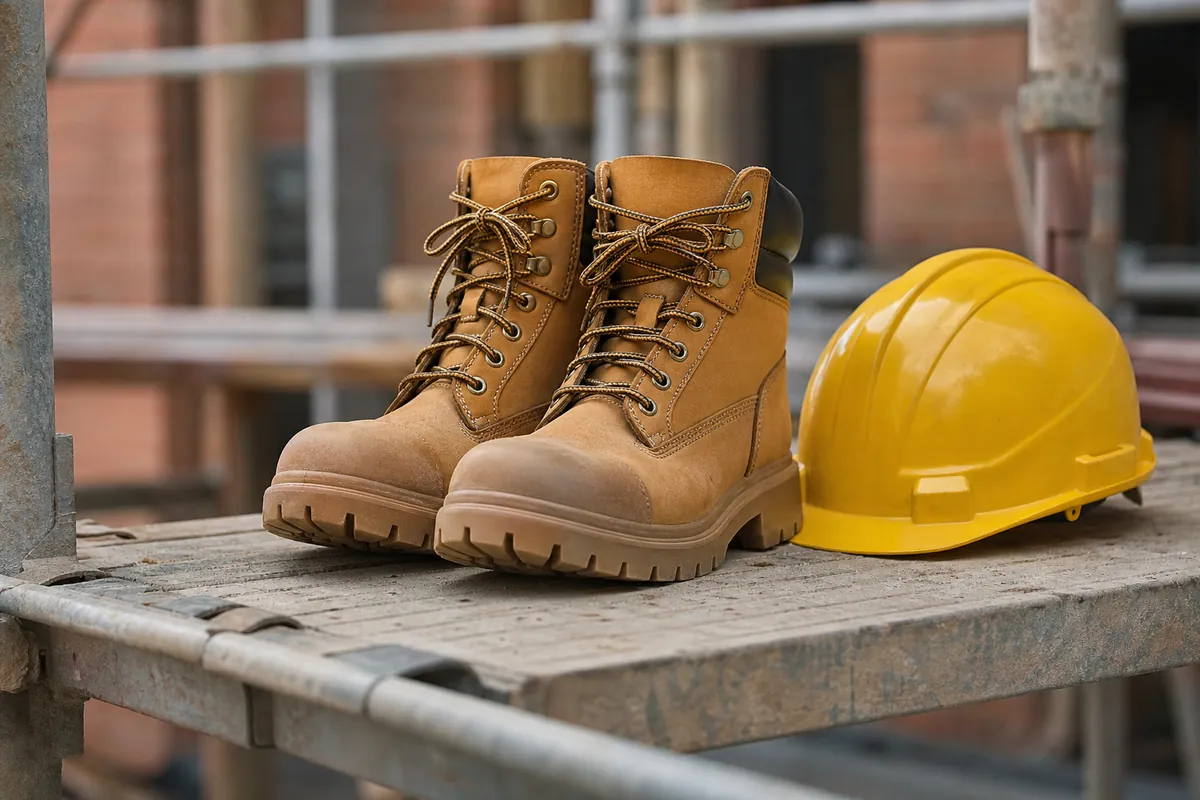
A safety toe changes the sizing decision because the cap does not give. In an ordinary leather boot, a little pressure at the top of the toes loosens as the leather softens. A composite or steel cap will not. If your toes touch the cap the first time you put the boot on, it is too short or too narrow, and you should change size or width rather than hoping it will relax.
The same goes for flexing: stand, rise onto the balls of your feet, and feel whether the cap bites. Composite toes are generally a little roomier than steel, but that varies by model. Consult the work boots fit guide for the signs of a cap that is too tight.
An online ordering checklist
- Write down your Brannock length and width, and your sneaker size.
- Decide on your sock thickness, and whether you use an orthotic.
- Pick M or W based on the cases above.
- Read recent reviews for the exact style for notes on the toe or heel.
- Try the boots indoors on a clean floor, so you can return them if the fit is off.
Insoles, lacing and the first week
Many work boots ship with a basic insole, and swapping it changes the fit more than people expect. A thicker or contoured insole lifts the foot toward the top of the boot, which reduces room over the toes and the instep. If you intend to swap, try the boot with that insole from the start, not the stock one.
Lacing helps with minor looseness. Use the heel lock, the extra turn at the top hooks, to stop a small heel lift in a roomy model such as the AMP LT. It will not rescue a boot that is a full size too big, but it can turn a mildly sloppy fit into a comfortable one. In a tight Logger, do the opposite: loosen the lower laces to relieve the forefoot while keeping the ankle firm.
Wear the boots indoors for a few evenings before full shifts. A good rule is to judge the fit on day three rather than day one, because the stiff leather and sole change the feel noticeably in the first few wears.
Quick recap
- Start at your sneaker size and your Brannock number.
- Choose W if your forefoot is thick or your toes feel cramped.
- Go half a size up for thick socks, orthotics or a safety toe.
- Check the specific model, since Logger styles run snug in front.
For the broader principles, see how should boots fit. If you are comparing brands, the Wolverine guide shows the half-size-down alternative.
Frequently asked questions
Do Georgia boots run true to size?
Generally yes. Georgia uses conventional sizing, so a size 10 sneaker usually means a size 10 boot. The difference from Red Wing is that you will not need to drop half a size. Fit still varies by model, especially in the toe.
What widths does Georgia Boot offer?
Two: M, which matches a Brannock D, and W, which matches EE. Choose W if your forefoot is wide or you want more toe room. If you need EEE or wider, Georgia may not have it, so look at other makers.
Why do Georgia boots feel tight in the toes?
Compared with Red Wing, Thorogood, Timberland and Wolverine, many Georgia styles feel more confined in the toe box, especially Loggers and safety-toe models. The W width or half a size up usually helps.
How does Georgia convert men's to women's sizes?
Georgia adds two to the men's number, so a men's 6 is a women's 8 and a men's 10 is a women's 12. That differs from the more common plus-1.5 rule, so use the size shown on the Georgia page.
Should I size up in Georgia boots for thick socks?
Yes, half a size up if you wear thick socks or an orthotic. When you sit between sizes, choose the larger, because extra room is easy to fill with an insole while a short boot cannot be fixed.