Wolverine Boot Sizing: 1000 Mile vs Work Boots, Which Size to Order?
Wolverine boots run about half a size large. Here is how the 1000 Mile and the work line differ, and which size to order.
Quick answer
Order half a size smaller than your sneaker size in Wolverine boots: a 10.5 sneaker becomes a size 10. Narrow feet can go a full size down. The 1000 Mile is slim and D width only, while work boots come in M and EW, so wide feet should pick the work line at their sneaker size.
- Fit
- Runs large
- Width
- Varies
- Our advice
- Half a size down from your sneaker size; full size down for narrow feet; wide feet stay at sneaker size in the work line.
Order Wolverine boots about half a size smaller than your sneaker size. A man who wears a 10.5 in running shoes will usually land on a 10 in a Wolverine, and that holds for both the dressy 1000 Mile and the rugged work line.
The two families do not feel the same on the foot, though. The 1000 Mile is slim and hugs the heel, while the work boots leave more room and come in wider options. Pick the family first, then pick the size.
Why your Wolverine size is smaller than your sneaker size
Sneaker sizing tends to run generous, and boot sizing tends to follow the older Brannock scale, where the number on the device is close to the number on the box. Wolverine sits on the boot side of that divide. The size stamped inside is a little longer than the number you are used to wearing in a Nike or an Adidas, so the same foot reads half a size lower.
That is the common consensus among owners, and it matches what fit guides report. It is a rule of thumb, not a law. If you already know your Brannock size, treat it as the second check: it should land the same or half a size below your sneaker number, and the half-size-down boot should feel snug but not tight.
Fit tip: A snug fit with roughly half an inch to an inch of room past your longest toe is the target. If you can only fit a pinky behind the toe, go up. If your whole thumb fits behind your heel when you stand, go down.
The 1000 Mile: slim last, roomy toe
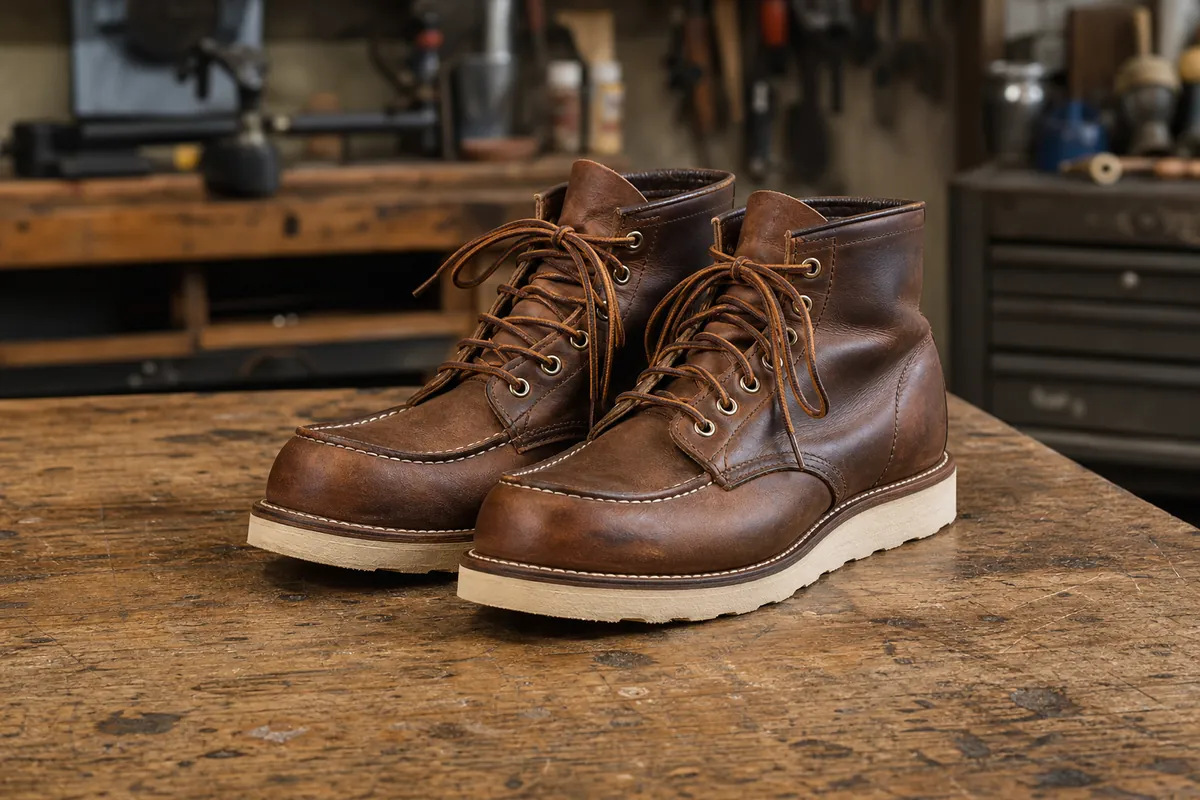
The 1000 Mile is a dress-leaning boot built on a slim last. It grips the heel, the waist and the ball of the foot, then opens into a roomy bump toe at the front. That mix surprises people: the boot feels tight through the middle and generous at the tip.
Because the volume is low, a half size down from your sneaker size is the right starting point for most feet. Narrow feet can go a full size down. Wide feet should stay at their sneaker size, and this is where the 1000 Mile becomes a problem, because it is offered in D width only. There is no EE or EEE to step into, so a foot that needs real width has to buy length and live with a longer boot.
The same D-only rule applies to the BLVD line. If width is your main issue, skip both and look at the work boots below.
Wolverine work boots: more room, more width choices
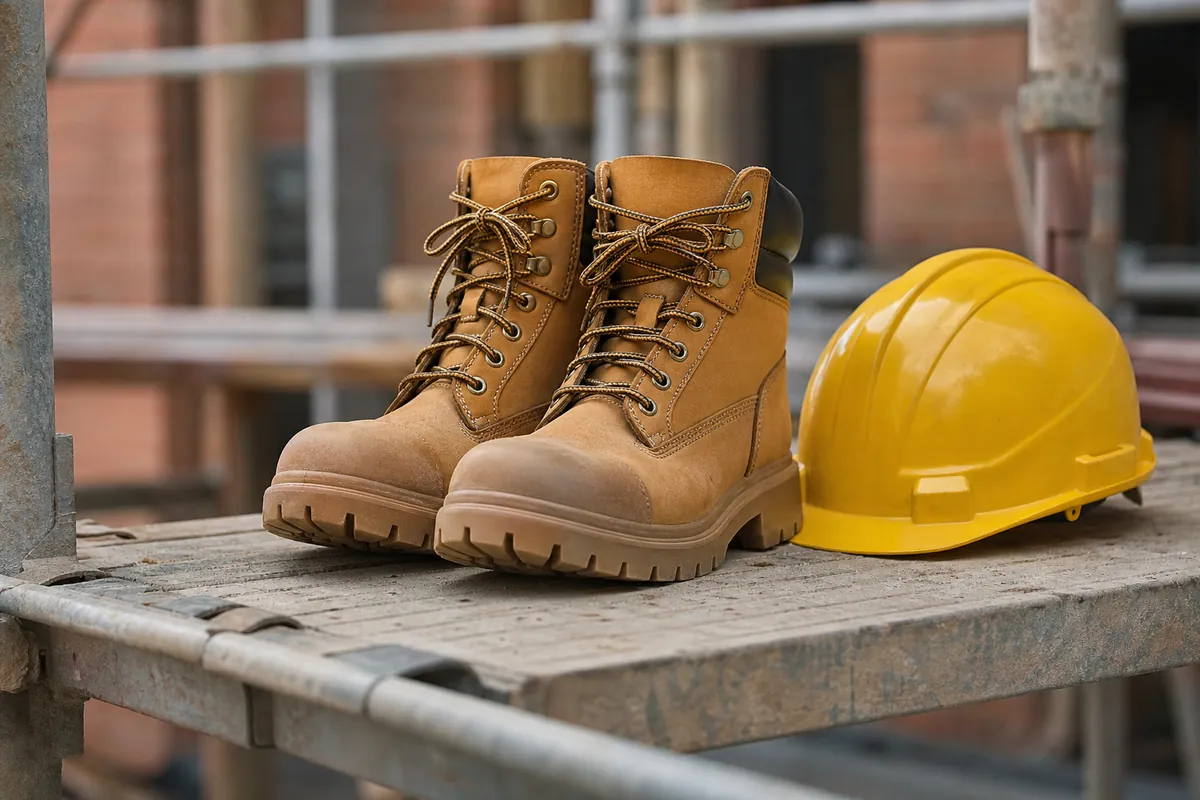
The work line is cut fuller. Most styles come in M, which is the same as a Brannock D, and EW, which corresponds to EEE. A few styles also appear in D or EEE under different labels. The shape suits wide or flat feet and has enough depth for a custom orthotic.
The half-size-down rule still applies. Where it gets tricky is insulated, waterproof and safety-toe models: their liners and toe caps eat into the interior, so they can feel closer to true size than the plain leather versions. If you plan to wear thick winter socks, hold your sneaker size rather than dropping half a size.
| Family | Fit character | Size vs sneaker size | Widths |
|---|---|---|---|
| 1000 Mile | Slim last, snug heel and waist, roomy bump toe | Half size down; full size down for narrow feet | D only |
| BLVD | Dressier styling, similar slim feel | Half size down | D only |
| Work boots | Fuller cut, room for orthotics | Half size down; sneaker size for wide feet | M (D) and EW (EEE), some in D or EEE |
This is a guide built from reported fit, not an official Wolverine chart. Check the exact style you want, because a brand that makes this many models will have outliers.
Narrow, average and wide feet
Narrow feet
A full size down from your sneaker size is the usual advice, and the 1000 Mile is the better match because of its slim heel and waist. Add a thin insole or thicker sock rather than sizing back up if the front feels loose.
Average feet
Half a size down in either family. This is the group the sizing was designed around, so you should not need to hunt for width.
Wide feet
Stay at your sneaker size and choose the work line in its wide option. If you wear a 2E or 4E sneaker, remember that the boot width labels differ: see the shoe width chart to translate between D, EE and EEE before you order.
How Wolverine compares with other boot brands
Wolverine runs a little large, like Red Wing. If you are a half size down in Red Wing, you will probably be the same in a Wolverine; our Red Wing sizing guide explains that brand in detail. Thorogood sits in a similar neighborhood, with a slightly different last shape, and the Thorogood guide covers it.
The reverse holds too. If you wear a boot brand that uses more conventional sizing, such as Georgia, your number will usually be the same as your sneaker number there and half a size lower here. For that case, read the Georgia Boot guide.
Breaking in Wolverine leather
Expect a snug first week in the 1000 Mile. The leather, Horween Chromexcel in many versions, softens with wear and conditioner, and most owners say it breaks in more easily than a stiff Red Wing Iron Ranger. A few weeks is a realistic window, not a month.
Some heel slip early on is normal. It should shrink as the leather molds. If the heel lifts a full inch when you walk, the boot is too big and breaking in will not fix it.
Fit tip: Wear thick wool socks for the first few outings, alternate days between two pairs of boots, and keep cedar shoe trees in them overnight. That combination shortens break-in more than any stretching trick.
Measuring at home
A Brannock device at a shoe store is the best option. Stand with your heel against the back plate, slide the width bar in, and read both length and width, where B, D, E and EE are the usual width letters. Do it at the end of the day, with the socks you plan to wear.
With no device, trace your standing foot on paper against a wall, pen held vertical. Measure heel to longest toe, and the widest point. Use the larger foot. Our foot measuring guide covers the steps in more detail, and the standard chart below turns a measured length into a US number.
| US men's | UK | EU | Foot length (cm) | CM (JP) |
|---|---|---|---|---|
| 8 | 7 | 41 | 25.4 | 26 |
| 8.5 | 7.5 | 42 | 25.9 | 26.5 |
| 9 | 8 | 42.5 | 26.2 | 27 |
| 9.5 | 8.5 | 43 | 26.7 | 27.5 |
| 10 | 9 | 44 | 27.1 | 28 |
| 10.5 | 9.5 | 44.5 | 27.5 | 28.5 |
| 11 | 10 | 45 | 27.9 | 29 |
| 11.5 | 10.5 | 45.5 | 28.4 | 29.5 |
| 12 | 11 | 46 | 28.7 | 30 |
| 12.5 | 11.5 | 47 | 29.2 | 30.5 |
| 13 | 12 | 47.5 | 29.7 | 31 |
Use that chart to find your US size from your foot length, then take the half-size-down step for the boot. It is the standard chart for all brands, not a Wolverine-specific table.
Worked examples from sneaker size to boot size
Examples make the rule easier to trust, so here are four common starting points. They follow the half-size-down guidance and the width notes above.
- Sneaker 9, average width, wants a 1000 Mile: order an 8.5 in D. Expect a snug heel and a roomy toe.
- Sneaker 10.5, narrow foot, wants a 1000 Mile: order a 9.5. A full size down keeps the heel from sliding.
- Sneaker 11, wide foot, wants a work boot: stay at 11 and choose the wide option, rather than shrinking length to fit a D-only dress boot.
- Sneaker 8, average width, wants an insulated work boot: start at 8 or 7.5 depending on your sock thickness, and favor the larger if you wear heavy wool.
If your sneaker size is itself unreliable, because you size up in running shoes for toe room, use your Brannock length instead. A runner who takes a size 11 in a trainer but measures a 10 on the Brannock should not drop to a 10.5 in a Wolverine on the sneaker rule alone. Start from the measured number and keep the boot snug.
Socks, insoles and when to go up
Boots are less forgiving than sneakers, because leather does not stretch evenly and a safety toe does not stretch at all. That makes sock choice part of the sizing decision. Thin dress socks leave more room than the wool socks most people wear with a work boot, so settle on one sock before you order and test with it.
Go up half a size from the half-size-down rule if you use a thick orthotic, if the style has a steel or composite toe, or if you are between sizes and lean toward the larger. Extra space in a boot is easier to fix with an insole than a lack of space is to fix at all. The work boots fit guide covers the signs that a toe cap is too tight.
One catch: white-label boots
Wolverine also builds boots for other brands. If a boot looks like a Wolverine but carries a different name, do not assume the same size applies; check the maker of the boot you are ordering and read reviews for that exact model.
The bottom line
Take half a size less than your sneaker size. Go a full size down for narrow feet in the 1000 Mile, and stay at your sneaker size if you are wide and choose the work line. For general principles on what a good boot fit should feel like, see how should boots fit.
Frequently asked questions
Do Wolverine 1000 Mile boots run big?
They run about half a size large in length, but the last is slim through the heel and waist. Most people size half a size down from their sneaker size, then expect a snug first few weeks before the leather softens.
What widths do Wolverine boots come in?
Most are standard D. The work boots often come in M, which equals D, and EW, which matches EEE, with some styles in other widths. The 1000 Mile and the BLVD are D width only, with no EE or EEE option.
Should wide feet buy Wolverine 1000 Miles?
Usually not. The 1000 Mile is only offered in D width on a slim last. A wide foot would have to go up in length to get room, which causes heel slip. The work line is the better choice for wide feet.
How much heel slip is normal in new Wolverines?
A small lift while walking is normal in stiff leather and tends to fade as the boot molds to your foot. If your heel moves about an inch, the boots are too large and you should size down.
Are Wolverine boots easier to break in than Red Wings?
Owners generally say yes. Wolverines tend to soften faster than a stiff pair like the Red Wing Iron Ranger. Thick socks, alternating pairs and a little conditioner help, but expect a few weeks for the 1000 Mile.