How Should Work Boots Fit? Toe Room, Heel Hold and Safety Toes
Work boots should leave a thumb's width at the toe, hold the heel and not pinch the sides. Here is how to test the fit, with safety toes and thick socks.
Quick answer
Work boots should leave about a thumb's width, roughly half an inch, in front of your longest toe, hold the heel with only slight lift, and fit the sides without pinching. Test them with your real work socks, late in the day. A safety toe will not stretch, so choose width before length and never rely on break-in.
Work boots should leave about a thumb's width between your longest toe and the front, hold your heel with only a little lift, and fit across the ball of the foot without pinching. Test them with the thick socks you actually wear on the job, late in the day, and walk and crouch in them before you decide.
A work boot has to do more than a casual shoe: it carries you through eight or more hours on hard surfaces, often with a safety toe, an insulated lining or a stiff sole. This guide covers the checks that matter, what changes with safety toes and waterproofing, and what to do when the boot is almost right.
Toe room: a thumb's width, and check the second toe
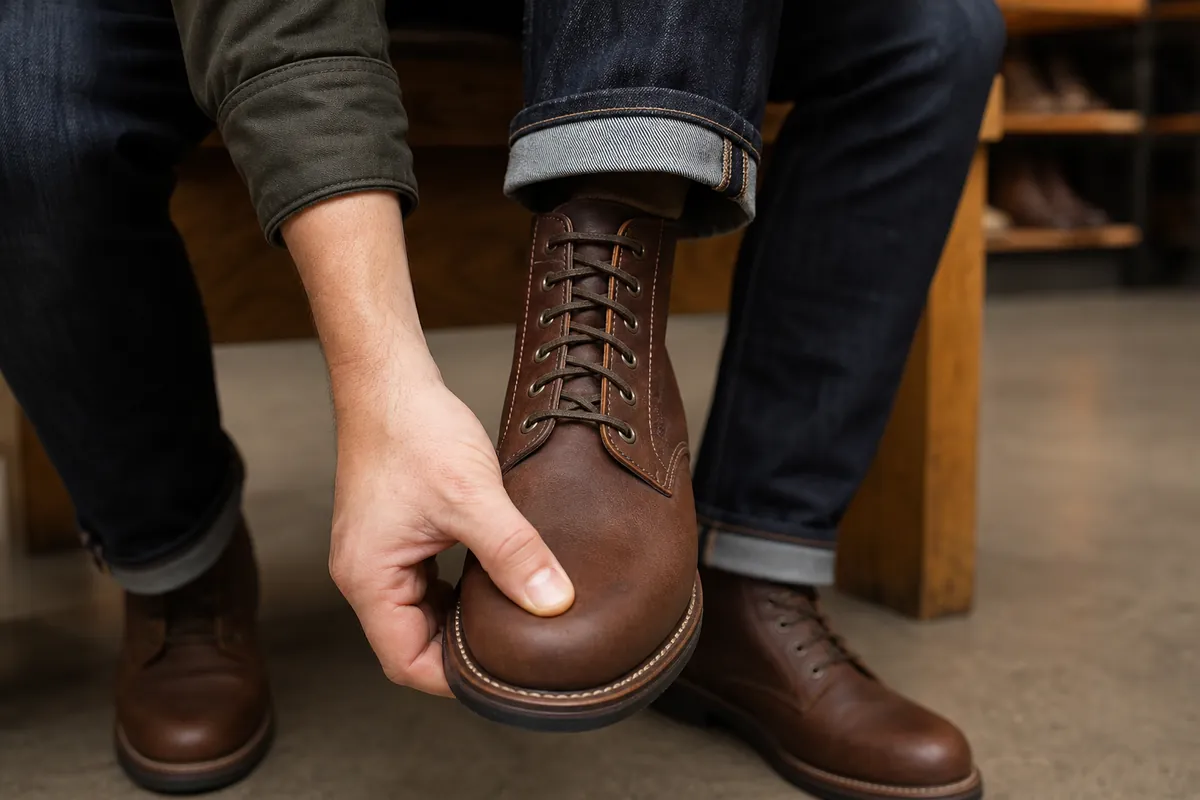
With the boot laced and your weight on it, press down in front of your longest toe. You should find roughly a thumb's width of space, which is close to half an inch. Safety guidance in Canada from the Canadian Centre for Occupational Health and Safety mentions about 12.5 mm for safety footwear, which lands in the same range.
Your longest toe may not be the big toe. For many people it is the second toe, so look at the whole row, not only the front of the big toe. If that second toe touches the front of the boot while you walk, the boot is too short, however good it feels at the ball.
Heel hold
A new work boot has a stiff heel counter and a firm sole, so a bit of heel slip is normal at first. What you do not want is a heel that rises with every step, since that rubs the skin and becomes a blister within hours. Walk in the shop for several minutes, take a few steps up stairs or a ramp, and feel for the heel lifting. If it does, try a different size or a model with a different last. A thicker sock or a heel grip can help at the margins.
You can use the laces, too. A heel lock, where the laces are threaded through the top eyelets to cinch the ankle, reduces slip. But laces should not be pulled hard to hold a loose boot. If you need to over-tighten them, the boot is probably the wrong size.
Fit tip: Crouch, kneel and climb a step in the shop. If your foot slides forward into the toe when you crouch, or the boot digs into the top of your foot, the fit is wrong for a job that has you moving around.
Width: choose it before you add length
If the sides of your feet pinch, change the width before you go up a half size. A longer boot with the same narrow width adds length you do not need, and that lets the heel slip. Many brands offer medium (D) and wide (EE) options, and some go wider. The widths on our standard chart are below.
| Men's width | Label | Women's width | Label |
|---|---|---|---|
| B | Narrow | 2A (AA) | Narrow |
| D | Standard / Medium | B | Standard / Medium |
| 2E (EE) | Wide | D | Wide |
| 4E (EEEE) | Extra wide | 2E (EE) | Extra wide |
| 6E | Extra-extra wide |
For more on identifying a wide foot, see the wide feet guide, and for what the letters mean, the shoe width chart.
Sizing against your sneakers
The size you wear in sneakers is not always the size you wear in a work boot. Many leather work boots are sized on the Brannock scale, so they land about half a size below the sneaker size, while some brands and many safety-toe models run closer to the sneaker size or half a size above. The chart below gives the real foot length for each US men's size, which is the number to compare against.
| US men's | UK | EU | Foot length (cm) | CM (JP) |
|---|---|---|---|---|
| 8 | 7 | 41 | 25.4 | 26 |
| 8.5 | 7.5 | 42 | 25.9 | 26.5 |
| 9 | 8 | 42.5 | 26.2 | 27 |
| 9.5 | 8.5 | 43 | 26.7 | 27.5 |
| 10 | 9 | 44 | 27.1 | 28 |
| 10.5 | 9.5 | 44.5 | 27.5 | 28.5 |
| 11 | 10 | 45 | 27.9 | 29 |
| 11.5 | 10.5 | 45.5 | 28.4 | 29.5 |
| 12 | 11 | 46 | 28.7 | 30 |
A 27.9 cm foot is a men's US 11 on this chart. In a leather boot, that wearer may be a size 10.5 or 11 depending on the brand and on the socks. A brand's own chart, or a brand-specific guide such as our Red Wing sizing guide, is more reliable than a general rule. Our general boot fit guide covers the other types of boots.
Safety toes: steel, composite and alloy
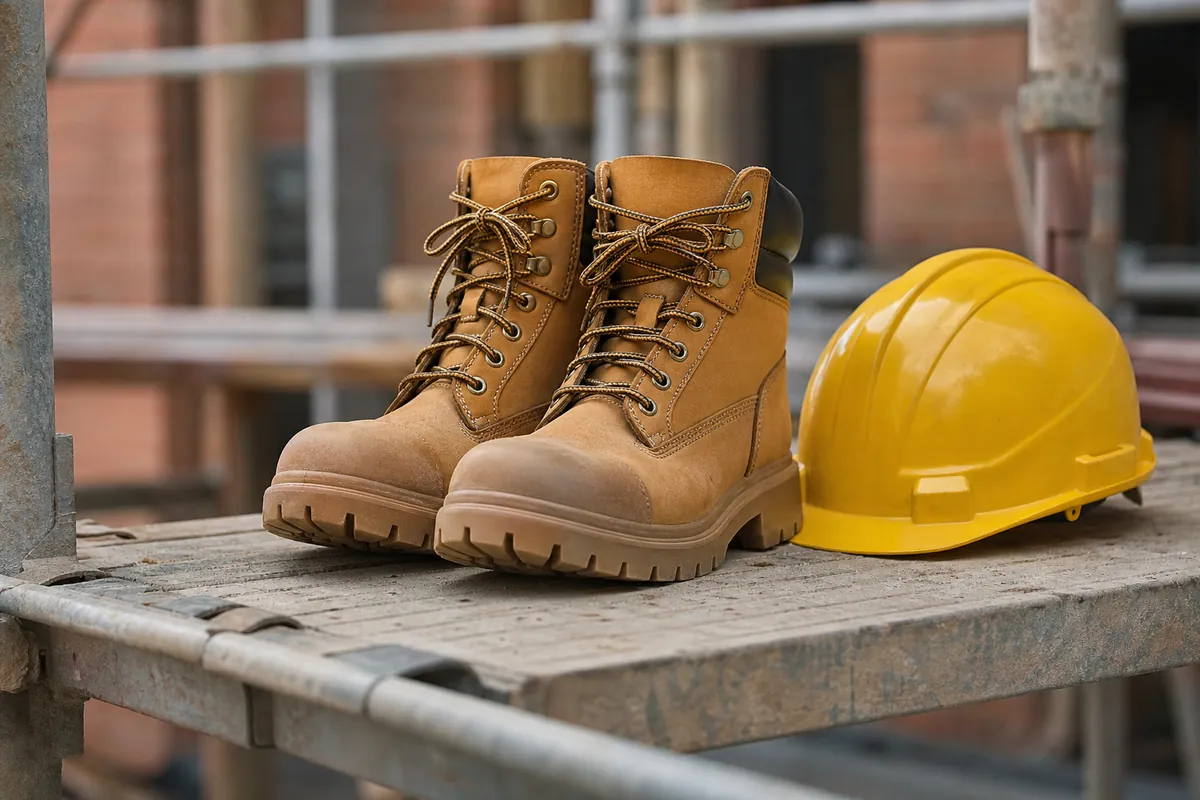
The cap in a safety-toe boot does not stretch. A soft leather boot will give over time, but a steel or composite cap keeps its shape. If it presses on your toes in the shop, it will press on them after a month too. This means the toe check is the most important test for these boots, and you should do it with your thick socks on.
Safety-toe models can also fit slightly smaller than the soft-toe version because the cap takes up volume. Some people find they need half a size up, though it is not universal. Wear them for the full try-on period before you cut the tags.
Socks and timing
Wear the work socks you will use on the job. A thick wool sock can make a boot feel half a size smaller than a thin one, and a boot that fits a thin sock may be too loose with a thick one. If you wear a liner, include it. Try boots on in the late afternoon or evening, when your feet are at their largest, and always fit to the larger foot.
Arch support and insoles
Arch comfort is personal. Many work boots have removable insoles, and replacing them with a firmer or more supportive one is common. A thicker insole takes up volume, so it can create pressure across the top of the foot, especially in a boot that was already snug. If you use orthotics, bring them to the shop and try the boot with them in place.
Waterproof, insulated and heavy-duty variations
- Waterproof boots: a membrane or a thicker lining reduces interior space a little. Test them with your socks.
- Insulated boots: need more room for the insulation and a thicker sock. For cold-weather specifics, see our winter boot fit guide.
- Pull-on boots: should be snug through the instep, and slight heel slip is common.
- Lace-up boots: allow more adjustment, so the fit at the instep is easier to correct.
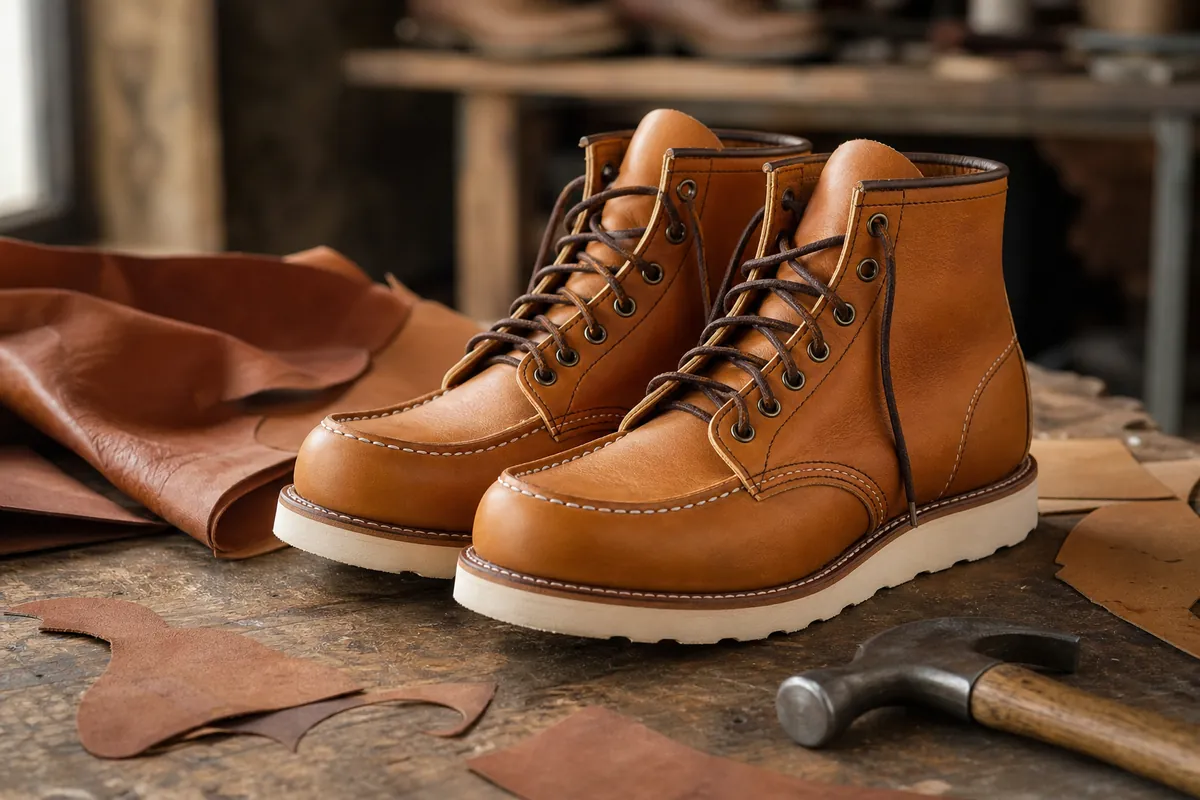
- Moc-toe and wedge soles: the shape differs from a traditional boot. See our Thorogood guide and Danner guide for two popular lines.
Fit for a long day on your feet
A boot that feels fine for ten minutes in the shop has to survive ten hours. Feet swell as the day goes on, particularly on concrete and in warm conditions, so a boot with no spare room can turn tight by afternoon. When two sizes both pass the heel test, many people choose the one with a little more space at the toe, then fine-tune the heel with socks or lacing.
The nature of the job matters as well. If you climb ladders or walk uneven ground, a secure heel and a firm midfoot matter more than extra toe room. If you stand mostly in one place, a roomier forefoot and a cushioned insole may be more comfortable. If you crouch or kneel a lot, check that the toe box is tall enough that the upper does not press on your toes when the foot bends.
Measuring before you buy
Stand on a sheet of paper, trace both feet, and measure from the back of the heel to the tip of the longest toe, then measure the widest part. Do it in the evening and wear the socks you plan to work in. Compare the longer foot with the brand's chart, since brands differ, and with the foot lengths above. Our guide on how to measure your feet has the steps. A measurement gives you a starting size, but the try-on settles it.
How much break-in is normal
Some stiffness in a new boot is normal. Leather softens, and the footbed starts to take your shape in a few weeks. Pain, numbness or a hot spot in the first few hours is not normal. Do not buy a boot that hurts and expect it to stretch, since leather mostly gives in width and not in length, and a safety toe does not give at all. If several sizes still hurt, try another model, because the last may not suit your foot.
Break in new boots on short days. Use a blister pad or tape on trouble spots, and keep a spare pair of socks in your bag.
A quick in-shop routine
- Wear your work socks and shop in the afternoon.
- Lace the boot fully, not loosely.
- Check for a thumb's width of room at the toe.
- Walk, crouch and climb stairs.
- Check for heel lift, pressure on the sides and pain at the instep.
- Repeat the process in the next half size and compare.
If you are working from a measurement, the shoe size calculator can convert your foot length into a US size for a starting point.
Bottom line
A work boot that fits well holds your heel, gives you a thumb's width at the toe and does not pinch at the sides. Choose the width first, test with your real socks, and never buy a boot that hurts on the promise that it will stretch. A safety toe will not give, so that part has to feel right on day one.
Frequently asked questions
How much room should work boots have at the toe?
About a thumb's width, close to half an inch, in front of your longest toe. Check the second toe too, since it is sometimes longer than the big toe. Canadian safety guidance mentions about 12.5 mm for safety footwear.
Should work boots be tight or loose?
Neither. They should be snug at the heel and midfoot with room at the toes. A small amount of heel slip is normal in a stiff new boot, but constant lifting means the size or the last is wrong.
Should I go up a size for steel toe boots?
Sometimes. The cap takes up space and does not stretch, so many people find safety-toe boots fit about half a size smaller than the soft-toe version. Check the toe with your thick socks on before you decide.
What if work boots pinch at the sides?
Try a wider width in the same size before going up a half size. A longer boot adds length you do not need and can make the heel slip. Many brands offer D and EE, and some go wider.
Will work boots stretch with wear?
Soft leather loosens a little, mostly across the ball of the foot. It barely lengthens, and steel or composite caps do not stretch. Some stiffness is normal, but pain or numbness is not, so do not buy boots that hurt.