Thorogood Boot Sizing: Moc Toe, American Heritage and Work Boots
Thorogood boots usually fit close to your Brannock size, about half a size below your sneaker size. Here is how that changes with safety toes and wide feet.
Quick answer
Thorogood boots generally fit close to your Brannock size, which is often a half size below your sneaker size. Safety-toe models often need about half a size more, wide feet may need EE, and thick work socks add volume. Sources disagree on the American Heritage last, so try it on before you commit.
- Fit
- True to size
- Width
- Standard width
- Our advice
- Order your Brannock size, usually half a size below your sneaker size; take half a size up for safety toes or thick socks.
Thorogood boots are usually described as running close to your Brannock size, which makes them a half size smaller than most people's sneaker size. If you wear a men's US 10.5 sneaker, a size 10 Thorogood is the usual first guess. The main variables after that are width, whether the boot has a safety toe, and which model you buy.
This guide covers how to pick a size in the Moc Toe, the American Heritage line and other work boots, where the information is unclear, and how Thorogood compares with other leather boots. Thorogood is not in our brand database, so there is no brand-specific chart here. We use the standard chart as a reference for foot length instead.
The simple rule, and its limits
The common advice is to order your Brannock size and expect it to fit. A Brannock device is the metal foot-measuring tool in shoe stores, and its scale is the US system most American boot makers use. Sneaker sizes tend to run about a half size larger, so the rule of thumb that gets quoted most is to go a half size down from your sneakers.
That rule has limits. It works best when your foot is average width. If your forefoot is wide, a half size down can leave the boot too short for the toes or too tight across the ball. If you have never been measured, do that first. Our measuring guide shows how to take the numbers at home, and the chart below shows the foot length that goes with each US men's size.
| US men's | UK | EU | Foot length (cm) | CM (JP) |
|---|---|---|---|---|
| 8 | 7 | 41 | 25.4 | 26 |
| 8.5 | 7.5 | 42 | 25.9 | 26.5 |
| 9 | 8 | 42.5 | 26.2 | 27 |
| 9.5 | 8.5 | 43 | 26.7 | 27.5 |
| 10 | 9 | 44 | 27.1 | 28 |
| 10.5 | 9.5 | 44.5 | 27.5 | 28.5 |
| 11 | 10 | 45 | 27.9 | 29 |
| 11.5 | 10.5 | 45.5 | 28.4 | 29.5 |
| 12 | 11 | 46 | 28.7 | 30 |
A 27.5 cm foot corresponds to a men's US 10.5 on this chart. If you use it as a baseline, expect a work boot to want a little more length than a dress shoe, because of socks and the thickness of the leather.
Moc Toe
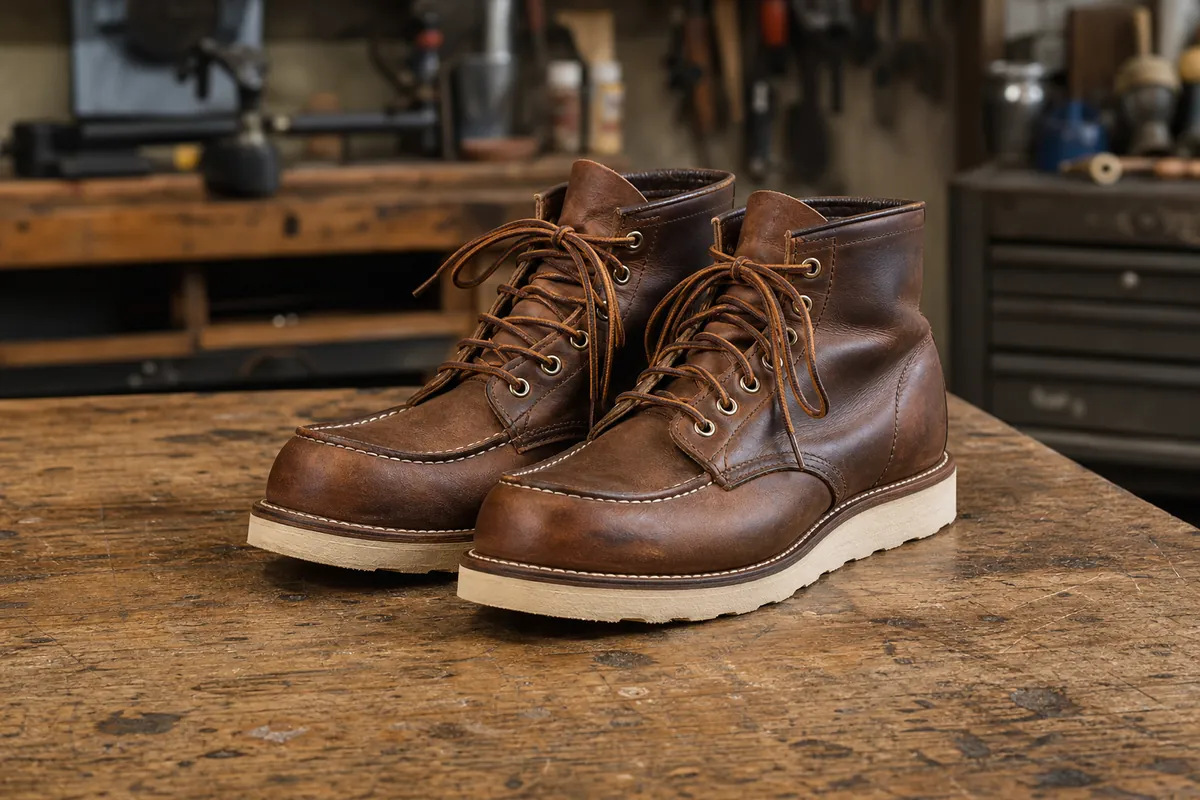
The Moc Toe is the model most people picture when they think of Thorogood. It has a rounded, moccasin-style toe that gives the toes a bit of room to spread. Buyers generally find it comfortable and relaxed through the forefoot, with a snug heel. Because the toe box is not cramped, the Moc Toe is a boot where the size-down rule often works well, especially in medium width.
American Heritage
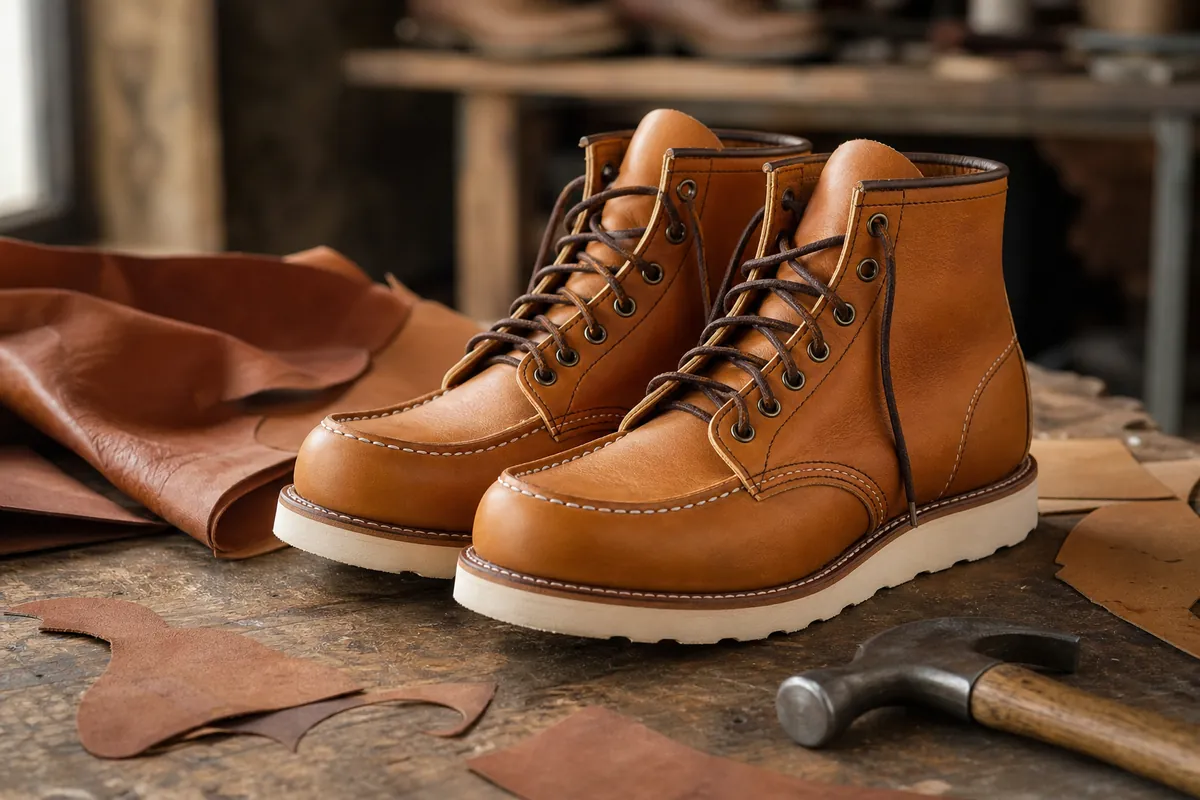
American Heritage is Thorogood's line of American-made boots and includes the unlined styles. Information about its last is not consistent: some descriptions call it narrower, while others mention a roomy toe box. We cannot settle that from the available sources, so the safe approach is to treat it as an average fit and check the product page for the width. If you are between widths, a slightly roomier option is wiser in an unlined boot, since there is no padded lining to take up space.
Logger, Genesis and safety-toe boots
These models change the picture in a few predictable ways.
- Logger-style boots: described as having a roomier last to make room for insulation or waterproofing. Test with the socks you will wear.
- Genesis-style boots: described as a combination last with a snug heel and a flared toe so the forefoot can spread. They tend to feel secure at the back and open at the front.
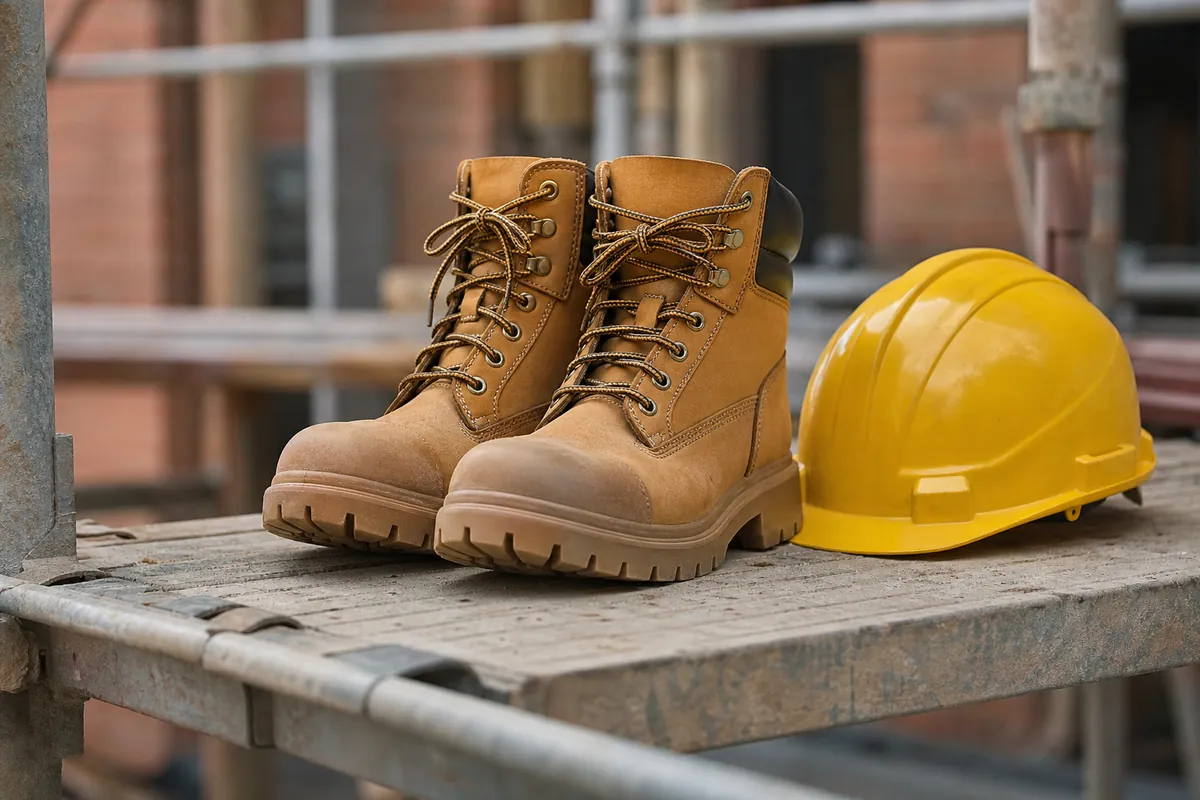
- Safety-toe boots: steel and composite caps add bulk at the toe. Many wearers need about half a size more than in the soft-toe version of the same boot, so the size-down rule may not apply. Check how the cap feels when you stand and when you crouch.
- Pull-on (wellington) boots: should feel snug through the instep. A small amount of heel slip is generally accepted.
Fit tip: A steel or composite cap does not stretch. If the cap presses on your toes in the shop, a break-in will not fix it. Try the next half size or a wider width before you commit.
Widths
Thorogood offers medium (D) and wide (EE) in many boots and a narrow (B) in some. Width labels vary between sources, and some charts use words like narrow, medium, wide and extra wide instead of letters, so check the exact label on the product page. The widths on our standard chart are shown below.
| Men's width | Label | Women's width | Label |
|---|---|---|---|
| B | Narrow | 2A (AA) | Narrow |
| D | Standard / Medium | B | Standard / Medium |
| 2E (EE) | Wide | D | Wide |
| 4E (EEEE) | Extra wide | 2E (EE) | Extra wide |
| 6E | Extra-extra wide |
If your feet are even slightly wider than average, EE is worth a try, and our wide feet guide explains how to tell. Leather boots do soften, but they soften mostly across the ball and the top of the foot, not in length. Our shoe width chart explains the letters if you are not sure of your own.
Thorogood versus Red Wing
Thorogood is often compared with Red Wing, because both make American-made leather work boots. The usual claim is that Thorogood gives more room in the toe box, while Red Wing models such as the Iron Ranger can feel narrower through the front of the foot. That generalization has exceptions, since Red Wing's different lasts vary too. If you already own a Red Wing and like the fit, our Red Wing guide shows how those sizes compare with sneakers. Do not transfer a Red Wing size directly to a Thorogood without testing, since Red Wing sizes often run larger than your sneaker size by a wider margin.
Socks and timing
Thick work socks can add roughly a half size to the volume you need, so wear them when you try the boots on or measure. Feet are larger late in the day, so fit the boot in the afternoon or evening, and always fit to your larger foot. If you stand on concrete all day, expect your feet to swell on the job, so a boot that feels perfect at nine in the morning may need a touch more room.
What the fit should feel like
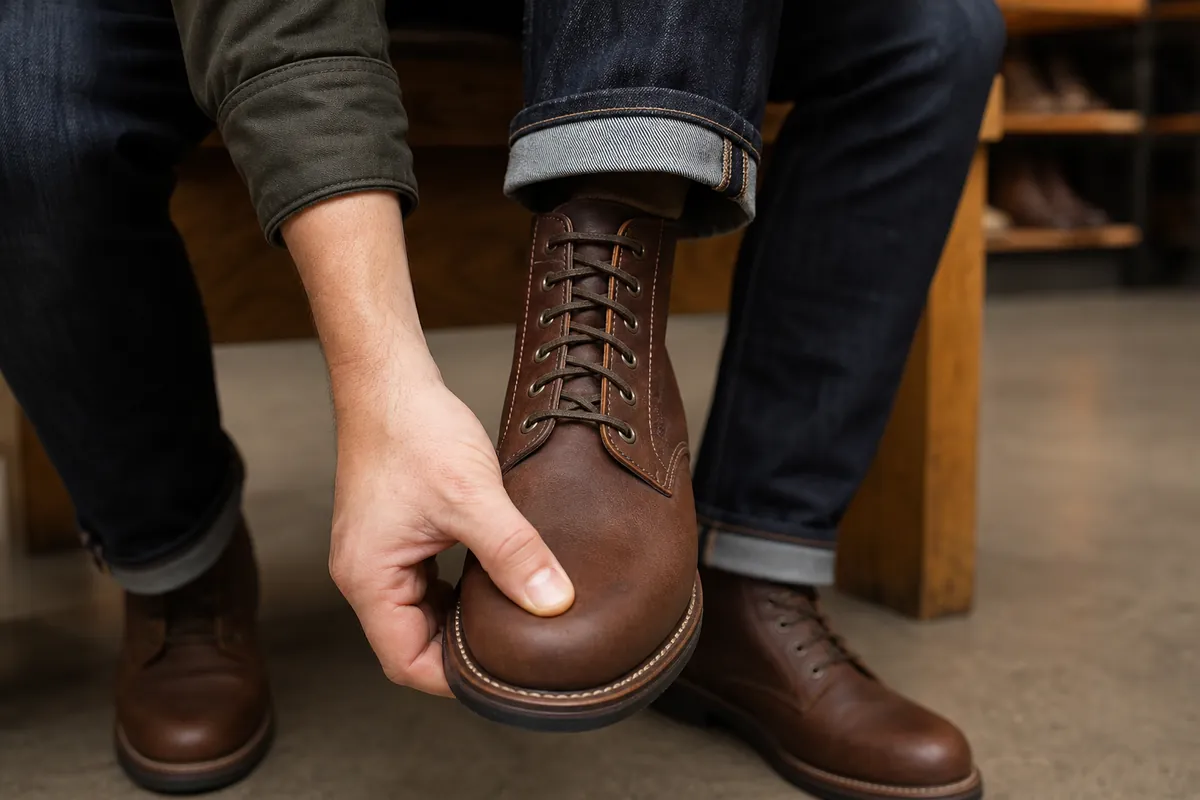
A good fit feels snug but not tight. Your heel should be secure and the boot should feel stable under your weight. Some stiffness is normal in a new leather boot, but pain, numbness or rubbing at the first wearing is not. Leather moulds to your foot over time, but it will not make up for a size that is clearly wrong. For the basic checks, our work boot fit guide lists the tests to run in the shop, such as the toe room, the heel lift and the crouch test.
Thorogood uses plastic lasts to shape its boots, which is a point of manufacturing, not an indication of fit. What matters to you is the shape of the last: the length, the width and the toe shape it gives, which differ from one model to another.
When you land between sizes
If a half size down leaves your toes touching the front when you walk downhill or crouch, take the larger size. If the larger size lets your heel lift with every step, try a thicker sock, a heel grip or a tongue pad before you give up on it. Pull-on styles are the exception, where a snug fit and a little heel slip are expected. A boot that is both too long and too wide is a different problem, and a narrower width in the smaller size is the better fix than a lot of padding.
How to order online
- Measure both feet in the evening, with the socks you will wear.
- Take the larger foot, and start with your Brannock size, which is often half a size under your sneaker size.
- Pick the width that matches your Brannock width letter, or go one width up if your foot is on the wide side.
- If the boot has a safety toe, consider ordering a second pair half a size up to compare, as long as the seller offers free returns.
- Walk around indoors on a clean floor for a while, and keep the pair that holds the heel and leaves a thumb's width at the toe.
If you are working from a foot measurement in centimeters, the shoe size calculator can give you the US size to start from.
Break-in
Expect a break-in period. Wear the boots at home for a few hours at a time, and then for short shifts. If the leather rubs, use a blister pad or a different sock. The leather will mould to the foot, but you should not need to suffer through weeks of pain, and if a boot hurts in the same place every time, it is most likely the wrong size or width.
Bottom line
For most people, a Thorogood boot fits best one half size below the sneaker size, which is usually the Brannock size. Safety toes, insulation and wide feet each push that rule the other way. Start from a measurement, choose the width first, and test with your work socks. Where the sources disagree on a specific last, such as the American Heritage, trust the try-on, not the rule.
Frequently asked questions
Do Thorogood boots run big or small?
Generally they are described as true to your Brannock size, which feels like half a size down from most sneaker sizes. Safety-toe models can need about half a size more, so the rule shifts with the model.
Should I size down in Thorogood Moc Toe boots?
Many wearers go half a size below their sneaker size, which is usually their Brannock size. The moc toe has a rounded, relaxed forefoot, so this often works in medium width. Wide feet may do better in EE at the Brannock size.
Do Thorogood boots come in wide sizes?
Many models come in medium (D) and wide (EE), and some have a narrow (B). Width labels differ between charts, so confirm the exact width on the product page and try EE if your feet are even slightly wider than average.
Is Thorogood roomier than Red Wing?
The common claim is yes, especially in the toe box, where some Red Wing models feel narrow. Both brands use several lasts, so there are exceptions. Do not carry a Red Wing size across without trying the Thorogood.
How should I size Thorogood safety toe boots?
You often need about half a size more than in the soft-toe version because the cap takes up space. The cap does not stretch, so if it presses on your toes, go up half a size or try a wider width.