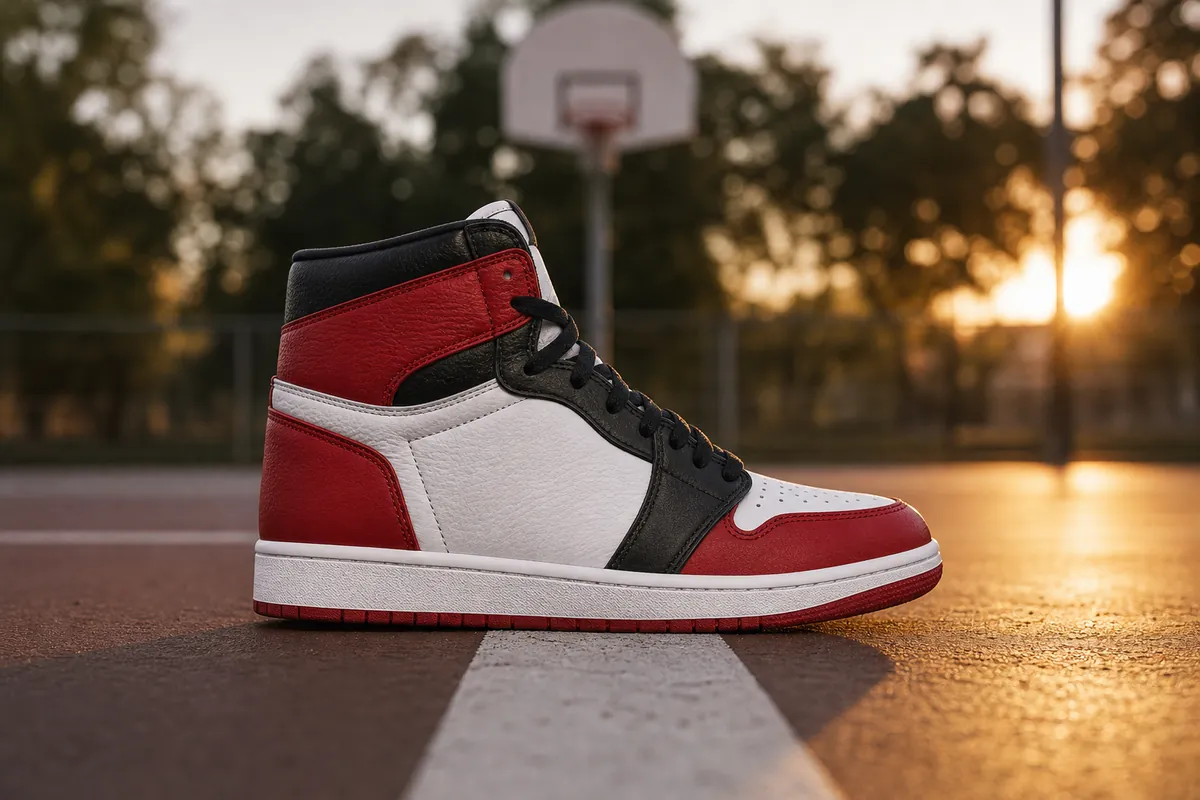
Nike Dunk vs Air Jordan 1 Sizing: Is It the Same Size?
Dunk Lows and Air Jordan 1s both fit true to size, so you can wear the same number. The Dunk is roomier up front and the Jordan 1 holds the heel tighter.
Quick answer
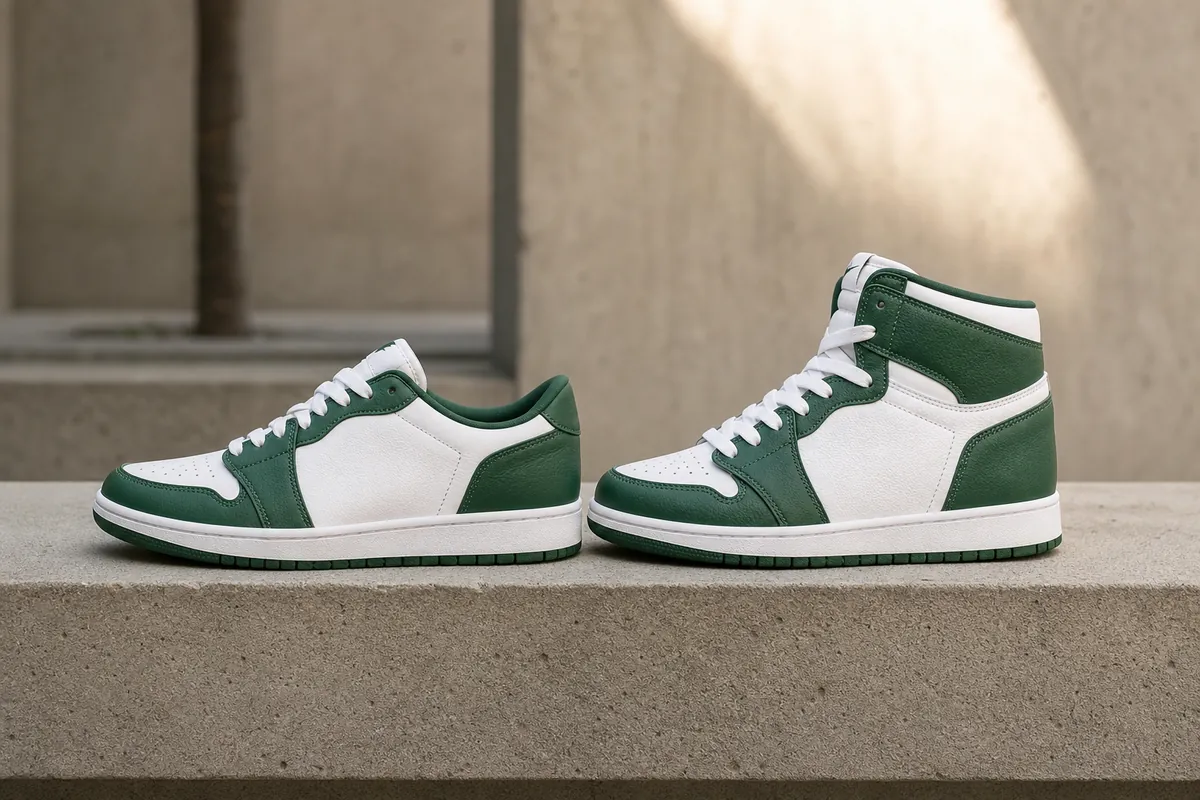
Yes, in most cases. The Nike Dunk Low and the Air Jordan 1 both fit true to size, so take the same number in each. The Dunk has more toe room, while the Jordan 1 fits closer in the midfoot and heel. Wide feet suit the Dunk, and narrow feet suit the Jordan 1.
- Fit
- True to size
- Width
- Varies
- Our advice
- Same size in the Dunk Low and Air Jordan 1; half a size up in the SB Dunk Low or for wide feet in the Jordan 1.
The Nike Dunk Low and the Air Jordan 1 both fit true to size, so most people wear the same number in each. What changes is the shape. The Dunk gives your toes more room, while the Jordan 1 holds the midfoot and heel more closely.
That means a shoe in your size can still feel different when you switch between the two. Here is what to expect, which one suits which foot, and how the special editions shift the numbers.
Same size, different shape
If you wear a men's 9 in a Dunk Low, a men's 9 is the right place to start in an Air Jordan 1, and the reverse is true as well. Both models match the numbers on Nike's size scale closely, which is why neither of them is on the list of Nike shoes that need a half-size correction. Our guides for the Dunk and the Air Jordan line agree on this.
The difference is how the shoe feels once your foot is inside it. The two silhouettes come from different parts of Nike's history: the Dunk was a college basketball shoe with a flatter, broader profile, and the Jordan 1 was designed as a slimmer performance shoe for one player. You can still see that in how they hold a foot today.
Where each shoe is roomier or tighter
Toe box and forefoot
The Dunk Low has the more generous front end. There is more height over the toes and more room across the ball of the foot. The Jordan 1 narrows toward the toe, so the same size has less room at the front.
Midfoot and heel
The Jordan 1 is more form-fitting here. The heel sits firmly, and there is less room in the middle of the shoe. The Dunk is more relaxed in the midfoot and gives you a bit more heel movement.
Sensitivity to lacing
The Jordan 1 is the more lace-sensitive of the two. How tight you pull the laces changes the feel noticeably. The Dunk tolerates loose lacing and still feels secure.
Runner's tip: If a Jordan 1 feels a little tight at your Dunk size, relace it a bit looser across the instep before you change sizes. Many people only need that.
Which one suits your foot?
- Narrow feet: the Jordan 1 usually suits better. The tighter heel and midfoot take up the spare space that narrow feet struggle with in a Dunk.
- Average feet: either one works at your normal size. Pick on style and use.
- Wide feet: the Dunk Low is the more forgiving option, because the forefoot is the roomier of the two.
If you have wide feet and love the Jordan 1, half a size up is a sensible workaround, with the caveat that extra length does not widen the shoe by much.
Special versions that change the answer
Standard Dunk Lows and Jordan 1s are the baseline. These variants deviate from it.
- Air Jordan 1 High '85: narrower in the forefoot than the High OG. Wide feet may want half a size up.
- Air Jordan 1 Low OG: can feel slightly long, so narrow and average feet may try half a size down.
- Dunk Low SP: generally described as roomier in the forefoot than the standard Dunk Low.
- Dunk Low QS: generally described as snugger than the standard Dunk Low.
- SB Dunk Low: the padded tongue and collar make it about half a size snugger. Go half a size up from your Dunk Low size. The SB Dunk vs Dunk comparison has the details.
- SB Dunk High: fits true to size, like the regular Dunk.
If you also own Air Force 1s
The Air Force 1 is the outlier. It runs about half a size big, so people who take half a size down there should go up half a size from that number in both the Dunk and the Jordan 1. In practice, an 8.5 in the AF1 matches a 9 in either of the other two. Our Air Force 1 sizing guide explains the reasoning, and the Dunk vs Air Force 1 article compares those two directly.
The exception is wide feet. Wide feet often wear the same number in all three, since the AF1's extra room is not wasted on them.
High-tops and mid-tops
Everything above is about the low versions, which are the most commonly compared. The high-tops follow the same pattern. The Dunk High and the Air Jordan 1 High both fit true to size, and the difference in toe box and midfoot is the same. The Jordan 1 Mid also fits true to size. If you want to compare heights within the Jordan family, read the Jordan 1 High vs Mid vs Low guide.
Break-in and materials
Both shoes are leather, and both soften with wear. Dunks tend to feel comfortable sooner, thanks to the roomier front. Jordan 1s can feel firm at the ankle and the toe flex point for the first few wears, and they improve after that. Nubuck and suede versions are softer than smooth leather from the start in either model.
Neither shoe stretches much in length, so do not buy a size too small and hope it will loosen. A pair that touches your toes on the first day will keep doing that. Leather gives a little in width over time, not in length.
A quick way to check your own pair
If you already own one of these, you can sanity-check the other before you buy. Put on your current pair with your regular sock, and notice three spots. First, how much room is there in front of your longest toe? Second, does your little toe touch the side wall? Third, can your heel lift when you walk?
When the toe room is right but the little toe feels pinched, you probably have a wider forefoot. A Dunk in the same size will feel better than a Jordan 1 in that case. When the toes are fine but the heel slips, you probably have a narrow heel, and the Jordan 1 is the one that will hold it. If both feel fine, you can buy either with no change.
What the numbers mean in practice
It helps to translate sizes into centimeters. A men's 9 fits a foot about 26.2 cm long, and the box label reads 27 CM, which includes the room Nike builds in for the toes. A men's 9.5 fits a 26.7 cm foot, and a men's 10 fits 27.1 cm. Moving up half a size therefore adds about half a centimeter, which is a small change but enough to matter when you are right on the border.
That is also why a half size does not repair a width problem. A half size adds length first, and only a little width, so if the issue is the pinky toe being squeezed from the side, a shoe with a naturally roomier forefoot like the Dunk is a better fix than a bigger number in the Jordan 1.
Our take on buying both
If you plan to own both models, buy the same size and let the shape differences work for you. Keep the Dunk for long days on your feet and the Jordan 1 for outfits where you want a trimmer profile. Reserve half-size changes for the SB Dunk Low and the High '85 only, because those are the variants where the data points in a clear direction.
Nike men's size chart
Both models use the same scale. The foot length column is the real length of the foot, and CM (JP) is the label on the box, which is longer than the foot.
| US men's | UK | EU | Foot length (cm) | CM (JP) |
|---|---|---|---|---|
| 6 | 5.5 | 38.5 | 23.7 | 24 |
| 6.5 | 6 | 39 | 24.1 | 24.5 |
| 7 | 6 | 40 | 24.6 | 25 |
| 7.5 | 6.5 | 40.5 | 24.9 | 25.5 |
| 8 | 7 | 41 | 25.4 | 26 |
| 8.5 | 7.5 | 42 | 25.9 | 26.5 |
| 9 | 8 | 42.5 | 26.2 | 27 |
| 9.5 | 8.5 | 43 | 26.7 | 27.5 |
| 10 | 9 | 44 | 27.1 | 28 |
| 10.5 | 9.5 | 44.5 | 27.5 | 28.5 |
| 11 | 10 | 45 | 27.9 | 29 |
| 11.5 | 10.5 | 45.5 | 28.4 | 29.5 |
| 12 | 11 | 46 | 28.7 | 30 |
| 12.5 | 11.5 | 47 | 29.2 | 30.5 |
| 13 | 12 | 47.5 | 29.7 | 31 |
For example, a 26.2 cm foot is a men's US 9, so a 9 in both the Dunk Low and the Jordan 1. Women's sizes are 1.5 higher than men's for the same foot, so that same foot is a women's 10.5. Use the shoe size calculator if you want to check your own measurement.
Note: Fit notes here reflect the general consensus among wearers and published sources, not lab measurements. Feet vary, so keep returns in mind.
Our recommendation
Short version: the number on the box is not where these two shoes differ. The shape is.
Order the same size in a Dunk Low and an Air Jordan 1, then adjust for your foot. Choose the Dunk if you have wide feet or want a relaxed toe box. Choose the Jordan 1 if you have narrow feet or want a firmer hold on the heel. Go half a size up in the SB Dunk Low, and in the High '85 if your forefoot is wide.
If you are buying your first pair of either, the safest approach is to use your size in another Nike shoe you already own. That is why the Nike sizing guide is a good companion to this one.
Frequently asked questions
Do I wear the same size in a Dunk and an Air Jordan 1?
For most people, yes. Both shoes fit true to size, so your usual Nike size works in each. The fit feels different, though: the Dunk is roomier in the toe box and the Jordan 1 is more closely shaped through the midfoot and heel.
Which is better for wide feet, the Dunk or the Jordan 1?
The Dunk Low. It has more room around the toes and across the forefoot. The Jordan 1 narrows toward the front, so wide feet may need half a size up, and extra length will not add much width.
Are Dunks or Jordan 1s better for narrow feet?
Jordan 1s, generally. The closer fit at the midfoot and heel holds a narrow foot more securely, while a Dunk can feel a little loose. You can also tighten the lacing on the Jordan 1 to refine the fit.
What Jordan 1 size if I wear a 9 in the Air Force 1?
Try a 9.5. The Air Force 1 runs about half a size big, while the Jordan 1 and Dunk Low run true to size. Many people with an 8.5 in the AF1 wear a 9 in the Jordan 1 and Dunk.
Does the SB Dunk fit like the Air Jordan 1?
Closer than the regular Dunk, but not identical. The SB Dunk Low is about half a size snugger than a regular Dunk because of its padded tongue, so many people go half a size up. The Jordan 1 stays at true to size.