Air Jordan 1 High vs Mid vs Low Sizing: Do They Fit the Same?
The Air Jordan 1 High, Mid and Low fit almost the same, true to size. The Low OG can run a touch long and the High '85 is narrower. Here is what to order.
Quick answer
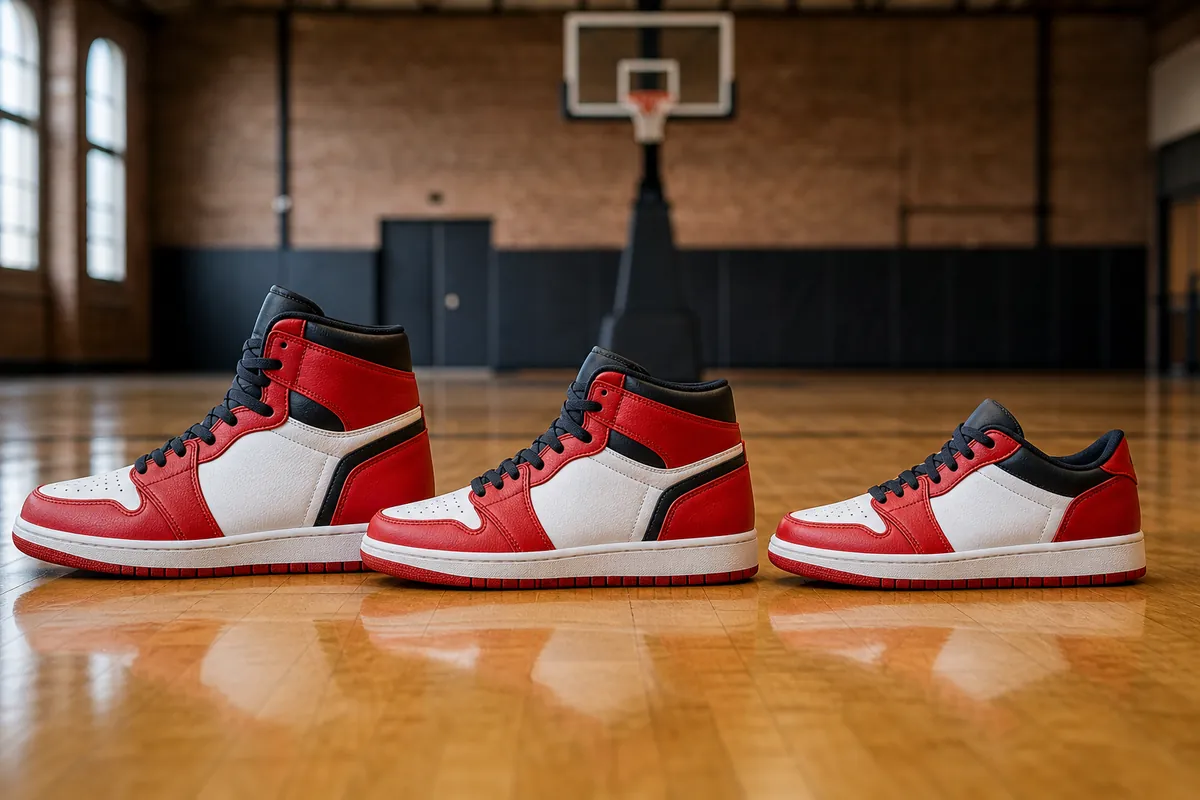
Air Jordan 1 High, Mid and Low all fit true to size, so order your usual Nike size. The Low OG can feel slightly longer, so narrow or average feet may try half a size down. The High '85 has a narrower forefoot, so wide feet may want half a size up.
- Fit
- True to size
- Width
- Standard width
- Our advice
- Order your usual Nike size in the High, Mid and Low; half a size down in the Low OG for narrow feet, half up in the High '85 for wide feet.
The three Air Jordan 1 heights fit almost the same. High, Mid and Low all run true to size for most people, so your usual Nike size is the right place to start. The one change worth knowing about is the Low OG, which some wearers find a touch longer, so narrow and average feet can consider half a size down.
The bigger sizing questions come from the version, not the height: the High '85 has a narrower forefoot, some Mids use stiff leather, and certain collabs are sold in women's sizes. This guide sorts those out so you can order a pair without guessing.
The short version, model by model
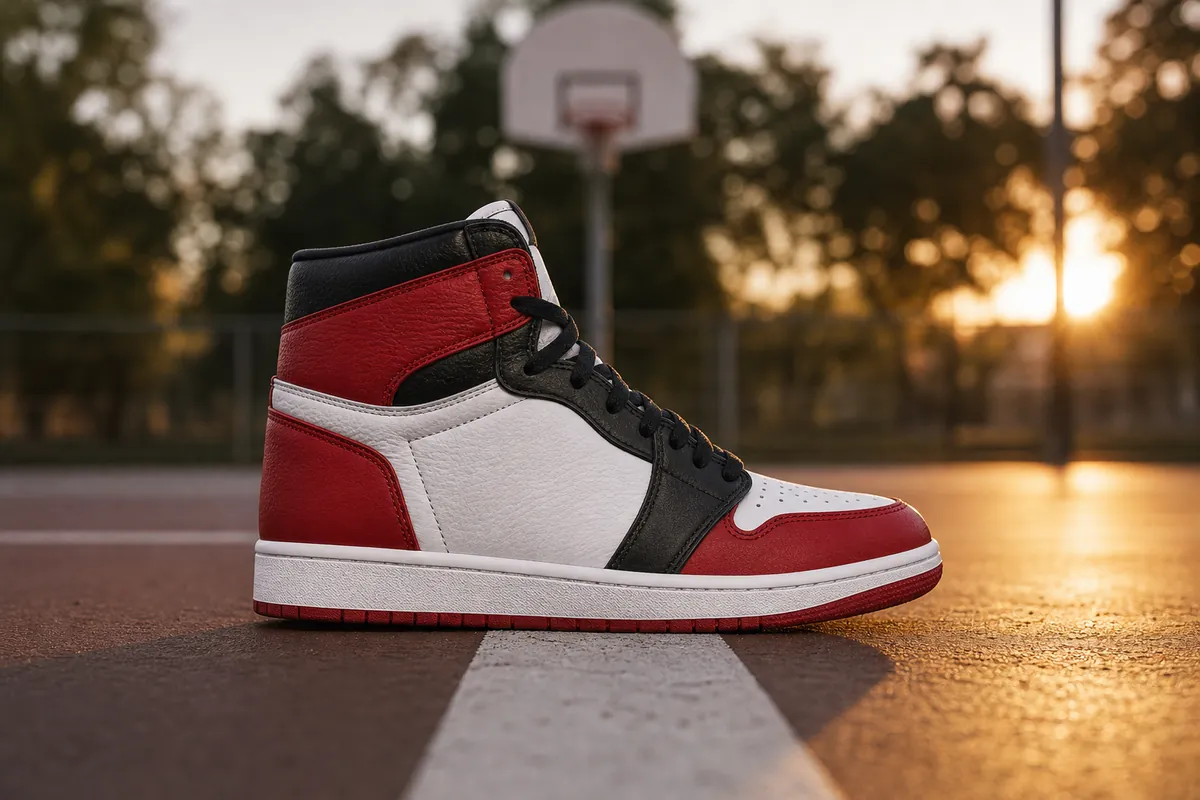
- Air Jordan 1 High OG: true to size. This is the reference model for the whole family.
- Air Jordan 1 High '85: true to size for most, with a narrower forefoot. Wide feet should consider half a size up.
- Air Jordan 1 Mid: true to size, with a length similar to the High. Some releases use stiffer leather that feels tighter for the first few wears.
- Air Jordan 1 Low and Low OG: true to size, though the Low OG can feel slightly longer. Narrow or average feet may go half a size down, while wide feet should stay at their usual size.
Our main Air Jordan sizing guide reaches the same conclusion for the 1: true to size across the family, with the other numbers in the Jordan line being a different story.
Why the height does not change the size
A high-top and a low-top share the same last and the same outsole length. What changes above the ankle bone is the collar, not the room for your toes. That is why the High and Mid behave alike in length: the lower two thirds of each shoe is the same design.
You will feel the difference in other ways. The High locks the ankle and can feel restrictive if you lace it tight. The Mid does a similar job with a shorter collar. The Low has no ankle structure at all, so it feels freer but also gives your heel less support.
The Low OG: the one that can feel longer
The Low OG is the model that people most often discuss in half-size terms. The shape runs slightly longer than the High OG, and the lower profile gives the toe area a more open feel. If your foot is narrow or average, a half size down can make the fit more secure. If your foot is wide, dropping half a size shortens the shoe without making it any wider, so it gets tighter across the ball. Staying at your normal size is the safer choice.
Sources are not unanimous here. Some wearers report the Low at exact true to size with no change, and the difference is small enough to depend on the release. If you are unsure, order your usual size from a store with easy returns.
Runner's tip: Pay attention to heel slip, not toe room, when deciding whether to drop half a size in a Low. A shoe that is a little long is fine if the heel stays put. A shoe that is a little short is not.
High '85 and the narrow forefoot
The '85 versions reproduce the original 1985 shape, which is trimmer in the front than the current High OG. Most people can still wear their normal size, because the length is the same. The people who notice it are those with a broader forefoot, who may feel squeezed across the toes. For them, half a size up is a reasonable fix.
Mid leather and break-in
The Mid is not smaller than the High. The issue is that some Mid releases use thicker, less pliable leather, so they feel tight at first and open up as you wear them. If the shoe feels tight but not painful in the first few days, do not size up straight away. Give it a week of normal wear. If it feels tight around the little toe in the first hour, though, that points to a real fit issue.
Width and volume across the line
Every Air Jordan 1 sits in the standard-to-slightly-narrow range. The toe box is slimmer than the Dunk and a lot slimmer than the Air Force 1. People with narrow feet often like them for that reason: the midfoot and heel hold well, and they are sensitive to lacing, which means you can dial in the fit.
Wide feet have more trouble. Your options are half a size up, or choosing a different model. If you are not tied to the Jordan 1, the Dunk and the Air Force 1 give more room in the forefoot. Our Dunk sizing guide and the Air Force 1 sizing guide explain both.
Collabs and women's sizing
Some of the most hyped Lows are released in women's sizing only, including the Travis Scott collaborations. The fit is the same as the other Low OGs, but the number on the box is not. Women's sizes run 1.5 higher than men's for the same foot, so a men's 9 is a women's 10.5. Convert before you buy, using our men's to women's conversion guide, so you do not end up a full size and a half off.
Collaborations also use different leathers and sometimes different linings, so they can feel firmer or softer. The length usually matches the base model.
How your size compares to other Nike models
- Dunk Low: true to size, with more toe room. Same number as the Jordan 1 for most feet.
- Air Force 1: runs about half a size big. If you wear a 9 in a Jordan 1, expect an 8.5 in the AF1.
- SB Dunk Low: snugger, so half a size up from your Dunk Low.
The Nike sizing guide puts all of this in one place.
Lacing and fit tweaks
The Jordan 1 reacts to lacing more than most sneakers. A snug lacing pattern pulls the leather in across the instep and makes the shoe feel a size smaller, while loose lacing gives you back some room. Before you decide a pair is the wrong size, relace it from the bottom and leave the top eyelets slightly looser than usual.
- In a High, the ankle collar is the pressure point. Leave the top eyelet loose if the collar digs in.
- In a Mid, the shorter collar gives you more flexibility, so you can lace tighter without discomfort.
- In a Low, a heel lock stops slip if you went half a size down or the shoe feels long.
Which height should you buy?
Since the size is the same, the choice is about use. The High gives the most support and the most classic look, and it takes the longest to break in at the ankle. The Mid costs less and suits daily wear. The Low is the easiest to wear in summer and the most forgiving on the ankle, but it offers less heel hold.
If you have wide feet or a high instep, you may find the Low the most comfortable, because nothing presses on the ankle. If you have narrow heels, the High and Mid give you the firmest lock. None of these preferences change the size you order.
Nike men's size chart
Use this chart for any Air Jordan 1 height. The foot length column is the real length of your foot, and CM (JP) is the box label, which is longer than the foot.
| US men's | UK | EU | Foot length (cm) | CM (JP) |
|---|---|---|---|---|
| 6 | 5.5 | 38.5 | 23.7 | 24 |
| 6.5 | 6 | 39 | 24.1 | 24.5 |
| 7 | 6 | 40 | 24.6 | 25 |
| 7.5 | 6.5 | 40.5 | 24.9 | 25.5 |
| 8 | 7 | 41 | 25.4 | 26 |
| 8.5 | 7.5 | 42 | 25.9 | 26.5 |
| 9 | 8 | 42.5 | 26.2 | 27 |
| 9.5 | 8.5 | 43 | 26.7 | 27.5 |
| 10 | 9 | 44 | 27.1 | 28 |
| 10.5 | 9.5 | 44.5 | 27.5 | 28.5 |
| 11 | 10 | 45 | 27.9 | 29 |
| 11.5 | 10.5 | 45.5 | 28.4 | 29.5 |
| 12 | 11 | 46 | 28.7 | 30 |
| 12.5 | 11.5 | 47 | 29.2 | 30.5 |
| 13 | 12 | 47.5 | 29.7 | 31 |
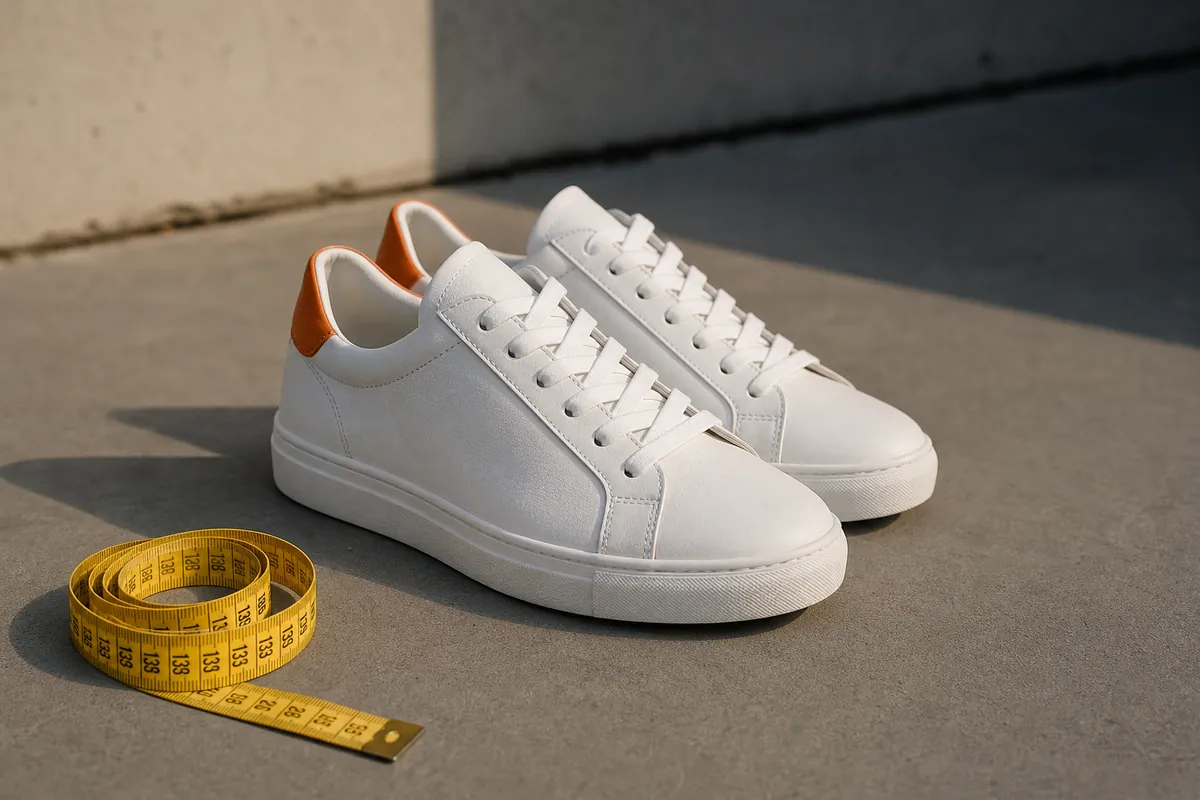
For example, a 27.1 cm foot is a men's US 10, which means a 10 in the Jordan 1 High, Mid or Low. A narrow-footed buyer eyeing a Low OG might try a 9.5. For women's sizing, add 1.5 to the men's number. If you are not sure of your measurement, use our foot measuring guide.
Note: Fit reports vary by release and by individual foot. Treat these notes as the common consensus, and check the return policy before you order.
Ordering a pair you cannot try on
Hyped Jordan 1 releases often sell through fast and have strict return rules, so a wrong guess can be costly. Do a little homework first. Measure your foot at the end of the day, when it is at its largest, and compare it with the chart above. Check what you wear in two other Nike models, ideally a Dunk and an Air Force 1, and see whether the numbers line up with the advice here. If they do, you can order with confidence.
Our recommendation
Order your normal Nike size in the High, the High '85 and the Mid. In the Low OG, stay at your normal size if you have wide feet and try half a size down if your feet are narrow or average. Go half a size up in the High '85 if you have wide feet.
If you already own one height, you can buy another at the same size with confidence. That is the best news in this guide: the Jordan 1 is one of the more consistent models in Nike's catalog.
Frequently asked questions
Does the Air Jordan 1 Low fit differently from the High?
Slightly. The Low OG can feel a little longer than the High OG, so narrow or average feet may try half a size down. Wide feet should stay at their usual size. Reports vary by release, so keep the return option open.
Is the Air Jordan 1 Mid the same size as the High?
Yes. The Mid has about the same length as the High, so take the same size. Some Mid releases use stiff leather that feels tight at first, but the sizing itself is not different, and the leather usually softens with wear.
Do the Travis Scott Jordan 1 Lows fit differently?
They fit like other Low OGs, but they are sold in women's sizing, so the number on the box is 1.5 higher than the men's size for the same foot. Convert your men's size to women's before you order to avoid buying a size too small.
Should I size up in the Air Jordan 1 High '85?
Only if your forefoot is wide. The '85 shape is narrower in the front than the High OG, so wide feet may feel squeezed at their normal size. For narrow and average feet, your usual Nike size is the right start.
Which Air Jordan 1 height is best for wide feet?
None of them is truly roomy, but the High OG and Mid at true to size are workable for many. Wide feet should avoid going down in the Low OG and may want half a size up in the High '85, or a roomier model such as the Dunk.