Justin Boot Sizing: How Western and Work Boots Should Fit
Justin pull-ons fit about a size below your sneakers, lace-ups near your usual size. Here is how to judge heel slip, instep and width.
Quick answer
Justin sizing depends on the style. Pull-on boots usually need one size down from your sneaker size, while lace-up work boots match your sneaker size. The heel should seat with a thud, the instep should feel like a firm handshake, and heel lift should stay well under an inch.
- Fit
- Depends on the model
- Width
- Varies
- Our advice
- Pull-ons: one size down from sneakers. Lace-ups: your sneaker size, half up for toe caps or insulated models.
For Justin pull-on boots, start one full size below your sneaker size. For Justin lace-up work boots, start at your sneaker size. Justin boots are generally true to size in the Brannock sense, but pull-ons are cut roomier than lace-ups, and that gap is the whole story.
A pull-on has no laces to take up slack, so the fit depends on three things you can feel at the first try: how the heel seats, how the instep grips, and how much your foot lifts when you walk. Get those right and the number on the box matters less.
Pull-on or lace-up: decide this first
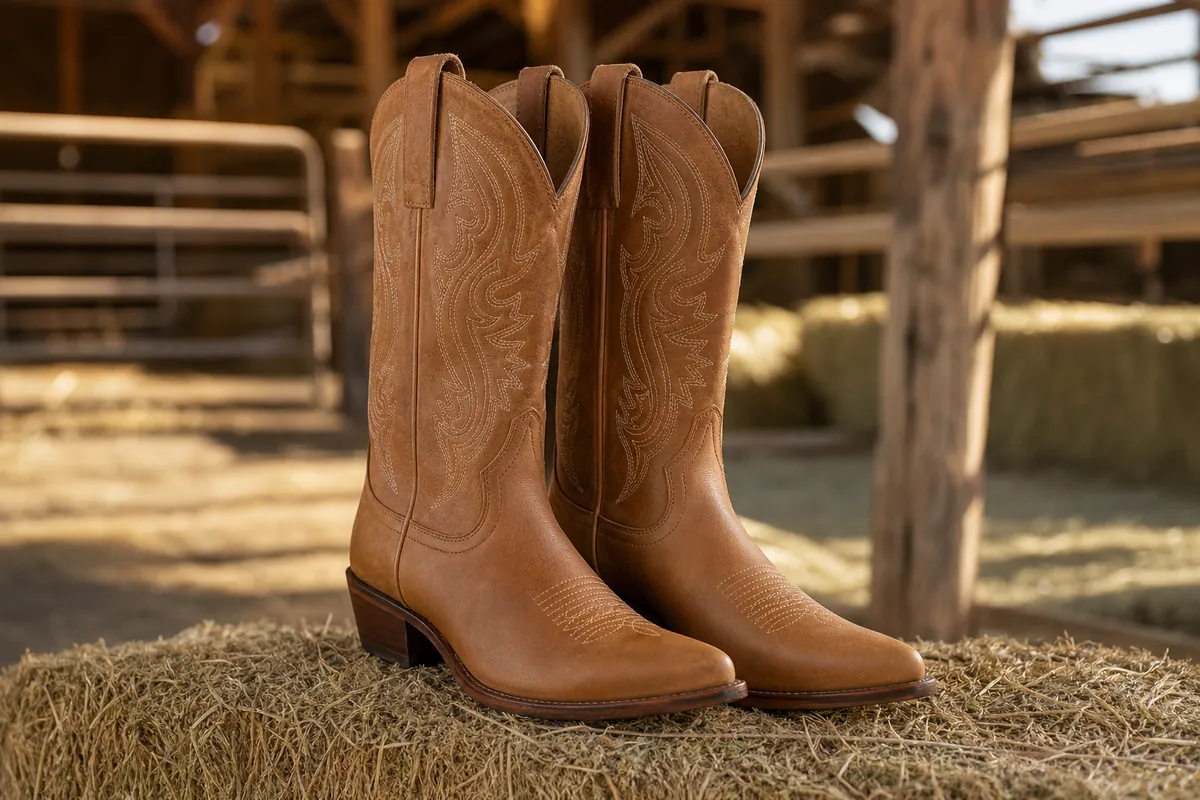
Justin sells both western-style pull-ons and lace-up work boots, and treating them as one fit is the usual mistake. A pull-on is built to be snug at the instep and loose at the toe, because the boot is held on by the instep and heel alone. A lace-up can be tightened, so it sits closer to a regular shoe size.
| Style | Fit character | Start from your sneaker size | Watch for |
|---|---|---|---|
| Pull-on work and western boots | Roomier overall, heel lifts a little at first | One size down | Sloppy instep means too big |
| Lace-up work boots | Closer to standard sizing | Same size | Toes pressing the front: go up half |
| Safety toe lace-ups | Cap limits flex at the ball | Same size, check the width | Cap digging in: go up a width |
| Insulated or waterproof | Liners reduce interior space | Half size up in length and width | Thick socks add to the squeeze |
This is a starting guide drawn from how these styles are commonly fitted, not an official Justin chart. Treat the first row as the most important: a pull-on that fits like your sneakers will be too large.
Check the fit in five places
1. The heel seat
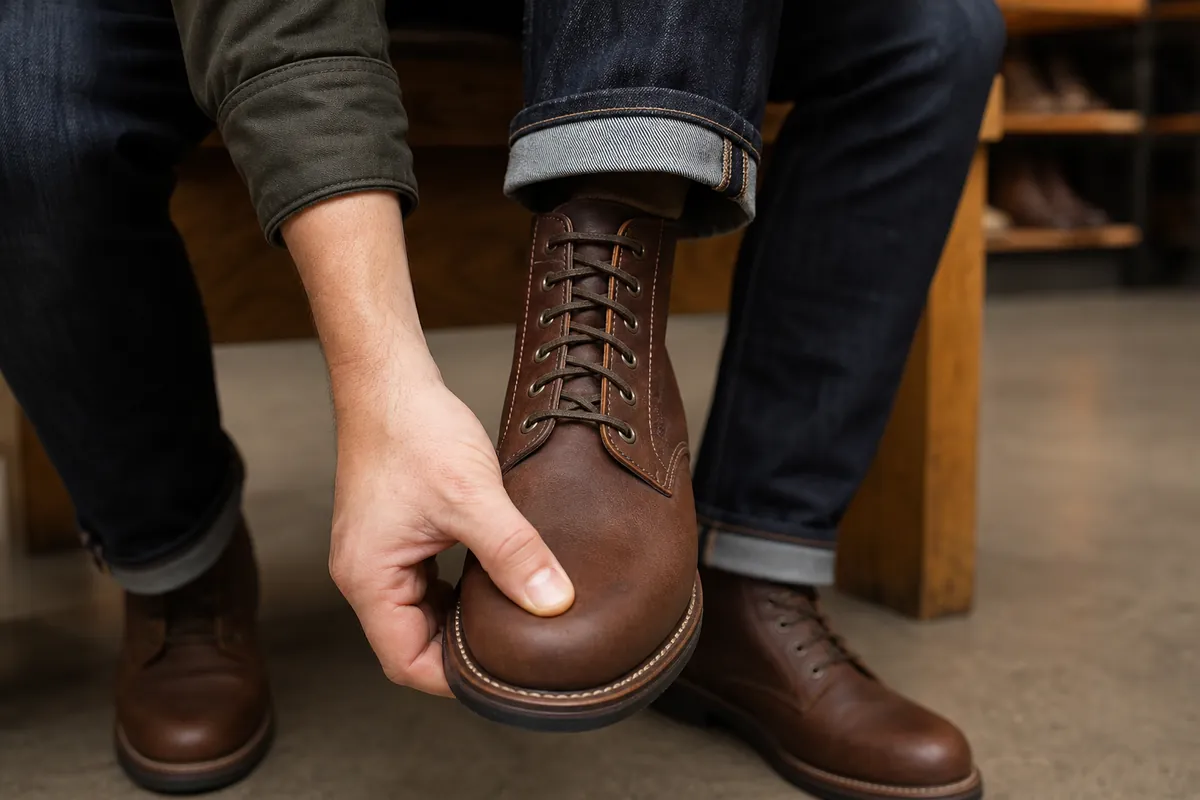
Pull the boot on and stamp your heel down. A properly sized pull-on seats with a distinct thud. If your foot slides in without any resistance, it is too loose. If you have to wrestle it on, it is too tight. Plan on the thud, not on ease.
2. The instep
The instep is where a pull-on holds your foot. It should feel like a firm handshake: snug, never painful. Pinching means the boot is too small. A sloppy or roomy feeling means you should drop down in size. People with a high instep sometimes cannot get a standard pull-on over it, and may need a boot with more volume rather than a bigger number.
3. The ball of the foot
The widest part of your foot should sit at the widest part of the boot. If the ball is ahead of or behind that point, the length is wrong, even if the toe feels fine.
4. The toe
Leave about a thumb width between your longest toe and the end of the boot. Toes touching the front before any break-in means the boot is too short. Pull-ons often feel a touch long at first, which is expected.
5. The heel lift
A small lift in the heel when you walk is normal in a new pull-on and will fade as the leather molds. A full inch of movement is too much. Do not buy a smaller size for heel slip alone if the instep and toe already feel right, because the slip may settle.
Fit tip: Wear the socks you will actually use, and test standing, not sitting. A pull-on that feels perfect on the edge of a bed can feel sloppy the moment you take weight on it.
Widths: what the letters mean
Justin sells men's boots in a spread of widths, which is helpful for a boot that depends so heavily on instep fit.
| Width | Men's meaning | Women's meaning |
|---|---|---|
| B | Narrow | Standard |
| C | n/a | Wide |
| D | Standard (default) | n/a |
| E | Wide | n/a |
| EE | Extra wide | n/a |
| EEE | Extra extra wide, the most generous | n/a |
That is the same lettering you will find on our shoe width chart, though the generic chart there lists 2E and 4E labels as well. If you wear a wide sneaker, try E before you buy a bigger size to make room, because extra length moves the heel and makes slip worse.
Square-toe styles give extra room at the front. The Caddo 11 inch western boot is a commonly cited example for wider forefeet. Women usually choose between B and C, so a woman with a wide foot should check C before moving up in length.
Lace-up work boots and safety toes
Here the usual advice flips. Lace-ups match your sneaker size more closely, and length comes first: if your toes press the front, go up half a size. With a safety toe, flex your foot at the ball while you stand. If the cap digs into your toes, go up a width rather than a length.
Insulated and waterproof versions need more space, since the lining takes up volume. Start half a size bigger in both length and width, then check the heel. This is a good time to read how work boots should fit before ordering.
Calf and shaft: the part sneakers never test
Western boots add a measurement that shoe sizing skips. Measure the widest part of your calf with a soft tape and compare it to the shaft opening listed for the style. Standard shafts are built for average calves, and wide-shaft or wide-calf versions exist if yours is larger. Shaft height is measured from the arch of the foot to the top of the boot.
If the foot fits but the shaft will not close around your calf, the boot is the wrong style, not the wrong size.
Size conversions
You can order Justin boots in US sizes, so conversion matters only for readers abroad. One caution: the sample charts that brands and retailers publish do not always agree with each other on EU numbers. One Justin sample lists men's US 10 as EU 43, while our standard chart gives EU 44. The foot length is the number that does not change, so convert from that.
| US men's | UK | EU | Foot length (cm) | CM (JP) |
|---|---|---|---|---|
| 7 | 6 | 40 | 24.6 | 25 |
| 7.5 | 6.5 | 40.5 | 24.9 | 25.5 |
| 8 | 7 | 41 | 25.4 | 26 |
| 8.5 | 7.5 | 42 | 25.9 | 26.5 |
| 9 | 8 | 42.5 | 26.2 | 27 |
| 9.5 | 8.5 | 43 | 26.7 | 27.5 |
| 10 | 9 | 44 | 27.1 | 28 |
| 10.5 | 9.5 | 44.5 | 27.5 | 28.5 |
| 11 | 10 | 45 | 27.9 | 29 |
| 11.5 | 10.5 | 45.5 | 28.4 | 29.5 |
| 12 | 11 | 46 | 28.7 | 30 |
| 12.5 | 11.5 | 47 | 29.2 | 30.5 |
| 13 | 12 | 47.5 | 29.7 | 31 |
The chart is the standard one for all brands, not a Justin-specific table. See our US to EU conversion guide if you need to cross-check a retailer chart.
Measuring before you order
A boot fitter or a Brannock device in a store is the best route. Measure both feet, use the larger, and note three things: length from heel to longest toe, width, and arch length, which is the distance from heel to the ball. Boots that line up with your arch length fit better than ones that only match toe length.
At home, trace each foot standing, pen vertical, and measure length and the widest point. If you land between sizes, go larger. The foot measuring guide has the steps.
Break-in and stretching
Justin boots are stiff at first and soften with wear, with a small natural stretch in the leather. Short wears around the house and a thicker sock help. Use leather conditioner sparingly, because too much makes the leather soft and sloppy. A boot stretcher can target a tight spot such as the toe box or instep if one area pinches while the rest is fine. For other methods, see how to stretch shoes.
How Justin compares
Chippewa is commonly reported to fit wider than Justin, so a wide-footed owner may find a Chippewa more comfortable. Red Wing is a different case, since it runs large even in lace-ups, so do not transfer a Red Wing size directly; the Red Wing guide explains why.
Four mistakes that lead to returns
- Using the lace-up rule on a pull-on. Your sneaker size in a pull-on usually leaves the instep loose and the heel sliding.
- Judging the boot sitting down. Weight changes how the instep grips, so stand and walk before deciding.
- Ignoring width. A boot that pinches across the ball needs a wider letter, not a longer size.
- Wearing the wrong socks. Try them on with the socks you will wear on the job or in the saddle, since a thin sock can hide a boot that is a half size too big.
When you fall between sizes
This happens often with pull-ons, because the rule of one size down can land on a half size you are not sure about. The answer depends on the style. In a lace-up, go to the larger size and lace the boot firmly, since the laces will take up the extra space. In a pull-on, there is nothing to tighten, so choose the smaller size if your instep already feels snug and the heel seats, and the larger one only if your toes touch the front.
Think about the work too. Someone who stands on a concrete floor all day wants more toe room than someone who rides a horse, where a close heel and a snug instep keep the foot from sliding in the stirrup. If the boot is for long walking, lean toward the roomier choice. If it is mostly for riding, lean snug. For a general benchmark of what a good fit feels like, read how should boots fit.
The short version
Pull-ons, one size down. Lace-ups, your sneaker size. Judge the heel seat, the instep and the heel lift, and use width letters before extra length.
Frequently asked questions
What size Justin boot should I buy if I wear a 10 sneaker?
For a pull-on, try a 9 first. For a lace-up work boot, start at 10 and go to 10.5 only if your toes press the front. Insulated or waterproof lace-ups may need half a size more room in length and width.
How much heel slip is normal in Justin boots?
A small lift when you walk is normal in new pull-ons, and it lessens as the leather molds to your foot. A full inch of movement is too much and suggests the boot is too large.
What widths does Justin offer?
Men's boots run B (narrow), D (standard), E (wide), EE (extra wide) and EEE (extra extra wide). Women's boots are usually B (standard) and C (wide). Try a wider letter before buying a longer boot.
Do Justin pull-on boots fit a high instep?
Sometimes with difficulty. A pull-on should feel snug at the instep, but a high instep can make a standard boot hard to get on. In that case look for a style with more volume or a wider width rather than a bigger length.
How do I know the calf will fit a Justin boot?
Measure the widest part of your calf with a soft tape and compare it to the shaft opening for the style. Standard shafts suit average calves, and wide-calf versions exist for larger ones.