How to Stretch Shoes and Boots Safely: Leather, Suede, Canvas, Rubber
Shoes stretch a little in width and barely in length. Safe methods for leather, suede, canvas and rubber, plus when to see a cobbler or exchange.
Quick answer
You can stretch shoes a little in width, with a stretcher, stretching spray or thick-sock wear-in, but length barely changes. Leather responds best, suede needs care, and rubber rarely gives. Skip heat on valuable pairs, and see a cobbler or exchange if toes hit the front or the shoe is tight everywhere.
You can usually stretch a shoe a little in width and almost never in length. A leather shoe or boot can gain a small amount of room across the ball of the foot with a stretcher, a stretching spray or careful wear-in. Length is different: the sole does not get longer, so if your toes jam against the front, stretching will not rescue the pair and you should exchange it.
This guide covers leather, suede and nubuck, canvas and knit, and rubber or synthetic shoes, and explains which methods are worth trying, where the risks are, and when to hand the job to a cobbler. Where the sources we checked disagree, we say so, because stretching advice is full of confident claims that do not agree with one another.
First, decide whether stretching can help
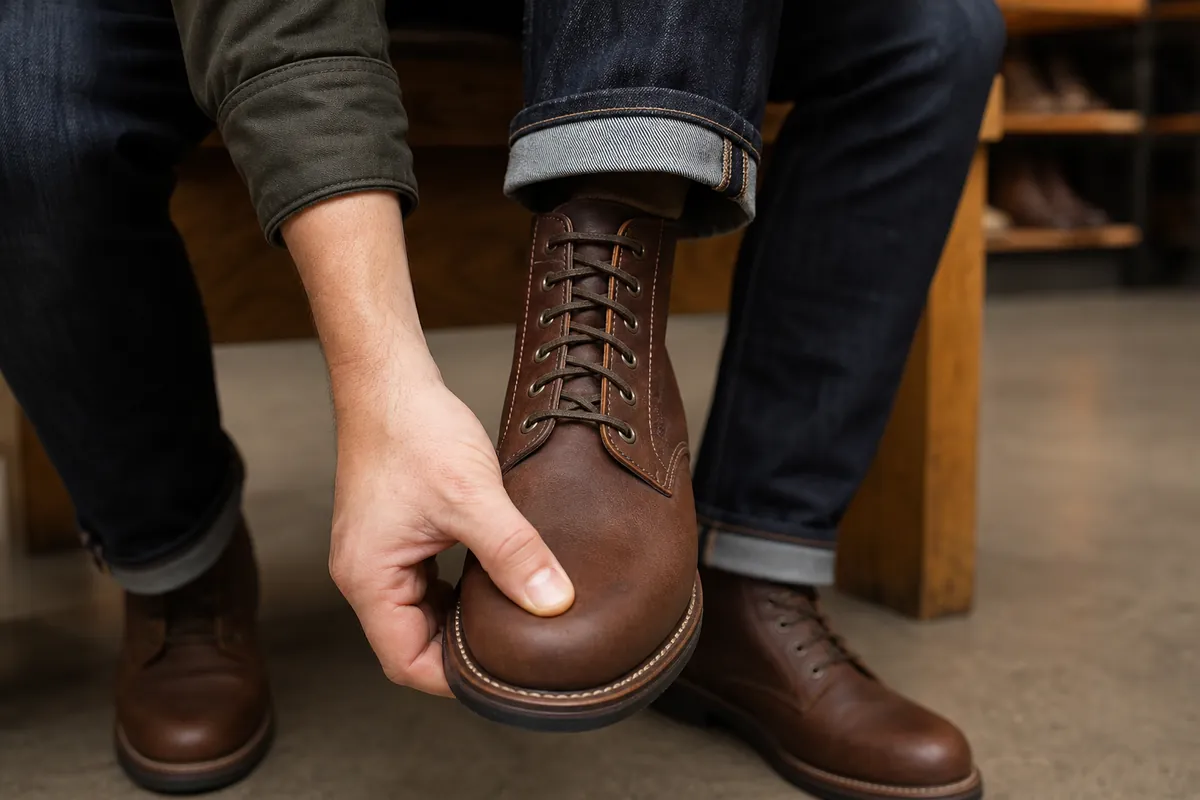
Stretching solves a narrow set of problems. Check where the shoe is tight before you buy anything.
- Tight across the ball or at the little toe. Good candidate. Width is the easiest dimension to gain.
- A single pressure spot, such as a bunion bump or the heel. Good candidate for spot stretching.
- Tight at the calf of a boot. Sometimes possible, with a calf stretcher or a cobbler's help.
- Toes touching the front. Poor candidate. Take the next size up instead.
- Toes crowding a steel or composite safety toe. Not a candidate. These caps do not stretch.
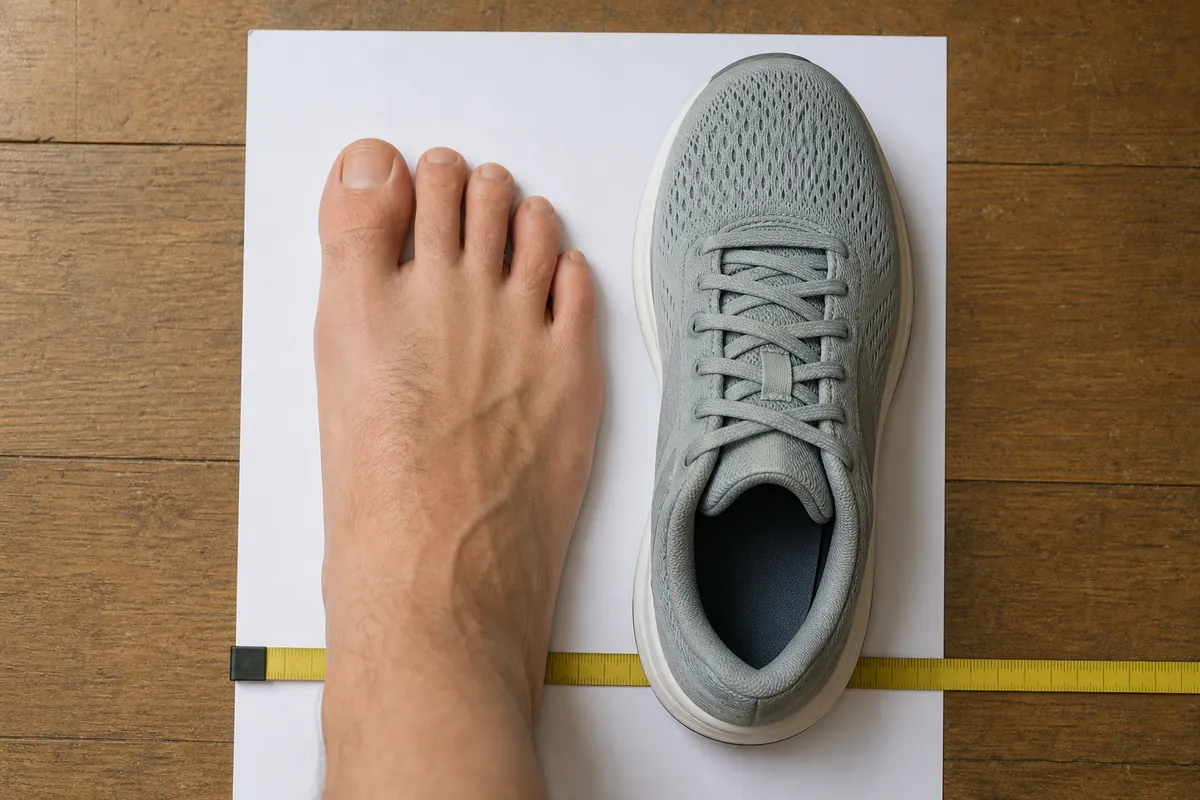
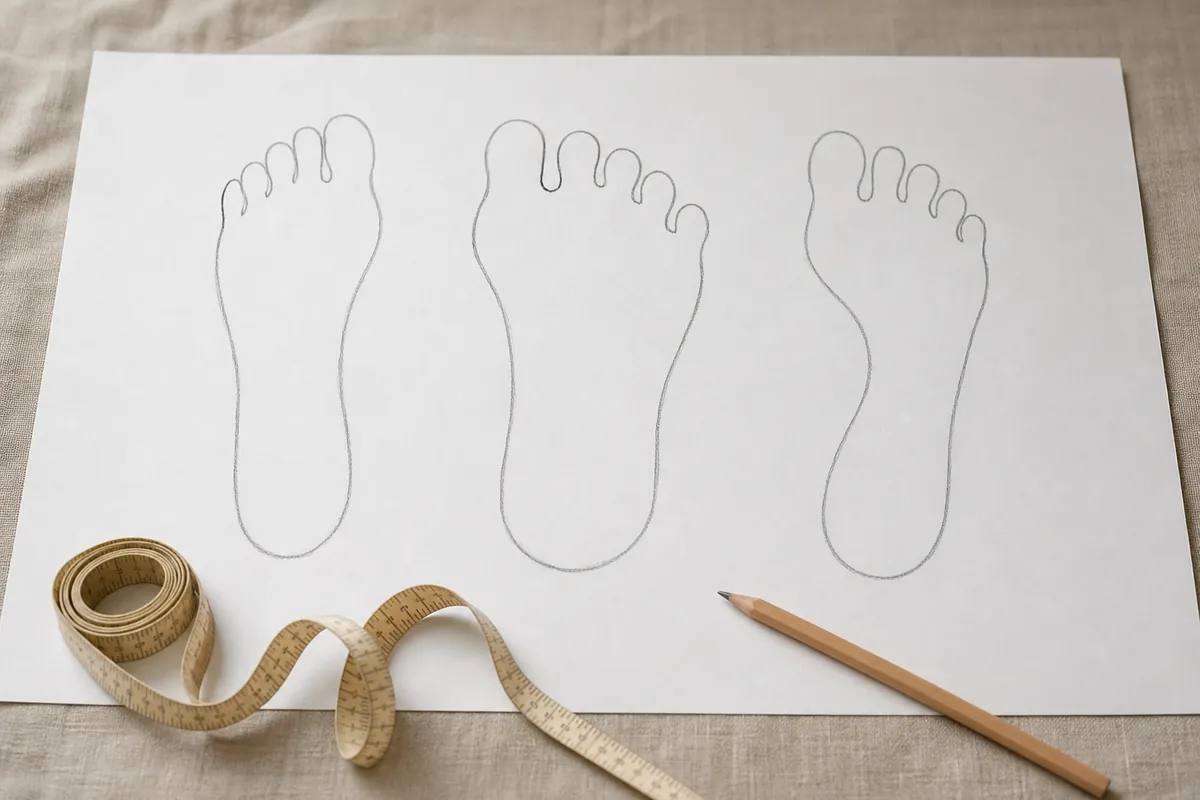
If you are not sure whether the problem is length or width, our guide on foot shape and shoe size shows how to read where a shoe presses.
How much can you realistically gain?
Expect a little. The sources we read give different figures. For boots, one maker claims about half a size in width, while a boot retailer says a quarter size at most. A bootmaker says professional stretching may add a quarter to half a size in length, whereas another guide says length is hard to gain because the sole does not lengthen. A dress-shoe guide says a stretcher can add about a quarter to half a size of length and widen the toe box.
We cannot reconcile those numbers, and we do not think anyone can without measuring a specific pair. The safe reading is this: width is the realistic target, a quarter to half a size is the optimistic ceiling, and length is unreliable. If you need more than that, you need a bigger shoe or a wide fitting.
Leather shoes and boots
Leather is the material that responds best, because it is a natural fiber that relaxes when it is damp and warm. These are the main methods, from gentlest to most aggressive.
Wear them in
Wear the shoes around the house with thick socks for 15 to 30 minutes at a time, and repeat over several days. Nothing can go wrong with this method, and it is the first thing to try if the shoe is only slightly snug. The downside is that it is slow and does very little for a shoe that is clearly too tight.
A shoe or boot stretcher
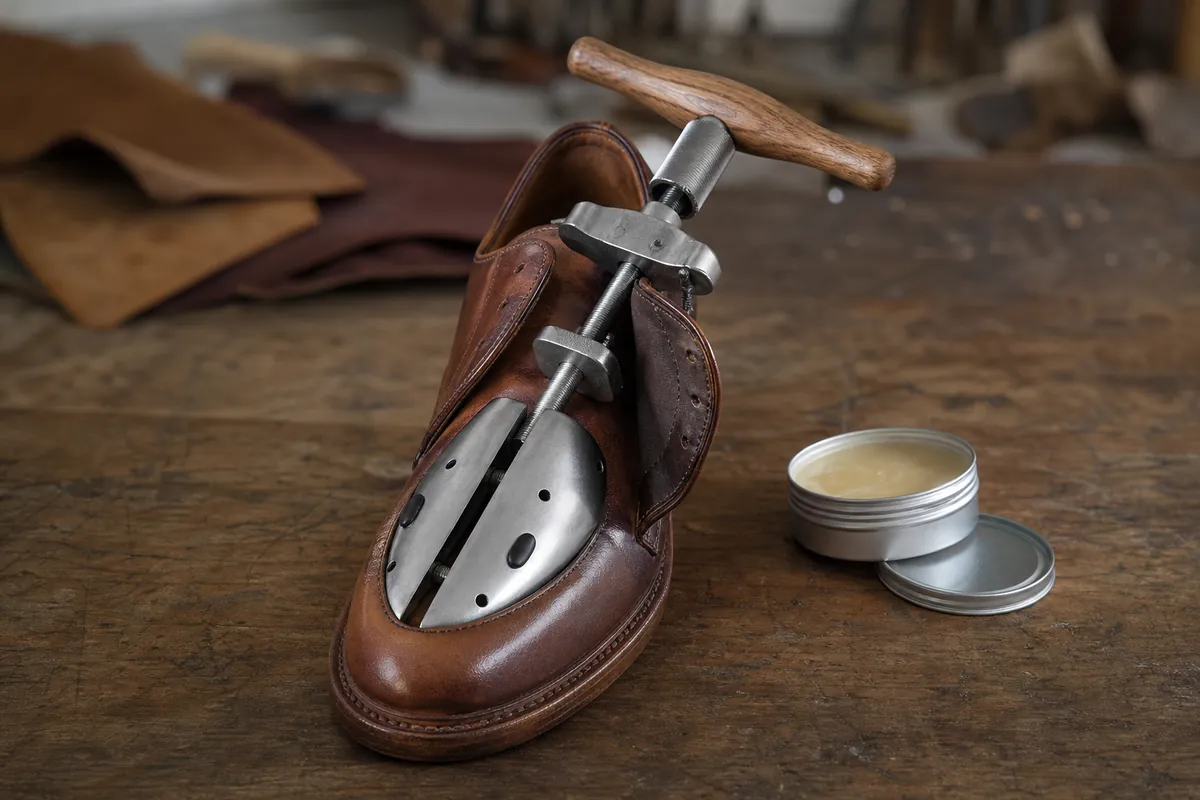
A stretcher is a two-part form that you insert and expand. A one-way stretcher widens the forefoot. A two-way adds a length adjustment, but the gain in length is small. Use a wooden stretcher if you can, since cheap plastic ones are weaker and can break. Add small bunion plugs for a single pressure point, such as the little toe.
The right way to use one is slowly. Expand it to firm tension, leave it overnight, then try the shoe. Repeat over several days rather than cranking it to the maximum. One boot shop says gradual stretching can take four or five days, and warns that forcing it can stress welt stitching and zippers.
Stretching spray, or alcohol and water
A stretching spray applied inside the shoe, followed by a stretcher or by wearing, softens the leather so it gives more. A homemade version is a mix of isopropyl alcohol and water. Recipes differ: one boot shop suggests one part alcohol to three parts water, another source says 50/50. The weaker mix is the safer start. Apply it to the inside only, since alcohol on the outside can strip the finish or change the dye, and test a hidden spot first.
Fit tip: Alcohol loosens leather but does not stretch it by itself. You still need pressure from a stretcher or from wearing the shoe. Condition the leather afterward, because alcohol dries it.
Spoon, hands and spot pressure
For a tight heel or a single hard spot, condition the area and work it with your fingers, or rub the rounded back of a spoon inside. This is slow but controlled, and it works on small areas.
The freezer method
You put a sealed bag of water inside the shoe, put the shoe in the freezer overnight and let the ice expand. It is popular, and it does widen a shoe a bit, but it has risks: the bag can leak and soak the leather, and the expansion can strain seams. Let the ice thaw before you pull the bag out.
Heat: where the advice splits
A hair dryer is the most disputed method. One shoemaker suggests about 20 seconds, another about a minute from 4 to 6 inches away, and Red Wing warns against heat altogether. In one review of 47 sources, roughly a third advised against direct heat, about a quarter allowed controlled heat, and the rest took no position. Heat can dry, crack or deform leather. If you use it, keep it short and far away, wear thick socks to mold the shoe, and condition the leather after. If the pair is expensive, skip it.
Suede and nubuck
Suede and nubuck need extra care, because water and alcohol leave marks on the nap. Use a stretching product made for suede, apply it sparingly and test on a hidden spot. A mechanical stretcher with gentle pressure over several days is usually safer than liquids. Waterproofing and protector sprays can also stiffen the surface, so avoid adding them before you have finished stretching. When a suede pair is new or costly, a cobbler is the better choice.
Patent leather stretches poorly because the coating resists movement, and forcing it can crack the finish.
Canvas and knit
These fabrics give with wear more readily than rubber or stiff leather, so the best treatment is also the simplest: thick socks, short sessions and patience. A woven canvas upper will relax across the toes after some wear, and a knit upper often feels more forgiving from the start. We did not find a reliable guide on stretching these materials, so we cannot promise any measured gain. Avoid strong heat, since glued soles and synthetic overlays can warp, and do not soak a shoe that has a glued insole.
If the tightness comes from a stiff heel counter or overlay rather than from the fabric, stretching the upper will not help. That calls for a different model.
Rubber and synthetic shoes
Rubber, plastic and many synthetics are the hardest to stretch. They are not fibrous like leather, so liquids do nothing, and they resist a stretcher. The methods that circulate online use heat or freezing: a hot-water bag left until it cools, a few minutes in a lukewarm oven, short bursts in a microwave, or a water bag frozen inside the shoe. The one guide we read on this describes those options but admits that rubber can be stubborn, and it does not address synthetic fabrics specifically.
The risk is clear. Heat can burn or distort rubber and damage any leather parts, and it can soften glues. We would not put a shoe in an oven or a microwave. A safer path is thick socks and short wear-in sessions, and if the shoe is still tight, it is the wrong size or the wrong last. Stuffing the shoes with paper after a stretch helps hold the shape, but it does not create room on its own.
When to go to a cobbler
A cobbler has stretching machines and controlled heat, and can apply pressure to specific spots without ruining the leather. Go to one when:
- the shoes are expensive or in an unfamiliar leather;
- the lining is heavy or the area has reinforcement;
- a boot shaft is tight at the calf, since a cobbler may add a gusset;
- a thick seam needs flattening;
- your own attempts barely moved the leather.
One guide puts the price of stretching at roughly 25 to 40 dollars. Prices vary by shop and work, so ask for a quote. For a pair that cost more than that, it is usually worth it.
When to exchange instead
Return or exchange the shoes if your toes jam against the front, if they press on a safety cap, or if the whole shoe is tight, not just one spot. Over-stretching also cannot be reversed reliably: a boot that is stretched too far can become loose elsewhere, and shrinking it back is unreliable. Check the return policy before you start, and avoid stretching shoes you may still want to send back, since a stretched pair is often not returnable.
For help choosing the right size or fit, see how boots should fit and how dress shoes should fit. If width is the issue every time, a wide fitting is a better answer than any stretcher. Our shoe width chart and wide feet guide help you find one.
A safe order of operations
- Confirm the problem is width or a spot, not length.
- Wear the shoes indoors with thick socks in short sessions for several days.
- If needed, use a wooden stretcher in small steps, checking after each overnight.
- Add a leather-safe stretching spray, applied inside only, if the leather resists.
- Stop before maximum force. Stress shows up first at seams, zippers and glued edges.
- If nothing has moved, see a cobbler or exchange the pair.
Fit tip: Stretch toward the end of the day, with the socks you will wear, and try the shoes on after each round. It is much easier to add a little more stretch than to take it back.
Bottom line
Treat stretching as a way to fine-tune width, not to change the size. Leather responds best, suede and canvas need care, and rubber rarely gives. When length is the issue, exchange the pair. For anything valuable, ask a cobbler, and for the next pair, try it on late in the day and compare it with the guides above before you order. If you are unsure about half a size either way, our half-size difference guide shows how much that decision really changes.
Frequently asked questions
Can you stretch shoes in length?
Barely. The sole does not lengthen, so any gain is small and unreliable. Sources disagree: some say a stretcher can add about a quarter to half a size, others say length is hard to gain. If your toes touch the front, exchange the pair.
Is it safe to stretch shoes with a hair dryer?
It is risky. Heat can dry, crack or deform leather, and Red Wing warns against it. Other makers allow brief, distant heat. If you try it, keep it short, wear thick socks, and condition the leather afterward. Skip it for expensive pairs.
Does rubbing alcohol stretch leather?
Not by itself. A diluted alcohol and water mix on the inside softens leather so it gives under a stretcher or wear. Weaker mixes are safer, and alcohol on the outside can damage the finish. Test a hidden spot first.
Can you stretch rubber or synthetic shoes?
Rarely, and with risk. Rubber resists stretchers and liquids, and heat can burn or distort it. Thick socks and short wear-in sessions are safest. If the shoe is still tight, choose a bigger size or a different model.
How much does a cobbler charge to stretch shoes?
One guide quotes about 25 to 40 dollars, but prices vary by shop and by the work. Ask for a quote. A cobbler is worth it for expensive leather, tight boot shafts, thick seams or reinforced areas.