How Should Dress Shoes Fit? Ball, Heel and Toe Room Explained
A dress shoe should hold the heel, fit the ball of your foot snugly and leave the toes free. Here is how to test it, and how it compares with sneaker sizing.
Quick answer
Dress shoes should fit snugly across the ball of the foot, hold the heel without slipping, and leave your toes free of the front. Many people take about half a size smaller than their sneaker size in laced shoes. Try them late in the day with thin dress socks, and check the width before going up in length.
Dress shoes should feel snug without squeezing: the ball of your foot sits in the widest part of the shoe, the heel stays put when you walk, and your toes have room without touching the front. Many people need a half size smaller than their sneaker size in a laced dress shoe, and some need a wider width than they expect.
This guide explains how to judge the fit of oxfords, derbies, loafers and similar shoes, why the last matters more than the number on the box, and how to order online without ending up in a pile of returns.
The one-sentence test
Stand up, lace the shoe, and ask three questions. Does the widest part of my foot match the widest part of the shoe? Does my heel stay down when I take a step? Can my toes lie flat without pressing on the cap? If all three answers are yes, the length is probably right. Sitting in the shoe tells you very little, so walk around the room, ideally on a hard floor, for a few minutes.
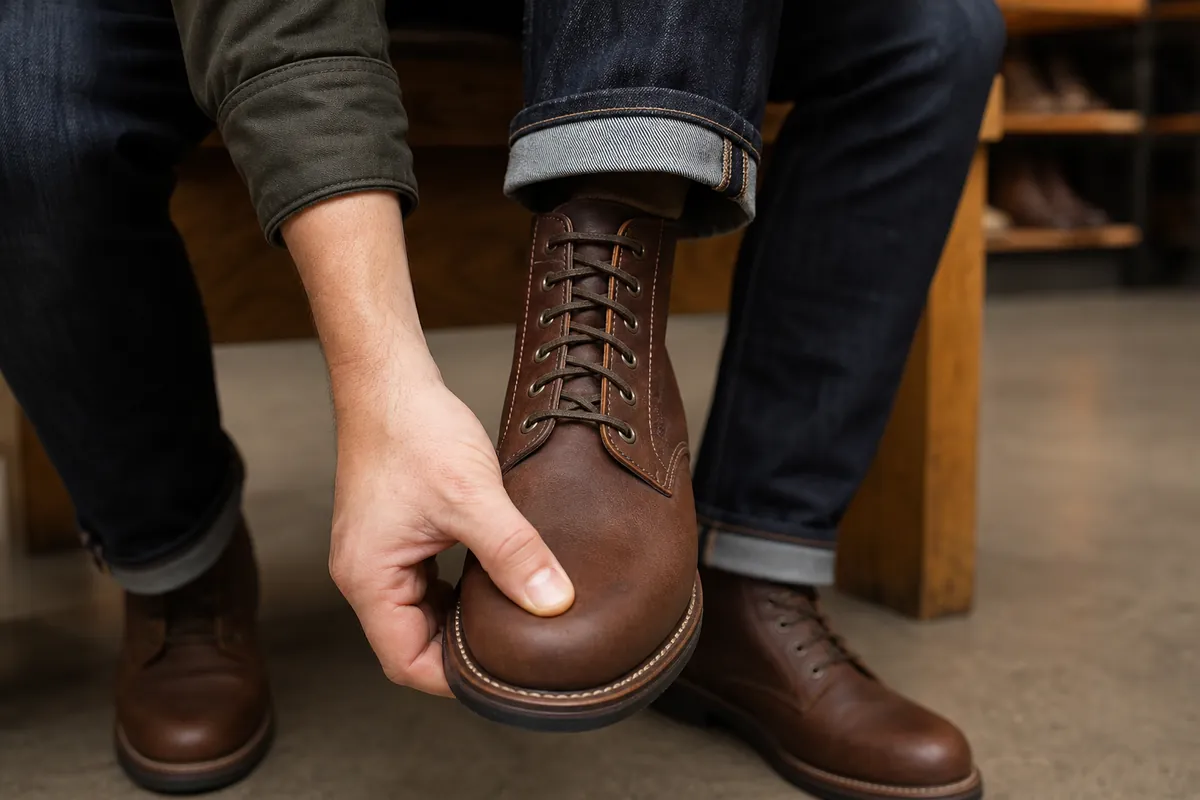
The old advice to press your thumb at the toe is a rough check at best. A shoe can have a thumb's width of empty space in front and still pinch across the ball, and that is the failure that sends shoes back.
Why dress shoes feel different from sneakers
A sneaker has a soft, stretchy upper and a lot of cushioning. A dress shoe has a structured leather upper, a stiffer sole and a narrower cut. The same foot can feel fine in a men's US 10 sneaker and cramped in a men's US 10 oxford. Dress shoes tend to be built on a tighter last, which is the wooden or plastic form the shoe is shaped around, and the last controls length, width, toe shape and instep height.
That is why a single conversion rule does not work. For a starting point, many wearers find that a laced dress shoe fits best about half a size below their sneaker size, but this varies with the brand and the last. Treat it as a hypothesis to test. Our sneaker fit guide explains the baseline you are converting from.
Start from a real measurement
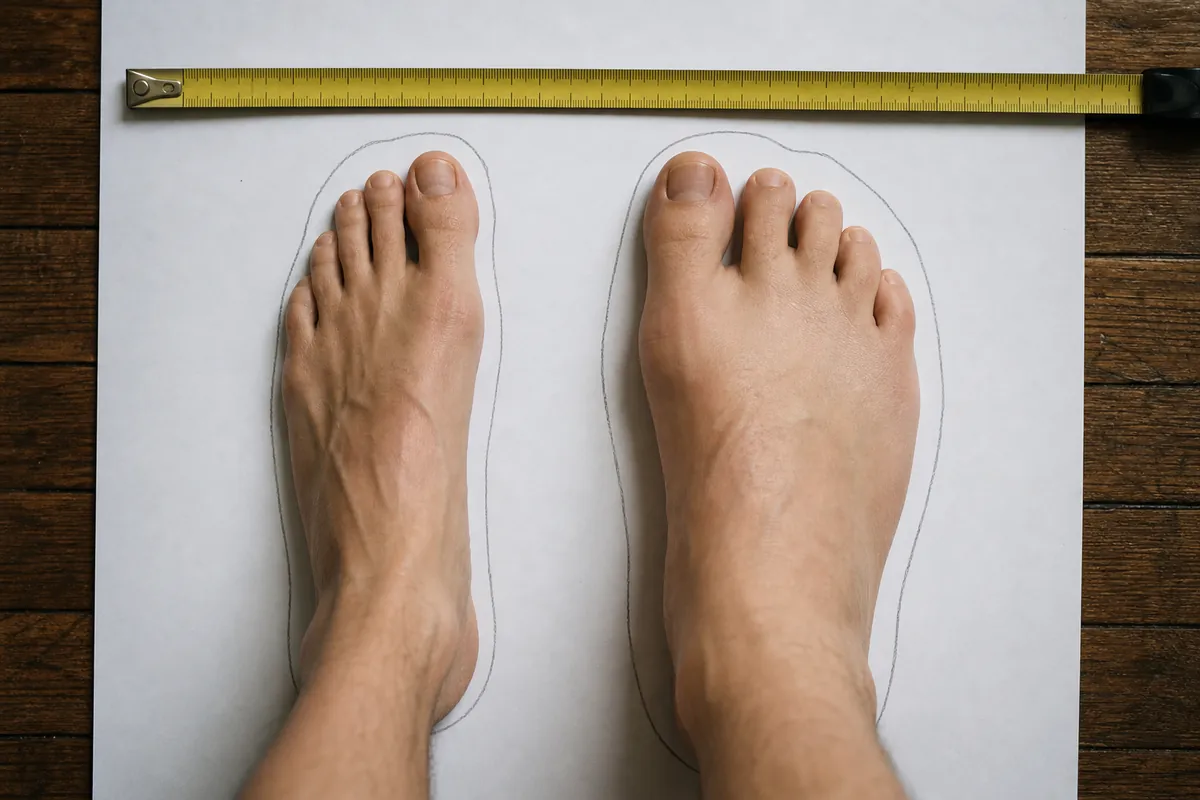
If a shoe store near you has a Brannock device, ask them to read two numbers: heel-to-toe length and heel-to-ball length. Use the larger result as your starting size, since a long ball measurement means you need a shoe that bends where your foot bends. The device also gives a width letter. If you do not have access to one, see how to measure your feet at home.
The chart below shows how a US men's size lines up with real foot length. Use the Foot length column as the length of your foot, and the CM (JP) column only as the size label some brands print.
| US men's | UK | EU | Foot length (cm) | CM (JP) |
|---|---|---|---|---|
| 7 | 6 | 40 | 24.6 | 25 |
| 7.5 | 6.5 | 40.5 | 24.9 | 25.5 |
| 8 | 7 | 41 | 25.4 | 26 |
| 8.5 | 7.5 | 42 | 25.9 | 26.5 |
| 9 | 8 | 42.5 | 26.2 | 27 |
| 9.5 | 8.5 | 43 | 26.7 | 27.5 |
| 10 | 9 | 44 | 27.1 | 28 |
| 10.5 | 9.5 | 44.5 | 27.5 | 28.5 |
| 11 | 10 | 45 | 27.9 | 29 |
| 11.5 | 10.5 | 45.5 | 28.4 | 29.5 |
| 12 | 11 | 46 | 28.7 | 30 |
A foot of 26.7 cm is a men's US 9.5 on this chart. A dress shoe in that size usually leaves enough room, but a foot with a high instep or a wide forefoot may need either the next width up or a different last.
Width is where dress shoes bite
Most dress shoes come in a standard medium width, and some makers offer wide and extra wide options. In US sizing, D is the usual men's medium and B is the usual women's medium. If you feel pressure on the sides of the foot or the little toe, the answer is often width rather than length, and a longer shoe on the same last will not cure it.
| Men's width | Label | Women's width | Label |
|---|---|---|---|
| B | Narrow | 2A (AA) | Narrow |
| D | Standard / Medium | B | Standard / Medium |
| 2E (EE) | Wide | D | Wide |
| 4E (EEEE) | Extra wide | 2E (EE) | Extra wide |
| 6E | Extra-extra wide |
If you are between two widths, remember that leather gives a little over time, mostly across the ball. Our shoe width chart covers the letters in detail, and the wide feet guide lists what to look for in a roomier shoe.
Fit tip: If a shoe is long enough but pinches across the ball, ask for the wider version of the same size before you try a bigger one. Extra length with the same narrow width lets the heel slip and does not relieve the pinch.
Heel hold: laced shoes versus slip-ons
In a laced oxford or derby, the heel should stay snug. A tiny bit of movement while new is normal because the leather counter is stiff, but a heel that rises and falls with every step means the shoe is too long or the last is the wrong shape for your heel. Laces let you adjust the instep, so the heel is the part you cannot fix afterward.
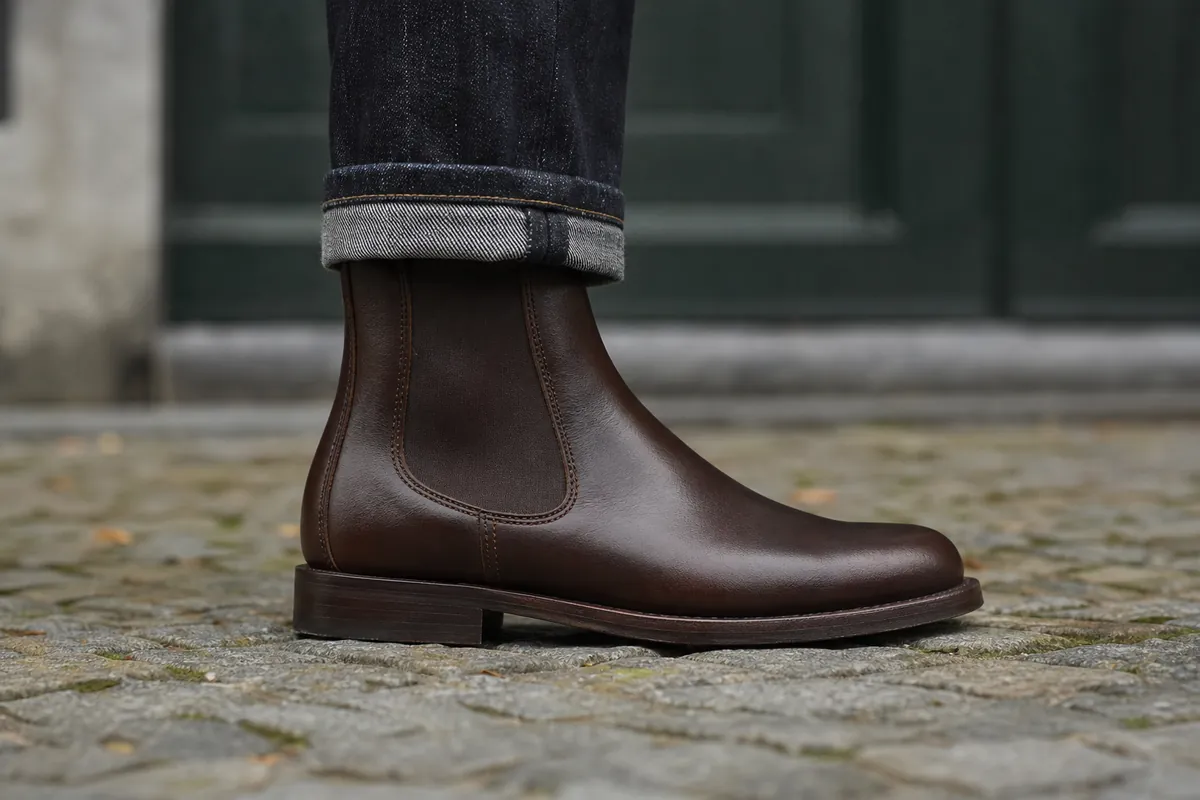
Slip-ons such as penny loafers and Chelsea boots are different. With no laces to hold the foot, they need to be quite snug through the instep, and a little heel movement is often accepted. If you own a pair of Chelsea boots, our Chelsea boot fit guide goes into that.
Socks and timing
Wear the sock you will wear with the shoe. Thin dress socks, preferably over-the-calf so they do not slide down, are the normal choice. Trying dress shoes on with thick athletic socks gives a false impression that they are tight, and you may buy a size too large.
Feet swell during the day, and the difference can be around a quarter size, so try shoes on in the afternoon or evening. If one foot is bigger than the other, which is common, fit the larger foot and add a thin insole or a tongue pad to the other if needed.
Different dress shoes, different rules
- Oxfords (closed lacing): the most fitted style. The eyelet panel is sewn under the vamp, so you cannot open the shoe up much. Check the instep in particular.
- Derbies (open lacing): the lacing panel opens wider, so they tolerate high insteps and wider feet better than oxfords of the same size.
- Loafers: rely on a snug instep and heel. If the shoe slides off, it is too big, even if your toes seem fine.
- Dress boots: often have more internal volume than shoes, so some people go a little smaller than in an oxford. Test with the socks you will wear.
- Pointed or chiseled toes: the visible length is not the usable length. A long, narrow toe can make a shoe look big while it still crowds your toes.
Sizes across brands
Two shoes with the same printed size can fit very differently because they use different lasts. Shoes that come from the same last tend to fit alike, so if a maker names the last on the product page, note which one worked for you. Advice online also disagrees on how much brands such as Allen Edmonds, Clarks and Cole Haan differ from sneaker brands, so do not trust any single rule. The most dependable approach is to record your size in one shoe that fits well and use that as your reference for the same last or model family.
It helps to know that sneakers and boots are often cut with more volume, while dress shoes are usually narrower. If you wear a boot like a Red Wing, see our Red Wing guide for how those leather boots compare, and remember that boot sizing rarely transfers one to one to an oxford. The brand size comparison shows how athletic brands differ from each other, which is a different question from how a dress shoe fits.
Ordering online without guessing
If you cannot try a pair in a store, order the size you believe is right plus the half size on either side, if the retailer has a free return policy. Try them at home on clean carpet, since leather soles scuff and many retailers will not accept returns that show wear on the sole. Walk for several minutes, then compare the three. Keep the one that holds your heel and does not pinch, and send the rest back.
When a shoe is only slightly tight, there are ways to ease it. Wear it at home with a thick sock for short periods, or take it to a cobbler who can stretch the leather across the ball. Our guide on how to stretch shoes covers the options. Stretching works across the width and a little in length, but it cannot make a short shoe long, and it cannot fix a heel that is too loose.
Break-in and care
Leather dress shoes need a short break-in. Wear them for an hour or two at a time for the first few outings, and check for hot spots. A stiff heel counter can rub the back of the ankle at first. This usually settles in the first week or two, but a shoe that causes pain at the first wearing is rarely going to become comfortable.
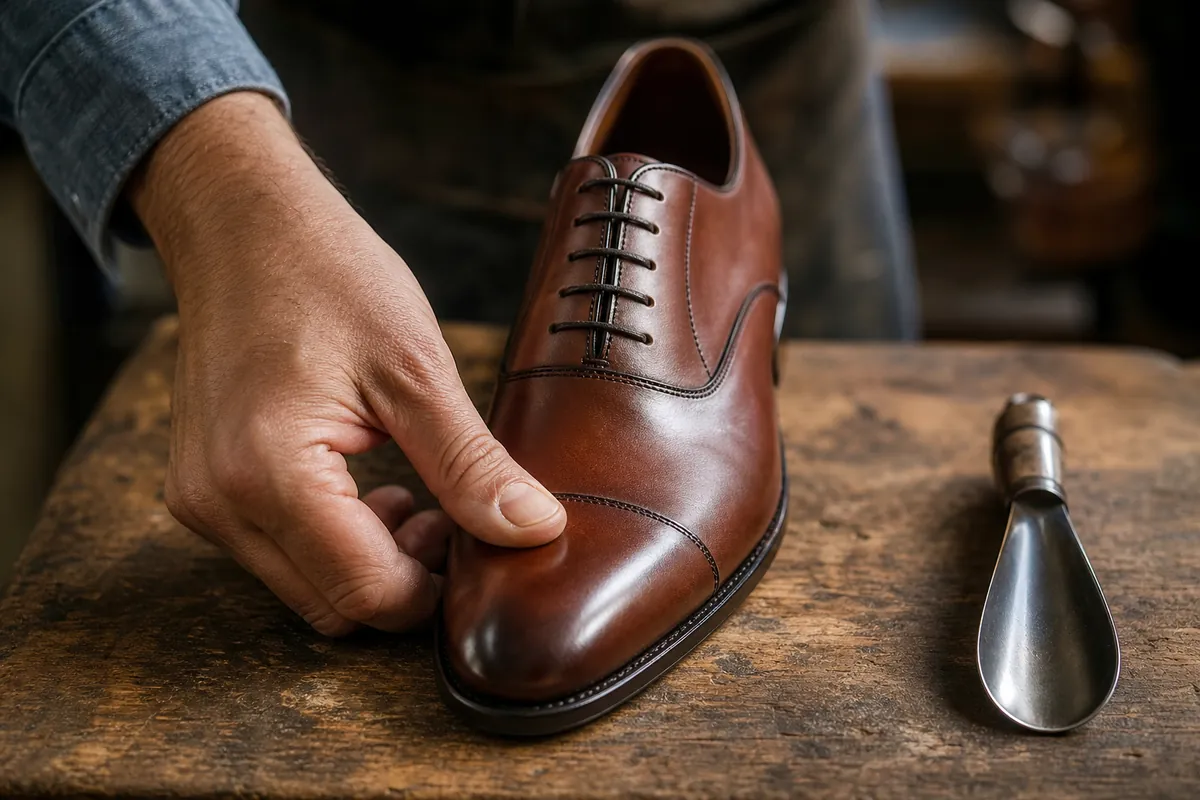
Fit tip: Use a shoehorn every time. Forcing a heel in with a finger collapses the counter, and a collapsed counter is the most common reason a good shoe starts to slip at the heel.
Cedar shoe trees help the shoe keep its shape between wears and absorb moisture, which also keeps the leather from creasing deeply across the vamp.
When to walk away
Pain on first wear, numbness, a heel that lifts with each step, or toes pressed against the cap are all reasons to return or exchange a pair. The reverse also applies: a shoe that is loose all over is not a safe choice, because your foot will slide and the leather will crease in the wrong places.
Bottom line
Judge dress shoes by the ball of the foot first, then the heel, then the toes. Start about half a size below your sneaker size in laced shoes, check the width letter, wear the right socks and try them late in the day. If you are unsure of your length, our shoe size calculator gives you a starting point to test against the shoe in your hands.
Frequently asked questions
Should dress shoes be tight at first?
They should feel snug and secure, but not painful. Leather gives a little across the ball of the foot, so mild snugness is fine. Pinching, numbness or a toe pressed against the cap is a sign to try another size or width.
Should I size down in dress shoes compared to sneakers?
Many wearers do go about half a size down in laced dress shoes, because sneakers are cut roomier and dress shoes use tighter lasts. It varies by brand and last, so use it as a starting point and test the heel hold.
How much heel slip is normal in dress shoes?
Almost none in laced shoes beyond a little stiffness while new. Slip-ons such as loafers and Chelsea boots allow a touch more. A heel that rises with every step means the shoe is too long or the wrong shape for your heel.
Is a wide width better than a bigger size?
If the sides of your foot or little toe feel pressed, yes. A longer shoe on the same narrow last adds length you do not need and can make the heel slip. Try the wider version of the same size first.
What is the best way to buy dress shoes online?
Order your best-guess size plus the half sizes on either side if returns are free. Try them on clean carpet, with the socks you will wear, in the evening. Keep the pair that holds the heel and does not pinch.