How Should Chelsea Boots Fit? Heel, Instep and Toe Room
Snug at the instep, a heel that seats with a little pop, free toes. How to judge Chelsea boot fit, choose a size and fix common problems.
Quick answer
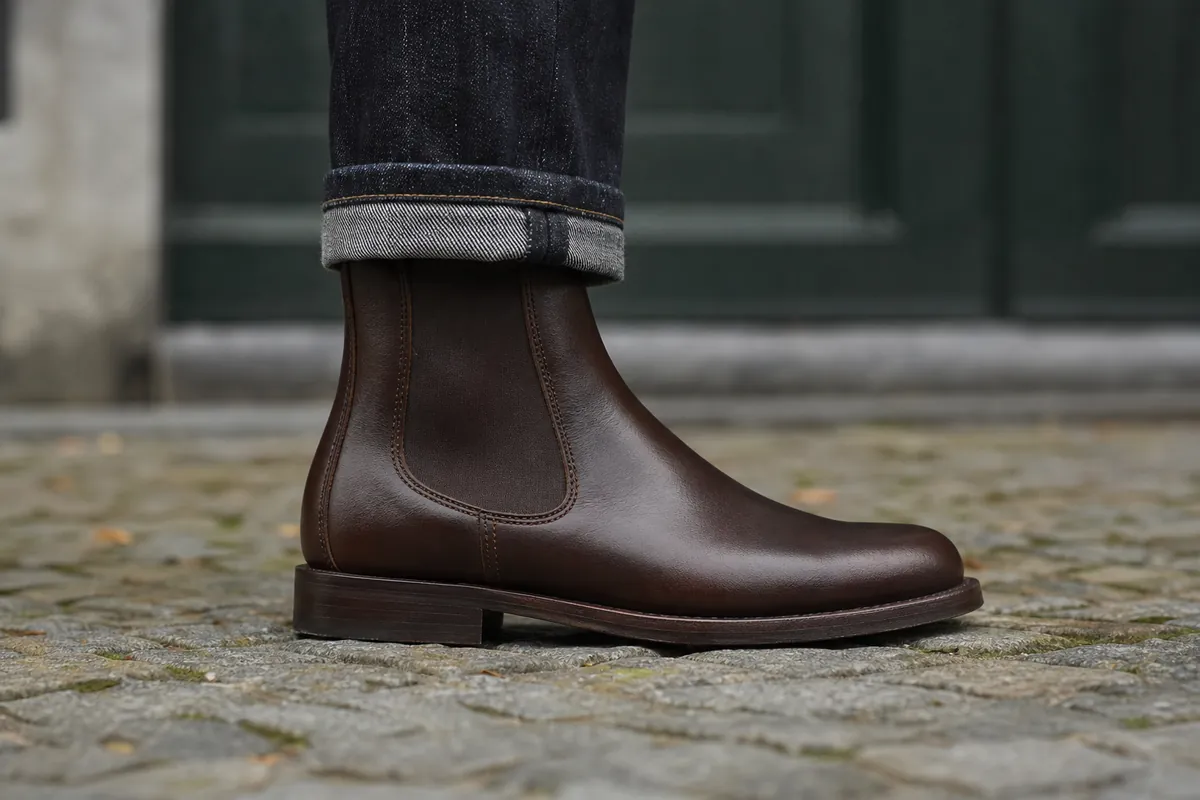
Chelsea boots should feel snug when new: firm over the instep, gripping the ankle through the elastic, with a heel that seats with a small pop and only slight lift. Leave a little room at the toes. Leather stretches in width, not length, so a loose boot only gets looser. Many run half a size long.
A Chelsea boot should feel snug when you first pull it on: firm over the instep, held at the ankle by the elastic, with your heel dropping into place and only a small amount of lift. Your toes should have a little room and never touch the end. If the boot is loose on day one, it will only get looser.
That one sentence is harder to apply than it sounds, because a Chelsea has no laces to make up for a bad size. The shape of the boot does all the work. Below you will find what to feel at each point of your foot, how to choose between sizes, how toe shape changes things, and how to fix the common problems.
Why Chelsea fit is less forgiving than lace-ups
With a lace-up boot you can tighten the throat, change the lacing pattern and add a heel lock. A Chelsea gives you one pull-on opening and two elastic gussets. Whatever space exists at the instep and heel is the space you live with.
That is why the right size tends to feel almost slightly too small in the store. Leather and elastic both ease with wear, so a boot that is merely comfortable on day one often ends up sloppy after a few weeks. Aim for firm and even, not tight and not roomy.
The five checks, in order
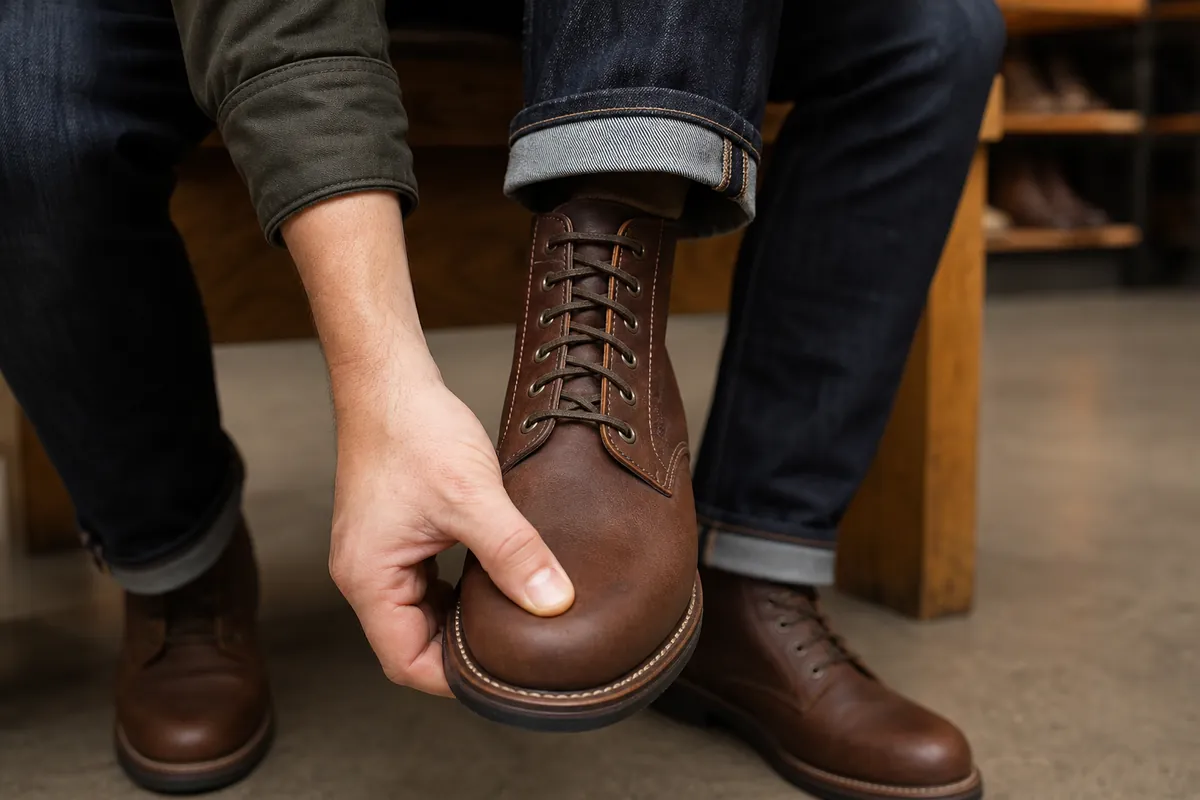
- Pull-on resistance. You should need the pull tab, or a good hold on the opening, to get your foot in. If your foot slides in and out with no hands, the boot is too big.
- Heel seat. As the heel drops past the narrowest point, you should feel a small pop of resistance. A hollow thud and a heel that wanders around means a loose heel pocket.
- Instep. A steady, even pressure across the top of your foot is good. Numbness, tingling or a band of pain after half an hour means the boot is too tight over the instep, even if the length is fine.
- Ankle. The elastic panels should hug the lower leg from the arch up to the ankle bone without cutting in. Wrinkles and gaps at the sides mean extra volume.
- Toes. Stand and push your foot forward. A little free space in front of the longest toe is welcome. Jammed toes are not, and leather will never grow longer.
Runner's tip: Wear the socks you actually plan to wear with the boots. A Chelsea that fits with a thin dress sock can feel snug with a medium wool sock and sloppy with none.
How much heel slip is okay?
A little. A new Chelsea has a stiff sole and a stiff heel counter, and without laces to hold you down, your heel will lift slightly with each step. Roughly a centimeter is common in a new pair, and it usually shrinks as the sole becomes more flexible. Two centimeters or an audible slap is too much.
The test is whether the boot feels like it wants to leave your foot. If it does, the instep or heel pocket is too big, and no insole will make up for a boot that is a size too large. A thin insole or heel grip can tidy up a small leftover gap, but it cannot rescue the wrong size.
Should I size up or down from my sneakers?
This depends on the last and the boot's construction. In general, Chelseas made on dress lasts, and boots built with a Goodyear welt, tend to run a little long. A common starting point is half a size below your sneaker size, particularly if you usually buy sneakers a bit roomy. Roomier work-style Chelseas or sleek, pointed ones can go the other way.
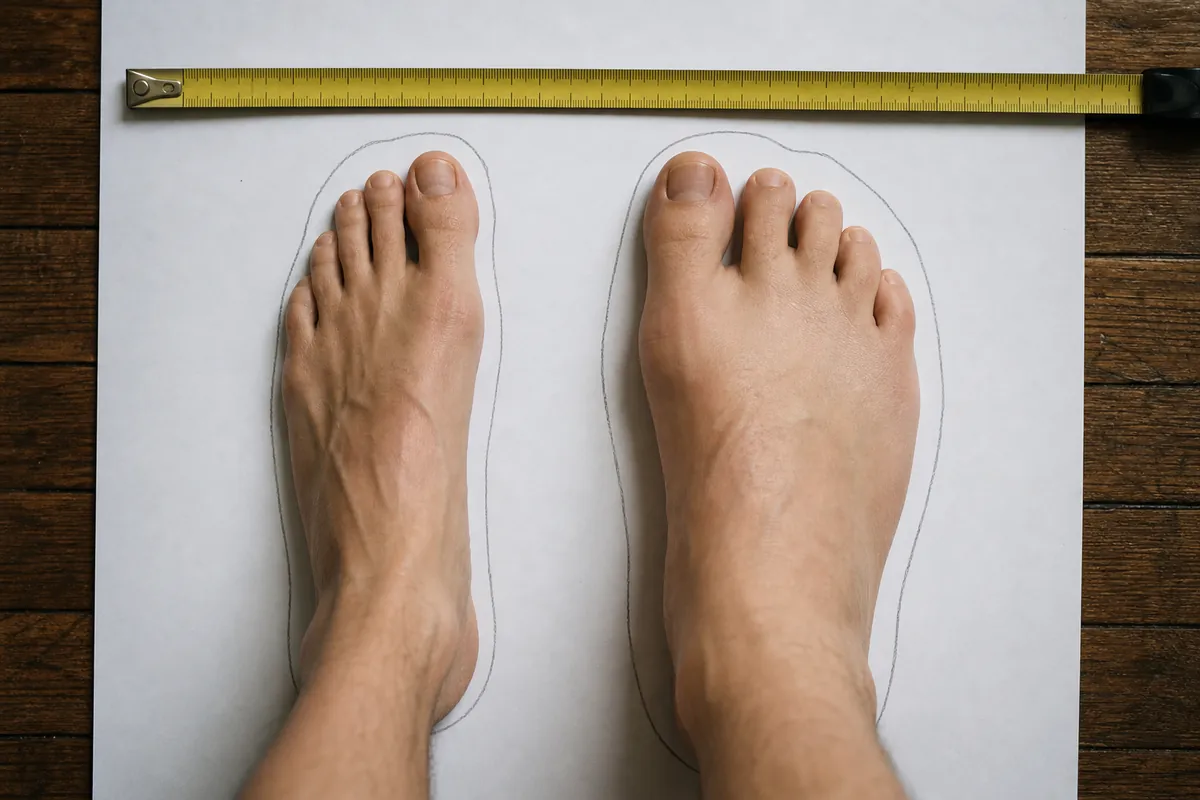
Instead of guessing, work from your actual foot length. Our guide to measuring your feet takes a few minutes. The shoe size calculator will then convert it. Use the result as a starting point, and read the maker's own fit note, because brands disagree. Some tell you to take your Brannock size, others say to go down half a size.
If your boot is labeled in UK sizes
Many Chelsea makers, especially British and Australian ones, print UK sizes. That label is lower than your US men's size, usually by one. The table below shows how that works on the standard chart in our data.
| US | UK | EU | Foot length (cm) |
|---|---|---|---|
| 7 | 6 | 40 | 25 |
| 7.5 | 6.5 | 40.5 | 25.5 |
| 8 | 7 | 41 | 26 |
| 8.5 | 7.5 | 42 | 26.5 |
| 9 | 8 | 42.5 | 27 |
| 9.5 | 8.5 | 43 | 27.5 |
| 10 | 9 | 44 | 28 |
| 10.5 | 9.5 | 44.5 | 28.5 |
| 11 | 10 | 45 | 29 |
| 11.5 | 10.5 | 45.5 | 29.5 |
| 12 | 11 | 46 | 30 |
| 12.5 | 11.5 | 47 | 30.5 |
| 13 | 12 | 47.5 | 31 |
If you buy from a maker with its own chart, trust it over a generic conversion. A UK 9 in one brand's chart can map to a US 10 or a US 9.5 depending on the maker, and a quick look at the conversion saves a return.
Toe shape changes the size you need
Chelsea boots come in a few common toe shapes, and the same measured size does not feel the same in all of them.
- Almond toe. Rounded with a gentle taper, usually the most forgiving. It gives your toes a little room without looking bulky.
- Round toe. Roomy and traditional, often a good pick for slightly wider feet.
- Square toe. Roomy at the front, but it can look heavy on a slim boot. Check the length carefully, as the empty space at the tip can mislead you.
- Pointed toe. Sleek, but often tighter. Some people need to size up a little, especially with wide forefeet, because the taper squeezes the smaller toes.
When a boot has a long, pointed toe, judge the length by where your foot bends, not by the amount of empty leather at the tip. The crease should form under the ball of your foot. A crease ahead of your toes means the boot is too long.
Wide feet, narrow feet and high insteps
Chelsea boots are designed to hold a foot in place with the elastic gussets and a fairly close instep, so foot shape matters more than for a sneaker.
If you have wide feet, check whether the model comes in a wider fitting, and consult the shoe width chart for what the letters mean. Going up half a size to gain width usually brings more heel slip. If you have a low instep, the boot may feel loose on top even when the length is right. Some popular Chelseas are built on lasts that suit average to higher insteps, and a low-volume foot can struggle to keep them snug.
If you have a high instep, the opposite happens. The boot can feel tight at the throat while the toes feel loose, and going up in length does not help. Try a style with a roomier vamp or more stretch in the gussets.
Break-in: what changes and what does not
Leather uppers soften and ease across the width. The elastic loses a bit of its snap. The footbed compresses a little, and the stiff sole starts to bend where your foot bends. These changes make a snug boot comfortable.
What does not change is length. Do not accept a boot that presses your toes against the front on the promise that it will stretch. Equally, do not buy a boot that is sloppy because it will somehow "tighten up". It will not.
Break-in rule: If the boot is snug but not painful, wear it indoors for an hour at a time on a clean floor for the first week. If you still feel a hot spot, the issue is probably the size, not break-in.
Suede, smooth leather and lining
Material changes how fast a Chelsea relaxes. Suede and soft calf ease quickly, so lean toward the snugger size. Stiff, thick leather and unlined boots take longer, and a size that feels tight at first may be right a month later. A full leather lining tends to grip the foot a little better than a thin textile lining. Judge the boot by the material in front of you, not by the label alone.
Common problems and fixes
The heel slips
Check the pull-on test first. If your foot can slip out easily, the boot is too big. If the boot passes the test but the heel still lifts, try thicker socks, a thin heel grip, or a slightly thicker insole. A half size down is often the cleanest fix.
The instep is tight
Tightness across the top that gets worse over time points to a boot that is too small in volume. Switching to thinner socks may help. Otherwise, move up half a size or try a model with a roomier last.
The toes are crowded
If your toes press the front, the boot is too short or too narrow in the toe box. Go up half a size, or switch to a rounder toe. Do not wait for the leather to give, as it will not lengthen.
The sides of the foot hurt
Pressure on the little toe or the ball joint is a width problem. A wider fitting, or a model with a roomier toe box, is better than a longer size.
A quick checklist for ordering online
- Measure your feet and write down the length in cm.
- Check the brand's own size chart and fit note.
- Decide whether to start from your sneaker size, your measured size, or half a size down, based on the maker's advice.
- Try the boots indoors on a clean floor with your usual socks. Walk on stairs.
- Keep the tags and packaging until you have decided.
For a broader look at boot fit across work, hiking and western styles, see our guide to how boots should fit. The right Chelsea is the one you stop noticing after the first week.
Frequently asked questions
How tight should Chelsea boots be at first?
Slightly snug. You should need the pull tab to get them on, feel firm contact across the instep, and have only a small heel lift. Painful pressure, numbness or crushed toes mean the size is wrong. A boot that is comfortable but loose on day one will get looser with wear.
Do Chelsea boots stretch?
Leather uppers ease across the width, and the elastic gussets relax a little, but the length does not grow. A boot that is tight across the sides may become comfortable. A boot that presses your toes at the front will keep pressing. Use that to decide between sizes.
Is it normal for my heel to slip in Chelsea boots?
A small amount is normal while the sole is stiff. Roughly a centimeter is common in a new pair, and it should lessen over a few weeks. If your heel pulls out of the boot with each step, or you hear a thud as it drops in, the boot is too big.
Should I size down in Chelsea boots?
Often by half a size from your sneaker size, particularly in dress-last or Goodyear-welted boots, which tend to run long. It varies by maker. Start from your measured foot length and read the brand's fit note, because some tell you to take your regular size.
What if I have wide feet or a low instep?
Wide feet need a wider fitting or a model with a roomier toe box, since going up half a size usually brings heel slip. A low instep can make a Chelsea feel loose on top even when the length is right, so try a lower-volume last or a smaller size.