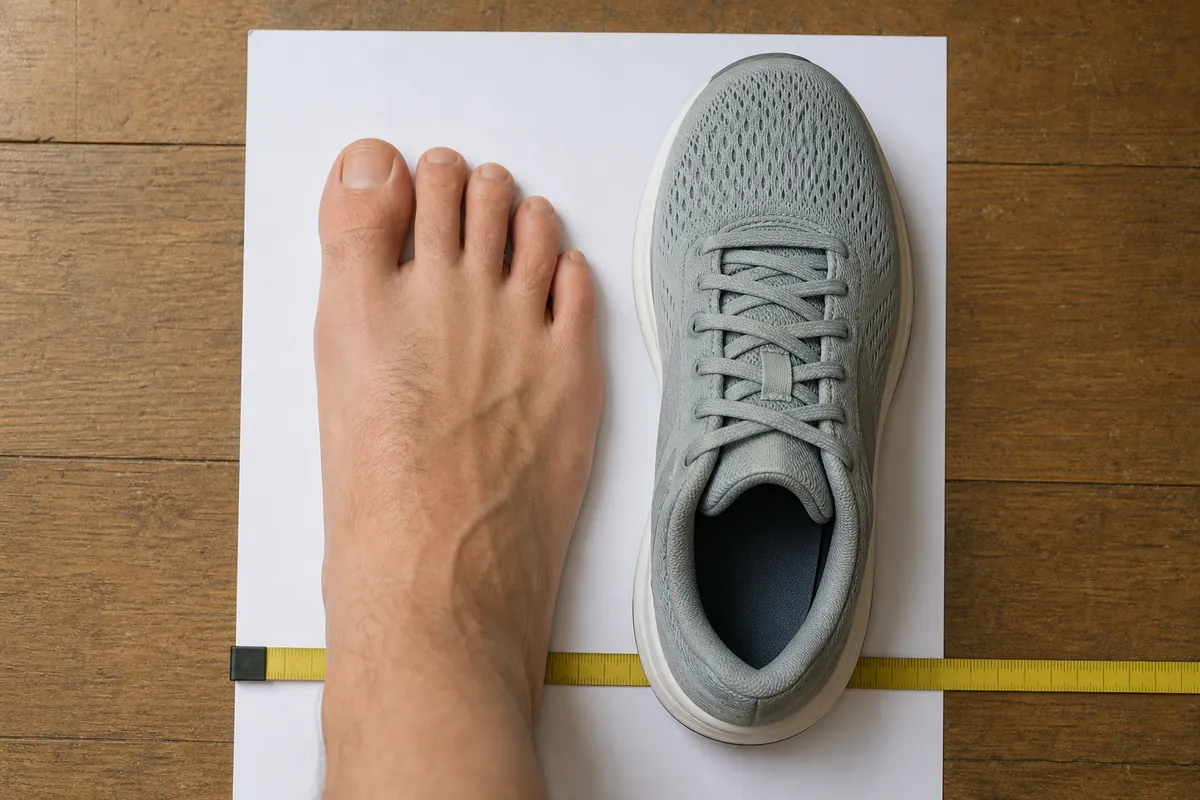
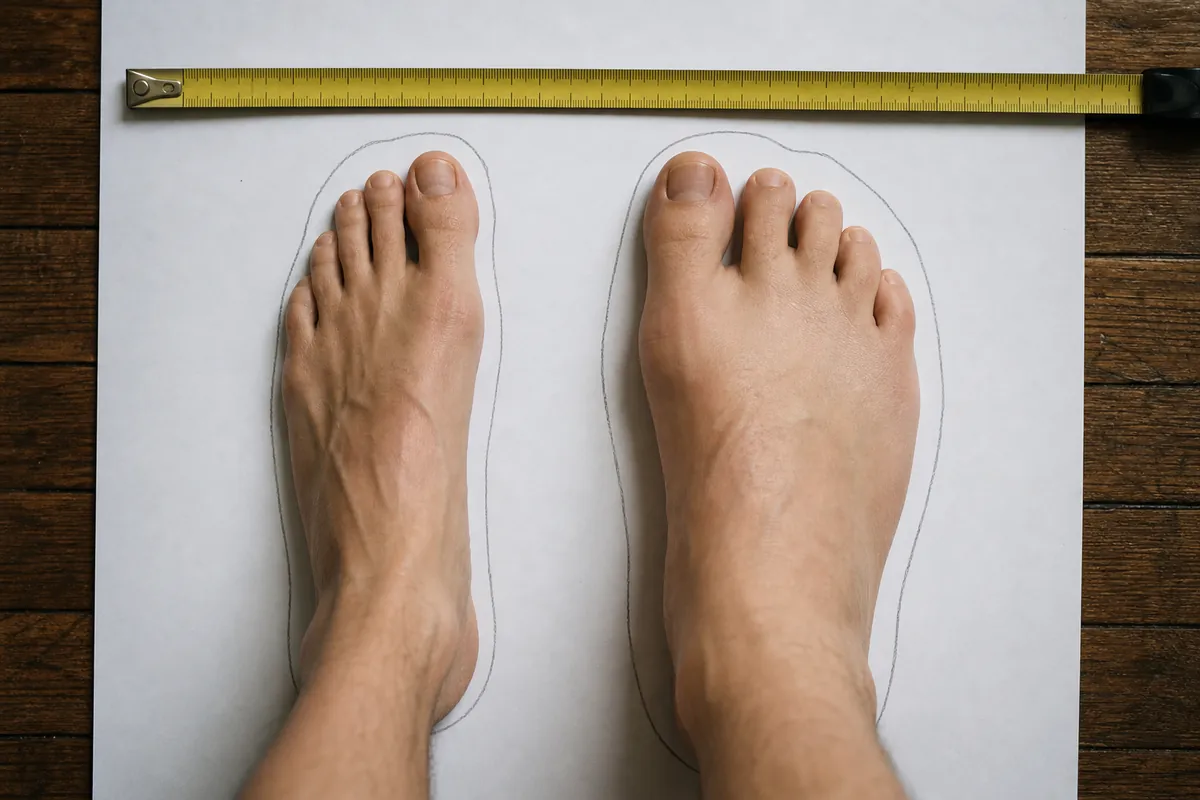
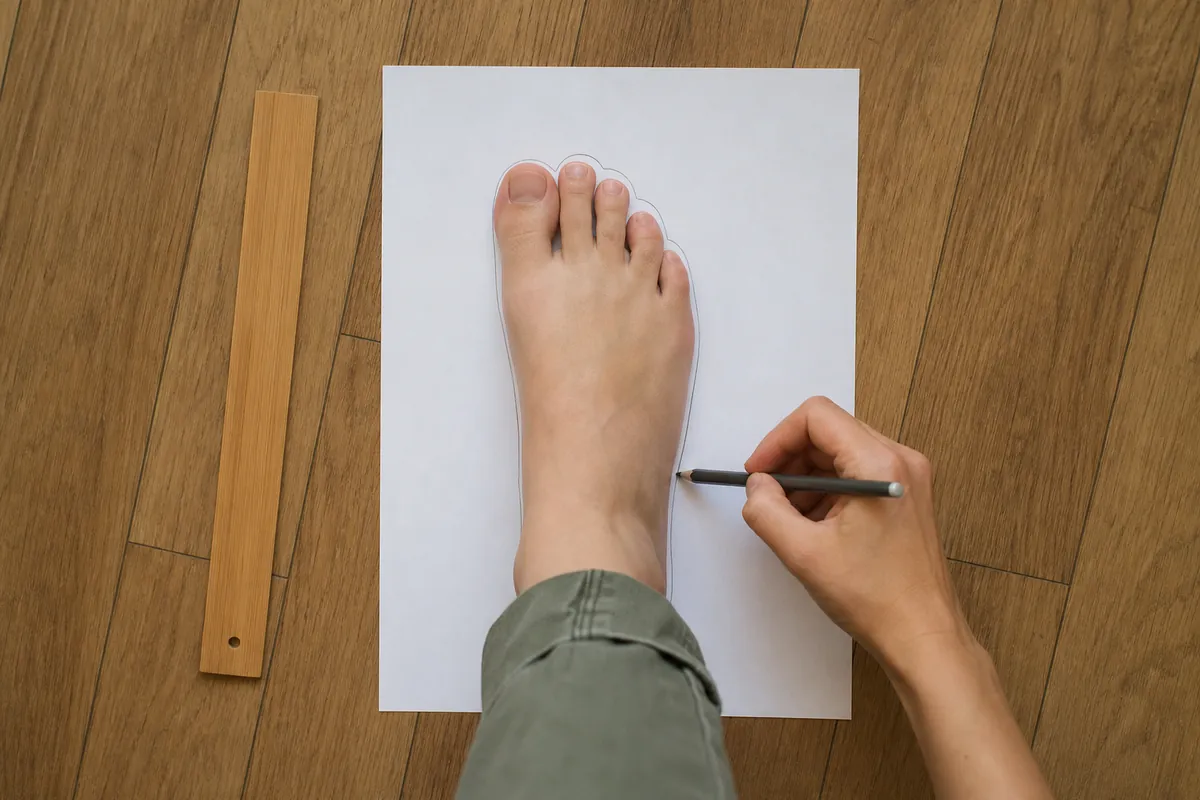
How Foot Shape Affects Shoe Size and What to Buy
Your size is length; shape is width, volume and taper. Learn when to change the size and when to change the model for your toes, arch and instep.
Quick answer
Size mostly describes length. Foot shape decides width, volume and taper. Toes jammed at the front need more length; side squeeze, instep pressure or heel slip usually need a different model or lacing, not a bigger size. Find where the shoe presses before you choose to size up.
Your size is only half of the answer. Two people who both measure 26.2 cm can wear the same US 9 and still need different shoes, because one has a tapered toe and a high instep and the other has a broad, flat forefoot. When a shoe pinches at the sides, rubs the top of the foot or lets the heel slide, a different model usually fixes it, and a different size often does not.
This guide explains how the common foot shapes affect fit, how to work out where your shoe is pressing, and when to change the size versus the shoe. It sits on top of a correct length measurement, so if you have not measured yet, start with our guide to measuring your feet.
Length, width and volume are three different things
A size number mostly describes length. Width and volume, meaning how much room there is above the foot, are handled by the shape of the shoe's last, the form it is built around. That is why you can wear the same number in two brands and find one comfortable and the other painful.
The practical consequence is simple. If the problem is length, such as toes jammed at the front, change the size. If the problem is anywhere else, look at the shape first. Going up half a size to fix a side squeeze adds length you do not need, and it often creates a loose heel. Our guide to the half-size difference shows how little a half size really adds.
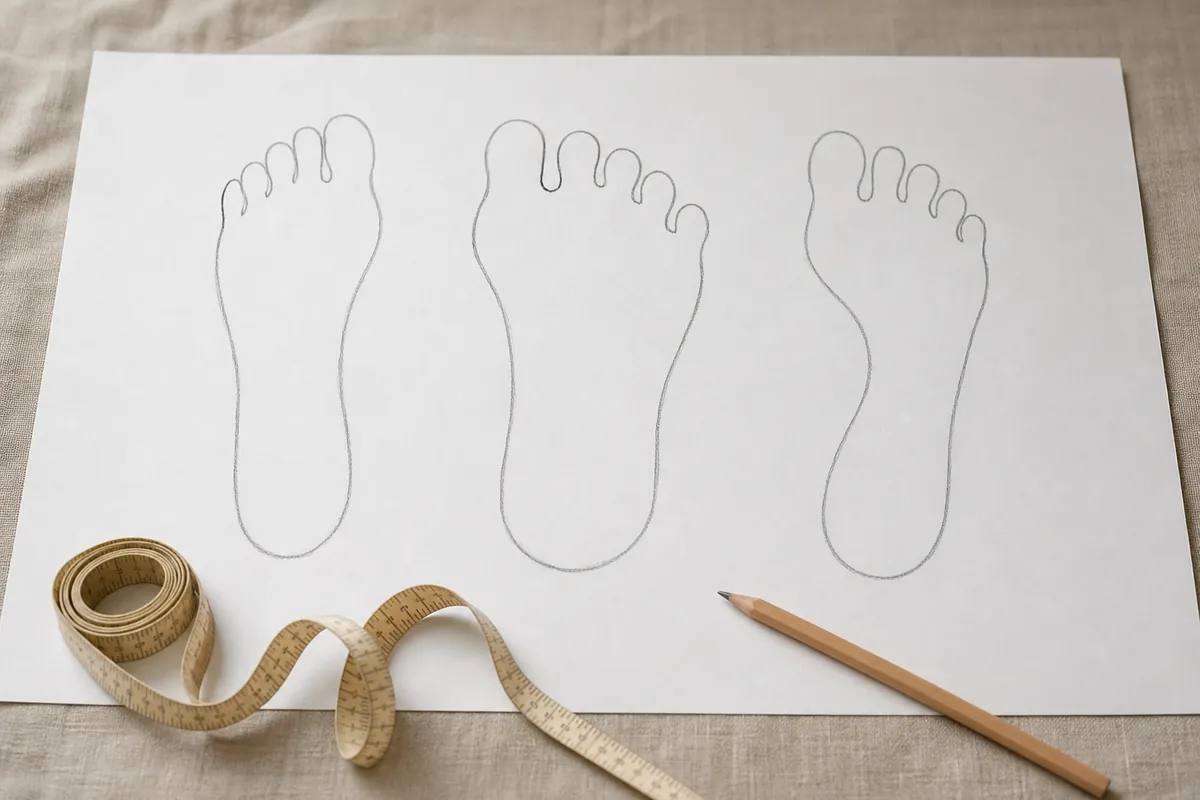
Toe shapes: Egyptian, Greek and square
Shoe fitters and size guides describe feet by which toe is longest. The names are informal labels, not a scientific standard, and sources use them a bit differently, but the three common types are easy to recognize.
Egyptian: big toe longest
The big toe leads and the others step down in a slope. This foot usually fits a gently tapered toe box well, because the shoe's outline follows the toes. It tends to be the easiest shape to fit in standard sneakers, as long as the big toe has clearance at the front.
Greek: second toe longest
The second toe extends past the big toe. The longest point of the foot is therefore the second toe, and that is the one that hits the front of the shoe first. People with this shape sometimes need a bit more internal length, either half a size up or a model with a longer toe box. Do not judge the fit by the big toe alone.
Square: first three toes about level
The toes end in a fairly straight line, which gives a broad, flat forefoot. A sharply tapered shoe squeezes the outer toes against each other, and extra length does not relieve that. A square toe box or a wider last helps more than a bigger number.
You may also see a Roman shape, where the first three toes are similar in length but the forefoot is more rounded. It tends to need less width than the square shape because the pressure spreads more evenly across the front. If a guide uses different names for these, rely on the description, not the label.
Arch height changes how the shoe feels
The arch changes the shape of your foot under load, which is the moment that matters when you stand or run.
- Low or flat arches. The foot flattens and spreads under weight, so the forefoot gets wider and the midfoot can feel tight. Some people with this foot do better in a wider model or, sometimes, half a size longer. A thick insole takes up volume, so test with the insole you will use.
- High arches. The midfoot is raised, so the top of the foot needs more height. Pressure usually appears across the top of the foot rather than at the sides. Extra width is not always the answer: look for a shoe with more depth and a softer or stretchy upper.
Arch support inside the shoe is a separate issue from fit. If you are not sure whether pain is a fit problem or a foot problem, a podiatrist is a better source than a size chart.
High instep: the pressure under the laces
The instep is the height of the foot over the midfoot, right where the laces cross. A high instep shows up as pressure under the laces or the tongue, even in shoes that fit well in length and width.
You have a few options, and each has a cost.
- Loosen or re-lace. Skipping a lace eyelet or using a window lacing pattern relieves the pressure over the high point. The downside is that you give up some heel hold.
- Choose a flexible upper. Mesh and knit uppers give more than rigid leather, so they tend to suit a high instep better.
- Size up. This adds vertical room but also length, so it only makes sense if you have spare length to lose. Otherwise you will trade a tight top for a sloppy toe.
Fit tip: If the pressure is under the laces and your toes have space, try a different lacing before you change the size. If the tongue digs in, look for a padded or gusseted tongue.
Wide forefoot, narrow heel
This is one of the most common mismatches: the front of the foot is broad and the heel is narrow. A standard shoe tends to fit the heel or the forefoot, not both.
Sizing up fixes the forefoot only partly, since a longer shoe usually keeps the same taper, and it makes the heel looser. The better answers are a less tapered model with a broader toe box, together with lacing to hold the heel. A runner's loop, which is a lace loop at the top eyelet, can lock the heel in without any change of size. Our wide feet guide covers the models and sizing that tend to work.
Narrow heel
If the heel slips even though the front fits, the heel cup is wider than your heel. Dropping a size can hold the heel better but will cost toe room, so try lacing first. A thicker sock or a heel grip can also help.
Wide heel
If the back or sides of the heel feel compressed or rub, length will not fix it. Look for a wider last or a more forgiving heel counter, which is the stiff cup that wraps the heel.
Bunions and other forefoot sore spots
Shoes that are too narrow in the forefoot can crowd the toes and irritate a bunion, according to the American Academy of Orthopaedic Surgeons. If you have a bunion or a bunion-like bump on the side of the foot, the usual advice is to look for a wider or less tapered shoe, often with a softer upper over the sore spot, rather than a longer size.
We are not a medical source. If your bunion is painful, see a podiatrist or orthopedist, and use the shoe advice here only as a starting point. Width codes such as D, E and 2E help you compare fittings, and our shoe width chart lines them up.
Read the pressure, then choose the fix
The fastest way to decide between a different size and a different shoe is to find where it presses.
- Toes hit the front. More length, so go up half a size.
- The sides of the forefoot squeeze, or the little toe is pinched. Wider or less tapered model. A longer size alone will not help.
- Pressure under the laces. Check instep height and upper flexibility before changing size. Try lacing changes.
- The heel lifts but the toes are fine. Adjust lacing, then consider a model with a snugger heel.
- Rubbing at the back or sides of the heel. Wider last or a softer heel counter.
This is a rule of thumb, not a diagnosis. Fit problems often come in pairs, and the symptoms can be a mix.
How to choose a model for your shape
When you are shopping, look at the shoe, not just the box. Check the outline of the sole from above: a heavily tapered outline suits an Egyptian foot, and a straighter, boxier outline suits a square or Roman one. Look at the material over the toes and instep, since stretchy knit and mesh are more forgiving than stiff leather or synthetic overlays. Look for notes on whether the shoe runs narrow or roomy.
Our sizing guides cover this brand by brand. Start with how running shoes should fit if you run, or how sneakers should fit for everyday pairs. Running shoes need more room ahead of the longest toe than casual shoes, roughly a thumb's width.
Measure properly before you diagnose
Shape problems are easy to blame when the real issue is a measurement error. Measure both feet while standing, ideally in the evening when they have swelled a little, and size to the larger one. It is common for one foot to be bigger than the other. Measure the width across the ball of the foot as well as the length. Then compare to the brand's chart, and if a brand lists a width, use it.
The same size from two brands will feel different, even if the numbers match. A shoe's last is a design choice. We cannot give a rate of how many people differ, and different sources describe these shapes slightly differently. What helps is the habit of describing a problem as length, width, volume or lockdown, and then fixing that one thing.
Between sizes or between shapes
If you are half a size between two rows, decide by your shape. A Greek foot or a long second toe leans toward the larger size. A narrow heel leans toward the smaller one, with lacing help. A high instep leans toward a flexible upper, not a bigger number. For leather you expect to stretch, the snugger size sometimes works, although stretching adds width far more easily than length. Our guide to how to stretch shoes explains the limits.
Fit tip: Try shoes on at the end of the day with the socks you plan to wear. If a shoe feels fine in the first minute but gets tight within an hour, volume or width is the problem, not length.
Quick summary
- Size is length. Shape is width, volume and taper.
- Greek toe: possibly more length. Square toe: more width and a roomier toe box.
- Flat arch: width and midfoot room. High arch: depth and a softer upper.
- High instep: lacing and flexible uppers before size.
- Wide forefoot with narrow heel: a less tapered model and heel-locking laces.
- Find the pressure point first, then choose between a size change and a model change.
Bottom line
Do not size up for a problem that length cannot fix. Measure your foot, locate the pressure, and change the model when the shape is wrong. If you have ordered the right size and it still feels off, the shoe's last is the likely reason, and the next pair should be a different last, not a different number.
Frequently asked questions
Should I size up if I have a Greek foot?
Sometimes. In a Greek foot the second toe is longest and hits the front first, so a half size up or a longer toe box can help. Check by the longest toe, not the big toe, and leave a thumb's width in running shoes.
How do I fit a high instep?
Try re-lacing or skipping an eyelet over the high point, and choose a flexible mesh or knit upper over rigid leather. Sizing up adds vertical room but also length, so use it only if you have length to spare.
Is a wide forefoot fixed by going up a size?
Usually not fully. A longer shoe often keeps the same taper and loosens the heel. A wider or less tapered model, or a wide width fitting, works better, with lacing to hold the heel.
What shoes suit bunions?
Wider or less tapered models with a soft upper over the sore area are the usual advice, rather than a longer size. For painful bunions see a podiatrist, because shoe choice only manages the pressure.
Do flat feet need a bigger size?
Not always. Flat arches spread under load, so the forefoot gets wider and the midfoot can feel tight. Some people need extra width, sometimes half a size up. Try shoes at day's end with the insole you will use.