How Should Running Shoes Fit? Toe Room, Heel and Midfoot
Leave a thumb's width in front of your longest toe, keep the heel locked and the midfoot snug. Here is how to test it and size for long runs.
Quick answer
Running shoes should leave about a thumb's width in front of your longest toe, hold the heel with little slip, and wrap the midfoot snugly without pressure. Most runners start half a size up from their casual shoe size, since feet swell on long runs. Try them late in the day with your running socks.
Running shoes should leave about a thumb's width of space in front of your longest toe, hold your heel without slipping, and wrap the midfoot snugly without pressure points. For most runners that means ordering half a size to a full size larger than their dress or casual shoe size. Fit is a three-part check: length, width and lockdown.
The reason runners need extra room is simple. Your foot lengthens and swells as you run, and it slides forward on every landing. A shoe that feels perfect standing still in the store can be tight by mile six. This guide shows how to test the fit, what each zone should feel like, and what changes between a daily trainer and a race shoe.
Toe room: the thumb test
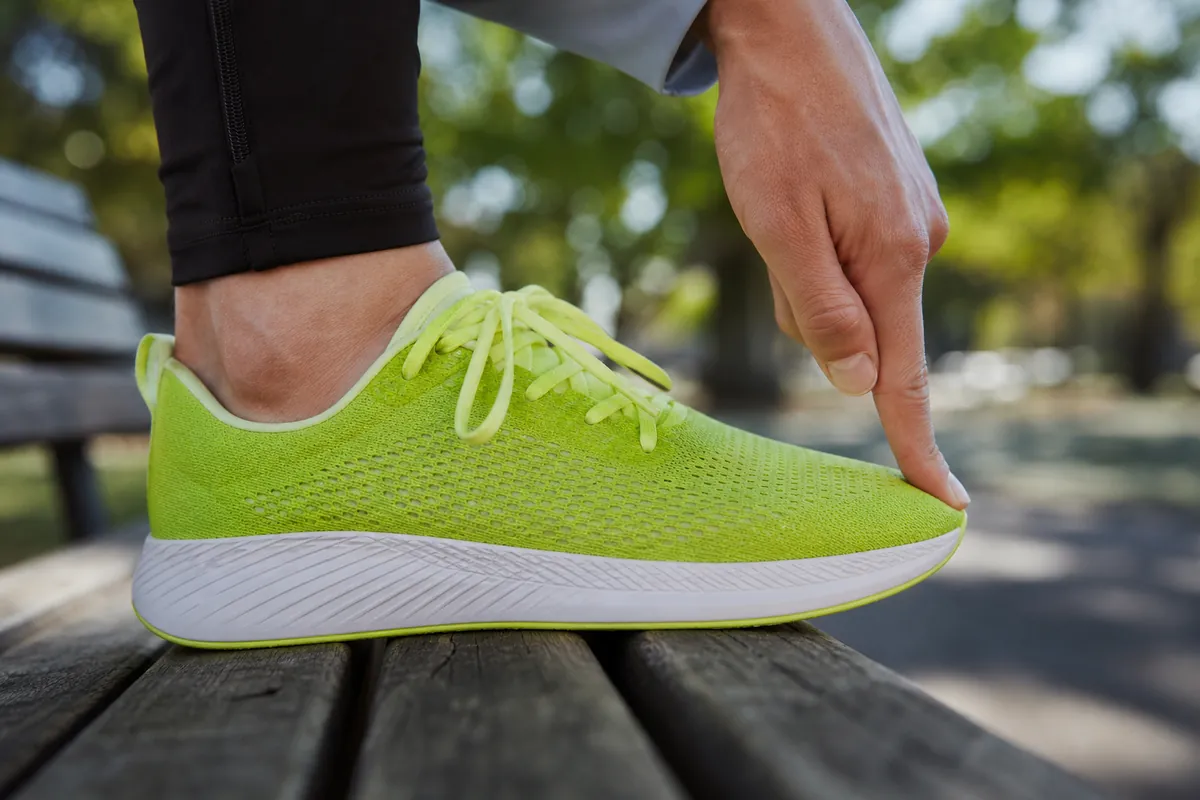
Stand up in the shoes with your weight on both feet, and press your thumb down on the front. You should feel roughly a thumb's width, about half an inch, between your longest toe and the end of the shoe. Note that the longest toe is not always the big toe, so check both.
Your toes should be able to spread and wiggle, and no toe should touch the front or the upper. If your toes are cramped, you may lose a toenail on a long run, and if there is far more than a thumb's width, the foot will slide around and the shoe feels sloppy.
Runner's tip: Try the shoes on at the end of the day, with the socks you run in. Feet are at their largest in the evening, which is also closer to how they feel in the second half of a long run.
Heel hold
The heel should sit firmly in the heel cup with little or no lift when you walk or jog. A tiny bit of movement is normal in a new shoe with a stiff counter, but a heel that slips out on every step will cause blisters. If your heel slides, use the extra eyelet near the ankle for a runner's loop, also called a heel lock, before you give up on the shoe.
If the heel slips even with a loop, the shoe may be too big, or the cup may be the wrong shape for your foot. Do not fix a loose heel by tightening the forefoot, because that pinches the toes and does not stop the slip.
Midfoot and lockdown
The laces should hold your foot against the footbed without squeezing. Cinching down on the top of the foot causes numbness and pain along the arch or the top of the foot. You should be able to slide a finger under the laces after tying them. If the shoe only feels good with very loose laces or very tight ones, the volume may be wrong, and you should look at a different model.
Many shoes have a gusseted or padded tongue, which locks the foot in. Foot shape matters here: high-volume feet may find a low-profile upper tight, and low-volume feet may find it baggy. Neither is a size error.
Width
The forefoot should feel roomy enough for your toes to splay on landing, without the foot hanging over the sole. If the sides of your foot push against the upper, you may need a wide version. Many popular models come in wide and extra wide, so check before sizing up for width, because a longer shoe with the same narrow last still pinches. Use our shoe width chart to see where you sit, and read the wide feet guide if the forefoot is where you feel tightness.
How sizes compare with your everyday shoe
Most runners find they need a half size larger than their casual sneaker size, and some need a full size, particularly for long distances. That is a common pattern and not a guarantee, so test with the thumb check above. Brand charts also differ: a US men's 9 fits a 26.2 cm foot on the standard chart, but the shoe's printed size can read differently across brands. See our brand guides, such as Nike, ASICS and New Balance, for how each cuts its running models.
| US men's | UK | EU | Foot length (cm) | CM (JP) |
|---|---|---|---|---|
| 8 | 7 | 41 | 25.4 | 26 |
| 8.5 | 7.5 | 42 | 25.9 | 26.5 |
| 9 | 8 | 42.5 | 26.2 | 27 |
| 9.5 | 8.5 | 43 | 26.7 | 27.5 |
| 10 | 9 | 44 | 27.1 | 28 |
| 10.5 | 9.5 | 44.5 | 27.5 | 28.5 |
| 11 | 10 | 45 | 27.9 | 29 |
| 12 | 11 | 46 | 28.7 | 30 |
| US women's | UK | EU | Foot length (cm) | CM (JP) |
|---|---|---|---|---|
| 6 | 3.5 | 36.5 | 22.4 | 23 |
| 6.5 | 4 | 37.5 | 22.9 | 23.5 |
| 7 | 4.5 | 38 | 23.3 | 24 |
| 7.5 | 5 | 38.5 | 23.7 | 24.5 |
| 8 | 5.5 | 39 | 24.1 | 25 |
| 8.5 | 6 | 40 | 24.6 | 25.5 |
| 9 | 6.5 | 40.5 | 24.9 | 26 |
| 10 | 7.5 | 42 | 25.9 | 27 |
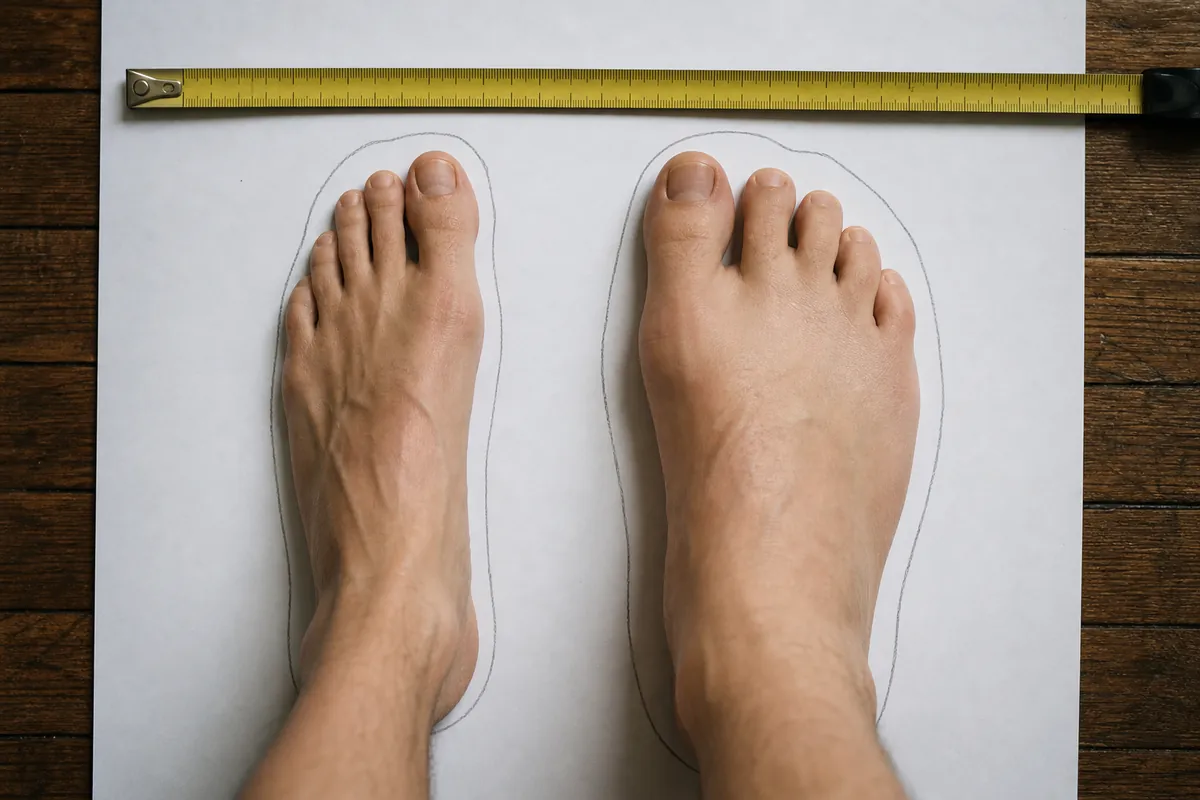
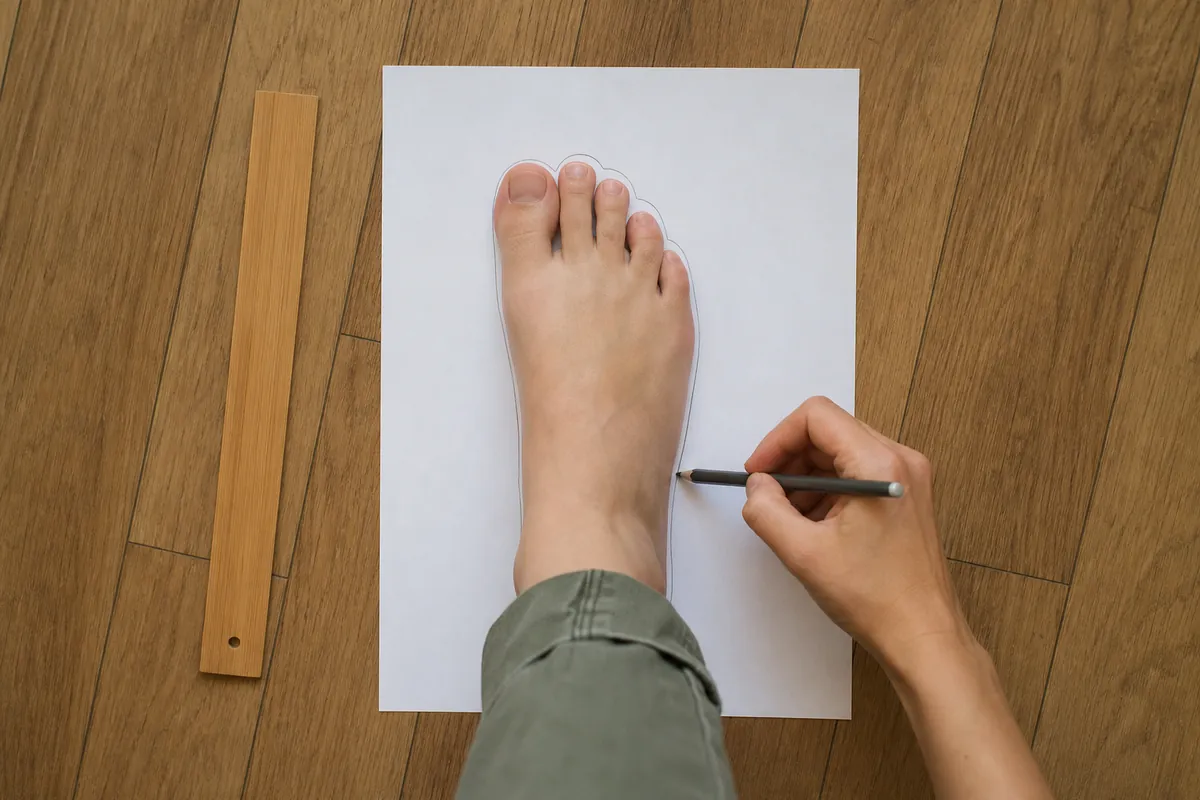
Use the Foot length column as your anchor. Add about 1.2 to 1.5 cm for the thumb's width, and then look for the shoe whose listed length, or the next size up, provides it. For example, a 26.2 cm foot plus 1.3 cm calls for a shoe with an interior length of roughly 27.5 cm, which in practice means a men's US 9.5 or 10 depending on the brand. Always cross-check with the brand's own chart.
Daily trainer versus race shoe
A daily trainer should be a bit roomier, because you will wear it for easy miles when your feet swell. Take the thumb's width plus a little for long runs. Racing flats and super shoes are often cut slimmer and built for a tighter hold, so runners sometimes go a half size smaller than their trainer in a racing shoe, particularly for short races. That is a matter of preference, and it is risky for a marathon, where swelling and the toe box matter more.
Never debut a race shoe on race day. Run in it at least a few times, including one longer run, to see how your feet respond.
Socks and insoles
Socks change the fit more than most people think. A thick cushioned sock takes up volume, and a thin one leaves room. Try shoes with the same socks you run in, and if you use compression socks or toe socks, bring them. Replacement insoles and orthotics also take space, so remove the stock insole and test the shoe with the new one in.
Downhill and long-run checks
Before committing, jog in the shop or around your house. On a slope, feel whether your toes hit the front on the way down. If they do, size up, or look for a shoe with a taller toe box. On a long run, watch for hot spots that appear after thirty or forty minutes. A hot spot on the heel often points to heel slip, one on the toes to a toe box that is too short or low, and one on the side of the foot to a narrow last.
Common fit problems and quick fixes
- Black or loose toenails: usually a toe box that is too short or too low. Go up half a size or choose a taller toe box, and keep your nails trimmed short.
- Heel blisters: heel slip. Try the heel lock, a thicker sock, or a shoe with a firmer heel counter.
- Pain on top of the foot: laces too tight or a tongue that digs in. Skip an eyelet, relace in a window pattern, or try a softer tongue.
- Numb toes: a narrow forefoot. Look for a wide version before going up in length.
- Arch ache: not always a size problem, since the shape of the midsole and your insole matter as much as the number.
When to replace shoes, and why fit changes
The fit of the shoe changes with wear. The foam softens, the upper stretches and the heel counter loosens. A pair that felt snug in the first week may feel looser after a few hundred miles, which is a sign to rotate in a new pair. Many runners replace shoes somewhere in a range of a few hundred miles, but the signs are better than the number: new aches, a flattened midsole or a loose heel.
Runner's tip: Keep a note of your size, model and any lacing tweaks. Models often change between versions, and a new release of the same shoe can fit differently. Try the new version before you commit to a pair.
Sizing online
Ordering online works if you have a baseline. Take your foot length from our measuring guide, check the brand's chart, and compare it with a pair you already own. Choose retailers with generous return policies and run indoors on a clean surface only, so you can send the shoes back if needed. A quick pass through the shoe size calculator helps check your number before you order. For the sneaker baseline, see our sneaker fit guide.
Quick checklist
- Thumb's width in front of the longest toe.
- Heel holds with little or no slip.
- Laces snug without pressure on the top of the foot.
- Room to wiggle and splay your toes.
- Tested with your running socks, in the evening.
- No hot spots after a short jog.
Bottom line
A running shoe should feel secure in the heel and midfoot and roomy in the toes. Go half a size up from your casual size as a starting point, test with your socks late in the day, and adjust for how the shoe is built, not only for the number on the box.
Frequently asked questions
How much room should running shoes have in the toe?
About a thumb's width, roughly half an inch, between your longest toe and the front of the shoe, standing up. Your toes should wiggle freely without touching the front or the upper.
Should running shoes be a size bigger than regular shoes?
Most runners need half a size larger than their casual size, and some need a full size for long distances. This is a common pattern, not a rule. Use the thumb test with your running socks.
How do I stop my heel from slipping in running shoes?
Use the extra top eyelet for a heel lock lacing and check the socks. If the heel still slips, the shoe may be too big or shaped wrong for your heel, and tightening the forefoot will not help.
Do race shoes fit differently from daily trainers?
Race shoes are often cut slimmer and hold the foot tighter, so some runners go half a size smaller than their trainer for short races. For a marathon, the toe box and swelling matter more, so many keep the trainer size.
Why do my running shoes feel tight after a few miles?
Feet swell and lengthen as you run, and heat adds to it. If toes press the front or the sides pinch after thirty minutes, the shoe is too short or too narrow. Try half a size up or a wide version.