Chippewa Boot Sizing: Do They Run Big and What Size to Buy
Chippewa boots run roughly half a size big. Most wearers order half a size below their Brannock size and expect two to four weeks of break-in.
Quick answer
Chippewa boots run about half a size big. Order half a size below your Brannock size: a 9D Brannock usually becomes an 8.5D, and a US 9 sneaker typically becomes an 8.5. Sizing up leaves extra room in the heel and forefoot. Standard width is D, with EE available. Sizing is similar to Red Wing, but break-in is usually faster.
- Fit
- Runs large
- Width
- Standard width
- Our advice
- Order half a size below your Brannock size. Take the smaller size when between sizes. Choose EE if you have a wide forefoot.
Chippewa boots generally run about half a size big. Most wearers order half a size below their Brannock size, which often works out to the same as, or a half size under, what a Red Wing buyer would choose. If you size up, you will usually find spare room in the heel and forefoot.
Chippewa has been around for generations, and its catalog mixes classic six-inch service boots, loggers, padded work boots and a newer lug-sole model. That variety is why advice sometimes sounds inconsistent. This guide sorts it out, starting with the number to order.
What size to order
Start from the Brannock device, which measures length, width and arch length. The common outcome: a Brannock 9D takes an 8.5D in Chippewa. Sneaker sizes give a similar picture, though they are less reliable. A men's US 9 sneaker typically lands at an 8.5 Chippewa, and a US 10 sneaker at a 9.5.
Notice that those two examples do not follow the same gap. That is the nature of sneaker-to-boot conversion, and it is a reason to prefer the Brannock number whenever you can get one. If your feet differ in size, order for the larger foot and fix the smaller one with an insole or thicker sock. Our guide on how to measure your feet explains how to find both lengths.
| If you know your | Typical Chippewa size | Note |
|---|---|---|
| Brannock 9D | 8.5D | Most common advice: half a size down |
| Sneaker US 9 | 8.5 | Reported by owners |
| Sneaker US 10 | 9.5 | Reported by owners |
| Between sizes | Take the smaller | Leather widens more than it lengthens |
Why Chippewa feels roomy
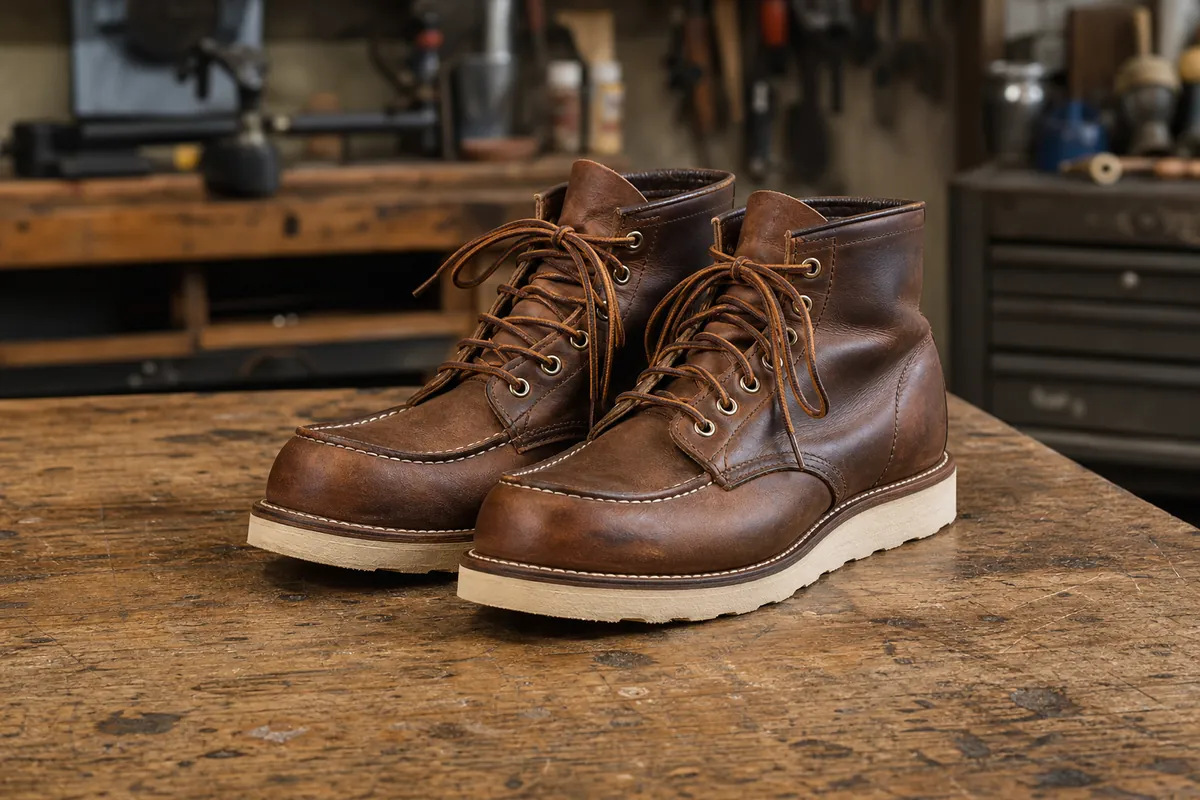
The classic six-inch service boot is built on a generous, rounded last, so toes do not feel crowded. That is a point in the brand's favor, especially if you spend long days standing. The cost is that going up in size can leave empty space in the heel and the forefoot, and the boot will feel sloppy rather than relaxed.
The newer Apache last is described as wider, with extra wiggle room. It also looks bulkier and less refined than the heritage Munson-style shape that earlier Chippewa lines used. If you care about silhouette, compare photos of the model you plan to buy and not just the brand's older reputation.
Chippewa also resembles Red Wing in sizing, which makes it easy to cross-shop. Our Red Wing sizing guide goes into that comparison. Thorogood, on the other hand, tends to feel more forgiving out of the box; see the Thorogood guide for details.
Models you will see
- Six-inch service boot: the classic. Generous rounded last, half a size down is the usual call.
- Apache with lug sole: returned around 2024. Wider last than the heritage models.
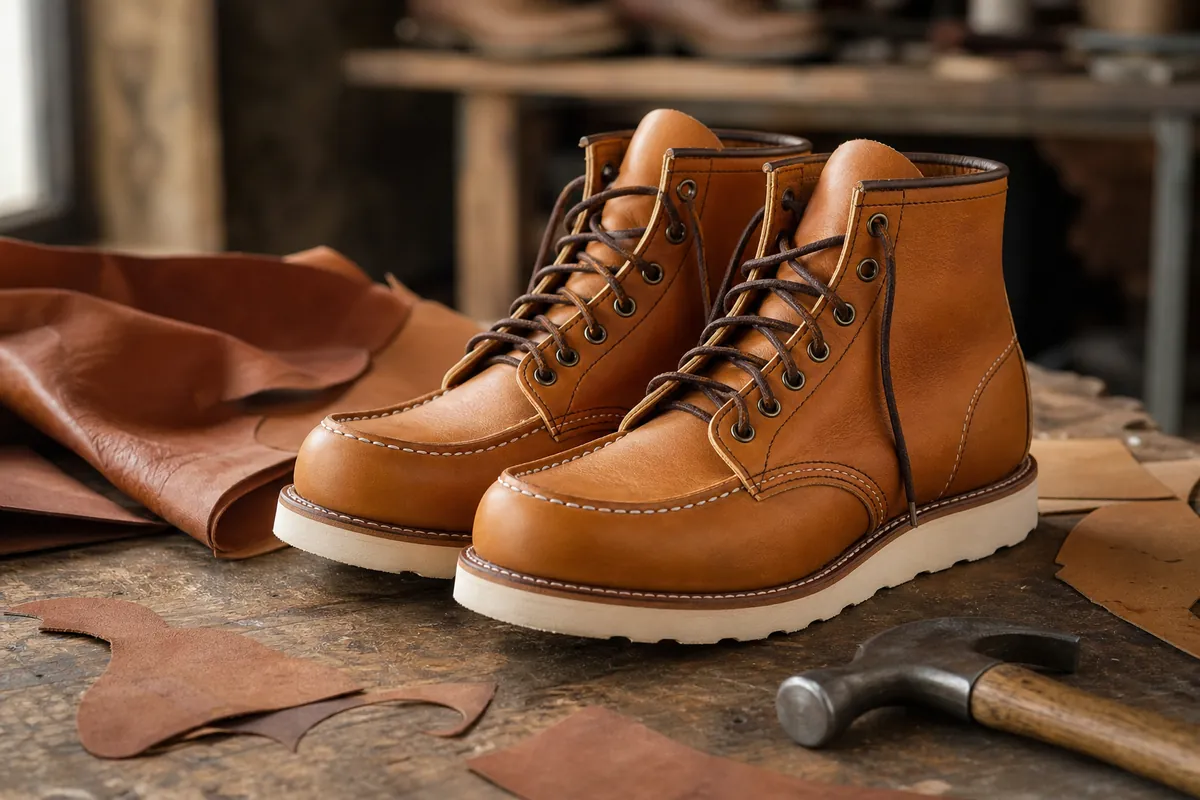
- Heritage line: reintroduced around 2013 and discontinued in 2021. You will mostly meet it on the secondhand market, where the same sizing logic applies.
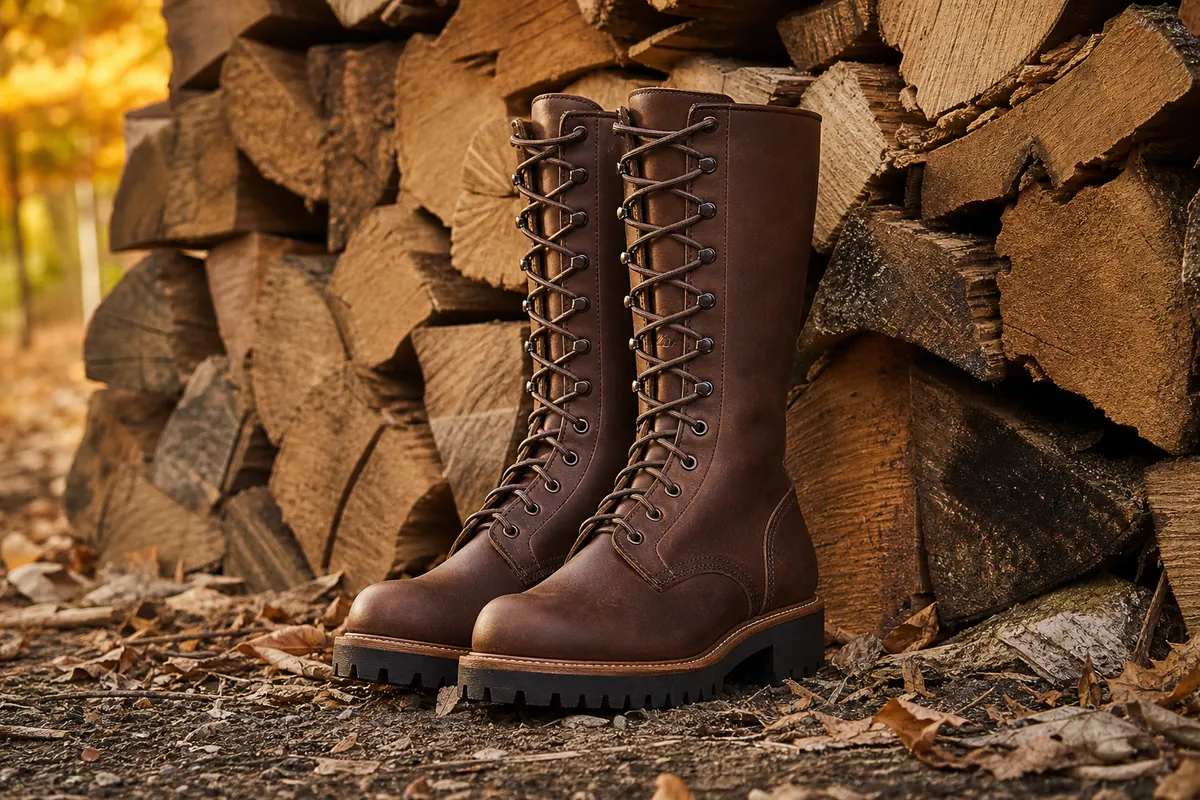
- Lace-up loggers: the same half-size-down habit usually applies, but check the heel height and shaft.
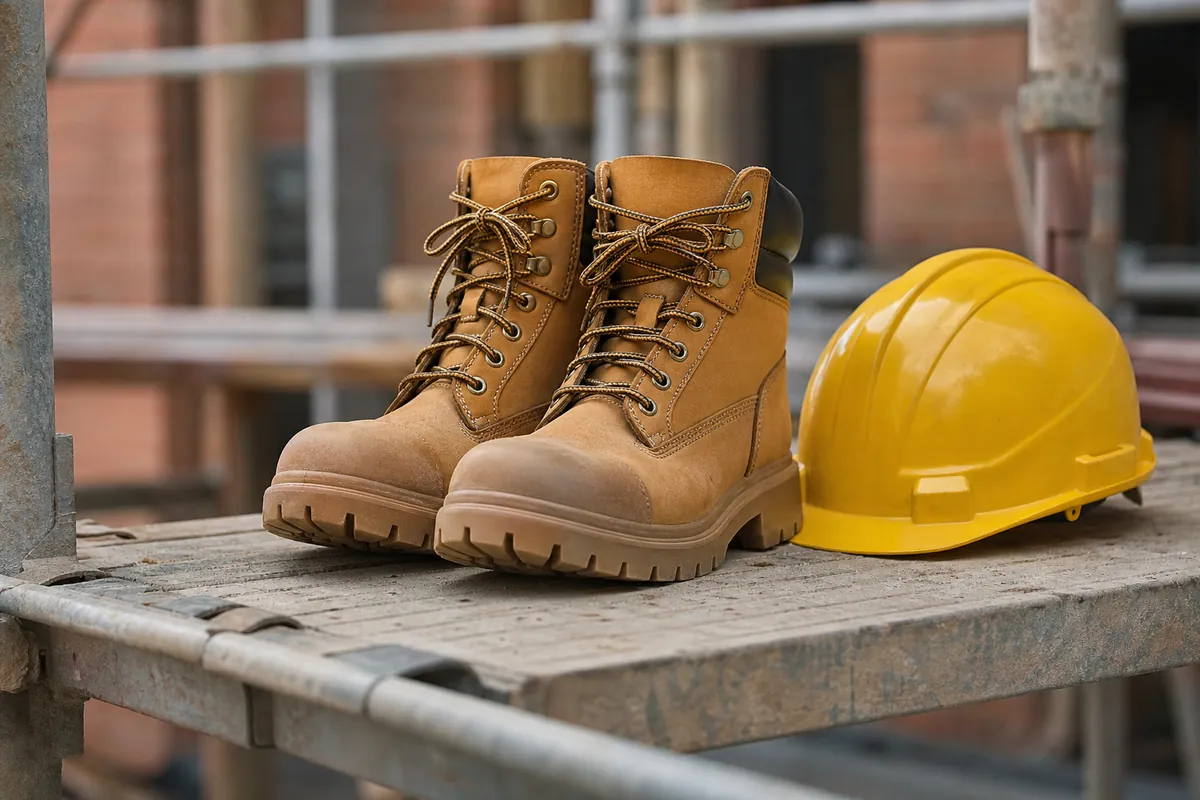
- Padded work boots: padding takes up volume inside the boot, so try them with your real work socks.
The sources we reviewed do not give a separate size rule per model, so the half-size-down guidance is the general one and it is not a promise for every style. When a listing mentions a different last, read it before you assume the same fit.
Width: D, EE and the gap below
Chippewa's standard width is D, also called medium. EE is available for wider feet. The usual letter equivalents are D/M/E for medium, EE/W for wide, and EEE/XW for extra wide.
What you will not find is a narrow option. A B or C width foot is not covered, so narrow-footed buyers should expect a roomy boot and plan for thicker socks or an insole. By comparison, Red Wing offers D, E and EE, and Thorogood offers B for narrow and EE for wide. If you are not sure which letter you are, our shoe width chart will help.
Fit tip: If a D-width Chippewa feels tight across the ball, going up a full size will not fix it, and it adds about a third of an inch (8 to 9 mm) of dead space at the toe. Go to the EE at your usual length instead.
The first month
New Chippewas feel stiff and firm underfoot, and pressure points are common early on. Most wearers describe a break-in of two to four weeks of regular wear. That is faster than Red Wing's, and without the foam padding of some newer brands or the cork midsole feel of a Red Wing.
The leather softens and molds with time, but it stretches mainly in width, not in length. That matters when you are deciding between two sizes. Going down hoping the boot will lengthen is a mistake, since a boot that is short at the toe on day one will remain short.
A specific pressure spot to watch
One owner found that the quarter stitching pressed on the pinky toe knuckle. They eased it by massaging conditioner into the leather over that area. If you feel a sharp point rather than general snugness, treat it that way before you decide the size is wrong. A rub that moves with wear is a leather issue. A toe that hits the front on every step is a size issue.
Heel slip and what is normal
A little heel lift at first is common in stiff welted boots. Check by walking up a flight of stairs. If the heel rises half an inch, you have likely gone up too much. If it rises slightly and settles by the second week, the fit is working. If you went up a half size from the usual advice and the heel keeps rising, drop back to the lower size.
This is also the point where a thicker sock earns its keep. A mid-weight wool sock fills the gap and cushions pressure points while the leather loosens. If you only try boots in thin dress socks, you will misjudge the size by a half step. For a deeper look at heel hold and toe room, read how work boots should fit.
Men's and women's
Chippewa publishes men's and women's size charts covering US, UK, EU and centimeter sizes. We have not collected the brand's own row-by-row numbers, so use the chart on the product page for your conversion and treat our half-size-down rule as the adjustment on top of your Brannock size. If you are converting between men's and women's labels, a men-to-women size guide explains the usual offset.
Chippewa against close alternatives
Red Wing is the usual comparison, and owners describe the sizing as similar: half a size under Brannock. The break-in is shorter on a Chippewa, though, so if Red Wing leather beat you up the first month, a Chippewa may be easier. Thorogood has a reputation as the easiest of the three out of the box, and it has a narrow option that Chippewa lacks.
Sources do not agree on every detail, such as how the older heritage last compares to the Apache, so treat the comparison as a direction and not a rule.
Buying secondhand or an older Chippewa
Because the heritage line ran from about 2013 to 2021, a lot of used pairs are in circulation, and the sizing logic carries over: half a size below Brannock. The catch is that a worn boot has already molded to someone else's foot. The footbed will carry that person's heel and toe impressions, and the leather will have stretched where their foot pushed.
When you buy used, ask for the insole length in inches or centimeters measured inside the boot, and compare it with your own foot traced on paper. A used boot that is a half size too large is much harder to fix than a new one, since the leather has already given up its width. A pair that is a touch snug can often be conditioned and worn into shape, but a loose pair rarely tightens.
Socks, insoles and small adjustments
Because Chippewa runs a little roomy, small tweaks do more than a size change. A mid-weight wool sock takes up the volume that a thin sock leaves. A full-length insole can fix a loose heel by raising the foot slightly, and a heel grip pad handles the rest. These changes cost far less than reordering, and you can undo them if the boot loosens or tightens as the leather moves.
Lacing helps too. Heel lock lacing, which uses the top eyelets to pull the heel back, is a classic remedy for a boot that is the right length yet a little loose at the back. If a boot is too tight across the instep, skip a pair of eyelets or use a looser pattern in that area until the tongue softens.
When to consider a different size anyway
The half-size-down rule is for the typical foot. A foot with high volume, such as a tall instep or thick forefoot, may find the usual size a squeeze, and a flat or narrow foot may find the same size loose. If you already know that most boots feel tight or loose, adjust the rule in that direction and try the boot with your real socks.
Because Chippewa does not make a narrow width, narrow-footed buyers should be extra careful. A boot that feels loose across the ball, with no heel lift, is a width problem. Going down a size will shorten the boot without narrowing it, so the toe box ends up cramped and the width is still wide.
Our recommendation
Order half a size below your Brannock size in a D, or an EE if the ball of your foot is wide. If you only know your sneaker size, remember the pairings above and verify with a measurement. Expect two to four weeks of stiffness, and wear the socks you will actually use. When you are between sizes, take the smaller one, since leather widens but does not lengthen. A broader introduction to boot fit is in how should boots fit.
Frequently asked questions
Do Chippewa boots run big or small?
They generally run about half a size big. Wearers usually take half a size below their Brannock size, and a US 9 sneaker typically fits as an 8.5 Chippewa. Sizing up tends to leave extra space in the heel and forefoot.
Is Chippewa sizing the same as Red Wing?
Sizing is described as similar, with half a size down from your Brannock as the common rule. The main difference owners mention is break-in: Chippewa tends to soften in about two to four weeks, which is faster than Red Wing.
What widths does Chippewa offer?
Standard width is D, also called medium, and EE for wide is available. The sources we reviewed do not cover narrow widths such as B or C, so narrow-footed buyers should expect a roomy fit.
Will Chippewa leather stretch to fit if I go a size down?
Not in length. The leather mainly stretches in width, so going down a size hoping to gain length will not work. If a boot is short at the toe on day one, it will probably stay short.
How long do Chippewa boots take to break in?
Most wearers report roughly two to four weeks of regular wear. Expect stiffness and some pressure points at first. The leather then softens and molds to the foot.