Wesco Boot Sizing: Heel Height, Lasts, Widths and Custom Fit
Wesco boots run large. Go half a size down from Brannock on tall-heel lasts and a full size down on low-heel ones, or use Wesco's custom fit form.
Quick answer
Wesco boots run about half a size large relative to your Brannock size. Owners commonly take half a size down on tall-heel lasts (Jobmaster, Boss, Mr. Lou) and a full size down on low-heel lasts (Romeo, Johannes). A Wesco E often feels like a D elsewhere. Custom fit costs $100 and uses your tracing.
- Fit
- Runs large
- Width
- Standard width
- Our advice
- Half a size down from Brannock on tall-heel lasts, a full size down on low-heel lasts. For a Wesco order, trace and measure for the custom fit form.
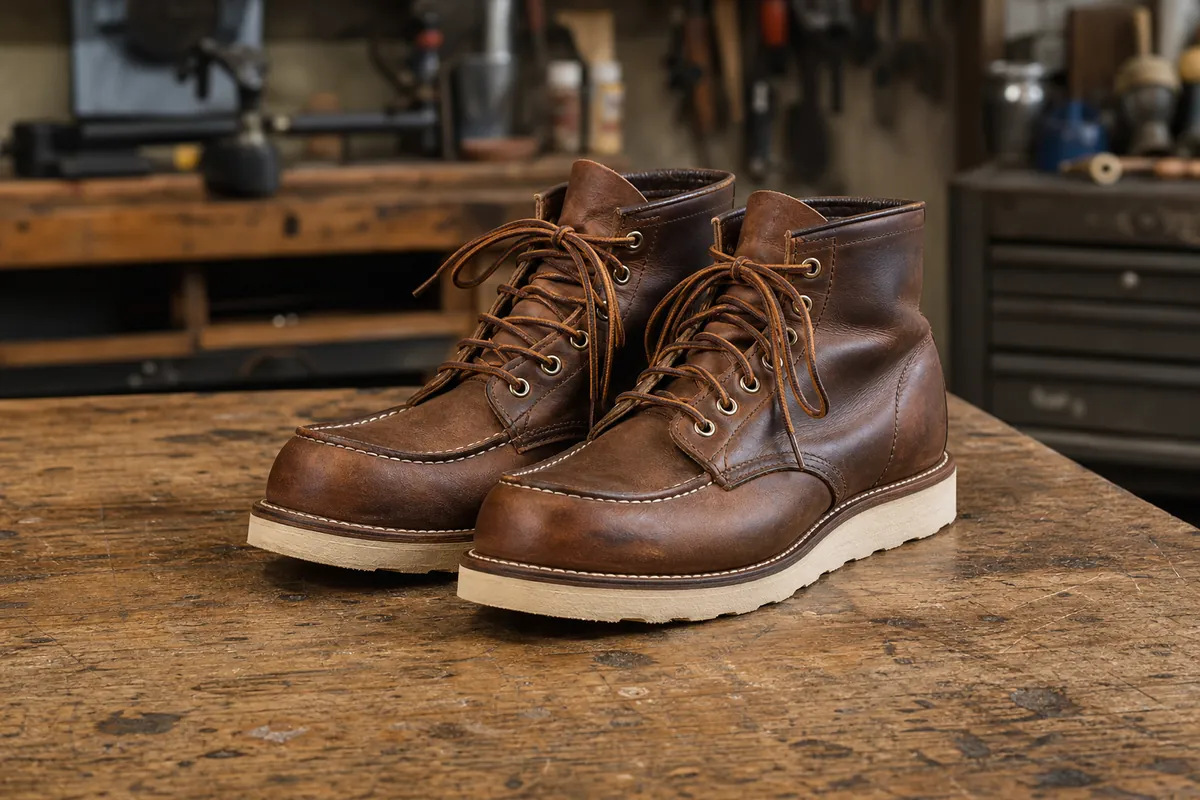
Wesco boots run large, and how large depends on the heel. On a tall-heel last such as the Jobmaster, Boss or Mr. Lou, the usual advice is half a size down from your Brannock size. On a low-heel last such as the Romeo or Johannes, owners commonly go a full size down. Compared with sneakers, most people drop half a size on a tall heel and a full size on a low one.
A typical example: a Brannock 10.5D often ends up a 10D in a Wesco. Because Wesco builds to order, you can also send your own measurements instead of guessing, and that is the more reliable route if you are between sizes or have a foot that does not match the standard lasts.
The heel height rule
Most boot brands tell you one number. Wesco is different because a low-heel boot is built longer and wider than its tall-heel sibling. The shape of the last changes as the heel drops, and the sizing follows.
- Tall heel: half a size down from your Brannock.
- Low heel: a full size down from your Brannock.
- Same heel height: Jobmaster, Boss, Firestormer and Mr. Lou generally take the same size.
Moving from a tall to a low heel on the same family means dropping half a size and one width. One owner comparison gives 9D in a Jobmaster as roughly 8.5C in a Romeo, and a 9D Mr. Lou as roughly an 8.5D Johannes. Treat those as reference points, not guarantees.
Wesco lasts and what they mean for fit
| Last or model | Toe and heel | Fit character | Size guidance |
|---|---|---|---|
| Jobmaster, Firestormer, Highliner, Timber | Round toe, tall heel | Roomy toe | Half down from Brannock |
| Boss | Round "bubble" toe, tall heel | Taller, flatter profile | Same size as Jobmaster |
| Romeo | Round toe, low heel | Longer and wider than the tall-heel round toe | Drop half a size and a width from the Jobmaster size |
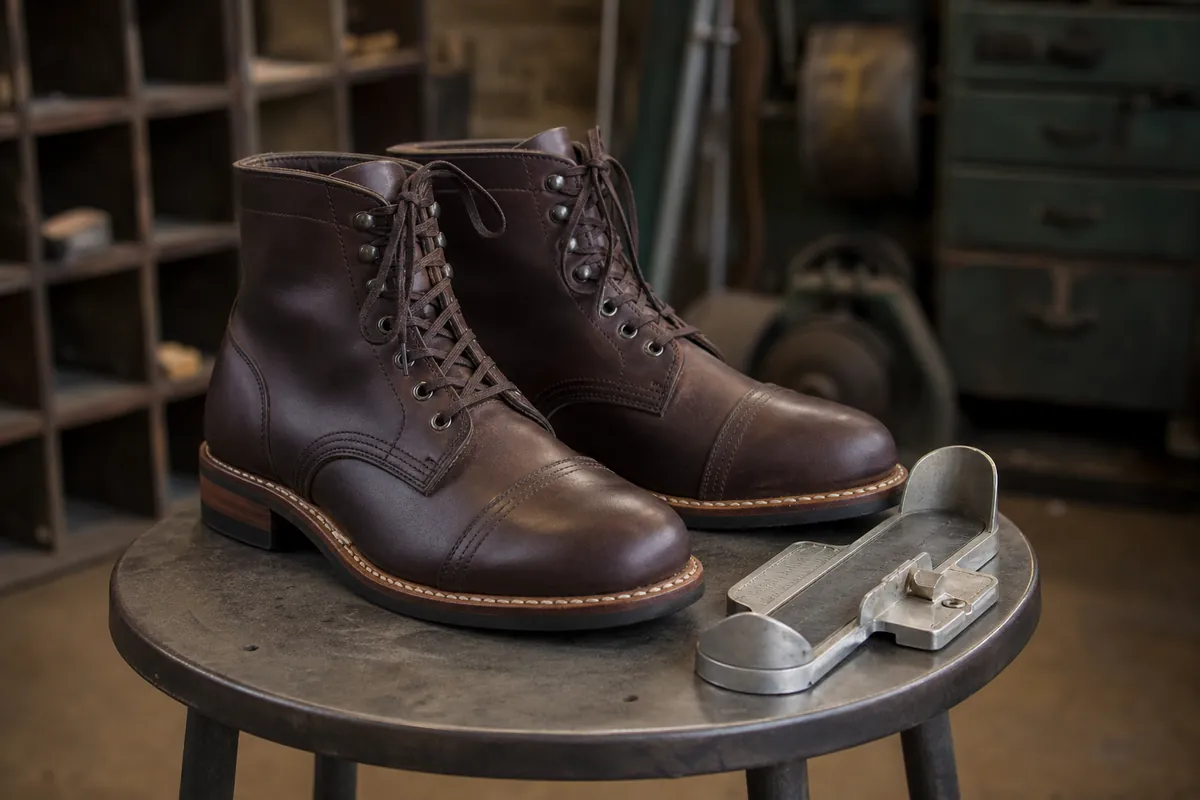
| Mr. Lou (Motor Patrol) | Tapered toe, tall heel | Wide heel for an engineer boot | Same as Jobmaster and Boss |
| Johannes (Motor Patrol) | Tapered toe, low heel | Wider and longer than Mr. Lou | Half a size down from the Mr. Lou size |
| Harness toe | Square toe | Fits like Boss and Mr. Lou | Same size as those |
| Morrison (Western) | Almond toe, tall or short heel | Instep roughly a quarter inch larger | One width narrower than the Boss or Jobmaster size |
How the width letters work
Wesco's width scale is its own and does not map one to one onto other makers. D is the baseline, E is slightly wider, EE is wide and EEE is the widest normally offered. On the narrow side, C is narrower than standard, B slightly narrow, and A or AA are rare and mostly custom.
The practical effect is that a Wesco E feels like a D in many other brands, and the standard widths feel narrower than many Pacific Northwest competitors. If your measurements fall between two widths, Wesco may adjust the last a little rather than forcing you into one letter. Our shoe width chart helps you read the letters when you compare across brands.
Stock widths on the Mr. Lou are D and E, with a triple E available on request. Size range runs from US 7 to 12 in half sizes plus 13, which corresponds to UK 6 to 12 and JP 25 to 31.
Comparing with other makers
Several side-by-side notes come from one retailer's comparisons and are worth reading as individual data points. A Wesco 8D in the MP95 last feels like a Truman 8.5D in the 79 last. It looks roughly half a size shorter than a Viberg 2030 in 8.5D, longer than a Wolverine 1000 Mile in 8.5D, and about the same as a Grant Stone Leo in 8.5D. A Wesco Hendrik in 8D is similar to an Alden Indy in 8.5D.
The common thread is that Wesco takes a smaller number than most for the same foot. If you already wear Red Wing, our Red Wing sizing guide covers a comparable pattern, and the two brands are often described as sizing alike. For a brand that works on a different numbering system, see Viberg.
Mr. Lou: what to expect from an engineer boot
The Mr. Lou is a pull-on, so the instep is the only part that holds your foot in place. It should feel secure there, because there are no laces to rescue a loose boot. Some owners find the heel roomy out of the box, with a little slip in thin socks that fades as the counter moulds. The heel is wider than many other engineer boots.
Chromexcel leather softens quickly, and instep snugness on a new pair tends to ease after a few wears. A bit of early heel lift is normal, but it should reduce, not stay put.
Fit tip: For a pull-on, judge the instep first and the heel second. If you can get the boot on only with a fight, expect it to be comfortable after break-in. If you slide on easily and the instep feels loose, the boot is too big and will not shrink.
Using the custom measuring process
Wesco's custom fit option is the strongest argument for buying from them directly. It costs $100, and Wesco keeps the measurements on file for future orders. They send a measuring tape, a custom fit form and a return envelope.
- Get a helper, a flat surface and a pencil, not a pen. Wear the socks you will wear with the boots.
- Trace your right foot with the pencil held straight up.
- Measure behind the ball of the foot, over the instep and around the base of the heel, and mark the tape positions on the tracing.
- Measure the leg just above the ankle bone, then every 2 inches starting 7 inches from the ground, up to the height of the boot. If you wear trousers inside the boots, record measurements with and without the leg.
- Repeat for the left foot and leg, and note any asymmetry, bumps or foot conditions.
Call Wesco before you start if you use orthotics. The usual errors are missing tape marks, incomplete tracings, several outlines on one sheet, not starting the tape at zero and skipped leg measurements. The last made from your numbers stays in the boot throughout the build and comes out only at completion.
If you need a refresher on tracing a foot, how to measure your feet walks through the basics.
Heights and models that affect fit
Boot height changes how the leg measurements matter. The Highliner is available from 6 inches up to 20 inches in 2-inch steps, the Voltfoe from 10 to 20 inches, and the Groundout in 8 and 10 inches only. A taller shaft means the calf and ankle measurements start to matter as much as the foot, which is where made-to-order helps most.
Seconds and irregulars
Seconds or irregulars may fit differently from first-quality boots, and the difference is not always visible. If you buy one, assume the standard size advice is a starting point and ask the seller whether the last is the same.
Sneaker size versus Brannock for Wesco
Many buyers start from the sneaker box, and that is where the half-size and full-size rules come from. Sneakers commonly run about half a size above a Brannock measurement, so a person in 11 running shoes often measures a Brannock 10.5. The Wesco rule of "half a size down from sneakers" for most models, and a full size down for the low-heel Service Boot, Romeo and Johannes, is simply a shorthand for the same arithmetic.
The two rules do not always agree. A Brannock-based calculation gives you a more repeatable answer because it does not depend on which sneaker brand you wear, and brands differ by a half size or more. If you do wear sneakers as your anchor, say which pair you are using when you call or email, so the person on the other end can translate it. Our brand size comparison shows how much sneaker brands vary against each other.
Break-in and what a new pair feels like
A Wesco is stiff when new. Expect a firm counter, a leather upper that has not yet folded at the flex point and a sole that resists bending. Heel lift is normal in the first weeks and usually reduces as the leather moulds to the foot, especially in Chromexcel, which softens faster than many other leathers.
That does not make a bad fit acceptable. The boot should flex where your foot bends, around the ball, and it should hold the heel without pinching. If you feel pressure across the top of the forefoot or at the side of the little toe, a different width is the answer, not another month of wearing.
Who should think twice about off-the-shelf sizing
- People with a noticeable difference between feet. A standard last cannot accommodate both, while a made-to-order last can.
- Buyers with bunions, high arches or foot conditions that change where pressure lands.
- Anyone who uses orthotics, which add volume and sometimes change the size you need.
- Buyers who need a taller shaft, where the calf measurements become part of the fit.
For all four groups the custom fit form is worth the $100, because it replaces guesswork with your own measurements.
Final recommendation
Pick the heel height first. Tall heel, half a size down from your Brannock. Low heel, a full size down, and a width narrower in many cases. If you are unsure, use the custom fit form. For general guidance on what a good fit feels like in a stiff leather boot, our page on how work boots should fit covers the checks that matter most.
Frequently asked questions
What size Wesco should I get if I am a 10.5D on the Brannock?
Owners commonly report a 10D in a tall-heel Wesco, so half a size down. On a low-heel last such as the Romeo or Johannes, many go a full size down and sometimes a width narrower. When in doubt, use the custom fit form rather than guessing.
Do Wesco low-heel boots fit differently from tall-heel ones?
Yes. Low-heel lasts such as the Romeo and Johannes are built longer and wider than the tall-heel versions. Going from tall to low heel, drop half a size, and in some cases one width. One owner comparison puts a 9D Jobmaster near an 8.5C Romeo.
How much does the Wesco custom fit cost?
The custom fit option costs $100, and Wesco keeps the measurements on file for future orders. They mail a measuring tape, a custom fit form and a return envelope. You trace each foot and record ball, instep and heel measurements, plus leg measurements for tall boots.
What widths does Wesco offer?
D is the baseline, with E slightly wider, EE wide and EEE the widest typically offered. C and B are narrower, and A and AA are rare and mostly custom. Stock widths on the Mr. Lou are D and E, with triple E available on request.
Is the Wesco Mr. Lou heel loose at first?
Some owners find the heel roomy out of the box, with slip in thin socks that lessens as the leather breaks in. The heel is also wider than many engineer boots. The instep should feel secure, since it is the only retention point on a pull-on.