Oak Street Bootmakers Sizing: Trench, Field and Lakeshore Fit
Oak Street boots run close to true to size, measured by Brannock, unlike Red Wing or Thursday. Wide feet go half a size down, and the Trench can run slightly large.
Quick answer
Oak Street Bootmakers advises going true to your Brannock size: a Brannock 11 is an 11 for a D width foot. Wider E or EE feet should size down half a size. Trench boots can run about half a size large, so size down if between sizes. Only D width is offered, in US 7 to 13, with custom sizes outside that range for some styles.
- Fit
- True to size
- Width
- Standard width
- Our advice
- Order your Brannock size in D. Wide feet go half a size down. Trench boots can run half a size large, so size down if between sizes.
Oak Street Bootmakers boots run close to true to size, measured against your Brannock device. If you are a regular D width, order the number the Brannock gives you. That is unusual in this corner of the boot world, where Red Wing, Thursday and Grant Stone all steer buyers a half size lower.
There are two exceptions to the clean rule. Wider feet, E or EE, are told to go down half a size, and the Trench boot family can run about half a size large even for a D. The rest of this guide sorts out which rule applies to you.
The headline rule: Brannock in, same number out
Oak Street's guidance is to take your Brannock size. A Brannock 11 typically equals an 11. This differs from the half-size-down habit you may have built from other heritage brands. If you are carrying that habit over, you will end up a half size short.
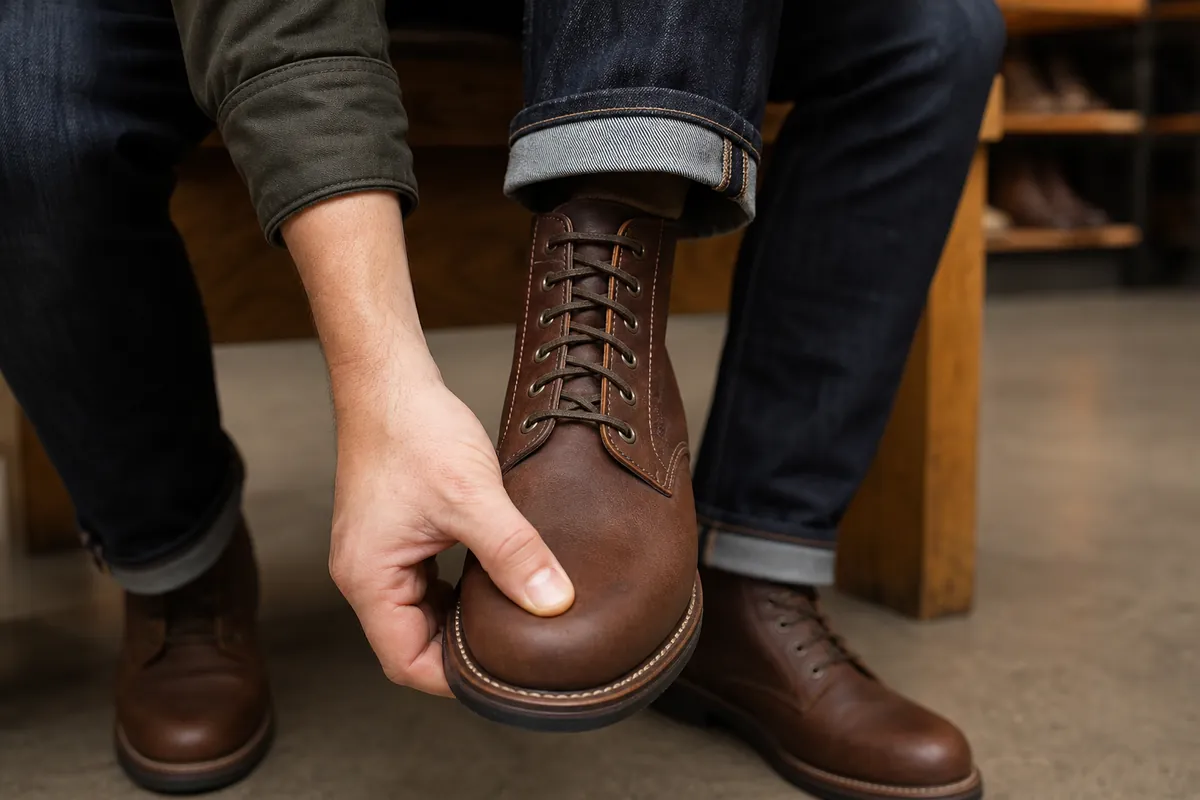
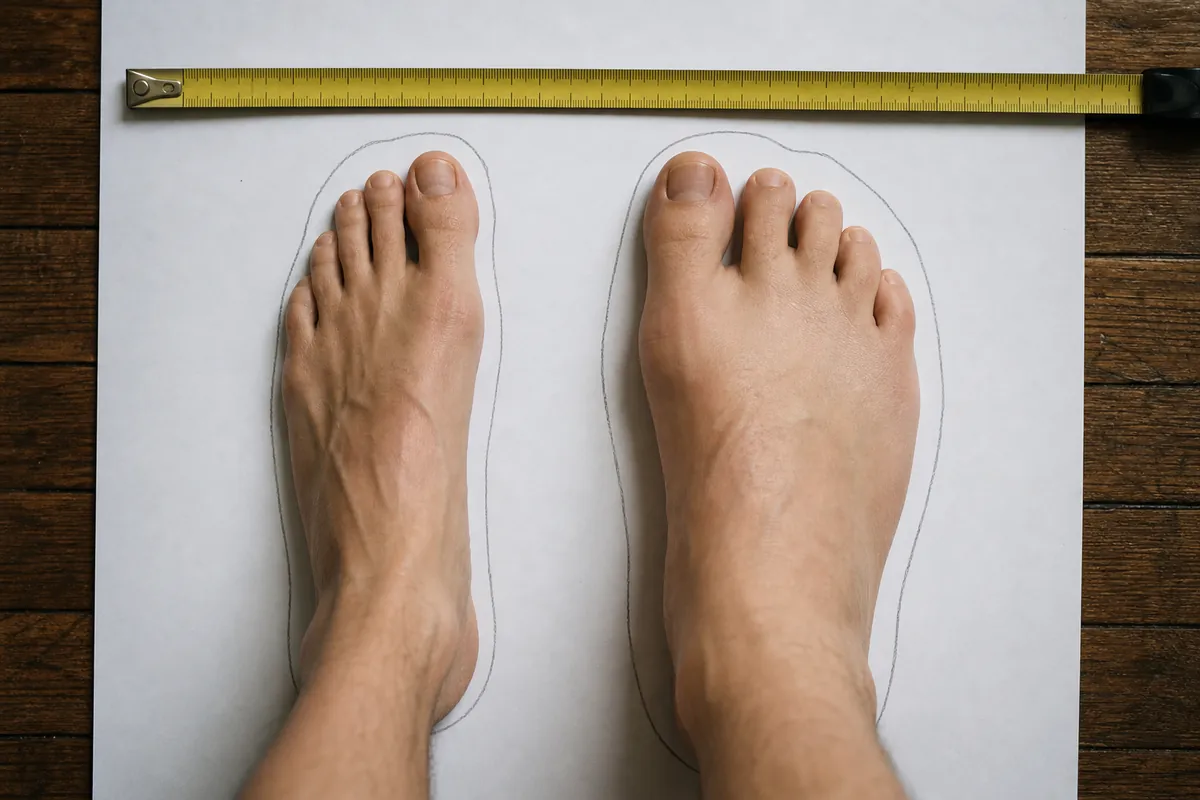
Makers define their own lasts and allowances, and Oak Street describes its round toe box as intentionally roomy. Our guide on how to measure your feet explains how to get the Brannock-style number at home, and a shop visit is better still.
| Brand | Typical advice | Brannock 11 becomes |
|---|---|---|
| Oak Street | True to Brannock for D width | 11 |
| Thursday (men) | Half a size below sneaker size | Not Brannock-based: half a size below your sneaker size |
| Grant Stone | Half a size down on most models | 10.5 (Diesel excepted) |
| Red Wing | Half a size down | 10.5 |
These are general rules, not fixed conversions. For how the others work, read the guides for Thursday, Grant Stone and Red Wing.
When a wider foot flips the rule
If your Brannock says E or EE, the advice reverses: go down half a size. Someone who measures 11.5 with a wide foot would typically order an 11. The logic is that the standard last is cut with generous volume, and the extra width in your foot needs less length to feel filled.
Here is the catch. Oak Street offers only D, so a wider foot is squeezing into a boot not sold in wider widths. The company says very wide or very narrow feet may need creative sizing or a different style. Sizing down half a size on a wide foot gives you a bit more effective width, since the proportions of the last shift. It is not a substitute for a true wide option, and anyone beyond an E or EE should think carefully. If you are not sure what width you have, our shoe width chart will help.
The Trench boot: the one model with its own rule
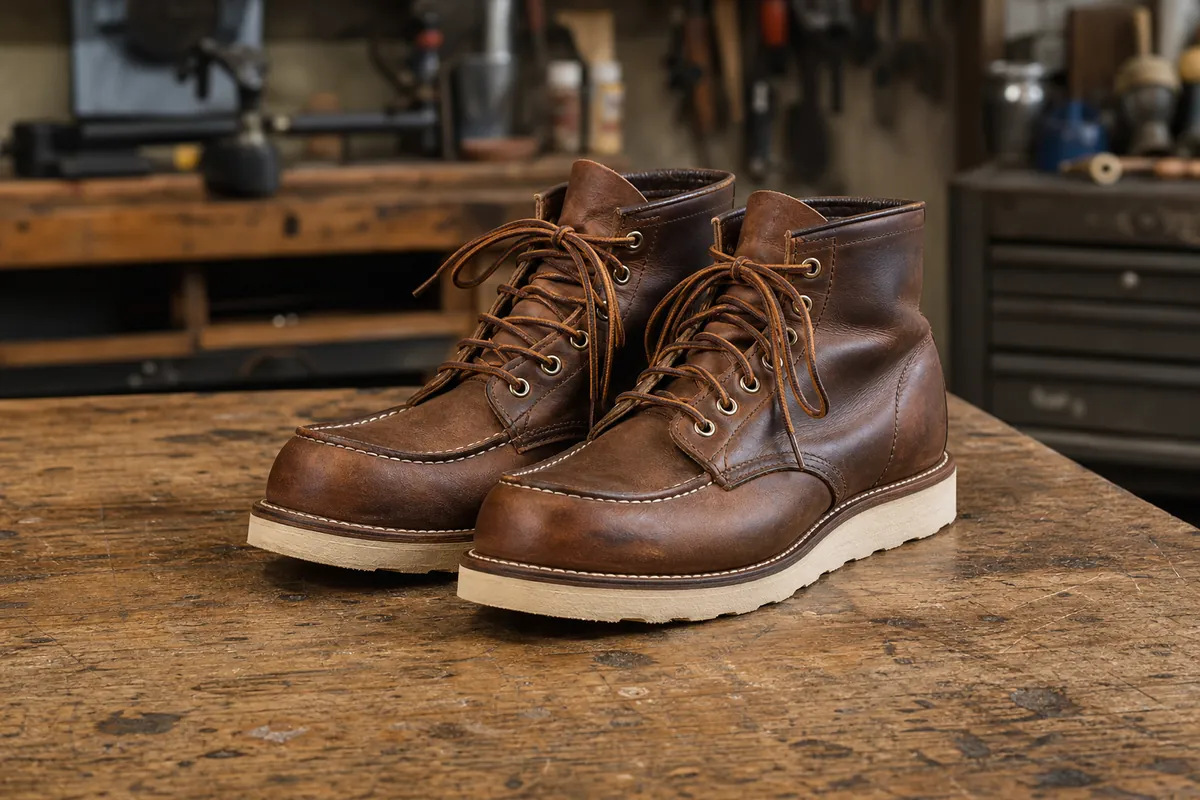
The Trench family, which includes the Trench Boot, Trench Oxford, Trench Chukka, Field Boot and Campus Chukka, is built on the Elston last. The sources describe a snug heel, a slightly loose waist by design, and roomy ball and toe areas. Most owners say these are comfortable out of the box, without pinching or hot spots.
The wrinkle is length. A Brannock 9 may feel too big in a Trench, even though most American brands would drop that foot to an 8.5. If you are between sizes, size down. Oak Street's own guidance is that Trench boots are not exactly true to size and may run half a size large.
Why the toe looks the way it does
The Trench has a round toe, sometimes called a duck bill, which looks unconventional by design. Oak Street explains that the shape allows for feet swelling during the day. If you are used to pointed or almond lasts, the roominess can feel like too much at first, but it tends to be what people with daytime swelling appreciate.
The kiltie, the leather flap under the laces, can tighten the instep and ankle. If your boot feels snug across the top of the foot, check lacing before you decide the size is wrong.
Fit tip: If the Trench feels a little long, resist a pair of thick socks as the fix. Try the half size down first. The boot is designed for a snug heel and room at the toe, so a loose heel is the warning sign, not an empty toe box.
An older Trench versus the current one
Earlier versions of the Trench had a problem: the foot could slide forward, causing toes to bump the front when you stood still. The newer versions respond to that. The leather sockliner was removed, about 1 mm of toe depth was added, and the toe spring was adjusted to keep the foot in place.
That means older reviews may describe a boot that does not match what is sold now. If you read a forum post complaining about toe bump, check its date. When you buy used, remember that you may be getting the earlier construction, and treat the fit advice with extra caution.
The Lakeshore, and other lasts
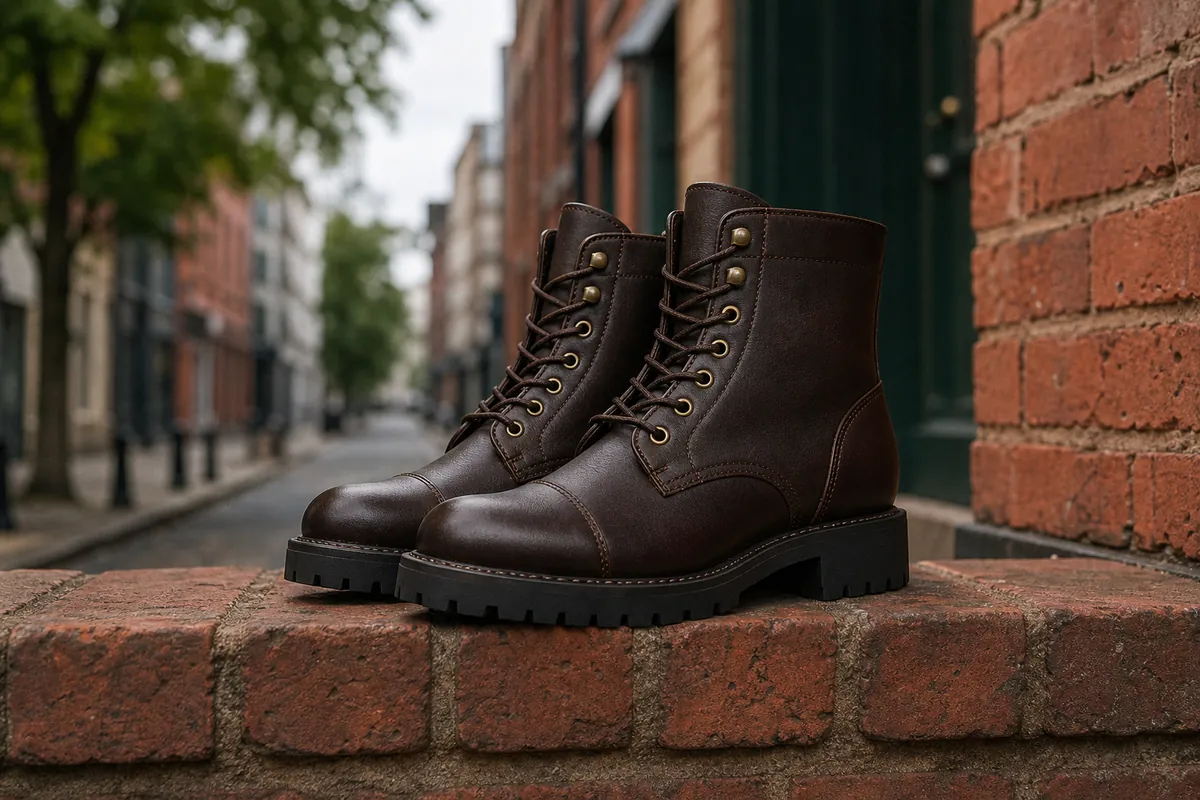
Oak Street builds on more than one last. The Lakeshore Boot uses the narrower Lakeshore last, with a sleeker, almond-shaped profile. Chromexcel leather can add some width over time, so a snug fit at first may relax a little. If your foot is regular to slightly wide, the Elston will suit you better, and the Lakeshore is a better pick for a narrower or lower-volume foot.
| Last | Used for | Character |
|---|---|---|
| Elston | Trench Boot, Trench Oxford, Trench Chukka, Field Boot, Campus Chukka | Wide toe box, roomy for daytime swelling; regular to slightly wide feet |
| Lakeshore | Lakeshore Boot | Narrower, sleek almond shape; Chromexcel can widen it |
| 5504 | Laceless boots | Round but narrow toe, flat heel, snug and secure |
| 800 | Loafers | Gently rounded toe, all-day comfort |
| 555 | Moccasin-style shoes | Medium width, broad toe |
| 304 | Moccasin-style shoes | Similar to the 555 but more athletic, true-to-size feel |
The table also shows that some of the brand's shoes come in forms beyond boots, which this guide does not cover in depth.
Sizes available
Online standard sizes run from US 7 to 13. Sizes outside that range, such as a 6 or a 14, are available as custom orders for certain styles. Width is D only at the moment. If you wear a size at the edge of the range, check whether your style can be made to order before you fall back on a different model.
Oak Street uses hand-lasting on all of its Goodyear-welted boots, which lets the maker adjust for each piece of leather. That makes a small natural variance between pairs plausible, so a boot that fits like your last pair is a good sign, and a boot that is a hair snugger is not a defect on its face.
Break-in and leather
New Oak Street boots feel snug but are meant to hug the foot, not hurt it. Premium leather stretches and molds with wear. Chromexcel stretches more, which gives a more personalized fit over time. Because the leather is likely to stretch a little, do not size up to chase a loose first-day feel. Trench boots, as noted, are usually comfortable immediately.
Think about sock thickness before you decide. Thick socks will fill the extra room in the toe box, and thin socks will make the roominess more obvious. If you want general guidance on what a good boot fit feels like in the heel, ball and toe, see how should boots fit.
Choosing between two sizes
Most of the confusion with Oak Street comes from the half-size habit. Say you are a Brannock 10D, you normally wear a 9.5 in other heritage boots, and you now see a 10 in the Oak Street listing. The 10 is not a mistake, since the brand tells you to use the Brannock number directly. Ordering a 9.5 out of habit puts you half a size short, and because leather stretches in width and not in length, the extra length you lacked will not appear later.
Where you do want to second-guess the rule is the Trench family. If you are between sizes on the Brannock, which is common, take the lower one. If you sit squarely on a whole size, a half size down may still be worth considering, since the sources say the Trench may run half a size large. A boot with a snug heel and a roomy front is the intended result, so a heel that locks in is a better sign than a toe box you have to fill.
For the lower-volume Lakeshore last, the opposite worry applies. Its narrower, almond shape leaves less room, so if you have a high instep or thick forefoot, the Brannock number is the floor, not a place to cut. Chromexcel leather can add some width over time, which gives a little relief, though not in length.
A short checklist before you order
- Get a Brannock measurement, or trace both feet and use the larger one.
- Note whether you are D or wider. Oak Street sells only D.
- Decide on your usual sock thickness.
- Pick the last: Elston for a roomier toe, Lakeshore for a sleeker, narrower profile.
- Check that your size is inside US 7 to 13, or that the style offers custom sizes.
Our recommendation
If you are a D width, order your Brannock size in standard Oak Street boots. If you are an E or EE, go down half a size, and be cautious because only D is sold. For the Trench family, size down half a size if you are between sizes, and expect a roomy toe and a snug heel. Check the date on any review, since the Trench was updated, and use the custom-size option if you are outside US 7 to 13.
Frequently asked questions
Do Oak Street boots run true to size?
For a regular D width, yes. Oak Street advises taking your Brannock size, so an 11 on the device is an 11 in the boot. Unlike Red Wing, Thursday or Grant Stone, it does not suggest a half size down. Trench boots are the exception and can run slightly large.
What size should I get if I have wide feet?
Wider E or EE feet should go down half a size from their Brannock measurement, so an 11.5 becomes an 11. Oak Street only offers D width, so very wide feet may need creative sizing or a different style.
Do Oak Street Trench boots fit differently?
Yes. They are built on the Elston last, with a snug heel, a slightly loose waist and a roomy ball and toe. A Brannock 9 may feel too big, so size down if you are between sizes.
What sizes and widths does Oak Street offer?
Standard sizes online run from US 7 to 13 in D width only. Sizes outside that range, such as 6 or 14, are available as custom orders for certain styles.
Did Oak Street change the Trench boot fit?
Yes. Older versions let the foot slide forward so toes bumped the front. Newer versions removed the leather sockliner, added about 1 mm of toe depth and adjusted the toe spring. Check the date of any older review.