Grant Stone Boot Sizing: Diesel, Edward, Brass and Ottawa Fit
Grant Stone boots run a little large, but the rule changes by model. The Diesel is near your Brannock size, while the Edward and Ottawa go half a size down.
Quick answer
Grant Stone boots run a little large. A common starting rule is half a size below your sneaker size. By model, the Diesel runs close to your Brannock size, the Edward and Ottawa call for half a size below it, and the Brass for half a size below sneaker size. Widths are D, E and EEE. Sources disagree on a full-size-down claim.
- Fit
- Runs large
- Width
- Varies
- Our advice
- Half a size below sneaker size for most models. The Diesel is close to Brannock. Go up a width before a length.
Grant Stone boots run a little large, and the usual advice is to go half a size down. The wrinkle is that the rule changes with the model: the Diesel is close to true to your Brannock size, while the Edward and the Ottawa call for half a size under it, and the Brass asks for half a size under your sneaker size.
Because Grant Stone builds its boots on several lasts, this guide is organized by model, not by a single rule. If you only want the short version, jump to the table, then read the width and break-in sections before you order.
Model-by-model sizing table
The figures below are collected from owner reports and the brand's own descriptions. They are starting points, not guarantees, and one source contradicts the others, which we explain further down.
| Model | Last | Fit character | Starting size |
|---|---|---|---|
| Diesel | Leo | Almond toe, low instep, wide forefoot | True to Brannock (10 becomes 10D or 10E) |
| Edward | Leo-based combination | Narrower heel and waist, roomier ball and toe | Half a size below Brannock |
| Ottawa | Leo | Similar to Diesel family | Half a size below Brannock |
| Brass | Floyd | Taller sidewalls, broader toe box | Half a size below sneaker size |
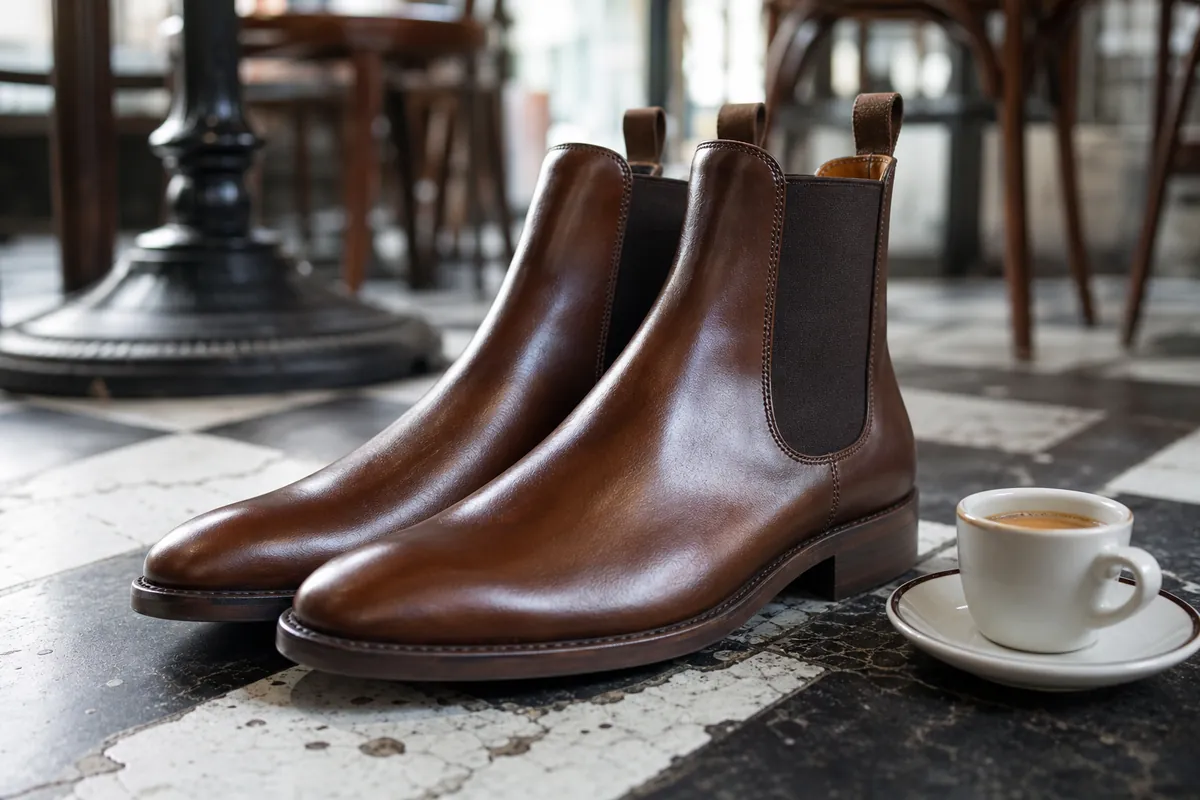
| Chelsea | UK last | Wider in the waist, longer toe | A half size below a US 10 from other heritage brands (9.5) |
Owners also describe an Edward 7.5E as fitting like an 8D Diesel. That shows how the last and width interact: a different last in a wider width can land you at a different number on the label.
Why the rule moves from model to model
The Leo last is the backbone of the Diesel, Edward and Ottawa. It has an almond toe, a low instep and a wide forefoot, so a foot that matches the Brannock length often fits at that same number. The Edward is a combination last, with a narrower heel and waist than the front of the boot, which is why it tends to feel snugger at the back and roomy at the ball and toes, and why half a size down works there.
The Brass uses the Floyd last. Taller sidewalls and a broader toe box make it feel roomier than the Leo boots. Owners warn that sizing down further than half a size risks toe crowding, and that some people find the boot too roomy, in which case an insert or thicker socks help.
The Chelsea sits on Grant Stone's UK last, wider in the waist and longer through the toe. One owner who wears a US 10 in Diesel, Brass or other heritage brands takes a 9.5 here.
Working from your sneaker size
If you do not have a Brannock number, sneaker size works as a fallback. A common instruction is to go half a size below your sneaker size: a US 11.5 becomes an 11. One owner reports that a 10.5 Nike turned into a 10 in the Brass. For the Diesel, a 10.5 sneaker also became a 10.
That match between a half-size drop and the sneaker-to-boot conversion is neat, but it hides an assumption. Sneaker sizes drift, so use a Brannock measurement when you can. For help, see our guide to measuring your feet.
The contradiction in the sources
One FAQ-style claim says most Grant Stone styles run a half size larger than a standard shoe size and a full size larger than sneaker size. That conflicts with the model-specific reports above, where a half size below sneaker size is the usual drop, not a full size. We could not settle it from the sources.
Our reading: the half-size-down rule is the safer bet, because it matches most individual owner reports, and a full size down on a Diesel would put a Brannock-10 foot into a 9, which is tight. If you are in doubt, call the brand or a retailer and ask about your specific model.
Widths
Grant Stone makes three widths: D (standard), E (about one eighth of an inch fuller than D), and EEE (much fuller through the instep and ball). Half sizes are available, but not every style comes in every width.
The practical rule is to go up a width if you feel slight pinching, instead of going up a length. This is the better trade, since extra length leaves heel slip while extra width fixes the pressure. If you are unsure of your own letter, see our shoe width chart to understand how D, E and EEE relate.
Fit tip: If the Diesel pinches across the ball at your Brannock size, try the E width at the same length before you move up a full size. A longer boot with the same pinch is a common and avoidable mistake.
Toe room and heel slip
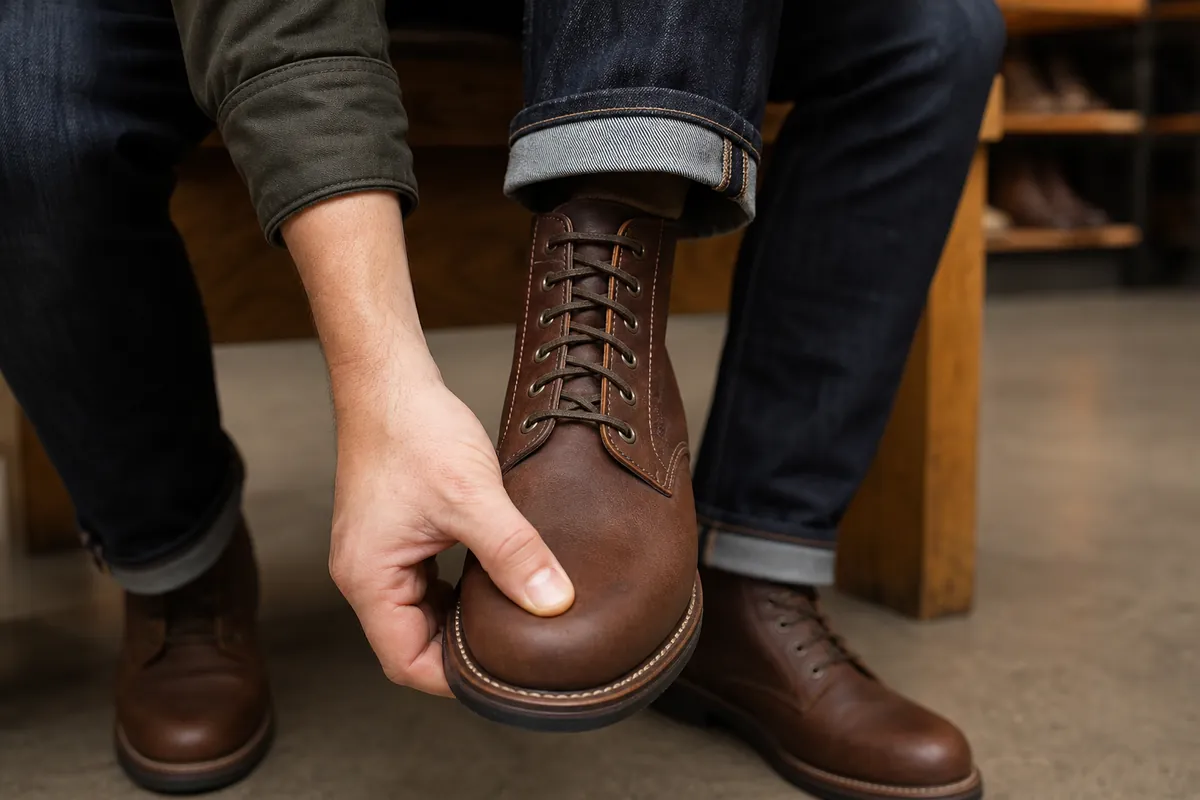
The toe room target quoted for boots like these is three quarters of an inch to one inch ahead of your longest toe, measured with your weight on the foot. Some heel slippage is normal at first in Goodyear-welted boots, because the sole and leather have not yet bent to your foot.
The Chelsea is an example of how socks change the answer. A 9.5 can feel tight with thick socks and roomy with thin ones. Decide on your sock before you decide on your size. For a wider view of what a good fit feels like, read how should boots fit.
Leather, break-in and the Diesel's odd opening
The Diesel uses Horween Chromexcel, which is supple and easier to break in than many leathers. Chromexcel stretches and molds over time. Veg-tanned leather stretches less, so if you are buying a veg-tan model, allow a little more room from the start.
One quirk is the Diesel's opening angle. It may require tight lacing, and that can cause pinching at the ankle at first. Owners say it eases with wear. If the pinch is at the top of the foot and not at the toes, it is usually a lacing issue and not a size issue.
How Grant Stone compares with others
One owner who wears an 8.5 in John Lofgren Champion sneakers also wears an 8.5 in Grant Stone Leo boots, but a 9 in Grant Stone Coast sneakers. That gap is a reminder that sneakers and boots from the same brand can take different sizes. Our John Lofgren guide and Thursday guide show how those makers handle their own rules.
Compared with Oak Street, which advises true-to-Brannock sizing, Grant Stone's advice is generally more conservative, since the Edward and Ottawa suggest a half size down. See the Oak Street guide to compare the two on the same foot.
A worked example for each type of buyer
Suppose you measure a Brannock 9D and wear a 9.5 in your running shoes. For the Diesel, the Brannock-matching rule points to a 9D, and the sneaker-based rule points to a 9, so a 9D is a reasonable first pick. For the Edward, the Brannock-based rule gives 8.5. For the Brass, the sneaker-based rule gives 9. All three land within half a size of each other, which is a good sign that the numbers are consistent.
Now suppose your forefoot is wide and a D has pinched you in other boots. In the Diesel, the E width on the Leo last has about an eighth of an inch more room. Because the Edward is narrower at the heel and waist, a wide-ball foot may find it hugs the back and gives room only at the front, which can feel odd if you expect an even fit. The Brass is the model whose broader toe box and higher sidewalls suit that kind of foot, as long as you do not drop below the half-size rule.
And if you have a narrow foot with a low volume, the Diesel's wide forefoot may feel loose, while the Edward's narrower heel could be the better match. Narrow-footed buyers might also keep a thick sock or an insole handy, as owners suggest for the Brass.
Ordering, trying and returning
Take your measurement in the evening, with both feet, and use the larger. Try the boots on carpet, wearing the socks you will use daily. Walk around for ten to fifteen minutes before deciding. Expect snugness and a bit of heel slip. You do not want a toe that touches the front, a sharp pressure point, or a heel that pops out when you walk upstairs.
If you are torn between two sizes within a model, the width offers a way out. A snug boot in E may fit better than a longer boot in D. The extra eighth of an inch is small on paper, but it changes how the leather presses on the ball of your foot.
What to check on the product page
- The last name, such as Leo or Floyd, since the rule depends on it.
- The available widths for that specific style, as not all offer all three.
- The leather: Chromexcel breaks in more easily, and veg-tan stretches less.
- The sole and sock lining, because thick lining uses up internal volume.
Our recommendation
For the Diesel, start with your Brannock size and choose D or E according to your forefoot. For the Edward and Ottawa, go half a size below Brannock. For the Brass, go half a size below your sneaker size, and do not drop further. For the Chelsea, expect a half size down from the size you take in other heritage boots, and test with the socks you will wear. If you are between sizes, move up a width before you move up a length.
Frequently asked questions
Do Grant Stone boots run big?
They generally run a little large. Owners usually drop half a size from their sneaker size, and the Edward and Ottawa call for half a size below Brannock. The Diesel is the exception, running close to your Brannock size.
What size Grant Stone Diesel should I buy?
Start at your Brannock size. A Brannock 10 becomes a 10D or 10E, depending on your width. One owner who wears a 10.5 sneaker took a 10 in the Diesel.
What widths does Grant Stone offer?
Three widths: D as standard, E about an eighth of an inch fuller, and EEE with much more room in the instep and ball. Half sizes exist, but not every style is offered in every width.
Is the Grant Stone Brass roomier than the Diesel?
Yes. The Floyd last has taller sidewalls and a broader toe box, so it feels roomier. Owners warn against dropping more than half a size, since it risks crowding the toes, and suggest an insert or thick socks if it feels too loose.
Why do some sources say go a full size down?
One FAQ-style claim says most styles run a half size larger than a standard shoe and a full size larger than sneakers. It conflicts with model-specific owner reports of a half size down, which is the safer starting rule.