Nike Dunk vs Adidas Samba Sizing: Which Size Should You Order?
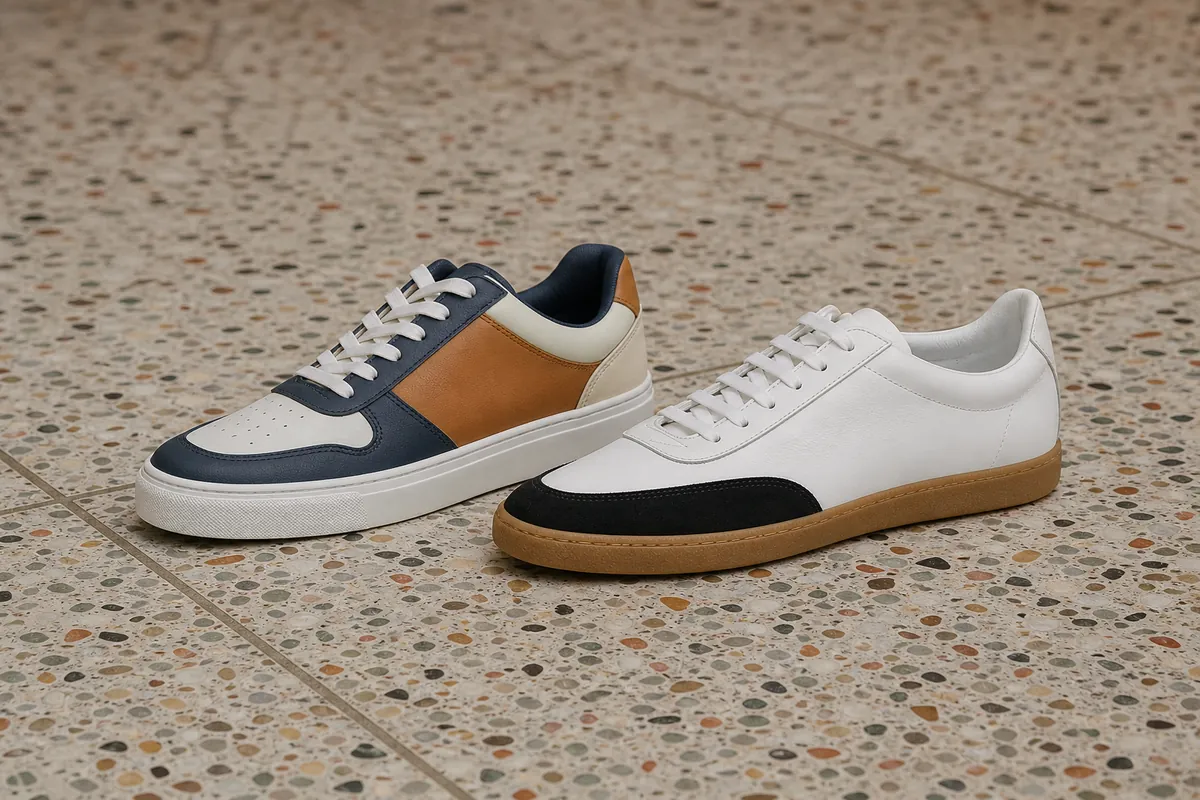
Dunks and Sambas match in length, but the Samba is narrower. Normal-to-wide feet should go half a size up in the Samba.
Quick answer
Nike Dunks fit true to size and Adidas Sambas fit true to size in length but run narrow. Narrow feet can wear the same size in both. Normal to wide feet should order half a size up in the Samba, so a Dunk 9 becomes a Samba 9.5. Never go a full size up.
- Fit
- Depends on the model
- Width
- Varies
- Our advice
- Same size in both for narrow feet; half a size up in the Samba for normal to wide feet.
Nike Dunks fit true to size, and Adidas Sambas fit true to size in length but run narrow. So in most cases you can order the same number in both, but the Samba will feel tighter across the forefoot and little toe. If you want the same comfort you get in a Dunk, order half a size up in the Samba.
That is the whole story in two sentences, and it is also where people go wrong: they see "true to size" on both and assume the shoes feel alike. They do not. The difference is width and shape, not length, and it matters most if your feet are normal to wide.
Quick conversion: Dunk to Samba
- Narrow feet: same size in both.
- Normal-width feet: same size in both for a snug Samba, or half a size up in the Samba for more room.
- Slightly wide feet: Dunk at true size, Samba half a size up.
- Wide or high-volume feet: Dunk at true size, Samba half a size up, and be aware it may still feel snug.
An example makes this concrete. A men's US 9 in a Dunk, which is a 26.2 cm foot, is often a US 9.5 in a Samba for someone with a normal to slightly wide forefoot. Nothing about the Samba is short; the extra half size buys you width at the toes.
Runner's tip: do not use a full size up to fix the Samba's narrowness. You gain length, not width, and the heel will start to lift. Half a size is the ceiling.
Why these two shoes feel different
The Dunk is boxy and forgiving
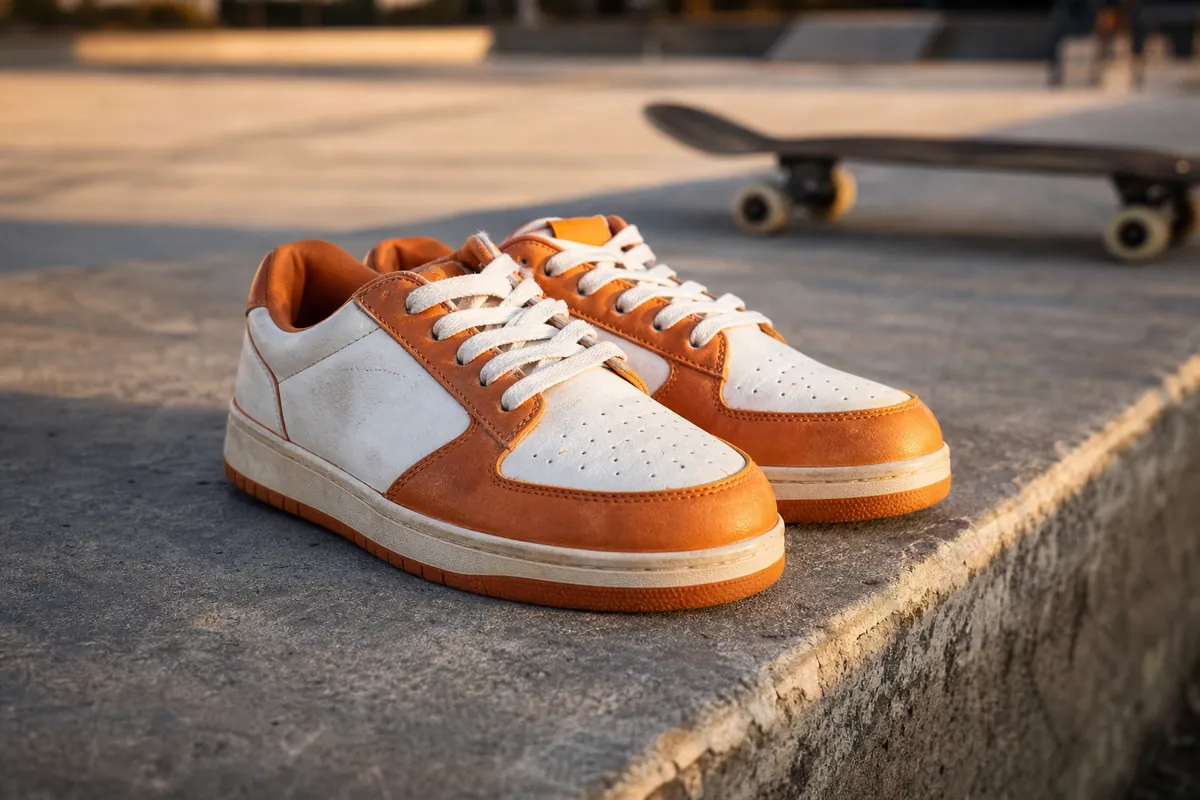
The Dunk was built as a basketball shoe, and its leather upper wraps a rounded, fairly spacious forefoot. There is room at the toes and across the ball of the foot, though it is not a wide shoe either. Once laced, the midfoot and heel are secure. Most people notice very little change between the first wear and the tenth. For details on every variant, read our Nike Dunk sizing guide.
The Samba is slim and low
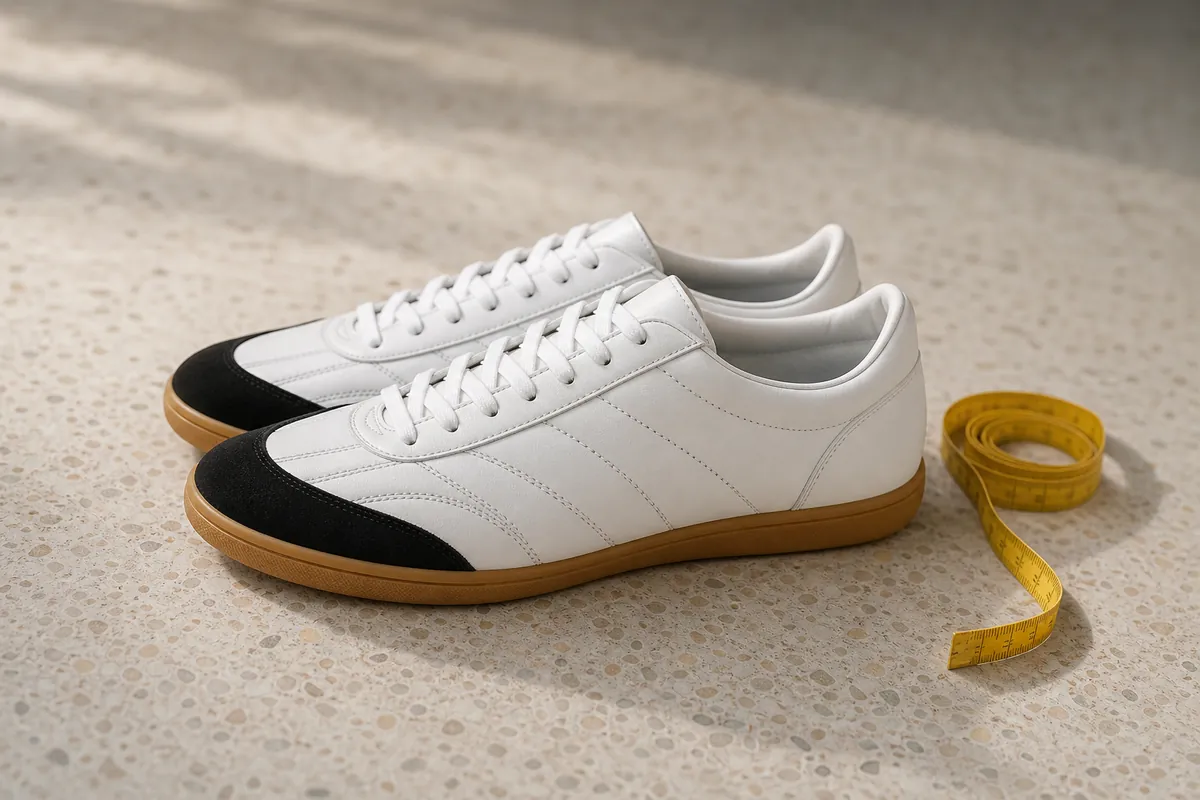
The Samba started life as an indoor football shoe, and it still has that slimline silhouette. The toe box is lower and tapers sooner, so leather presses on the outside edge of the forefoot and around the little toe. The midfoot and heel are held closer too, which means lacing needs a bit more care. The reward is a clean fit that stays put. The full picture is in the Adidas Samba sizing guide.
Length, width and volume, side by side
Length
Same. If your longest toe has about a thumb's width of room in a Dunk, it should have about the same in a Samba at the same size. That is why the numbers match for narrow and average feet.
Width
This is the one that splits them. The Dunk has more room in the forefoot and toe box. The Samba is narrower toward the toe. Wide feet in particular will feel the difference in the first few minutes.
Volume
The Samba's lower toe box and snug instep make it less friendly to thick socks and bulky insoles. The Dunk handles both better. If you wear orthotics, lean toward the larger size in the Samba.
Break-in: what changes and what does not
The Dunk changes little after the first wear. The Samba is different. Its leather softens around the forefoot over several wears, and many people find the initial pinch fades. Do not expect it to gain a lot of width though; softening makes the leather more flexible, not wider. If a Samba hurts across the outside of the foot on day one, treat that as a sign to size up rather than something to wait out.
Size charts for both brands
The charts below come from our brand data. Nike uses the standard chart, and Adidas adds its own fractional EU sizes and a UK label that sits half a size higher than Nike's. Foot length is the actual foot that fits that US size, so it is almost identical in both (26.2 cm at Nike, 26.3 cm at Adidas for a men's US 9). The labels on the box are where Nike and Adidas diverge.
| US men's | UK | EU | Foot length (cm) | CM (JP) |
|---|---|---|---|---|
| 7 | 6 | 40 | 24.6 | 25 |
| 7.5 | 6.5 | 40.5 | 24.9 | 25.5 |
| 8 | 7 | 41 | 25.4 | 26 |
| 8.5 | 7.5 | 42 | 25.9 | 26.5 |
| 9 | 8 | 42.5 | 26.2 | 27 |
| 9.5 | 8.5 | 43 | 26.7 | 27.5 |
| 10 | 9 | 44 | 27.1 | 28 |
| 10.5 | 9.5 | 44.5 | 27.5 | 28.5 |
| 11 | 10 | 45 | 27.9 | 29 |
| 11.5 | 10.5 | 45.5 | 28.4 | 29.5 |
| 12 | 11 | 46 | 28.7 | 30 |
| US men's | UK | EU | Foot length (cm) | CM (JP) |
|---|---|---|---|---|
| 7 | 6.5 | 40 | 24.6 | 25 |
| 7.5 | 7 | 40 2/3 | 25 | 25.5 |
| 8 | 7.5 | 41 1/3 | 25.5 | 26 |
| 8.5 | 8 | 42 | 25.9 | 26.5 |
| 9 | 8.5 | 42 2/3 | 26.3 | 27 |
| 9.5 | 9 | 43 1/3 | 26.7 | 27.5 |
| 10 | 9.5 | 44 | 27.1 | 28 |
| 10.5 | 10 | 44 2/3 | 27.6 | 28.5 |
| 11 | 10.5 | 45 1/3 | 28 | 29 |
| 11.5 | 11 | 46 | 28.4 | 29.5 |
| 12 | 11.5 | 46 2/3 | 28.8 | 30 |
Notice that a men's US 9 is UK 8 and EU 42.5 at Nike, and UK 8.5 and EU 42 2/3 at Adidas. That is why comparing US numbers is the cleanest route. For a full conversion, see the shoe size conversion chart or the brand size comparison.
Men's and women's sizing
Both shoes are sold in men's and women's sizes. Add 1.5 to a men's size to get the women's equivalent: a men's 9 is a women's 10.5, and you subtract 1.5 to go the other way. The Dunk Low is also popular in women's-specific colorways. If you buy a men's colorway as a woman, add the 1.5 first and then apply the Samba half size rule if it fits your foot. Our men's to women's conversion has the table.
Which shoe should you order first?
If you do not know either size yet, start with the Dunk. It is the more forgiving of the two and gives you a reliable baseline. Then ask yourself three questions about the Samba.
- Do I feel pressure on the side of my little toe in snug sneakers?
- Do I normally wear thick socks or an insole?
- Do I have a high instep?
Answer yes to any of them and go half a size up in the Samba. Answer no to all three, and your Dunk size should work.
Note: the verdict here is the common consensus. Individual feet vary, and special editions of either shoe can fit differently from the standard release.
When you are between sizes
Pick the smaller size in the Dunk and the larger size in the Samba. That sounds contradictory, but it follows from the shapes: the Dunk has spare room that can absorb a longer or wider foot, while the Samba has none to give. For the broader half-size question, see how much a half size matters.
How to check your own size
Measure your foot on paper in the evening, using the longer foot, and match it to the Foot length column. A 26.2 cm foot is a men's US 9; a 27.1 cm foot is a US 10. Then think about forefoot width. If you can feel the sides of your foot pressing on the edge of a narrow sneaker you already own, you probably need the Samba half size up. Our how to measure your feet guide covers the process.
Dunk variants and what they change
Not every Dunk fits the same. The Dunk Low and Dunk High are true to size. The SB Dunk Low is the exception: its thick tongue and extra padding make it about half a size snugger, so people with anything wider than narrow feet go half a size up in that one. If you are comparing an SB to a Samba, the two shoes end up much closer in feel than the standard Dunk and the Samba do. That is a case where you can wear the same number in both, but only because you moved the SB up first. The Air Force 1 guide is worth a look as well if you are building a wider size map.
Socks, lacing and insoles
Small choices move the fit more than people expect, especially in the Samba.
- Socks: thin or no-show socks suit the Samba. Thick cushioned socks suit the Dunk, which has the room for them.
- Lacing: in a Samba, skip the top eyelet pressure and keep the midfoot lacing even. A heel that slips usually means you need tighter lacing, not a smaller shoe.
- Insoles: a thicker insole fills volume. If you swap one in, count it as a half size when you decide.
Ordering online without guessing
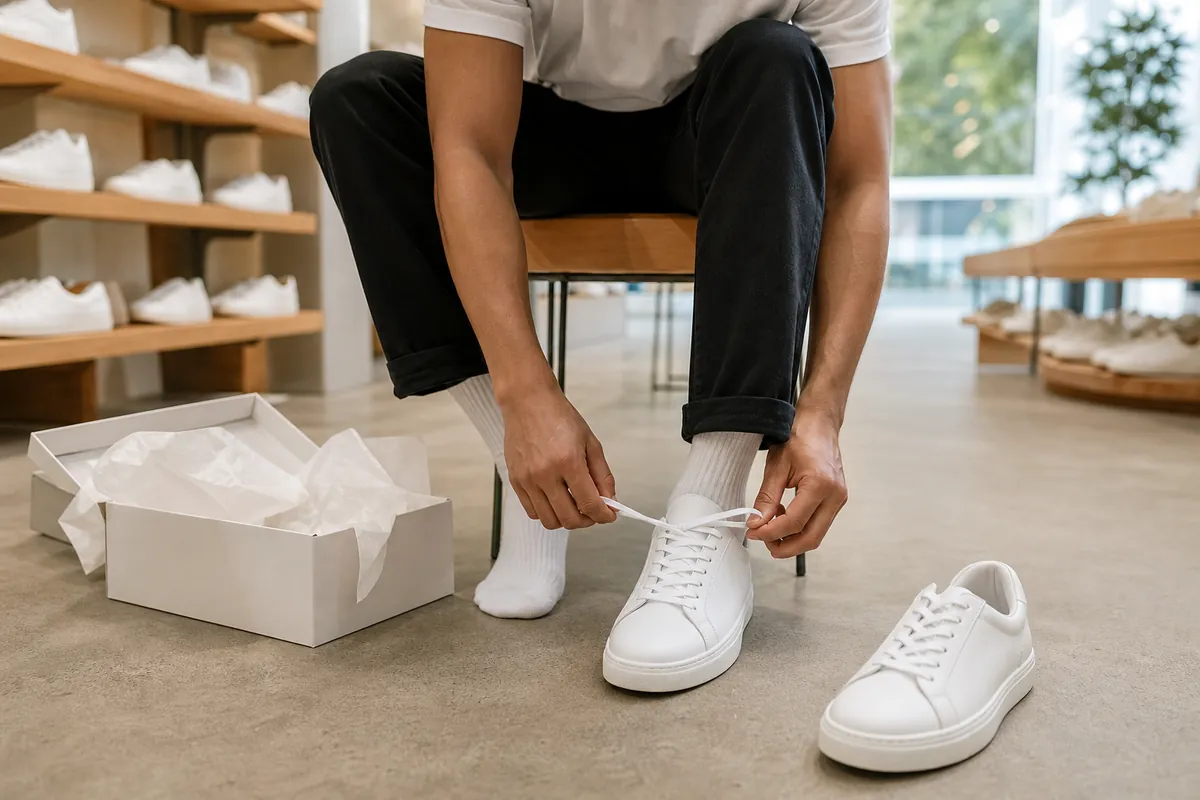
Buy from a retailer with a clear return policy, keep the tags and the box, and walk around on a clean floor for a few minutes before you decide. Pay attention to three signals: pressure on the outside of the forefoot, whether your toes touch the front, and whether the heel stays down. Pressure at the side is the Samba telling you to go up. Toes at the front is the opposite message in either shoe.
If you are still unsure, use the shoe size calculator to get a baseline from your measurement and then adjust for the shape of each shoe, as described above.
Final recommendation
Order your usual size in the Dunk. Order the same size in the Samba only if your feet are narrow or you like a close fit, and go half a size up if you have normal-to-wide feet or high volume. Keep returns easy, since the Samba is the more personal fit of the two.
Frequently asked questions
Is a Dunk size the same as a Samba size?
In length, yes, since both fit true to size. Width is the difference: the Dunk has a roomier forefoot, while the Samba is narrower and lower at the toes. Narrow feet can match sizes, and most normal-to-wide feet should go half a size up in the Samba.
I wear a 9 in Nike Dunks. What size Samba should I get?
A US 9 works if your feet are narrow or you like a snug fit. If you have normal to wide feet, try a 9.5 in the Samba. The extra half size gives the little toe and forefoot room without making the shoe too long.
Which is tighter, the Dunk or the Samba?
The Samba. It holds the midfoot and heel closer and tapers sooner at the toe, so the leather can press against the little toe. The Dunk has more overall room and changes little after the first wear.
Does the Samba stretch to fit?
The leather softens around the forefoot over several wears, so mild pinching often eases. It does not gain a meaningful amount of width, so if the shoe hurts on the first day, order half a size up instead of waiting. Treat that as a size signal, not a break-in problem.
What if I'm between sizes in both shoes?
Choose the smaller size in the Dunk and the larger size in the Samba. The Dunk has spare room that absorbs a half size, while the Samba's narrow shape leaves little margin. That is the safest tie-break for both pairs, especially when ordering online with returns.