Adidas Samba Sizing: True to Size, but Should You Size Up?
The Samba is true to length but narrow through the forefoot. Here is who should size up, how versions differ, and how it compares with the Gazelle and Nike.
Quick answer
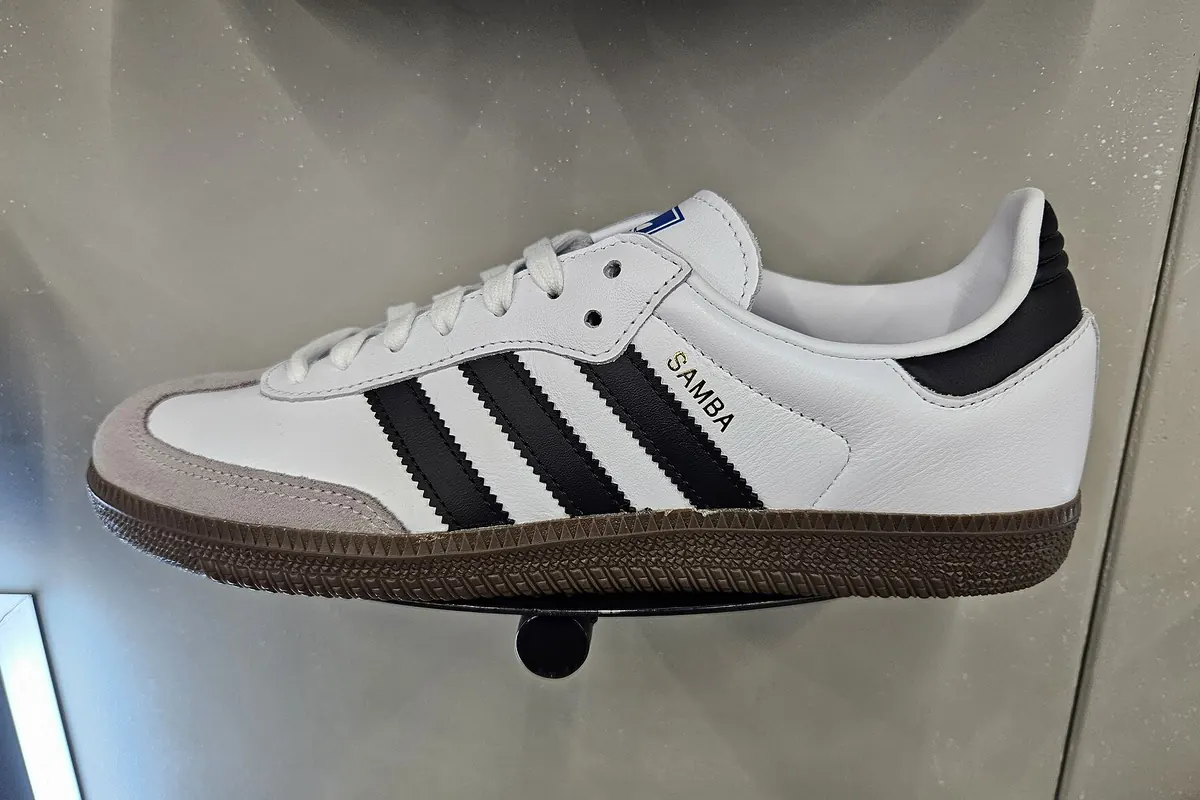
The Adidas Samba fits true to size in length but runs narrow through the forefoot, midfoot and toe box. Order your usual size if your feet are narrow or average width. Go half a size up if your feet are wide, your instep is high or you wear thick socks. Avoid a full size up: you gain length, not width.
- Fit
- True to size
- Width
- Narrow
- Our advice
- Order your usual size with narrow or average feet; go half a size up if your feet are wide or you have a high instep.
The Adidas Samba is true to size in length and narrow in everything else. If your feet are narrow or average width, order your usual size. If they are wide, or you have a high instep, go half a size up. Very wide feet are better served by a different Adidas shoe altogether.
That is the short version, and it explains why the internet can't agree on Samba sizing. People who say "they run small" are usually feeling width, not length. People who say "true to size" usually have slimmer feet. Both are describing the same shoe. Below we break down who should stay, who should size up, how the different Samba versions compare, and how the Samba lines up against the Gazelle, Campus and the Nike shoes you might already own.
Length, width and volume: where the Samba gets tight
The Samba began life as a football trainer for frozen pitches, and the last still reflects that. It is built to hold the foot close for quick cuts, not to give it space. Three things make it feel smaller than its label:
- A slim forefoot. The widest part of your foot, across the ball, is where most wearers feel pressure first.
- A low toe box. There is little vertical room over the toes, so thick socks or a high instep use up space fast.
- A close midfoot and heel. The lacing runs far down the shoe and wraps the arch tightly. Great for lockdown, less great for wide feet.
What the Samba does not do is run short. Most wearers have normal toe room in front of the longest toe at their usual size. That matters, because it tells you what sizing up actually buys you: a little more width, and length you may not need.
Who should stay true to size, size up or size down
Work out your foot type first, then use this as your starting point.
- Narrow feet: your usual size. The Samba may be the best-fitting Adidas classic you own. Half a size down only makes sense if your regular size slips at the heel.
- Average feet: your usual size. Expect a snug first week in leather pairs.
- Slightly wide feet: half a size up. This is the group that benefits most from the change.
- Wide feet: half a size up, and try them on before committing. If the sides still press, a bigger size won't solve it.
- High instep or thick socks: half a size up. The low toe box and tight lacing leave little room over the top of the foot.
- Between sizes: round down for narrow or average feet, up for wide feet.
If you don't know your width, the shoes you already own will tell you a lot. Do most sneakers feel tight across the ball of your foot, and do you lace them loosely to compensate? You are probably on the wide side. Our guide to measuring your feet at home shows how to check length and width with a sheet of paper and a tape measure.
We don't recommend going a full size up. You will gain only a sliver of width, the flex groove ends up behind the ball of your foot, and the shoe starts creasing in the wrong place.
Runner's tip: Lacing changes a Samba more than most shoes. If your forefoot feels pinched, skip the lowest eyelet or loosen the bottom two crossings. That relieves pressure across the toes without making the heel any looser.
Samba OG, Classic, XLG and other versions
The good news is that the core Samba lineup shares the same basic fit. What changes from version to version is material, and material changes how fast the shoe relaxes.
- Samba OG: leather upper, suede T-toe, gum sole. This is the reference fit, and everything above applies to it directly.
- Samba Classic and Samba ADV: same general shape. The skate-focused ADV adds a little padding, which takes up a bit of room, so wide-footed skaters should stay half up.
- Samba XLG: a thicker platform sole on the familiar upper. The sole doesn't change the internal fit, so size it like the OG.
- Vegan and synthetic Sambas: similar shape, but synthetic uppers stretch less than leather. If you are on the edge between sizes, lean up.
- Nylon and soft suede collaborations (for example, the Wales Bonner nylon pairs and the softer suede JJJJound releases): same narrow shape, but the materials feel gentler from the first wear.
- Clarks-built collaborations (the Ronnie Fieg / Kith 8th Street pairs): different factory, different materials, and a fit that most wearers describe as true to size even if they size up in regular Sambas. Don't apply the half-up rule automatically here.
With collaborations, check the designer's own sizing notes when they publish them. They have seen the samples and you haven't.
Samba vs Gazelle, Spezial and Campus
People who love the Samba often buy its siblings next, and almost everyone gets caught out the first time. The Samba is the slimmest of the four; the others are roomier and often worn smaller.
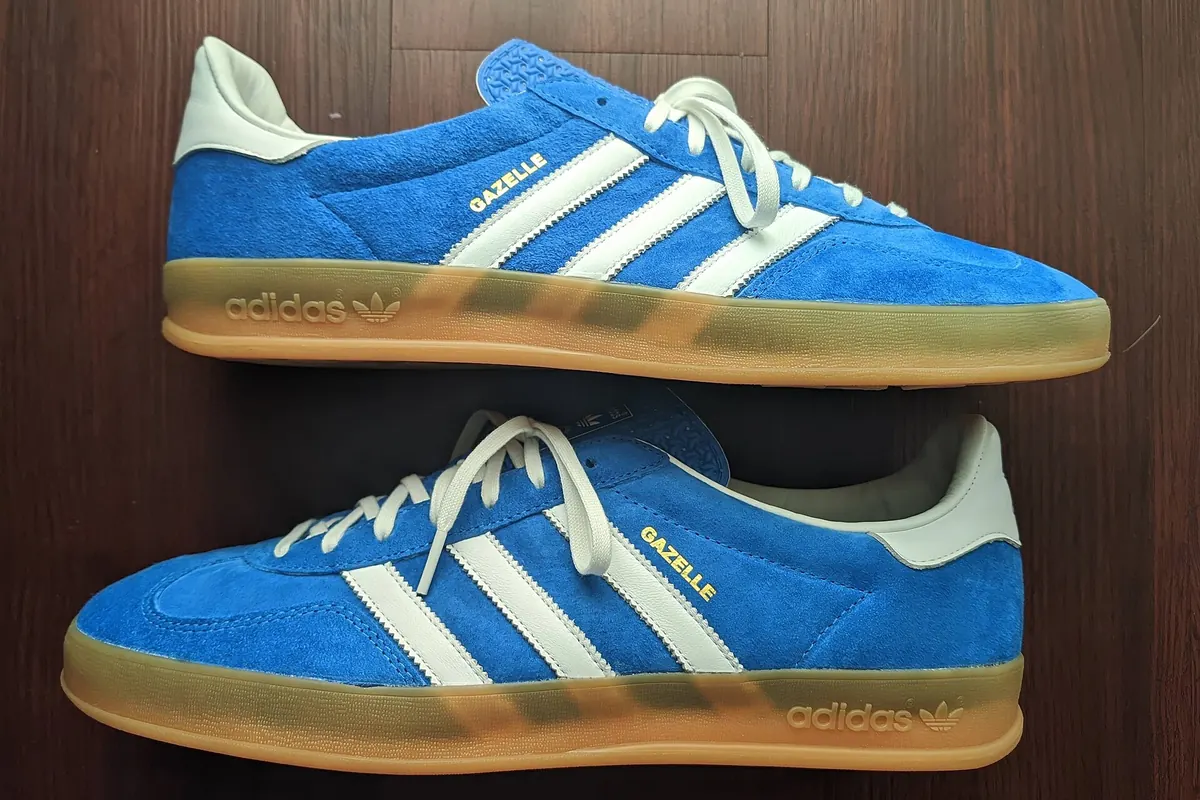
- Gazelle: more volume through the forefoot and midfoot. Most average-footed wearers go half a size down from their usual size. That puts a wide-footed person who takes a 10.5 in the Samba at about a 9.5 or 10 in the Gazelle. See our Gazelle sizing guide for the details.
- Spezial: closer to the Samba in shape, with a structured arch, but a little longer. Many wearers go half down from their usual size.
- Campus: the roomiest of the group. For many people the right Campus size is a full size smaller than their Samba size.
If width has been a problem for you in the Samba, the Gazelle or Campus will probably feel like a relief. If you love the Samba's locked-in feel, the Spezial is the closest alternative. For how the rest of the range fits, start with our Adidas sizing guide.
Samba vs Nike: Dunk, Air Force 1 and Air Max
Comparing across brands works best if you use your true-to-size Nike as the reference, not a Nike that you size up or down in.
- Nike Dunk: the Dunk has more room across the toes. If you wear a 10 in the Dunk, start at a 10 in the Samba, or 10.5 if your feet are wide. Our Nike Dunk sizing guide covers the Dunk side.
- Nike Air Force 1: the AF1 is roomy and many people take it half a size down. Don't use that number for the Samba. If you wear a 9.5 in AF1 and a 10 in most other Nikes, start at 10 in the Samba.
- Nike Air Max 90: more padding and a wider midfoot. Same starting number as your Air Max size, but expect the Samba to feel much closer.
Keep in mind that the Samba is a flat, thin-soled shoe. If you are coming from cushioned Nike runners, part of the "tight" feeling is simply less padding between you and the upper.
Break-in: what changes and what doesn't
Leather Sambas feel stiff for the first several wears, especially across the forefoot and where the shoe bends. That stiffness eases. The leather softens and molds slightly where your foot presses, and a snug pair often feels much friendlier after a week or two of regular wear.
What doesn't change is the shape. Leather relaxes; it does not grow a wider last. If your little toe is being crushed in the store, or the sides press hard enough to hurt after ten minutes of walking, the size is wrong. Buying a painfully tight pair and hoping the leather fixes it is the most common Samba mistake we hear about.
Insoles are the other trap. Swapping the stock insole for a thicker cushioned one lifts your foot into the lowest part of the toe box. If you plan to do that, go half a size up from the start.
Good to know: try Sambas with the socks you will actually wear. A thin dress sock and a thick athletic crew can feel like half a size of difference in a shoe this close-fitting.
Men's and women's Samba sizing
Most Sambas are sold as unisex shoes and listed in US men's sizes. On the Adidas chart, US women's equals US men's plus one. A women's 8 is a men's 7; a women's 9 is a men's 8. This is a smaller gap than the 1.5-size gap you may be used to from other brands, so convert using the Adidas numbers rather than a generic chart.
Once you have converted, apply the same width advice. A women's 8.5 with wide feet should look at a men's 8 rather than a 7.5.
Adidas Samba size charts
The Samba uses the standard Adidas grid below. Measure your foot length in centimeters, find the closest row, then adjust using the foot-type advice above.
| US men's | UK | EU | Foot length (cm) |
|---|---|---|---|
| 4.5 | 4 | 36 2/3 | 23 |
| 5 | 4.5 | 37 1/3 | 23.5 |
| 5.5 | 5 | 38 | 24 |
| 6 | 5.5 | 38 2/3 | 24.5 |
| 6.5 | 6 | 39 1/3 | 24.5 |
| 7 | 6.5 | 40 | 25 |
| 7.5 | 7 | 40 2/3 | 25.5 |
| 8 | 7.5 | 41 1/3 | 26 |
| 8.5 | 8 | 42 | 26.5 |
| 9 | 8.5 | 42 2/3 | 26.5 |
| 9.5 | 9 | 43 1/3 | 27 |
| 10 | 9.5 | 44 | 27.5 |
| 10.5 | 10 | 44 2/3 | 28 |
| 11 | 10.5 | 45 1/3 | 28.5 |
| 11.5 | 11 | 46 | 29 |
| 12 | 11.5 | 46 2/3 | 29 |
| 12.5 | 12 | 47 1/3 | 29.5 |
| 13 | 12.5 | 48 | 30 |
| 13.5 | 13 | 48 2/3 | 30.5 |
| 14 | 13.5 | 49 1/3 | 31 |
| US women's | UK | EU | Foot length (cm) |
|---|---|---|---|
| 5 | 3.5 | 36 | 22 |
| 5.5 | 4 | 36 2/3 | 22.5 |
| 6 | 4.5 | 37 1/3 | 23 |
| 6.5 | 5 | 38 | 23.5 |
| 7 | 5.5 | 38 2/3 | 24 |
| 7.5 | 6 | 39 1/3 | 24.5 |
| 8 | 6.5 | 40 | 25 |
| 8.5 | 7 | 40 2/3 | 25.5 |
| 9 | 7.5 | 41 1/3 | 26 |
| 9.5 | 8 | 42 | 26.5 |
| 10 | 8.5 | 42 2/3 | 26.5 |
| 10.5 | 9 | 43 1/3 | 27 |
| 11 | 9.5 | 44 | 27.5 |
| 12 | 10.5 | 45 1/3 | 28.5 |
Notice the EU column moves in thirds. Adidas keeps the fractions from the European Paris-point system instead of rounding them, so you will see sizes like 42 2/3 on the box. They are normal and they match the US and UK sizes on the same row.
Our recommendation
Order the Samba in your usual size if your feet are narrow or average. Go half a size up if your feet are wide, your instep is high, or you plan to wear thick socks or a cushioned insole. Skip the full-size jump.
Ordering online with no store nearby? Buy from a retailer with free exchanges and test the pair indoors on a clean floor. Lace it normally, walk for ten minutes, and pay attention to the outside edge of the forefoot near your little toe. Mild pressure that fades as you move is break-in. Pressure that builds is a size problem.
If you have never worn one, try a pair in a store and walk around for a few minutes rather than just standing. Samba problems show up at the sides of the forefoot after some steps, not at the toe. Not sure of your base size? Measure your foot and run it through our shoe size calculator before you order.
Frequently asked questions
Do Adidas Sambas run small?
Not in length. Most wearers have normal toe room in front at their usual size. What makes Sambas feel small is the narrow forefoot and low toe box, so people with wide feet or a high instep often feel squeezed. That is a width problem, which is why the fix is half a size up for those feet rather than for everyone.
Should I size down in Adidas Sambas?
Rarely. The Samba already fits close, so going down usually makes the forefoot too tight. The only case for half a size down is a genuinely narrow foot where your regular size slips at the heel even with the laces snug. Even then, try both sizes before buying, because the smaller pair often pinches after a few minutes of walking.
Do Samba XLG and Samba OG fit the same?
Yes, for practical purposes. The XLG puts a thicker platform sole under a familiar Samba upper, and the sole does not change the space inside the shoe. Use the same size you would choose in the OG, including half a size up if your feet are wide. The shoe looks bigger on foot, but it does not fit bigger.
Is my Samba size the same as my Gazelle size?
Usually not. The Gazelle has noticeably more volume, so most average-footed wearers take it half a size below their usual size, while the Samba stays at the usual size or goes half up. Many people end up a half to a full size apart between the two. Never copy your Samba size straight across to a Gazelle or Campus.
Will my Sambas stretch if they feel tight?
Leather Sambas soften and mold a little over the first couple of weeks, so mild stiffness is normal. They will not get meaningfully wider, though, because the last stays the same. If your toes are crushed or the sides hurt after ten minutes of walking, exchange them for half a size up rather than waiting for a break-in.