How Should Ski Boots Fit? Mondopoint, Shell Fit and Flex
Ski boots should feel snug, with toes brushing the front and a 1 to 2 cm shell gap. Learn Mondopoint, last width, liner packing out and flex ratings.
Quick answer
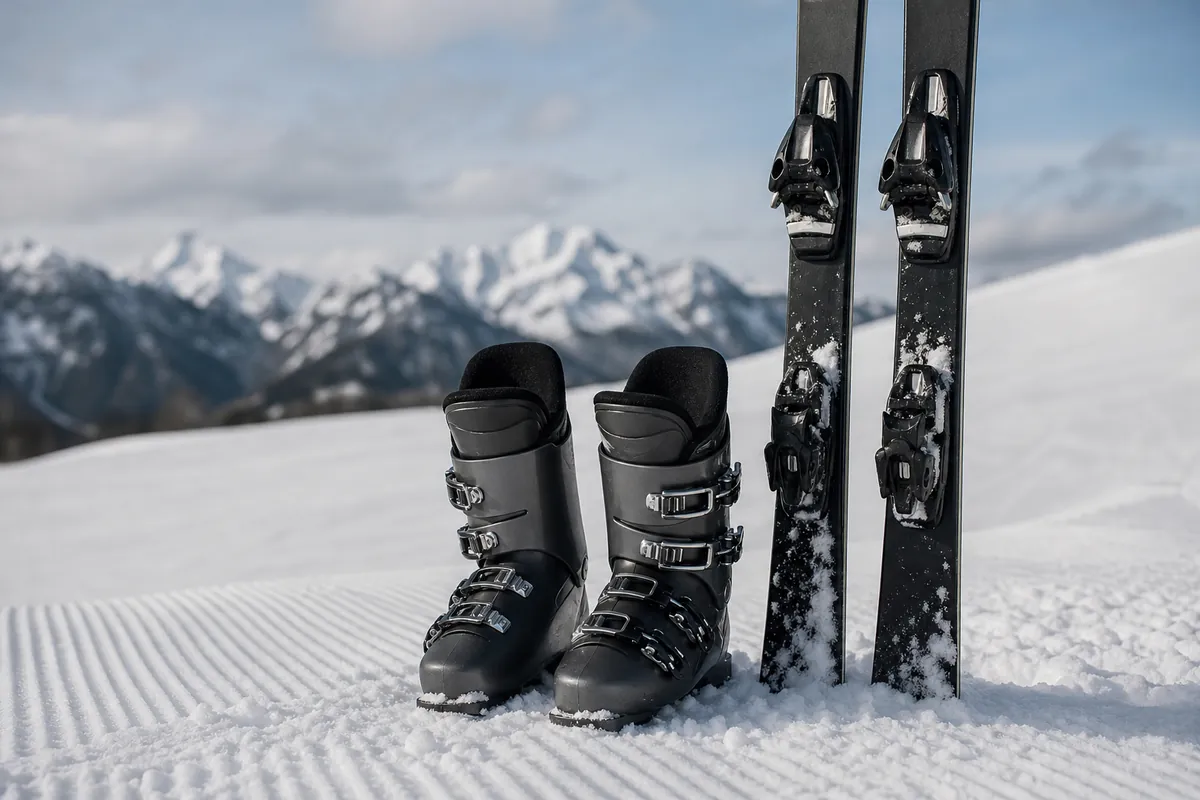
Ski boots should feel snug: toes lightly touch the front when standing and pull back when you flex, and the heel is held. Sizes are Mondopoint, your foot length in mm divided by ten. Check the shell with the liner out for a 1 to 2 cm gap behind the heel. Start tight, because the liner packs out, and wear one thin sock.
A ski boot should feel too small in the shop. Your toes should lightly brush the front of the shell when you stand upright, the heel should be held down and back, and the whole boot should feel like a firm handshake. Ski boots are sized in Mondopoint, which is your foot length in centimeters, and the fit that matters most is the shell fit, not the number printed on the boot.
That feels backwards to anyone used to sneakers, where a snug shoe is wrong. In a ski boot, the liner packs out and the foot gets more room with use, so a boot that is merely comfortable on day one tends to be sloppy by the end of the season. Here is how the size, the shell, the liner and the flex fit together.
Mondopoint in plain words
Mondopoint is a metric system that uses the foot length, with no letters or half-steps tied to a brand. A foot of 280 millimeters (28 cm) starts at Mondo 28. Adult boots run from about 21.5 to 33. Most are sold in half sizes, and full sizes are a centimeter apart in length, so a 26.5 and a 27.5 are one full size apart.
Because Mondopoint is a length in millimeters, you can get an estimate from the standard chart: multiply the foot length in centimeters by ten. The table gives a starting number from the chart's real foot lengths. It is a starting point for a boot fitter, and not what you should order blind, because shells are built in specific lasts and widths.
| US men's | Foot length (cm) | Foot length (mm) | Starting Mondopoint |
|---|---|---|---|
| 7 | 24.6 | 246 | 24.6 |
| 8 | 25.4 | 254 | 25.4 |
| 9 | 26.2 | 262 | 26.2 |
| 10 | 27.1 | 271 | 27.1 |
| 11 | 27.9 | 279 | 27.9 |
| 12 | 28.7 | 287 | 28.7 |
| 13 | 29.7 | 297 | 29.7 |
| US women's | Foot length (cm) | Foot length (mm) | Starting Mondopoint |
|---|---|---|---|
| 6 | 22.4 | 224 | 22.4 |
| 7 | 23.3 | 233 | 23.3 |
| 8 | 24.1 | 241 | 24.1 |
| 9 | 24.9 | 249 | 24.9 |
| 10 | 25.9 | 259 | 25.9 |
For example, a men's US 9 foot measures 26.2 cm, or 262 mm. That points to a Mondo 26.0 or 26.5 shell, and the boot fitter's shell check decides which. For other regions and scales, our shoe size conversion chart lists the standard conversions.
Why the shell fit comes first
The shell is the hard plastic outer. The liner is the soft inner boot that sits inside it. When you try a boot in the shop, the liner is new, thick and fluffy, so it hides how much space the shell really gives you. That is why fitters check the shell on its own.
The test takes a minute. Remove the liner, step into the empty shell with your bare foot, and slide forward until your toes lightly touch the front. Stand up straight and look at the gap behind your heel. About 1 to 2 centimeters is a typical target. A fitter may use a fit stick, aiming at roughly 20 mm for comfort and about 15 mm for a performance fit. You can use fingers if you are at home: one to two fingers behind the heel is normal, and racers or free riders sometimes want about 10 mm or less.
A gap larger than two fingers, about 20 mm, is likely too loose, since the liner will compress and the gap will grow. Check the ankle too: you should be able to fit a finger between the shell and each side of the ankle.
Fit tip: Test the boot with the liner in, buckled, and bend your knees into a ski stance. Your toes should pull back off the front of the boot when you lean forward, and the heel should stay planted.
Toes, heel and the lean forward
Ski boot toes behave in a way that confuses newcomers. When you first stand in a boot, your toes touch the front, and that is expected in the correct size. When you flex your knees forward, the foot is pulled back into the liner and the toes should move free. If you can wiggle them slightly and nothing is crushed, the length is right.
More than about 2 cm of space behind the heel means the boot is too big. Over-tight toe buckles can also cause pain, so avoid cinching them to fix a loose boot. A toe that hurts when standing still but eases in a ski stance is common, and a toe that hurts in both positions suggests a shell that is too short.
Liner packing out
New boots loosen as the liner compresses with skiing. The foam gets thinner and molds to your foot, and the boot gains volume. That is the reason experienced fitters tell you to start snug. You can speed the process with heat molding, in which the liner is warmed and shaped around your foot. Some brands supply liners made to be heat-molded; Scarpa, for example, uses Intuition liners that can be molded.
If a boot is merely comfortable in the shop, expect a loose boot in a month. There are two exceptions. Cold feet or numb toes in a first fitting mean the boot is too tight, and you should not wait for the liner to fix a pressure point, since a shell that is the wrong shape stays the wrong shape. A good boot fitter can punch or grind the shell for a bony spot.
Last width and volume
Ski boots have a last width, measured across the forefoot of the shell in millimeters. Common widths are 98, 100, 102 and 104 mm, sometimes labeled low, mid, high and extra-high volume. The reference size 26.5 is made in those four widths. Each full size up or down changes the width by about 2 mm, so a size 22.5 runs roughly 90 to 96 mm and a size 30.5 roughly 106 to 112 mm.
The rule of thumb: lasts below 100 mm suit narrower feet and performance fits, while 100 mm and wider suit wider feet and relaxed fits. As an example, a 25.5 cm foot about 99 mm wide maps to a 25.5 mid-volume shell at 98 mm. To measure the forefoot, trace your foot on paper and measure the widest part in millimeters. Our boot width guide explains the ball measurement, and the shoe width chart covers ordinary shoe letters, which do not apply to ski boots.
Flex ratings
Flex is how stiff the boot is when you drive your knee forward. The scale runs from about 60 for the soft end to 130 or higher for the stiff end. It is not standardized between brands, so a 100 flex from one maker can feel different from a 100 from another. The ranges below are typical numbers reported by sizing sources, and the sources overlap a little.
| Skier level | Men's flex | Women's flex |
|---|---|---|
| Beginner to intermediate | 65 to 80 | 50 to 60 |
| Intermediate to advanced | 90 to 100 | 90 to 100 |
| Advanced to expert | 110 to 130 (one source says 100 to 130) | 85 to 110 |
| Race boots | 140 to 150 | not listed |
Treat flex as a choice about skiing style, weight and strength, not about foot size. A stiffer boot gives more power and precision but is harsher on a lighter skier. If you land between two flexes, pick the softer, because you can feel a stiff boot working against you in a way you do not feel from a softer one.
Measuring at home
Measure your foot length from the longest toe to the heel in centimeters. Do it standing, because a standing measurement runs about half a size larger than a seated one. Then measure the widest part of the forefoot in millimeters, so you can narrow down the last. Instep height, instep volume and the distance from heel to calf can refine the fit, though a fitter will assess those. Our how to measure feet guide lays out the tracing method.
Do not size from your street shoe
A ski boot's Mondopoint size is often a full size or more smaller than your sneaker size, so reading across from a US number can mislead. Use foot length instead, and compare your result with the table above. Our general advice on snug but painless fit in stiff boots appears in how should boots fit, and the winter guidance in how should winter boots fit is almost the opposite: a ski boot is a performance tool and is not meant for thick socks.
That last point matters. Wear a single thin ski sock when you try boots. A thick sock distorts the fit, adds volume you will not have on the slopes, and can cause cold feet by restricting circulation.
Bottom line
Start from your foot length in millimeters as the Mondopoint, check the shell with the liner out for a gap of about 1 to 2 cm behind the heel, and choose a last width that matches your forefoot. Expect toes to touch the front when you stand, and to pull back when you flex. Start snug, because the liner will pack out, and use a thin sock. The shoe size calculator gives you your foot length to begin with.
Frequently asked questions
What is Mondopoint sizing?
Mondopoint is a ski boot size based on foot length in centimeters, so a 280 mm foot starts at Mondo 28. Adult sizes run roughly 21.5 to 33. It does not map neatly to street shoe sizes, so use foot length.
How much space should be behind the heel in a ski boot shell?
About 1 to 2 cm with the liner removed and toes touching the front. Fitters often aim for about 20 mm for comfort and 15 mm for performance. More than two fingers, about 20 mm, is likely too loose.
Should my toes touch the front of a ski boot?
Yes, lightly, when you stand upright in a new boot. When you flex your knees forward, the foot pulls back and the toes should be able to wiggle. Toes that hurt in both positions mean the boot is too short.
Do ski boot liners pack out?
Yes. The liner compresses as you ski and the boot gains volume, so start snug. Heat molding speeds the process, and some liners, such as Scarpa's Intuition liners, are made to be heat molded.
What do the widths like 98 mm and 102 mm mean?
They are last widths across the forefoot of the shell. Common widths are 98, 100, 102 and 104 mm, sometimes called low to extra-high volume. Under 100 mm suits narrow feet and performance fits.
What flex should I choose?
Match flex to ability and weight: about 65 to 80 for men beginners, 90 to 100 intermediates, and 110 and up for experts. Ratings are not standardized between brands, so use them as a guide and have a boot fitter check.