JK Boots Sizing: Why You Order a Full Size Below Brannock
JK Boots recommends one full size below your Brannock. Learn the A to 8E widths, stock versus custom, and why soles are sized separately.
Quick answer
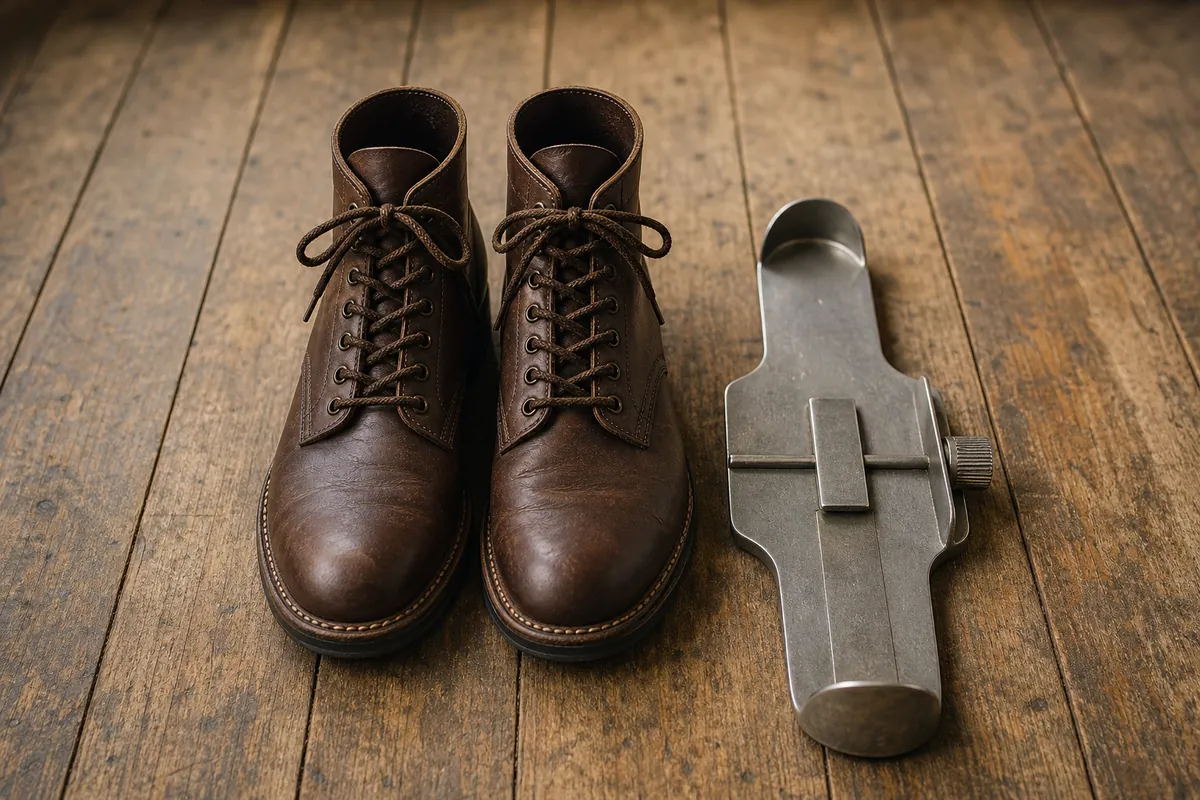
JK Boots recommends ordering one full size below your Brannock length, so a Brannock 8 becomes a JK 7. Widths run from A to 8E, and if you fall between two, choose the narrower. Very wide or narrow feet should consider a custom order from the measurement form.
- Fit
- Runs large
- Width
- Varies
- Our advice
- Order one full size below your Brannock length; choose the narrower width if between two.
JK Boots recommends ordering one full size below your Brannock length. If the Brannock device says 8, you order a 7. That is a bigger drop than most heritage makers ask for, and it works because JK's sizing is tied to the US Brannock scale rather than to a sneaker-style label.
The second decision is stock or custom. Stock boots follow body-proportion ratios, and custom boots are made to your measurements. Most sizing trouble at JK comes from mixing up the two, or from using a sneaker size instead of a Brannock reading.
The one-size-down rule
JK revamped its sizing in March 2023 so that it now follows the US Brannock device. Older advice you may find on forums, from before that change, can point you in a different direction, so check the date before you trust a post.
The rule itself is easy to apply. Start from a real Brannock length, not your sneaker label, and subtract one full size. The standard chart below shows the rows, so you can find your Brannock number and then step one row down to the JK size.
| US men's | UK | EU | Foot length (cm) | CM (JP) |
|---|---|---|---|---|
| 8 | 7 | 41 | 25.4 | 26 |
| 8.5 | 7.5 | 42 | 25.9 | 26.5 |
| 9 | 8 | 42.5 | 26.2 | 27 |
| 9.5 | 8.5 | 43 | 26.7 | 27.5 |
| 10 | 9 | 44 | 27.1 | 28 |
| 10.5 | 9.5 | 44.5 | 27.5 | 28.5 |
| 11 | 10 | 45 | 27.9 | 29 |
For example, a man whose Brannock length is a US 9 would look at a JK 8. Width is separate, and we cover it next. We are not claiming a different foot length for a JK size, because the brand does not publish one; the chart here is only the standard US scale.
Fit tip: Do not carry your sneaker size over. Sneakers use thin, flexible materials that stretch around the foot, while thick leather does not give at once. A boot sized from sneaker numbers is more likely to rub your toes during break-in.
Widths from A to 8E
JK's charts cover lengths 3.5 to 16. The first chart runs widths A through 2E and the second runs 3E through 8E. That is an unusually wide spread for a boot maker.
Not every width is stocked. The letters A, B and C and 4E through 8E are custom-only, marked with an asterisk on the chart. If you are very wide or very narrow, the custom route is where those widths live.
If you fall between two widths, JK's advice is to take the narrower. That sounds backwards until you remember that heavy-gauge leather stretches and molds, while a boot that is too wide only moves around. Our shoe width chart explains what the letters mean in general terms.
Stock versus custom
| Option | How it is sized | Best for |
|---|---|---|
| Stock | Body-proportion ratios that fit a range of people | Average feet that match the Brannock range |
| Custom | Handmade from your exact measurements | Very wide or narrow feet, hammer toes, unusual shapes |
The 300 and 300x models are not available in custom. For everything else, a custom order starts from a measurement form. JK asks for height, weight, which foot is dominant, and how you walk. Those details help the maker adjust proportions beyond length and width alone.
If you have a foot that regularly beats off-the-shelf shoes, custom is worth the wait. If your feet are average, stock will usually do. Persistent rubbing in several places is a sign of the wrong size, and JK invites you to contact them rather than guess.
The sole is sized separately
This catches buyers off guard. JK sizes soles separately from the upper, so a size 6D boot might get a size 10 sole, and a size 14 boot might get a size 15 sole or larger. Do not worry if the outsole looks bigger than the boot you expected: it is how JK builds its boots, and the sole size is not a sign that you were sent the wrong pair.
For unusual feet, JK can adjust the soles too. If you are ordering custom, mention any history of arch or stability problems.
Toe caps change how much room you get
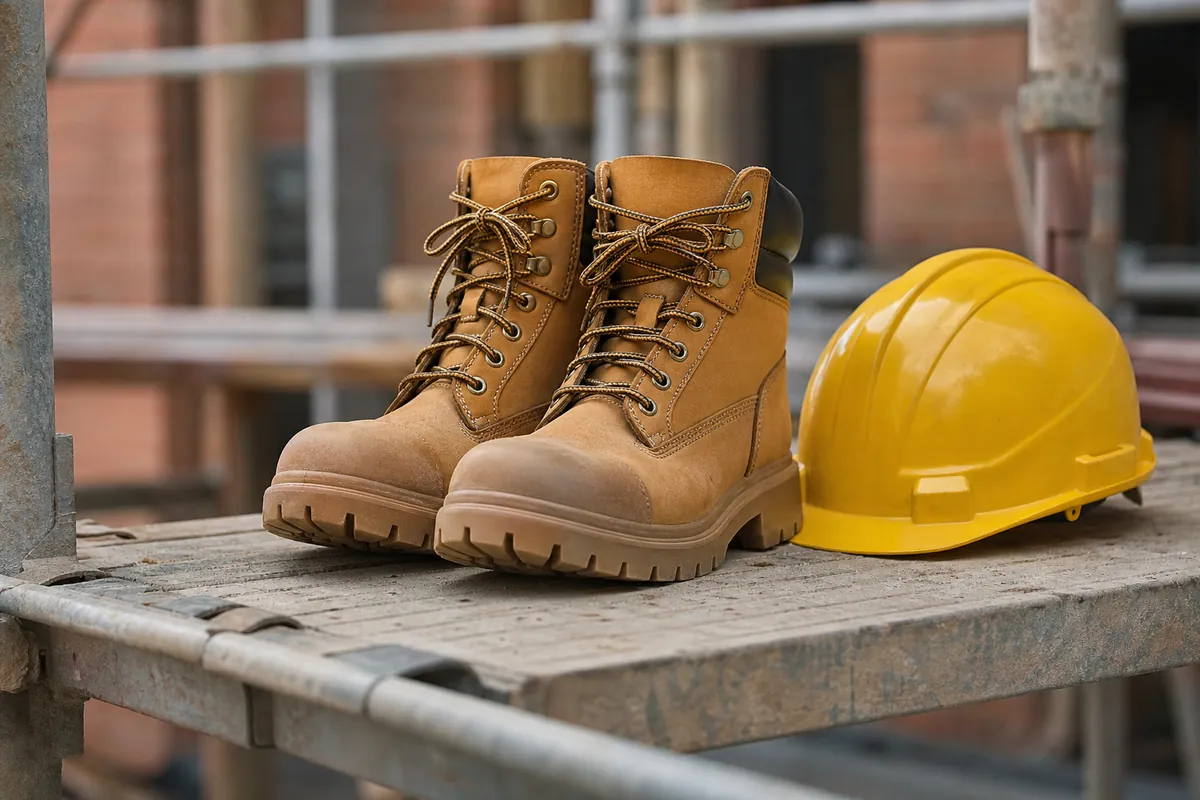
If you buy a safety boot, the toe cap matters. Composite toes give a larger toe box and more room. JK reports fewer complaints of pinky toe rub since moving to composite. Steel toes have a narrower profile, which suits narrow or low-volume feet, but they can pinch the little toe.
Hard toe caps do not mold to your foot the way leather does. That means a cap that is too tight will stay that way. Our how work boots should fit guide explains how to test a toe cap in the shop.
Calf gap and shaft fit
JK boots are tall, so shaft fit matters as much as foot fit. A calf gap of roughly 1 to 2.5 inches is normal, and the uppers should not touch or overlap. For narrower calves that leave extra space, JK offers a long tongue guard, which closes the gap behind the lacing.
Break-in and what will not change
Expect a snug boot at first. Heavy-gauge leather stretches and molds with wear, and stiff leather softens, but it does not change the boot's size. That distinction matters: a boot that is the right size becomes comfortable, while one that is truly too small stays too small.
You can tune the fit with three small things:
- Insole: the standard insole is thin neoprene. A thicker leather insole adds snugness, and removing it adds room.
- Laces: nylon or paracord laces cinch the instep better than stiff leather laces.
- Socks: thick socks reduce volume, thin socks add room.
Oil the toe, sides and ankle as the leather dries, and avoid the hardware.
How to get a good measurement
The best method is a trained fitter in a boot store, who checks length, width, arch length and foot shape. On a Brannock, read the heel-to-toe length, check the arch length and note the width.
At home, trace each foot on paper, because one foot is often larger, and measure width with a soft tape around the widest point. Do it at the end of the day, in the socks you will wear. People with high arches or thick insteps may need a larger size than their length suggests. Our how to measure your feet guide has a full walkthrough.
Fit tip: Feet swell through the day. Measure in the evening and try boots on late, so the boot fits your feet at their largest.
How JK compares with other work boots
A full size down is a bigger offset than the half size many heritage-boot buyers are used to. If you own a Red Wing, check our Red Wing guide for how that brand sizes, and do not assume the two use the same offset. Compare Brannock to Brannock, not boot size to boot size.
The same caution applies to Danner. If you wear a Danner in a size you like, treat it as one data point, then check it against your Brannock reading and JK's own rule before ordering. When the two disagree, the Brannock reading is the better anchor.
Common ordering mistakes
- Using shoe-store sneaker size. It can be a half size or more off your Brannock, and the one-size-down rule assumes a real Brannock reading.
- Going wider to stop a tight spot. If you are between widths, JK says to pick the narrower. The leather will mold, but a boot that is too wide will not shrink.
- Ignoring the toe cap. A steel cap that pinches the little toe will not stretch. Ask about composite before ordering.
- Reading old forum threads. Posts from before the 2023 revamp may describe a different sizing logic.
If a pair rubs in more than one spot after a fair amount of wear, treat it as a size problem and contact JK rather than adding more insoles or socks.
About the maker
JK Boots was founded in 2008 by John Khadzhi, a boot maker trained in Ukraine who moved to the US in 1994. It is family owned and operated in Spokane, Washington, and the boots are handmade with American materials. That matters for fit because a small maker can talk to you directly. If your Brannock reading and your instinct disagree, ask them.
Ordering a replacement pair
If you are reordering after owning JKs for years, do not simply copy the old size. Sizing was tied to the US Brannock device in March 2023, so a pair bought earlier may follow a different logic. Remeasure both feet, apply the one-size-down rule, and compare the result with the pair you own. If they disagree, trust the fresh measurement and mention the old pair when you contact JK.
Our recommendation
Get a Brannock reading, go one full size down, and pick the narrower width if you are between two. Choose custom if your feet are far from average. Check your toe cap type, because a tight steel toe is the most common regret. Give the boots a few weeks of wear before judging them.
Frequently asked questions
What size should I order in JK Boots?
JK recommends one full size below your Brannock length, so a Brannock 8 becomes a JK 7. This applies since the March 2023 sizing revamp tied to the US Brannock scale. Use a Brannock reading rather than sneaker size, and pick the narrower width if you are between two.
What widths do JK Boots come in?
Their charts cover widths A to 2E and 3E to 8E for lengths 3.5 to 16. Widths A, B and C and 4E through 8E are custom-only. If you are between two widths, JK says to choose the narrower.
Why is my JK sole bigger than my boot size?
JK sizes soles separately from the upper. A size 6D boot can get a size 10 sole, and a size 14 boot may get a 15 or larger. This keeps the sole in proportion with the upper and is normal.
When should I order custom JK Boots?
Custom is recommended for unusual feet, such as very wide or narrow feet or hammer toes. JK asks for height, weight, dominant foot and walking style. The 300 and 300x models are not available in custom.
Composite or steel toe for a better fit?
Composite toes give a larger toe box with more room, and JK reports fewer pinky-toe complaints since switching. Steel toes have a narrower profile that suits narrow or low-volume feet, but they can pinch the little toe.