Nike Foamposite Sizing: Do Foamposites Run Small or True to Size?
Nike Foamposites fit true to size, and you should not size down. Here is how the molded shell fits, when to go half up, and how break-in works.
Quick answer
Nike Foamposites fit true to size for most feet, and you should not size down because the molded shell is already snug and stiff. Go half a size up only for very wide feet or to avoid a long break-in, accepting some heel slip. Expect several wears before the shell softens.
- Fit
- True to size
- Width
- Narrow
- Our advice
- Order your usual Nike size and never size down; half a size up for very wide feet.
Nike Foamposites fit true to size for most people, and you should not size down. The molded shell is snug and stiff when new, and it only softens with wear. Go half a size up only if your feet are very wide or you want to avoid a long break-in.
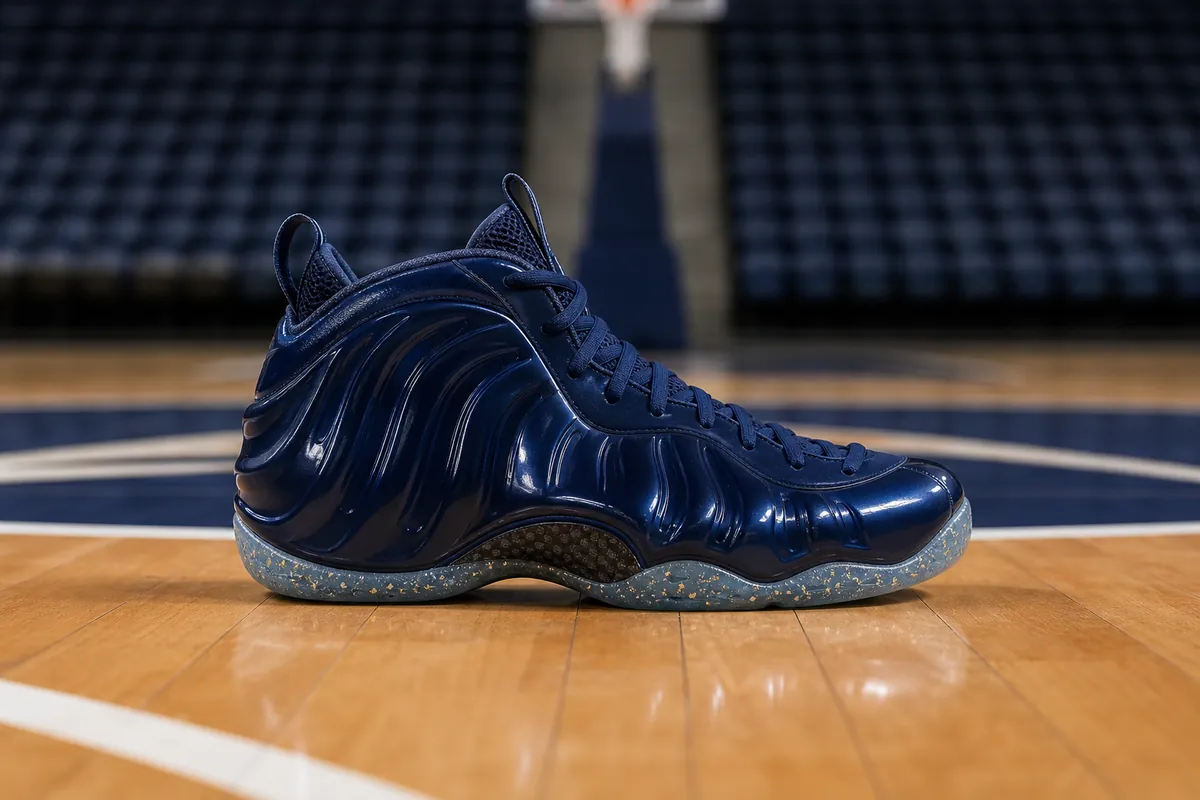
The Foamposite is unlike any other Nike. Instead of stitched panels, the upper is a single molded shell around an inner bootie. That construction explains almost everything about how it fits, from the tight first wears to the way the shoe slowly molds to your foot.
Why the shell decides the fit
A normal sneaker upper flexes in many places and stretches a little in every direction. A Foamposite shell does not. It is a hard, formed shape that holds its size and gives very little. The inner bootie adds padding, but it cannot make the shell larger.
That is why length is not forgiving. If a Foamposite is too short, no amount of wear will fix it. And if it is slightly snug in width, the shell may ease over time, but only by a small amount. Choose your size with that in mind rather than counting on stretch.
True to size, and why not to go down
For narrow, normal and slightly wide feet, the common recommendation is your true Nike size. Sizing down makes the shell feel even tighter at the toes and sides, and the stiffness means the shoe will not forgive it.
If you are between two sizes, the larger one is usually the safer choice for comfort. The smaller one will feel better in the heel, but it may leave you with sore toes for the first stretch of wearing.
Runner's tip: Judge a new pair by the length first. Slide your foot forward until the toes touch, then check that you can fit a finger behind your heel. The sides are the part that will ease, the length is not.
The break-in is not optional
Foamposites start out stiff, snug and heavy. The shell softens with heat, moisture and repeated wear, and that usually takes several wears. Plan for a stretch where the shoe is uncomfortable, especially at the sides and across the toes.
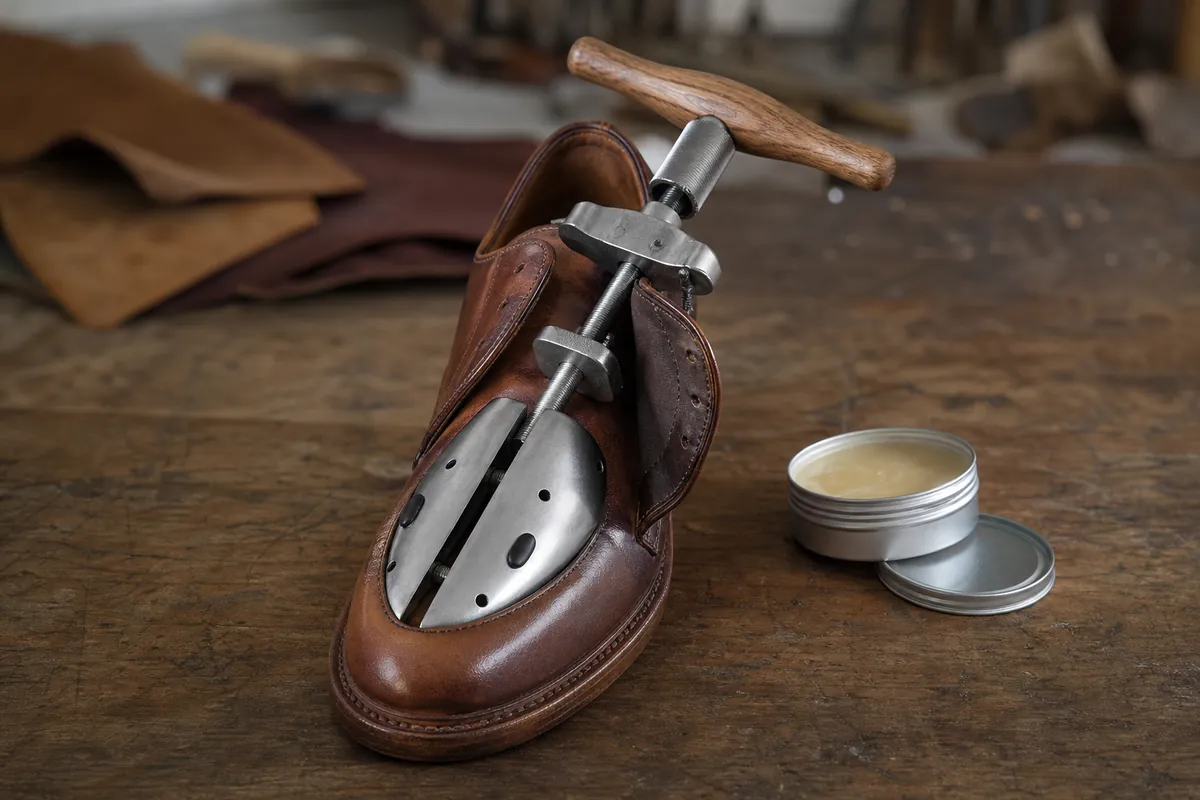
Wear is the safest method. Forcing the shell to stretch, with tools or heat applied aggressively, can damage it. Short sessions at home, then a few easy outings, are enough for most people. Our guide on how to stretch shoes covers methods for other materials, but molded shells are the exception, so go gently.
Wide feet
Slightly wide feet generally do fine at true size once the shoe has molded. Very wide feet may want half a size up, and so should anyone who does not want to endure a long break-in.
The trade-off is real. Half a size up gives more toe room, but the heel may slip. A thin removable insole can reduce heel slip, although it also makes the toe box tighter. Our wide feet guide has more on balancing length and width.
Colorways and special releases
Not every Foamposite behaves the same, and reports for individual releases vary.
- Doernbecher: runs tighter than the standard, so wide feet should consider half a size up.
- Comme des Garcons: wide feet should also consider half a size up.
- Tekken 8: reported to fit true to size after break-in, even for wide and flat feet.
- Triple White: thin ankle padding, but the inner bootie fits well.
- Copper: a softer shell than older releases, so it squeezes less.
- Psychic Blue: an updated toe shape that one reviewer preferred to the original.
These are individual reports, not measurements. A release may use a different shell hardness from an older pair of the same name, so treat the list as clues.
One versus Pro
The Foamposite One is the original and the one most buyers mean. The Foamposite Pro is a related model, and our source material does not compare the two directly, so we cannot give you a number for the difference. What we can say is that both use the same molded-shell idea, and the shell logic above applies to both. If you are buying a Pro and have only worn Ones, buy from a seller with easy returns.
Ankle and heel feel
The ankle padding on a Foamposite is thin compared with Jordan 1s, Jordan 2s or Jordan 5s. That is part of why heel slip is the main side effect of sizing up. The collar does not fill the extra space the way a heavily padded one would.
For high-instep feet, the opening can also be tight at first. The bootie compresses with wear, and most people find the pull-on gets easier. See our Air Jordan sizing guide if you are comparing against those shoes.
Foamposite versus other Nike sizes
Use your size in other Nikes as a starting point, then think about how stiff the shoe is. A shoe that stretches, like a leather Dunk or Jordan 1, forgives a slightly short size. A Foamposite does not. For most people, that means the same number as in their Jordans, with no downward adjustment.
- Air Jordan 1: if you are a men's 10 there, a men's 10 is the sensible starting point in a Foamposite. The Jordan has more padding at the ankle, so the Foamposite heel feels less cushioned.
- Air Force 1: the AF1 runs about half a size big, so if you take half a size down in it, go back to your regular Nike size here. Our Air Force 1 sizing guide explains the logic.
Insoles, socks and lacing
Because the shell will not make room for you, small changes inside the shoe matter more than usual. A thick, cushioned sock can turn a comfortable fit into a tight one, so choose a sock for the break-in period and stick with it. Moderately thin athletic socks are the usual choice.
If you went half a size up and the heel moves, try a thin insole before changing size again. It will reduce the extra volume, although the toe box becomes a bit tighter. Lace the shoe firmly through the midfoot so the bootie holds your foot back, and leave the top section a touch looser if your ankle feels pinched.
When you are walking, the heel should stay planted and the toes should lie flat. If the toes curl or the heel lifts with every step, the size is wrong, not the lacing.
Who should size up
Most buyers do not need to. Half a size up makes sense in a few situations:
- Your feet are very wide, and the shell pinches the forefoot.
- You have a high instep, and the pull-on is painful even after a few wears.
- You plan to wear the shoes for long days on foot, and you want to skip most of the break-in.
- You are buying a release known to run tighter, such as the Doernbecher.
If none of these apply to you, buy true to size.
Men's and women's sizing
Women's Nike sizes are 1.5 above men's for the same foot, so a men's 9 is a women's 10.5. Foamposites are mostly sold in men's, grade school and a few women's releases. Convert to men's first, then buy true to size. If you wear a women's 9, that is a men's 7.5. Our conversion guide has the complete chart.
Nike men's size chart
Match your measured foot to the nearest row. The foot length column is the real length of the foot for that size. CM (JP) is the box label, which is longer than the foot.
| US men's | UK | EU | Foot length (cm) | CM (JP) |
|---|---|---|---|---|
| 6 | 5.5 | 38.5 | 23.7 | 24 |
| 6.5 | 6 | 39 | 24.1 | 24.5 |
| 7 | 6 | 40 | 24.6 | 25 |
| 7.5 | 6.5 | 40.5 | 24.9 | 25.5 |
| 8 | 7 | 41 | 25.4 | 26 |
| 8.5 | 7.5 | 42 | 25.9 | 26.5 |
| 9 | 8 | 42.5 | 26.2 | 27 |
| 9.5 | 8.5 | 43 | 26.7 | 27.5 |
| 10 | 9 | 44 | 27.1 | 28 |
| 10.5 | 9.5 | 44.5 | 27.5 | 28.5 |
| 11 | 10 | 45 | 27.9 | 29 |
| 11.5 | 10.5 | 45.5 | 28.4 | 29.5 |
| 12 | 11 | 46 | 28.7 | 30 |
| 12.5 | 11.5 | 47 | 29.2 | 30.5 |
| 13 | 12 | 47.5 | 29.7 | 31 |
| 14 | 13 | 48.5 | 30.5 | 32 |
| 15 | 14 | 49.5 | 31.3 | 33 |
For example, a 26.7 cm foot is a men's US 9.5. In a Foamposite, we would order a 9.5 (27.5 CM on the box). If your foot falls between two rows, round up. Use the shoe size calculator if you want a second check.
How to buy and test a pair
Foamposites are often limited and resold, so returns matter. Check the exact release, then try the shoes on at home on a carpet, not outside. Wear them with the socks you intend to use, since the shell leaves little room for thick ones.
Pay attention to three spots: the big toe, the outer edge of the forefoot, and the heel. Toe pressure that stays after an hour is a sign of a short shoe. Side pressure that eases is normal. Heel slip with a good length suggests half a size too large.
Warning: Do not try to speed up the break-in with aggressive heat, hammering or stretching tools. A damaged shell cannot be repaired, and a shoe that is too short will not be rescued by stretching anyway.
Our recommendation
Order your true Nike size and never size down. Go half a size up for very wide feet, or if you cannot tolerate a long break-in, and accept a bit of heel movement. Stay true to size for slightly wide feet, and give the shell several wears before you judge it.
For a broader look at Nike sizing, read our Nike sizing guide.
Frequently asked questions
Do Nike Foamposites run small?
Not by length. They fit true to size for most people, but the stiff molded shell feels tight at first, especially at the sides and toes. It softens over several wears, so the early tightness is not a reason to size up.
Should I size down in Foamposites?
No. The shell is already snug and does not give much, so sizing down makes the toes and sides feel worse. If you are between sizes, the larger one is usually the safer choice for comfort.
How long does it take to break in Foamposites?
Usually several wears. The shell softens with heat, moisture and use. The break-in is described as long, and forcing a stretch can damage the shell, so gradual wear is the recommended method.
What size Foamposite for wide feet?
Slightly wide feet generally stay true to size and the fit improves as the shell molds. Very wide feet may want half a size up, at the cost of more heel slip. A thin insole can help reduce the slip.
Do Foamposite One and Pro fit differently?
We could not confirm a reliable difference between the two, so we do not give separate numbers. Both use the molded-shell design. If you are switching from a One to a Pro, buy from a seller with easy returns.