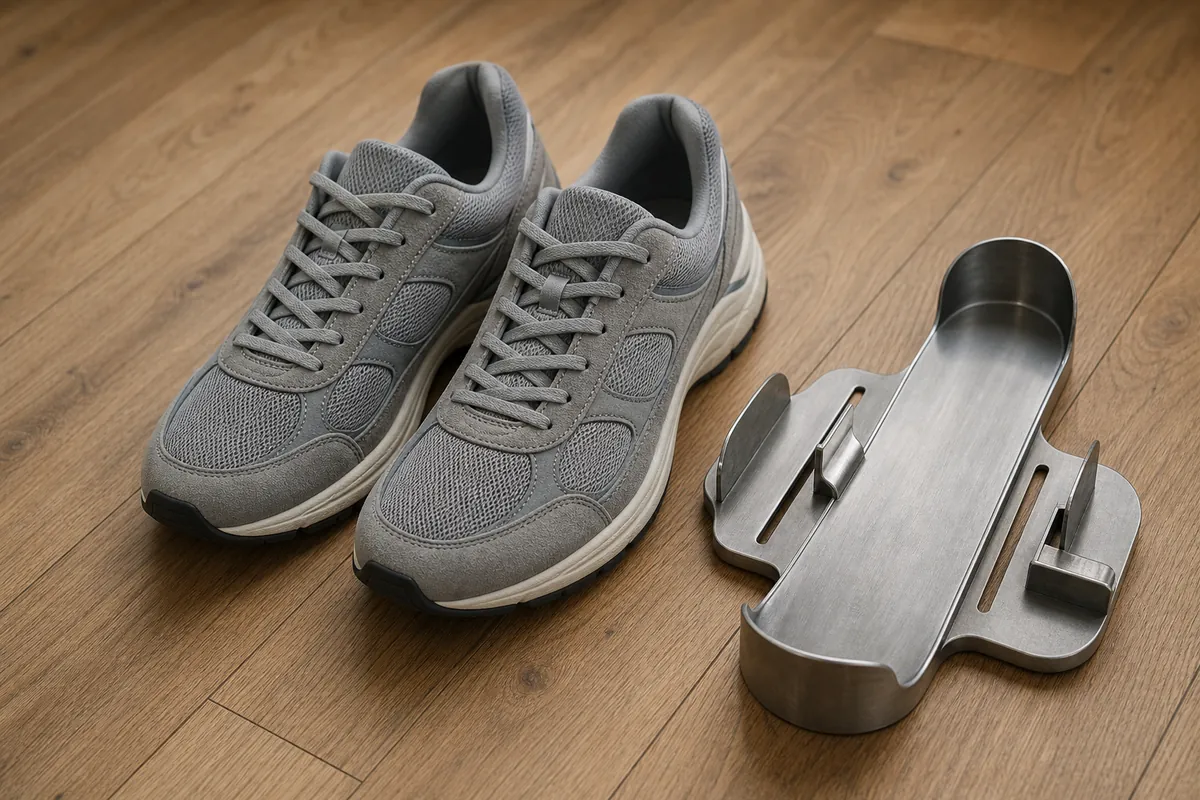
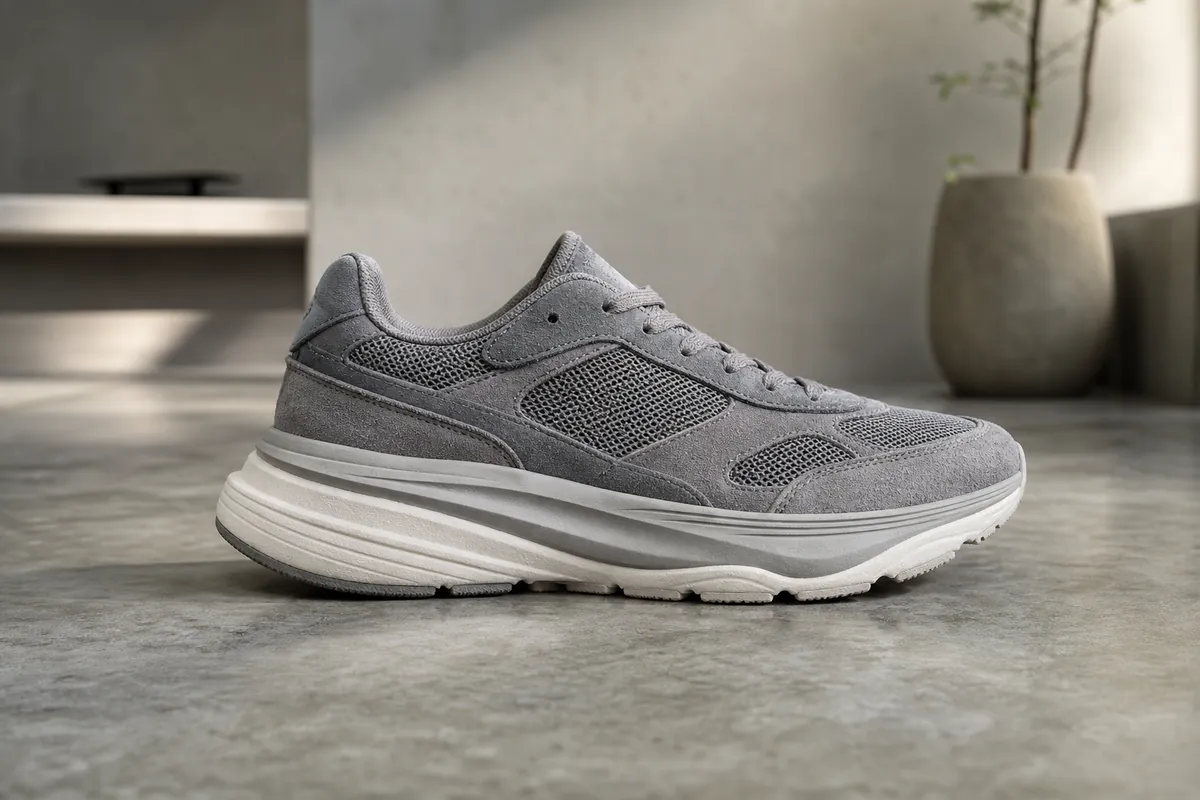
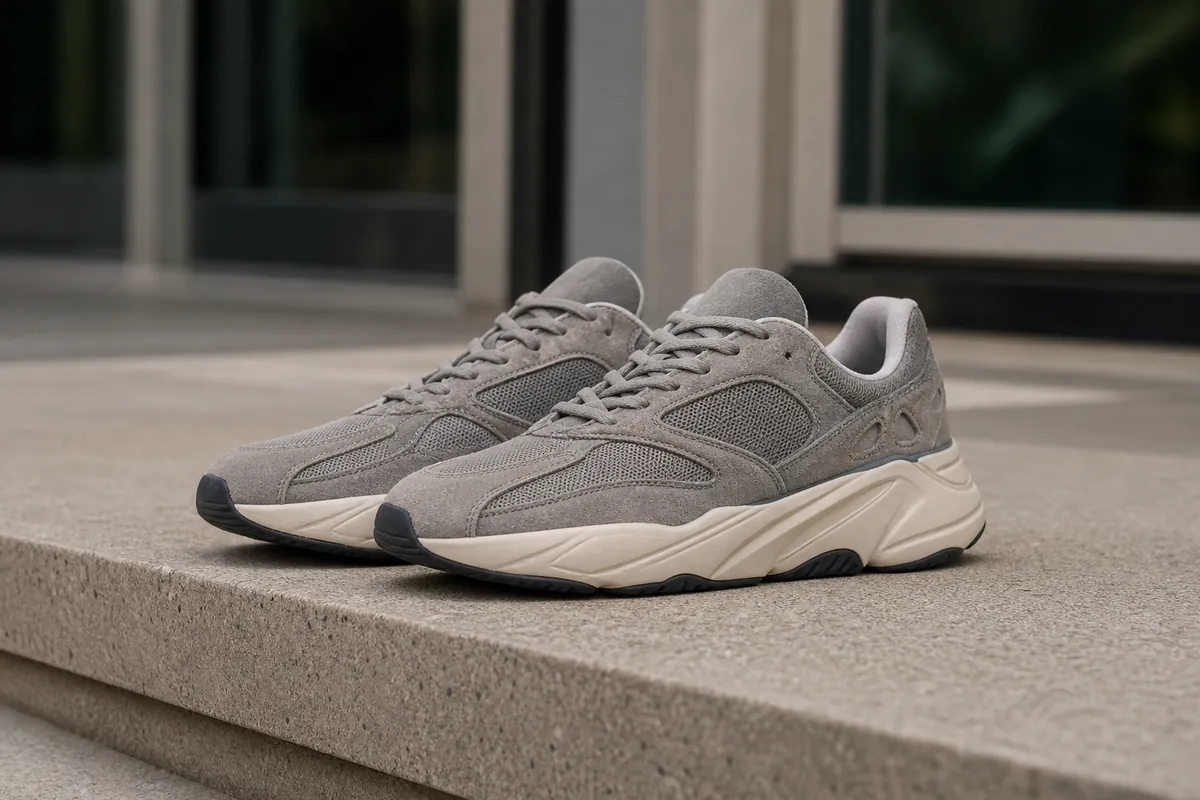
New Balance 1000 Sizing: Do They Run Big, Small or True to Size?
The New Balance 1000 runs long, and half a size down suits most feet. Here is who should stay at true size, plus comparisons with other models.
Quick answer
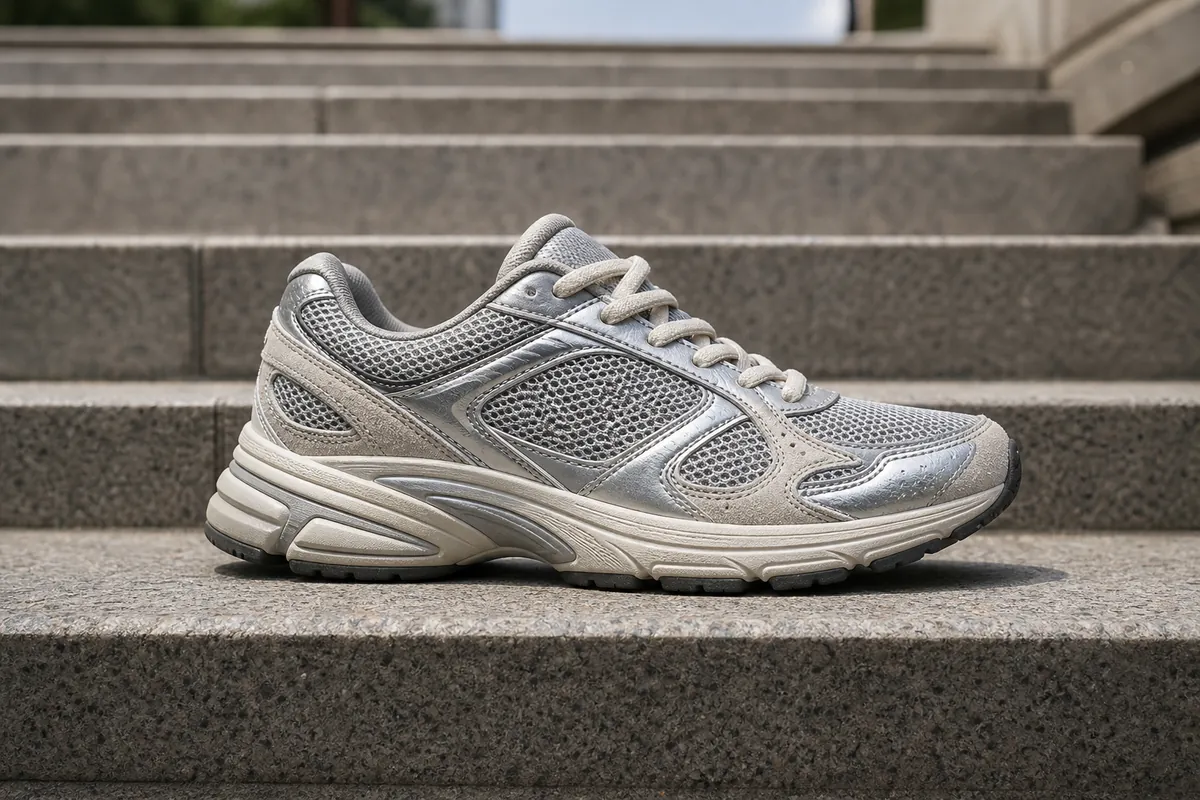
The New Balance 1000 runs long, so most people should go half a size down from their usual size. At true size there is a little over a thumb's width in front of the toes. The forefoot feels snug at first in the smaller size and breaks in. Wide feet should stay at true size.
- Fit
- Runs large
- Width
- Standard width
- Our advice
- Half a size down for a close fit; true size for wide feet or thick socks.
The New Balance 1000 runs long, so most people are happier going half a size down from their usual size. At true size, you can expect a little more than a thumb's width of space beyond your longest toe, which is more than most people want in a lifestyle sneaker. Half a size down tightens that to about a finger's width and leaves a closer, better-shaped fit.
There is a catch, and it is worth knowing before you order: the forefoot can feel snug at first in the smaller size, then eases as the shoe breaks in. If you have wide feet or like a roomy toe box, your true size is the better call.
Pick your size by priority
- You want a close, fitted look and feel: half a size down.
- You have wide feet or want toe space: your true size.
- You are narrow and want a very snug fit: half a size down, with the break-in caveat below.
- You wear thick socks or orthotics: true size.
Where the extra length comes from
Length is the main sizing quirk of the 1000. The width itself is a middle ground: neither slim nor roomy. So the shoe does not feel big because of its volume. It feels big because the toe area extends farther in front of your foot than you are used to in similar models.
In practice, that shows up as extra space at the tip. It does not usually cause heel slip, because the heel area holds the foot securely, and wearers describe the shoe as shaped around the foot. That is why dropping half a size works here without a heel problem.
Runner's tip: When you try the smaller size, stand up, let your toes relax and wiggle them. If they can lift and spread without pressing the top of the shoe, the snugness at the sides is the part that breaks in. If the big toe presses the end, go back to your true size.
The break-in period
Expect a short break-in if you go half a size down, particularly across the forefoot. Wearers who made that choice report that the toe box felt tight at first and softened with wear. That is a reasonable expectation for a shoe with a structured upper, but it is not a promise, so keep the return window in mind and wear the shoes indoors first.
At true size, there is little to break in. The trade-off is just the longer toe area.
Comparing the 1000 with other New Balance models
New Balance sizing is easiest to understand as a set of habits. The 1000 sits with the models that call for a smaller size, not with the true-to-size group.
Models where half a size down is also common
- The 992 and the 993.
- The 990 v3 through v6. See the 990 guide.
- The 550, which wearers also take half a size down in.
Models where you wear your true size
- The 2002R, the 1906R, the 860v2 and the 1500.
- The 991.
So a person who wears a 9 in the 2002R or 1906R is likely to find a 9 in the 1000 long, and an 8.5 is the better start. The 990v2 is the odd one out: it is reported to have a narrower toe box than the 1000, so do not use it as a guide for the 1000.
Wide feet and widths
For men, D is the standard width and 2E is wide. For women, 2A is narrow, B is standard and D is wide. If you are used to buying a wide width, look for it on the product page, because availability varies by colorway and retailer. Our shoe width chart explains the letters.
If you cannot find a wide pair, stay at true size and not half a size down. Extra length is a better trade-off than a squeezed forefoot.
Collaborations and special editions
Most collaborations, including the Aime Leon Dore pairs, are reported to fit the same as the standard 1000, so the half-size-down advice carries across. The Concepts x New Balance 1000 is the exception: it has extra padding and fits differently, which makes true size the more sensible choice for most people. Half a size down is only suggested if your feet are narrow and you want it very snug.
When true size is the better answer
Half a size down is the common advice, but it is not right for everyone. Three situations favor your true size.
First, wide feet. The 1000 is a middle-width shoe, and the smaller size takes some of the forefoot room you need. Second, orthotics or thick insoles, which use up volume that a half-size-down shoe does not have to spare. Third, a long day of walking, because feet swell and a shoe that felt fine in the morning can be tight by evening.
There is also a simple matter of preference. Some people like a little extra length in front of the toes, and the 1000 is one of the few models where true size gives you that without being obviously too big.
Everyday wear and socks
The 1000 is mostly worn as a lifestyle shoe, so the size you want depends on how you wear it. If you wear thin socks or no-show socks, the half-size-down fit is easier to live with. If you wear thick cushioned socks, move back to true size, because the added thickness uses up the same space that half a size would have removed.
If you are buying for running, our running shoe fit guide explains why training needs a little more space than casual wear does.
If you cannot try them on
Buying online is where this rule earns its keep. Start from a pair you already own: find the shoe in the lists above that matches one of your own and apply the same habit. If you wear a true size in the 2002R, buy an 8.5 if your usual is 9. If you wear half a size down in the 992, the same step applies to the 1000.
If you own no New Balance at all, measure your foot, pick your size from the chart, then go down half a size only if your foot is not wide. Keep the packaging, try them on a carpeted floor and return them if the toe room is wrong.
Men's and women's sizing
New Balance women's sizes are 1.5 above men's on the same row, so a men's 8.5 is a women's 10. If you are shopping from women's sizes and plan to go half a size down, move down one half step on the women's scale. Because men's is D and women's is B at standard, a woman with a wider foot may find the men's version comfortable. Our men's to women's guide explains the rule.
New Balance size chart
The charts below follow the New Balance size guide, copied on 2026-11-13. New Balance publishes length as foot length, so the Foot length and CM (JP) columns match.
| US men's | UK | EU | Foot length (cm) | CM (JP) |
|---|---|---|---|---|
| 7 | 6.5 | 40 | 25.0 | 25 |
| 7.5 | 7 | 40.5 | 25.5 | 25.5 |
| 8 | 7.5 | 41.5 | 26.0 | 26 |
| 8.5 | 8 | 42 | 26.5 | 26.5 |
| 9 | 8.5 | 42.5 | 27.0 | 27 |
| 9.5 | 9 | 43 | 27.5 | 27.5 |
| 10 | 9.5 | 44 | 28.0 | 28 |
| 10.5 | 10 | 44.5 | 28.5 | 28.5 |
| 11 | 10.5 | 45 | 29.0 | 29 |
| 11.5 | 11 | 45.5 | 29.5 | 29.5 |
| 12 | 11.5 | 46.5 | 30.0 | 30 |
| 13 | 12.5 | 47.5 | 31.0 | 31 |
| US women's | UK | EU | Foot length (cm) | CM (JP) |
|---|---|---|---|---|
| 6 | 4 | 37 | 22.5 | 22.5 |
| 6.5 | 4.5 | 37.5 | 23.0 | 23 |
| 7 | 5 | 38 | 23.5 | 23.5 |
| 7.5 | 5.5 | 38.5 | 24.0 | 24 |
| 8 | 6 | 39.5 | 24.5 | 24.5 |
| 8.5 | 6.5 | 40 | 25.0 | 25 |
| 9 | 7 | 40.5 | 25.5 | 25.5 |
| 9.5 | 7.5 | 41.5 | 26.0 | 26 |
| 10 | 8 | 42 | 26.5 | 26.5 |
| 10.5 | 8.5 | 42.5 | 27.0 | 27 |
| 11 | 9 | 43 | 27.5 | 27.5 |
Use the chart to find your true size first, then apply the half-size-down rule if you want the closer fit. For instance, a 27 cm foot is a men's 9, so the half-size-down choice would be an 8.5. Measure at the end of the day for the most realistic number, and see our foot measuring guide.
A short test when the pair arrives
- Put the shoes on with your usual socks and lace them fully.
- Stand, and press down at the front to find your longest toe. Look for about a finger's width of space in the smaller size, or a bit over a thumb's width in your true size.
- Walk around the room. The heel should feel locked in.
- Judge the forefoot. If it is tight but does not hurt, give it a few wears. If it numbs your toes, go back to true size.
Mistakes to avoid
- Copying your 2002R size. It is true to size, so the 1000 will probably feel long at the same number.
- Dropping a size. Half a size is the right step. A full size is too much.
- Ignoring your widths. If your feet are wide, the best answer is often true size.
Note: These recommendations come from wearer reports and from comparison with related models. New Balance does not publish model-specific fit notes, so treat the return policy as your safety net.
Our recommendation
Go half a size down from your usual size for the best fit, and stay at true size if your feet are wide, you wear thick socks or you want plenty of toe room. For the overall picture, see the New Balance sizing guide and the shoe size calculator.
Frequently asked questions
Do New Balance 1000 run big or small?
They run long. Wearers report just over a thumb's width of room in front of the toes at true size, so many go half a size down. The width is a middle ground, neither narrow nor roomy.
Should I go half a size down in the 1000?
For most people, yes, if you want a closer fit. Expect the forefoot to feel snug at first and ease with wear. If you have wide feet, wear thick socks or like toe room, stay at your true size.
Is the New Balance 1000 sized like the 2002R?
No. The 2002R is true to size, while the 1000 runs long. Someone who takes a 9 in the 2002R or 1906R will likely find a 9 in the 1000 long, and an 8.5 is the better starting point.
Does the Concepts x New Balance 1000 fit differently?
Yes. It has more padding than the standard model, so true size makes more sense for most people. Half a size down is only suggested for narrow feet that want a very snug fit. Other collaborations fit like the standard 1000.
Does the 1000 come in wide sizes?
For men, D is standard and 2E is wide, and for women 2A is narrow, B is standard and D is wide. Availability varies by colorway and retailer, so check the product page for a width selector before ordering.